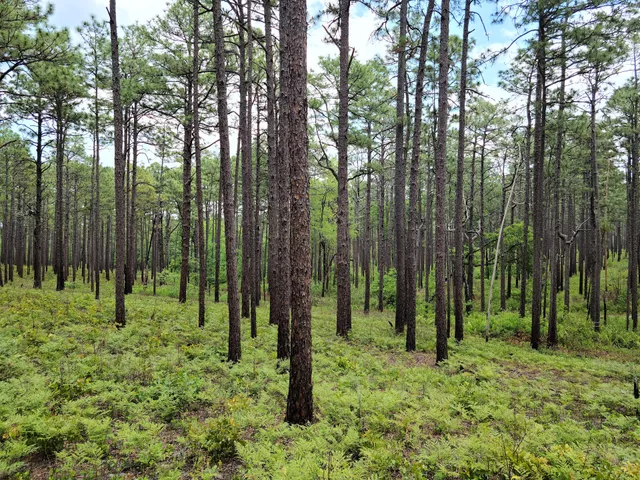
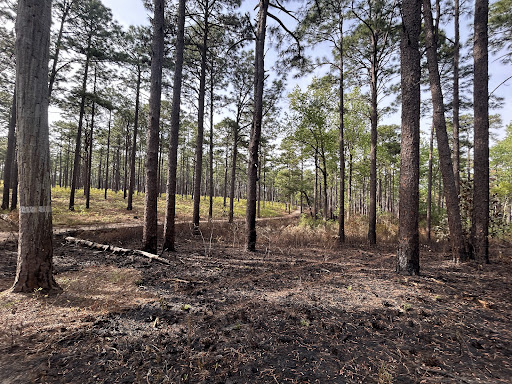
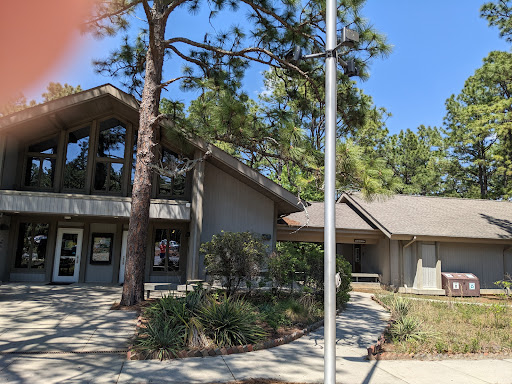
Weymouth Woods is a nature preserve near Southern Pines in the Sandhills region of North Carolina. Although managed by the state parks, it is not a traditional state park. The focus of the area is the preservation of the endangered longleaf pine ecosystem, rather than public recreation. Longleaf pine forests were heavily logged in the late 19th century and replaced by faster-growing loblolly pine. Early in the 20th Century, the grandfather of James Boyd purchased a large tract of land to protect the forest from logging. He named it Weymouth, because the pines reminded him of Weymouth, England. In 1963, the widow of James Boyd donated 403 acres to the state to form the first state natural area. Although the focus of the preserve is protection of longleaf pines, there are a few amenities for the public to enjoy. The visitor center has an exhibit hall on the cultural and natural history of the region. And there are over four miles of hiking trails leading through the woods with great opportunities for wildlife viewing and photography and to experience the longleaf pine ecosystem.
In addition to the main part of Weymouth Woods, there are two smaller locations - Paint Hill and Boyd Tract. Parking for the Boyd Tract is at the Weymouth Center, the former home of James Boyd whose family donated the land for the state preserve. The home is now an arts center and the gardens around it are absolutely beautiful. Before hiking through the Boyd Tract, we walked around the gardens a bit. Some Japanese maple trees had the most brilliant orange foliage. The Boyd Tract begins in the open meadow and signs direct hikers to the Round Timber Trail. A short one-mile loop winds through the forest passing the oldest and second largest longleaf pine trees in the state. They're not marked and we were unable to figure out which tree was the oldest, but the second largest was quite obvious without a sign - it was a huge tree. In addition to the hiking trail, there's an equestrian trail and several old service roads that to extend a hike through the longleaf pine ecosystem. Paint Hill Tract is off Stonyfield Drive. A couple miles of trails and some old service roads lead...
Read more3-5-23
This isn't my favorite state park in NC but some things are worth mentioning that some may find interesting.
There are three accesses/areas and of course, the visitor center is located in the main one at this Google listing. Would recommend going into the visitor center and getting a map. Talk to a ranger about the main points of interest, and get some info regarding plants and animals, and how to access the other two areas as they aren't on Google as of the date above.
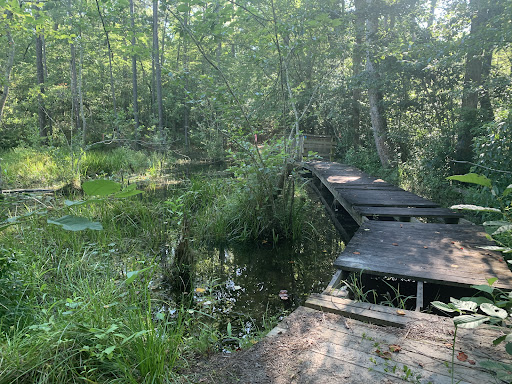
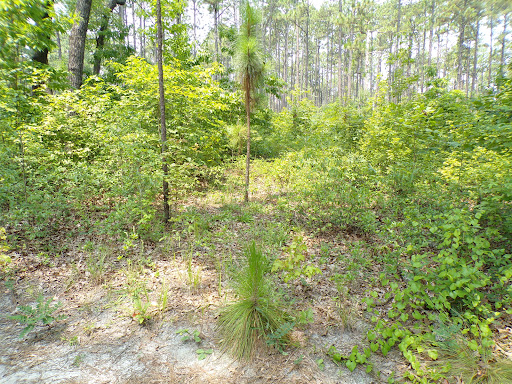
We always come to parks to hike and we will always hit every trail. The main access trails have about 6 miles of trails combined. We started at the lot and did Bowers Bog, to Lighter Stump, Pine Island, Holly Road, Gum Swamp, to Pine Barrens which returns you to the lot. All the trails are easy but have occasional unevenness and slight elevation changes. Nothing to stress over. Mostly sand with pine needles galore. Expect some small bridges. We saw the endangered woodpecker and the fox squirrel. There is also a beaver dam on one of the trails (can't remember which). The long-leaf pines have super large cones. In general, the trails are nothing more than a walk in the woods and rather ordinary. Good for those of all ages however.
The Paint Hill access has 1.5 miles of trails and can be done in a loop. Makeshift lot on Stoneyfield Road that can hold maybe 5 cars. The Pixie Moss trail is the highlight because of the white mossy flowers (there is some significance that I don't remember) at the service trail off this trail. These flowers are just beyond an orange traffic cone. Same mostly flat and easy terrain as the main access trails.
The Boyd Tract access can be entered from Den Road and/or the Weymouth Center of the Arts. About 1.5 miles of trails here and again, very ordinary and just like the other areas. We were a tad disappointed because on the map there is allegedly the oldest known long-leaf pine but we couldn't find it. So we just used the access to do another 1.5 miles of walking.
It's ok and this is a state park that I would...
Read moreImmersing oneself in Weymouth Woods is akin to taking a beautiful journey through time. This unique nature reserve captivates with its towering longleaf pines, some of the oldest of their kind, and offers an exceptional hiking experience spanning several miles.
One of the crowning jewels of Weymouth Woods is undoubtedly its age-old pine tree, a symbol of endurance and a testament to the magnificent longevity of nature. Walking amidst these ancient trees, one can’t help but feel awe for their resilience and quiet grandeur.
The park’s trails, which meander through these forests of longleaf pines, offer an array of hiking opportunities suitable for various fitness levels. Each journey brings with it a sense of tranquility and solitude, allowing you to truly absorb the beauty of your surroundings. The rustling of the pine needles underfoot, the scent of the woodland air, and the occasional birdsong offer a sensory treat.
What makes the Weymouth Woods even more special are the hidden gems that are the water holes. Not immediately obvious, these secret spots provide an exciting quest for the adventurous hiker. Finding these serene water pockets is its own reward; they provide a unique, refreshing oasis in the heart of the woods. These secluded spots are perfect for a quiet break or a moment of reflection amidst your hike.
Overall, Weymouth Woods is a captivating blend of ancient arboreal majesty, engaging trails, and hidden water pockets. Its unique characteristics make it an exciting and rewarding hiking destination. Whether you’re a seasoned hiker or a family looking for a leisurely nature-filled day, Weymouth Woods is a destination that promises a...
Read more