HTML SitemapExplore
logo
Find Things to DoFind The Best Restaurants

Knife River Indian Villages National Historic Site — Attraction in Stanton

Name
Knife River Indian Villages National Historic Site
Description
The Knife River Indian Villages National Historic Site, which was established in 1974, preserves the historic and archaeological remnants of bands of Hidatsa, Northern Plains Indians, in North Dakota. This area was a major trading and agricultural area. Three villages were known to occupy the Knife area.
Nearby attractions
Nearby restaurants
Nearby hotels
Related posts
Keywords
Knife River Indian Villages National Historic Site tourism.Knife River Indian Villages National Historic Site hotels.Knife River Indian Villages National Historic Site bed and breakfast. flights to Knife River Indian Villages National Historic Site.Knife River Indian Villages National Historic Site attractions.Knife River Indian Villages National Historic Site restaurants.Knife River Indian Villages National Historic Site travel.Knife River Indian Villages National Historic Site travel guide.Knife River Indian Villages National Historic Site travel blog.Knife River Indian Villages National Historic Site pictures.Knife River Indian Villages National Historic Site photos.Knife River Indian Villages National Historic Site travel tips.Knife River Indian Villages National Historic Site maps.Knife River Indian Villages National Historic Site things to do.
Knife River Indian Villages National Historic Site things to do, attractions, restaurants, events info and trip planning
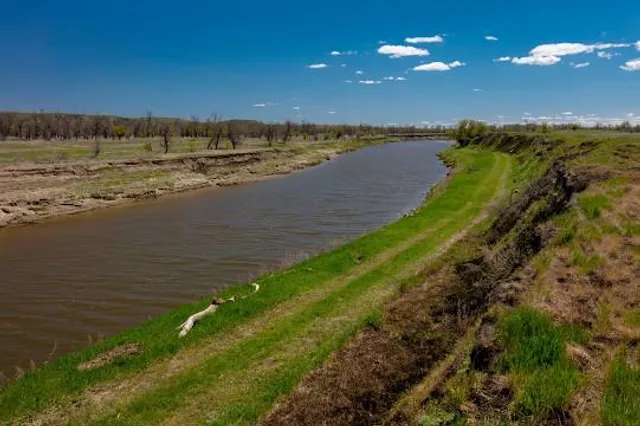
Knife River Indian Villages National Historic Site
United StatesNorth DakotaStantonKnife River Indian Villages National Historic Site

Basic Info

Knife River Indian Villages National Historic Site

564 County Rd 37, Stanton, ND 58571
4.7(240)
Open until 5:00 PM
Save
spot

Ratings & Description

Info

The Knife River Indian Villages National Historic Site, which was established in 1974, preserves the historic and archaeological remnants of bands of Hidatsa, Northern Plains Indians, in North Dakota. This area was a major trading and agricultural area. Three villages were known to occupy the Knife area.

Cultural
Outdoor
Family friendly
Accessibility
attractions: , restaurants:
logoLearn more insights from Wanderboat AI.
Phone
(701) 745-3300
Website
nps.gov
Open hoursSee all hours
Sun9 AM - 5 PMOpen

Plan your stay

hotel
Pet-friendly Hotels in Stanton
Find a cozy hotel nearby and make it a full experience.

hotel
Affordable Hotels in Stanton
Find a cozy hotel nearby and make it a full experience.

hotel
The Coolest Hotels You Haven't Heard Of (Yet)
Find a cozy hotel nearby and make it a full experience.

hotel
Trending Stays Worth the Hype in Stanton
Find a cozy hotel nearby and make it a full experience.

Reviews

Get the Appoverlay
Get the AppOne tap to find yournext favorite spots!
Wanderboat LogoWanderboat

Your everyday Al companion for getaway ideas

CompanyAbout Us
InformationAI Trip PlannerSitemap
SocialXInstagramTiktokLinkedin
LegalTerms of ServicePrivacy Policy

Get the app

© 2025 Wanderboat. All rights reserved.
logo

Reviews of Knife River Indian Villages National Historic Site

4.7
(240)
avatar
5.0
18w

⭐⭐⭐⭐⭐ Knife River Indian Villages National Historic Site in Stanton, ND is a gem—especially for anyone interested in Native American history and culture.

From the moment you enter the visitor center, you’re immersed in the world of the Hidatsa. The museum exhibits are thoughtfully curated and include a moving 15-minute film narrated in the voice of Buffalo Bird Woman (Waheenee), offering firsthand insight into her life and Hidatsa culture 

The reconstructed earth lodge is impressive, giving a real sense of how families lived. Walking the Village Trail, you’ll see the remains of the Awatixa Xi’e and Sakakawea (Awatixa) villages—sites where life once flourished and where Sacagawea lived before joining Lewis & Clark 

Across the park, earthen depressions mark where Hawi­t­sa villages once stood. These were significant trade and agricultural hubs, maintained by generations of Hidatsa women like Buffalo Bird Woman—who managed gardens producing corn, beans, squash, and sunflowers—central staples known as the “Three Sisters” 

One of the highlights is learning about Buffalo Bird Woman’s legacy. Born around 1839 at Knife River, she later preserved the traditional farming methods of her people through detailed interviews captured by anthropologist Gilbert Wilson. Her work, “Buffalo Bird Woman’s Garden: Agriculture of the Hidatsa Indians,” remains a vital record of Indigenous lifeways 

Tips for visitors: • Watch the orientation film first—it frames everything with her personal stories. • Explore the garden area near the earth lodge to see crops planted just as she described. • Take the Visitor Center to Hidatsa Village trails (1.3 mi Village Trail or longer North Forest and Two Rivers Trails) for scenic, historic walking paths 

Overall, the site offers a rare opportunity to step into the past through the lens of a remarkable Hidatsa woman whose stories still resonate today. Highly recommend for families, history lovers, and anyone hoping to understand Indigenous perspectives...

   Read more
avatar
5.0
4y

This is an incredible place to visit. A set of villages of the Mandan group of tribes makes this a truly remarkable area for Indian lore, culture and spiritual awareness.

There are several village groupings along the river that are shown on the ground by the humped up circles where the lodges were located. This was when the tribes were down a bit in population, but were still very strong and had a lively and fruitful life within the village territory.

When you get a chance to look at the lodge that was built under the direction of a very old descendent of the 19th century, some years back, you can hear the laughter, the chants during dancing festivities and religious ceremonies.

With the very knowledgeable and friendly guides at the Visitor's Center, you have all the information you could possibly process in one visit.

A highlight of my visit was watching to lrge bull snakes mating during a remarkably cold day where the temp was about 46-48 deg F. Yet it didn't stop them.

What an a great place to stop for an hour or two to learn about the Mandan group of tribes that lived here in the...

   Read more
avatar
5.0
19w

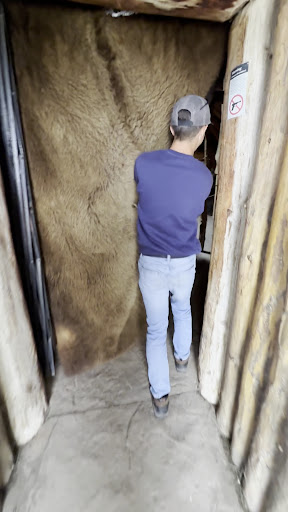
Very interesting. It was hot when we visited. The earth dwelling was very cool inside and quite spacious. It was remarkable the temperature difference on the inside compared to the outside. I could live there. I wonder what it is like in the winter.

The animal skin covering over the entry way opening was very heavy.

The two rangers at the visitor center were very knowledgeable. I explained that we have been to Angel Mounds and Mounds State parks in Indiana. I asked them what the difference was between the earth dwellings (maybe primarily for living) and mounds (maybe primarily for ceremonial or burial). They were not familiar with the parks in Indiana and looked them up on their computers. They said they would have to do additional research. I appreciated their honesty and willingness to research...

   Read more
Page 1 of 7
Previous
Next

Posts

Your browser does not support the video tag.
thepathwetakethepathwetake
We visited Knife River Indian Villages National Historic Site in #northdakota #nationalpark #travel #tiktoktravel #fulltimetravel
Daniel Flint (Independent Historian)Daniel Flint (Independent Historian)
⭐⭐⭐⭐⭐ Knife River Indian Villages National Historic Site in Stanton, ND is a gem—especially for anyone interested in Native American history and culture. From the moment you enter the visitor center, you’re immersed in the world of the Hidatsa. The museum exhibits are thoughtfully curated and include a moving 15-minute film narrated in the voice of Buffalo Bird Woman (Waheenee), offering firsthand insight into her life and Hidatsa culture  The reconstructed earth lodge is impressive, giving a real sense of how families lived. Walking the Village Trail, you’ll see the remains of the Awatixa Xi’e and Sakakawea (Awatixa) villages—sites where life once flourished and where Sacagawea lived before joining Lewis & Clark  Across the park, earthen depressions mark where Hawi­t­sa villages once stood. These were significant trade and agricultural hubs, maintained by generations of Hidatsa women like Buffalo Bird Woman—who managed gardens producing corn, beans, squash, and sunflowers—central staples known as the “Three Sisters”  One of the highlights is learning about Buffalo Bird Woman’s legacy. Born around 1839 at Knife River, she later preserved the traditional farming methods of her people through detailed interviews captured by anthropologist Gilbert Wilson. Her work, “Buffalo Bird Woman’s Garden: Agriculture of the Hidatsa Indians,” remains a vital record of Indigenous lifeways  Tips for visitors: • Watch the orientation film first—it frames everything with her personal stories. • Explore the garden area near the earth lodge to see crops planted just as she described. • Take the Visitor Center to Hidatsa Village trails (1.3 mi Village Trail or longer North Forest and Two Rivers Trails) for scenic, historic walking paths  Overall, the site offers a rare opportunity to step into the past through the lens of a remarkable Hidatsa woman whose stories still resonate today. Highly recommend for families, history lovers, and anyone hoping to understand Indigenous perspectives from the inside.
JossJoss
Definitely worth a stop if you’re in the area- if you plan on doing ‘everything’ here give yourself at least 2 hours to explore. There is a small museum, gift shop, as well as an interesting informative video that is played in the theatre inside of the visitors center. Outside you can find an actual earthlodge, a type of home where the Awatixa people once lived. You can do a trail (it is supposed to be a loop but part of the trail is closed due to erosion) to see the bowl shaped depressions in the ground of where all the earth lodges once stood before these people were forced to leave due to a smallpox epidemic in 1780. Ranger Emilee was very helpful and gave us a brief introduction on things for us as well as answered all of our questions.
See more posts
See more posts
hotel
Find your stay

Pet-friendly Hotels in Stanton

Find a cozy hotel nearby and make it a full experience.

We visited Knife River Indian Villages National Historic Site in #northdakota #nationalpark #travel #tiktoktravel #fulltimetravel
thepathwetake

thepathwetake

hotel
Find your stay

Affordable Hotels in Stanton

Find a cozy hotel nearby and make it a full experience.

Get the Appoverlay
Get the AppOne tap to find yournext favorite spots!
⭐⭐⭐⭐⭐ Knife River Indian Villages National Historic Site in Stanton, ND is a gem—especially for anyone interested in Native American history and culture. From the moment you enter the visitor center, you’re immersed in the world of the Hidatsa. The museum exhibits are thoughtfully curated and include a moving 15-minute film narrated in the voice of Buffalo Bird Woman (Waheenee), offering firsthand insight into her life and Hidatsa culture  The reconstructed earth lodge is impressive, giving a real sense of how families lived. Walking the Village Trail, you’ll see the remains of the Awatixa Xi’e and Sakakawea (Awatixa) villages—sites where life once flourished and where Sacagawea lived before joining Lewis & Clark  Across the park, earthen depressions mark where Hawi­t­sa villages once stood. These were significant trade and agricultural hubs, maintained by generations of Hidatsa women like Buffalo Bird Woman—who managed gardens producing corn, beans, squash, and sunflowers—central staples known as the “Three Sisters”  One of the highlights is learning about Buffalo Bird Woman’s legacy. Born around 1839 at Knife River, she later preserved the traditional farming methods of her people through detailed interviews captured by anthropologist Gilbert Wilson. Her work, “Buffalo Bird Woman’s Garden: Agriculture of the Hidatsa Indians,” remains a vital record of Indigenous lifeways  Tips for visitors: • Watch the orientation film first—it frames everything with her personal stories. • Explore the garden area near the earth lodge to see crops planted just as she described. • Take the Visitor Center to Hidatsa Village trails (1.3 mi Village Trail or longer North Forest and Two Rivers Trails) for scenic, historic walking paths  Overall, the site offers a rare opportunity to step into the past through the lens of a remarkable Hidatsa woman whose stories still resonate today. Highly recommend for families, history lovers, and anyone hoping to understand Indigenous perspectives from the inside.
Daniel Flint (Independent Historian)

Daniel Flint (Independent Historian)

hotel
Find your stay

The Coolest Hotels You Haven't Heard Of (Yet)

Find a cozy hotel nearby and make it a full experience.

hotel
Find your stay

Trending Stays Worth the Hype in Stanton

Find a cozy hotel nearby and make it a full experience.

Definitely worth a stop if you’re in the area- if you plan on doing ‘everything’ here give yourself at least 2 hours to explore. There is a small museum, gift shop, as well as an interesting informative video that is played in the theatre inside of the visitors center. Outside you can find an actual earthlodge, a type of home where the Awatixa people once lived. You can do a trail (it is supposed to be a loop but part of the trail is closed due to erosion) to see the bowl shaped depressions in the ground of where all the earth lodges once stood before these people were forced to leave due to a smallpox epidemic in 1780. Ranger Emilee was very helpful and gave us a brief introduction on things for us as well as answered all of our questions.
Joss

Joss

See more posts
See more posts