HTML SitemapExplore
Find Things to DoFind The Best Restaurants

Old Fort Johnson / Montgomery County Historical Soc — Attraction in Town of Amsterdam

Name
Old Fort Johnson / Montgomery County Historical Soc
Description
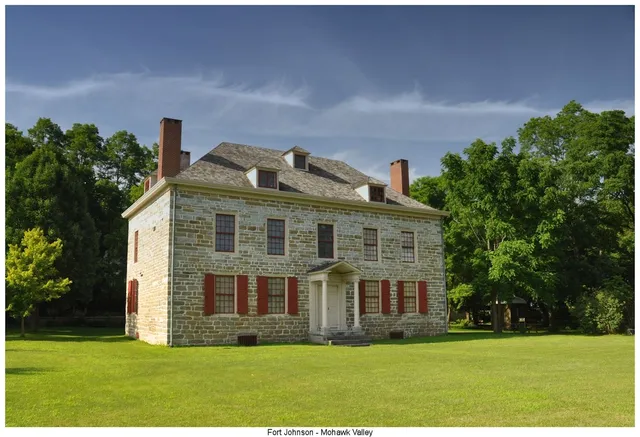
Old Fort Johnson is a historic house museum and historic site at 2 Mergner Road in Fort Johnson, New York. It is the site of Fort Johnson, a two-story stone house originally enclosed in fortifications built by Sir William Johnson about 1749.
Nearby attractions
Nearby restaurants
Nearby hotels
Related posts
Keywords
Old Fort Johnson / Montgomery County Historical Soc tourism.Old Fort Johnson / Montgomery County Historical Soc hotels.Old Fort Johnson / Montgomery County Historical Soc bed and breakfast. flights to Old Fort Johnson / Montgomery County Historical Soc.Old Fort Johnson / Montgomery County Historical Soc attractions.Old Fort Johnson / Montgomery County Historical Soc restaurants.Old Fort Johnson / Montgomery County Historical Soc travel.Old Fort Johnson / Montgomery County Historical Soc travel guide.Old Fort Johnson / Montgomery County Historical Soc travel blog.Old Fort Johnson / Montgomery County Historical Soc pictures.Old Fort Johnson / Montgomery County Historical Soc photos.Old Fort Johnson / Montgomery County Historical Soc travel tips.Old Fort Johnson / Montgomery County Historical Soc maps.Old Fort Johnson / Montgomery County Historical Soc things to do.
Old Fort Johnson / Montgomery County Historical Soc things to do, attractions, restaurants, events info and trip planning
Old Fort Johnson / Montgomery County Historical Soc
United StatesNew YorkTown of AmsterdamOld Fort Johnson / Montgomery County Historical Soc

Basic Info

Old Fort Johnson / Montgomery County Historical Soc

2 Mergner Rd, Fort Johnson, NY 12070
4.7(47)
Open 24 hours
Save
spot

Ratings & Description

Info

Old Fort Johnson is a historic house museum and historic site at 2 Mergner Road in Fort Johnson, New York. It is the site of Fort Johnson, a two-story stone house originally enclosed in fortifications built by Sir William Johnson about 1749.

Cultural
Family friendly
attractions: , restaurants:
logoLearn more insights from Wanderboat AI.
Phone
(518) 843-0300
Website
sites.google.com

Plan your stay

hotel
Pet-friendly Hotels in Town of Amsterdam
Find a cozy hotel nearby and make it a full experience.
hotel
Affordable Hotels in Town of Amsterdam
Find a cozy hotel nearby and make it a full experience.
hotel
The Coolest Hotels You Haven't Heard Of (Yet)
Find a cozy hotel nearby and make it a full experience.
hotel
Trending Stays Worth the Hype in Town of Amsterdam
Find a cozy hotel nearby and make it a full experience.

Reviews

Things to do nearby

Titanic: An Immersive Voyage
Sat, Dec 20 • 10:00 AM
125 Washington Avenue, Schenectady, 12205
View details
Merry Lit-mas Ornament MAKE and TAKE
Fri, Dec 19 • 5:00 PM
501 State St, Schenectady, NY 12305, Schenectady, NY 12305
View details
Madame Jane Puff & Paint
Sun, Dec 21 • 6:00 PM
108 State Street, Schenectady, NY 12305
View details
Get the Appoverlay
Get the AppOne tap to find yournext favorite spots!
Wanderboat LogoWanderboat

Your everyday Al companion for getaway ideas

CompanyAbout Us
InformationAI Trip PlannerSitemap
SocialXInstagramTiktokLinkedin
LegalTerms of ServicePrivacy Policy

Get the app

© 2025 Wanderboat. All rights reserved.

Posts

DakotaDakota
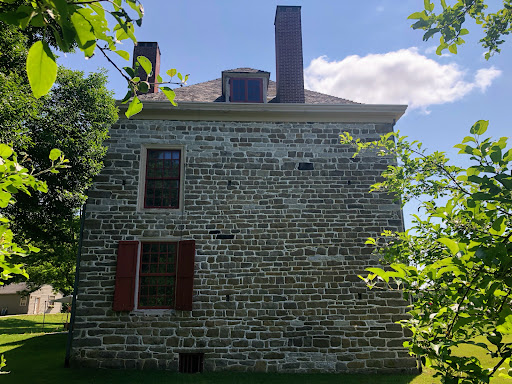
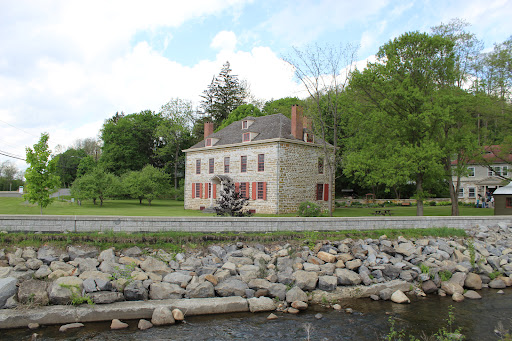
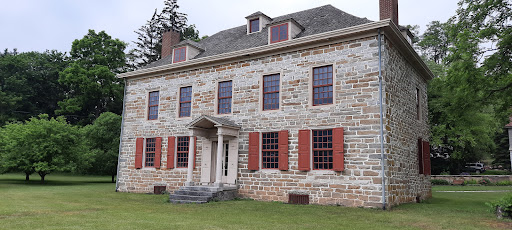
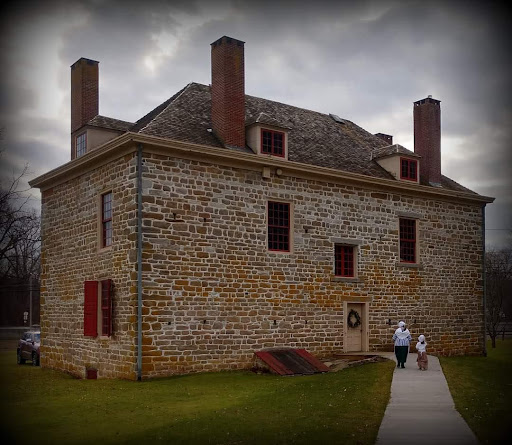
Fort Johnson is the three story limestone house originally enclosed in fortifications built by Sir William Johnson in 1749 on the Mohawk River. ‘Old Fort Johnson’ is located at the center of the village of Fort Johnson, on the north side of NY Route 5 overlooking the Mohawk River just west of NY Route 67. Sir William Johnson was only 23 years old when he arrived oversee his Uncle Peter Warren's land holdings south of the present day city of Amsterdam in the colony of New York. William purchased a tract of land north of the Mohawk River in 1739. He moved there, building a log house, sawmill, and trade post in 1743 called Mount Johnson. Here he developed the fur trade with the Mohawk and Haudenosaunee, which became the basis of his fortune. Johnson soon became involved in colonial politics. Johnson was influential in relations between the colonial government and the Haudenosaunee. He provisioned British military posts, kept the Indigenous Nations friendly to the British, served in the New York colonial legislature, and in 1756 was commissioned "Superintendent of all the affairs of the Six Nations and other Northern Indians." Johnson won military fame as a major general of the provincial militia and a commander when the French forces under Baron Dieskau were defeated at the Battle of Lake George on September 8th, 1755. Largely as a result of this victory, Johnson was made a baronet by King George III. Sir William won greater renown for military achievements at the Siege of Fort Niagara (July 6th-26th, 1759) and the capture of Montreal (July 2nd – September 8th, 1760). Prior to these achievements William Johnson had constructed a larger house, for himself and his family. Acting as his own architect, Johnson built a large three story stone house about a mile west of his first home. Following the Georgian style of architecture it was finished in 1749 after King George's War ended, and was to be called Fort Johnson. The property, about 1 acre in size, is fringed on the front and east side by a low stone retaining wall. The house is a three story structure, built out of limestone and topped by a hip roof. Brick chimneys are located in the side walls, and the front face of the roof is pierced by three gabled dormers. The front facade is five bays wide, with a center entrance sheltered by a gabled portico supported by Doric columns. The interior follows a central hall plan, with a parlor and study on the left, and a large dining room and serving chamber on the right; the kitchen is located in the basement. Along with the three-story house, a grist mill and our buildings were on this property. Johnson convened many Native American conferences on this site as the British Superintendent of Indian Affairs for the Northern Department. The fort served as Johnson's home, business office and trading center. Soon after completion, Johnson was ordering new furnishings from England and locally made pieces to enhance his new home. Structures which no longer exist flanked the house on the front and were fortified by a wooden palisade during the Seven Years War, from 1755 to 1763, as a means of defense from attack by the French. In 1763, Sir William Johnson moved west to Johnson Hall in what is now Johnstown, New York. With Sir William's removal to Johnson Hall, Fort Johnson was given to his son John Johnson who married Mary Watts, a member of a prominent New York family. John occupied the Fort until 1774, when upon Sir William's death, John inherited the baronetcy and moved to Johnson Hall. After Sir John and Lady Mary moved to Johnson Hall, Fort Johnson was used by other members of William's family. Fort Johnson was one of four Johnson family homes on the eve of the American Revolution. But the Fort did not remain in the Johnson family for long. With the outbreak of the American Revolution in 1775, Sir John Johnson decided to remain loyal to the British Crown. Sir John was declared a traitor, and he and his family fled to Canada from the Mohawk Valley in 1776.
Ryan MazierskiRyan Mazierski
Old Fort Johnson was the residence of Sir William Johnson, an Irish pioneer who became an influential British Superintendent of Indian Affairs. Johnson was a very important colonist who did much to build the future United States even though he was working for the British. Built in 1749 the three story Georgian style house is made of limestone and sits near the banks of the Mohawk River. The house is also home to the Montgomery County Historical Society. Tours of the inside of the house are given and they are educational and informative. Much of the furniture and furnishings in the house are original to it. The layout of the house is also as historically accurate as possible. Originally, the house was essentially part of a larger fort. They have a nice display as to what the fort would've looked like and they have a gunport built into the house. Outside of the house it is easy to admire the gardens, and the steam that runs down to the Mohawk. Interestingly enough there is also a privy outside, which is believed to be one of the oldest intact one’s in the US. There is Mixed into the house are displays of Native American artifacts and Mohawk Valley history. Some of the interesting displays that can be seen are Nicholas Herkimer’s rifle and a chair that was saved from a house in the Cherry Valley Massacre in 1778. On the third floor of the home unique artifacts from Montgomery County’s history are displayed. One of the most interesting artifacts they have is a Mohawk canoe that could be 500 or more years old. There is also a small collection of carriages to be seen here. On the tour I was informed that there would be some work on the roof of Old Fort Johnson being completed this year. Check the website or call ahead for the hours that tours are given. A small admission price is charged. There is a small, but nice gift shop located here. This is a great place to learn about Sir William Johnson and the history of the Mohawk Valley.
Dirt ObseXXionDirt ObseXXion
A must see for French and Indian War history, the tour guide was incredibly well read on Sir William Johnson, the houses history, the French and Indian War, and New York's colonial politics.. There's lots of artifacts from the local area with coolest piece being a 15th Century dugout canoe!
See more posts
See more posts
hotel
Find your stay

Pet-friendly Hotels in Town of Amsterdam

Find a cozy hotel nearby and make it a full experience.

Fort Johnson is the three story limestone house originally enclosed in fortifications built by Sir William Johnson in 1749 on the Mohawk River. ‘Old Fort Johnson’ is located at the center of the village of Fort Johnson, on the north side of NY Route 5 overlooking the Mohawk River just west of NY Route 67. Sir William Johnson was only 23 years old when he arrived oversee his Uncle Peter Warren's land holdings south of the present day city of Amsterdam in the colony of New York. William purchased a tract of land north of the Mohawk River in 1739. He moved there, building a log house, sawmill, and trade post in 1743 called Mount Johnson. Here he developed the fur trade with the Mohawk and Haudenosaunee, which became the basis of his fortune. Johnson soon became involved in colonial politics. Johnson was influential in relations between the colonial government and the Haudenosaunee. He provisioned British military posts, kept the Indigenous Nations friendly to the British, served in the New York colonial legislature, and in 1756 was commissioned "Superintendent of all the affairs of the Six Nations and other Northern Indians." Johnson won military fame as a major general of the provincial militia and a commander when the French forces under Baron Dieskau were defeated at the Battle of Lake George on September 8th, 1755. Largely as a result of this victory, Johnson was made a baronet by King George III. Sir William won greater renown for military achievements at the Siege of Fort Niagara (July 6th-26th, 1759) and the capture of Montreal (July 2nd – September 8th, 1760). Prior to these achievements William Johnson had constructed a larger house, for himself and his family. Acting as his own architect, Johnson built a large three story stone house about a mile west of his first home. Following the Georgian style of architecture it was finished in 1749 after King George's War ended, and was to be called Fort Johnson. The property, about 1 acre in size, is fringed on the front and east side by a low stone retaining wall. The house is a three story structure, built out of limestone and topped by a hip roof. Brick chimneys are located in the side walls, and the front face of the roof is pierced by three gabled dormers. The front facade is five bays wide, with a center entrance sheltered by a gabled portico supported by Doric columns. The interior follows a central hall plan, with a parlor and study on the left, and a large dining room and serving chamber on the right; the kitchen is located in the basement. Along with the three-story house, a grist mill and our buildings were on this property. Johnson convened many Native American conferences on this site as the British Superintendent of Indian Affairs for the Northern Department. The fort served as Johnson's home, business office and trading center. Soon after completion, Johnson was ordering new furnishings from England and locally made pieces to enhance his new home. Structures which no longer exist flanked the house on the front and were fortified by a wooden palisade during the Seven Years War, from 1755 to 1763, as a means of defense from attack by the French. In 1763, Sir William Johnson moved west to Johnson Hall in what is now Johnstown, New York. With Sir William's removal to Johnson Hall, Fort Johnson was given to his son John Johnson who married Mary Watts, a member of a prominent New York family. John occupied the Fort until 1774, when upon Sir William's death, John inherited the baronetcy and moved to Johnson Hall. After Sir John and Lady Mary moved to Johnson Hall, Fort Johnson was used by other members of William's family. Fort Johnson was one of four Johnson family homes on the eve of the American Revolution. But the Fort did not remain in the Johnson family for long. With the outbreak of the American Revolution in 1775, Sir John Johnson decided to remain loyal to the British Crown. Sir John was declared a traitor, and he and his family fled to Canada from the Mohawk Valley in 1776.
Dakota

Dakota

hotel
Find your stay

Affordable Hotels in Town of Amsterdam

Find a cozy hotel nearby and make it a full experience.

Get the Appoverlay
Get the AppOne tap to find yournext favorite spots!
Old Fort Johnson was the residence of Sir William Johnson, an Irish pioneer who became an influential British Superintendent of Indian Affairs. Johnson was a very important colonist who did much to build the future United States even though he was working for the British. Built in 1749 the three story Georgian style house is made of limestone and sits near the banks of the Mohawk River. The house is also home to the Montgomery County Historical Society. Tours of the inside of the house are given and they are educational and informative. Much of the furniture and furnishings in the house are original to it. The layout of the house is also as historically accurate as possible. Originally, the house was essentially part of a larger fort. They have a nice display as to what the fort would've looked like and they have a gunport built into the house. Outside of the house it is easy to admire the gardens, and the steam that runs down to the Mohawk. Interestingly enough there is also a privy outside, which is believed to be one of the oldest intact one’s in the US. There is Mixed into the house are displays of Native American artifacts and Mohawk Valley history. Some of the interesting displays that can be seen are Nicholas Herkimer’s rifle and a chair that was saved from a house in the Cherry Valley Massacre in 1778. On the third floor of the home unique artifacts from Montgomery County’s history are displayed. One of the most interesting artifacts they have is a Mohawk canoe that could be 500 or more years old. There is also a small collection of carriages to be seen here. On the tour I was informed that there would be some work on the roof of Old Fort Johnson being completed this year. Check the website or call ahead for the hours that tours are given. A small admission price is charged. There is a small, but nice gift shop located here. This is a great place to learn about Sir William Johnson and the history of the Mohawk Valley.
Ryan Mazierski

Ryan Mazierski

hotel
Find your stay

The Coolest Hotels You Haven't Heard Of (Yet)

Find a cozy hotel nearby and make it a full experience.

hotel
Find your stay

Trending Stays Worth the Hype in Town of Amsterdam

Find a cozy hotel nearby and make it a full experience.

A must see for French and Indian War history, the tour guide was incredibly well read on Sir William Johnson, the houses history, the French and Indian War, and New York's colonial politics.. There's lots of artifacts from the local area with coolest piece being a 15th Century dugout canoe!
Dirt ObseXXion

Dirt ObseXXion

See more posts
See more posts

Reviews of Old Fort Johnson / Montgomery County Historical Soc

4.7
(47)
avatar
5.0
2y

Fort Johnson is the three story limestone house originally enclosed in fortifications built by Sir William Johnson in 1749 on the Mohawk River. ‘Old Fort Johnson’ is located at the center of the village of Fort Johnson, on the north side of NY Route 5 overlooking the Mohawk River just west of NY Route 67.

Sir William Johnson was only 23 years old when he arrived oversee his Uncle Peter Warren's land holdings south of the present day city of Amsterdam in the colony of New York. William purchased a tract of land north of the Mohawk River in 1739. He moved there, building a log house, sawmill, and trade post in 1743 called Mount Johnson. Here he developed the fur trade with the Mohawk and Haudenosaunee, which became the basis of his fortune. Johnson soon became involved in colonial politics. Johnson was influential in relations between the colonial government and the Haudenosaunee. He provisioned British military posts, kept the Indigenous Nations friendly to the British, served in the New York colonial legislature, and in 1756 was commissioned "Superintendent of all the affairs of the Six Nations and other Northern Indians." Johnson won military fame as a major general of the provincial militia and a commander when the French forces under Baron Dieskau were defeated at the Battle of Lake George on September 8th, 1755. Largely as a result of this victory, Johnson was made a baronet by King George III. Sir William won greater renown for military achievements at the Siege of Fort Niagara (July 6th-26th, 1759) and the capture of Montreal (July 2nd – September 8th, 1760).

Prior to these achievements William Johnson had constructed a larger house, for himself and his family. Acting as his own architect, Johnson built a large three story stone house about a mile west of his first home. Following the Georgian style of architecture it was finished in 1749 after King George's War ended, and was to be called Fort Johnson. The property, about 1 acre in size, is fringed on the front and east side by a low stone retaining wall. The house is a three story structure, built out of limestone and topped by a hip roof. Brick chimneys are located in the side walls, and the front face of the roof is pierced by three gabled dormers. The front facade is five bays wide, with a center entrance sheltered by a gabled portico supported by Doric columns. The interior follows a central hall plan, with a parlor and study on the left, and a large dining room and serving chamber on the right; the kitchen is located in the basement. Along with the three-story house, a grist mill and our buildings were on this property. Johnson convened many Native American conferences on this site as the British Superintendent of Indian Affairs for the Northern Department. The fort served as Johnson's home, business office and trading center. Soon after completion, Johnson was ordering new furnishings from England and locally made pieces to enhance his new home. Structures which no longer exist flanked the house on the front and were fortified by a wooden palisade during the Seven Years War, from 1755 to 1763, as a means of defense from attack by the French.

In 1763, Sir William Johnson moved west to Johnson Hall in what is now Johnstown, New York. With Sir William's removal to Johnson Hall, Fort Johnson was given to his son John Johnson who married Mary Watts, a member of a prominent New York family. John occupied the Fort until 1774, when upon Sir William's death, John inherited the baronetcy and moved to Johnson Hall.

After Sir John and Lady Mary moved to Johnson Hall, Fort Johnson was used by other members of William's family. Fort Johnson was one of four Johnson family homes on the eve of the American Revolution. But the Fort did not remain in the Johnson family for long. With the outbreak of the American Revolution in 1775, Sir John Johnson decided to remain loyal to the British Crown. Sir John was declared a traitor, and he and his family fled to Canada from the Mohawk...

   Read more
avatar
5.0
28w

Old Fort Johnson was the residence of Sir William Johnson, an Irish pioneer who became an influential British Superintendent of Indian Affairs. Johnson was a very important colonist who did much to build the future United States even though he was working for the British. Built in 1749 the three story Georgian style house is made of limestone and sits near the banks of the Mohawk River. The house is also home to the Montgomery County Historical Society. Tours of the inside of the house are given and they are educational and informative. Much of the furniture and furnishings in the house are original to it. The layout of the house is also as historically accurate as possible. Originally, the house was essentially part of a larger fort. They have a nice display as to what the fort would've looked like and they have a gunport built into the house. Outside of the house it is easy to admire the gardens, and the steam that runs down to the Mohawk. Interestingly enough there is also a privy outside, which is believed to be one of the oldest intact one’s in the US. There is Mixed into the house are displays of Native American artifacts and Mohawk Valley history. Some of the interesting displays that can be seen are Nicholas Herkimer’s rifle and a chair that was saved from a house in the Cherry Valley Massacre in 1778. On the third floor of the home unique artifacts from Montgomery County’s history are displayed. One of the most interesting artifacts they have is a Mohawk canoe that could be 500 or more years old. There is also a small collection of carriages to be seen here. On the tour I was informed that there would be some work on the roof of Old Fort Johnson being completed this year. Check the website or call ahead for the hours that tours are given. A small admission price is charged. There is a small, but nice gift shop located here. This is a great place to learn about Sir William Johnson and the history of the...

   Read more
avatar
5.0
10y

Old Fort Johnson cannot be over-looked in any Mohawk Valley travel plans.

It's unmatched as a colonial site, key to understanding the context of the Revolutionary War, a fantastic concentration of significant material culture and period decorative arts, an excellent venue for programming throughout the year, a truly beautiful setting (with the coolest outhouse...) and its visitors center is on of the most comprehensive sources of regional history texts and memorabilia in Central New York. GO! GO AGAIN! You will never regret...

   Read more
Page 1 of 7
Previous
Next