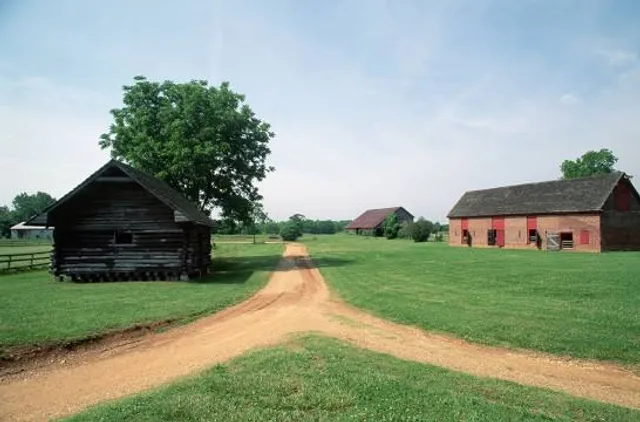
Shirley Plantation is the oldest active plantation in Virginia and the oldest family-owned business in North America, dating back to 1614 with operations starting in 1648. It used the forced labor of about 70 to 90 enslaved people for plowing the fields, cleaning, childcare, and cooking. The plantation was added to the National Register in 1969 and declared a National Historic Landmark in 1970.
The lands of Shirley Plantation were first settled in 1613 by Sir Thomas West, 3rd Baron De la Warr and were named West and Sherley Hundred. The land was cultivated for growing tobacco to be shipped around the colonies and to England.
In 1638, a portion of this land was granted to Edward Hill, thus beginning the occupation by the Hill family. The original 450-acre (180 ha) plot was expanded by marriage and gradual land acquisition. The land passed to Edward Hill II who was owner during Bacon's Rebellion in 1676. He sided with Governor William Berkeley, and Bacon's rebels proceeded to plunder his home. The land was then inherited by Edward Hill III in 1700.
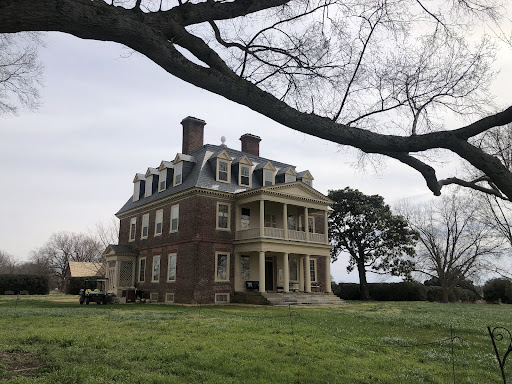
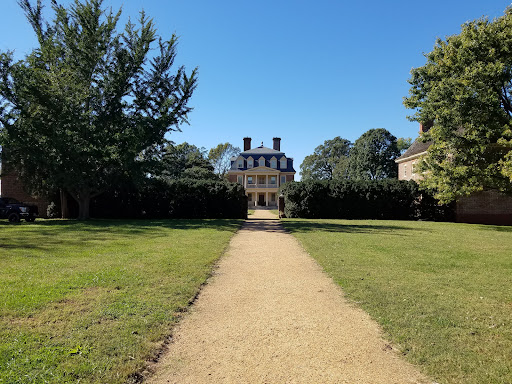
Edward Hill III's only son, Edward Hill IV, died at 16 of consumption, leaving no male heirs. The property reverted to Edward Hill III's youngest daughter Elizabeth who married John Carter (eldest son of Robert "King" Carter), in October 1723. The construction of the present mansion and outbuildings began c. 1723.
The mansion, called the "Great House", was completed in 1738 and was located close to the original house built by the Hills that became known as the "Hill House". The Hill House stood until the late 1860s, when it was demolished and the building materials were salvaged and used to construct the mansion at...
Read moreThis home was built off the labor of enslaved persons. This family prospered from their labor. The horrors the enslaved persons must’ve endured on this land.. Not to mention, the 400 year old large trees behind the home, which is where I can imagine lynchings and beatings may have occurred.
I cannot believe the home is still owned by the slave owners family... The Carter family’s wealth is built on the back of enslaved persons - how awful and disgusting.
I hope they reach out to the descendants of the enslaved persons on this land and offer some form of restitution for what their relatives were put through by the Carter family members. Not to mention, the centuries of suffering, and physical, mental, and verbal abuse each enslaved person endured. The enslaved persons were treated as property rather than actual human beings.
The Carter family continues to monetarily benefit from the land and home, while the families of the enslaved persons never received anything for the free labor and what they endured for centuries. Plantations are constant reminders of the torture and pain that Black Americans endured in this country for centuries, and the fact that this one still operates as a multimillion dollar business...
Read moreIt was a beautiful Plantation and we had gone 2 days before Thanksgiving 2022 to visit family on Virginia. When we arrived we waited for the 3:00 tour to begin. It started outside & the weather was sunny but chilly and very windy. The tour guide Kathy started outside with a lengthy explanation of the exterior and history of the buildings. Once we went inside she discovered there was no heat and it was 56 degrees in the house on the main floor which is where the tour is. Mind you my husband and I both wore masks and I had gloves, scarf and hood on during the entire tour. That evening about 3 hours later I started to get so sick from coughing and we had to leave Virginia without seeing our family, no thanksgiving & driving back straight through the next morning Wednesday 500 miles to Ohio. My husband ending up getting sick as well. Not Covid just horrible colds and we are still sick and it’s Saturday.
Warning : If your going to visit this historic plantation during the cold season call in advance to make sure the home has heat. Especially if your older.
Just wish the outcome was better because the history of the plantation was just fascinating and the guide was...
Read more