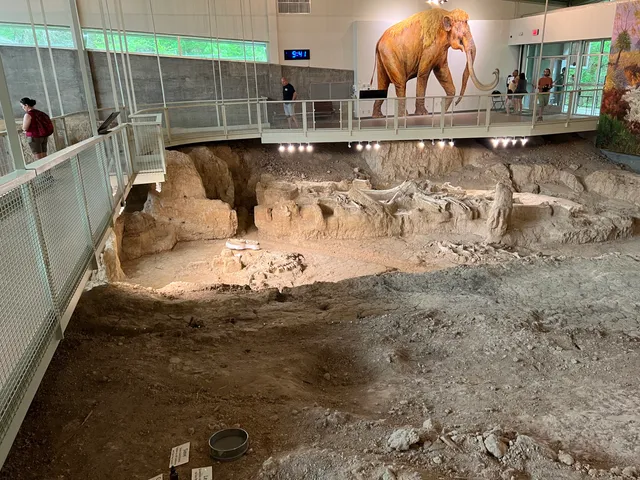
I took our fossil-obsessed 4 year old and his 2 year old brother. I was a little worried about doing a guided tour with such young kids, because they kinda want to see what they want to see, and can be pretty noisy and disruptive! This was a perfect place for a tour with young kids. For one, it is very inexpensive - adults are $5, kids are $3, and kids under 3 are free, so you don't feel like you are wasting money if you have to quit the dig site early. Second, the dig site isn't that big, so you can't really loose your kids in the building. I left my 4 year old with his dad at one end and followed the 2 year old as he wandered where he would, but I could see my husband the whole time. Kids who aren't at all interested in fossils may not last long inside, but I was able to interest mine in the fossils in situ, the table with some toys and illustrations of prehistoric creatures, the mammoth femur bone display, and the paintings. And most of all, the tour guides were very friendly, very accommodating, and not at all bothered that once we entered the dig site building, the kids were wandering everywhere. We felt very welcome and got to spend a full hour inside, making it a memorable experience. As you walk in to the dig site, there are walkways built so that you can look down over the fossils, but the rails are high enough and there is no way for a little one to squirm underneath or between panels. The only worry you'd have with kids is them tossing something into the dig site, but there is a sign as you enter warning you to secure all loose objects (and probably take everything away from the kids).
As for the free parts of the park, there are walking trails that seem very doable for kids, picnic tables very close to the paved walkway coming down from the visitors center, and a play dig pit for kids. When we visited (early August), the dig pit was closed, but there were tables out with kids workbooks, coloring sheets, geodes, and a park employee showing off a mammoth tooth. I was under the impression before we came that the visit would be free, but to see anything mammoth related, you need to buy the tour. Not a big deal, but that can be a bit misleading from a basic google search. Without the dig site, this is just a nice park for the most part.
There are bathrooms in the gift shop/visitors center. The path to the dig site is paved, wide, a very gentle slope, and the tour guide can drive a golf cart down to the site as well for anyone with mobility issues. The dig site is wheelchair accessible, although the gift shop is very small and tight - but you can reach...
Read moreThis is not like a standard museum with displays, it is so much more. If you are interested in paleontology, prehistoric life, how those large fossil skeletons came to the museum, or how scientists know so much about them, this park needs to be on your list of places to visit. This is an active fossil excavation site where numerous Pleistocene animals died relatively quickly due to a still uncertain cause. University students and research professors will be at this park for decades to come, and the public has the chance to see it all.
The park has plenty of paved parking. The location is relatively flat, and where there are gullies ramps have been added. In fact, most of the ramps are level and just above the excavation area. If you have problems walking, rangers have a small transport upon request that staff can use to get you where you need to go.
There are two buildings. The first is the building where you purchase your tickets ($6.00 for adults, less for seniors and children). It has a mineral shop, small book and toy shop, learning & hands-on displays (sometimes outside in tents), and handicap bathrooms.
It is my recommendation to take the guided tour. There is no added cost, but you learn so much more about the site. It might mean a short wait, but I found it worth the time.
Since the excavation area is a few hundred feet away, you can take either the short crushed rock trail through the woods or a paved path to the second building and excavation. There are also several nature trails available. Some of the local vegetation is labeled. There are picnic areas, but I did not see any food or drinks for purchase.
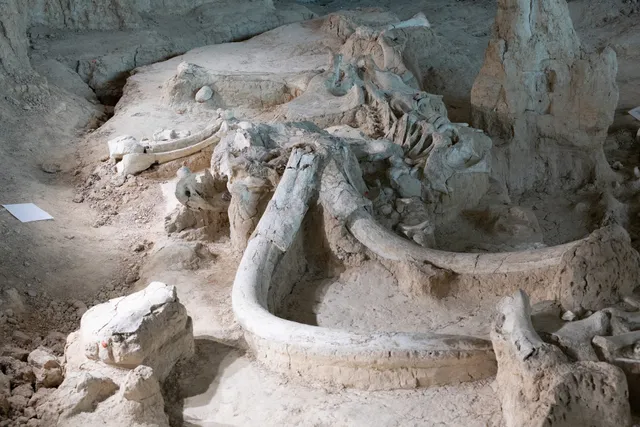
The large second structure encloses the current excavation area. The first excavation area was located in a dry creek bed just outside the enclosure. About 16 Columbian mammoths were discovered here, all adult females with young. When excavation was complete and the area was being filled, another skeleton was discovered. This is the current excavation area with more mammoths, camels, a sabretooth cat fang, turtles, and probably more. Bore holes across at least 5 acres indicate numerous additional fossil skeletons remain to be excavated and studied.
The reason for so many fossils at this location was believed to be a flash flood drowning and burying the animals, but this theory has become questionable based on further evidence and study. So, can you solve...
Read moreMy visit to the Waco Mammoth National Monument was a journey through time, back to the era of the mammoths. This remarkable site, situated in Waco, Texas, along the Bosque River within 100 acres of wooded parkland, offers a unique glimpse into the lives of Columbian Mammoths, a fascinating part of our natural history.
The tour guide was knowledgeable and passionate, sharing intriguing facts about the mammoths and the site’s history. They explained that the Waco Mammoth National Monument stands as the only known remains of a nursery herd of Ice Age Columbian mammoths, making it a significant paleontological site. It’s not just mammoths; the site also includes in situ fossils of a Western Camel, providing insights into the variety of species that existed during that era.
The bones of these majestic creatures, aged to about 67,000 years old, suggest that their deaths were likely due to a flash flooding event. This theory is supported by the proximity of the site to the Bosque River and the manner in which the mammoths were found. The most striking aspect of the site is seeing these fossils in situ, as they were originally discovered, offering a direct connection to the past.
The monument offers a variety of trails for visitors to explore, adding a recreational aspect to the educational experience. It’s a great way to engage with the natural surroundings and the history it holds. The visitor center provides additional information and context, enhancing the overall experience.
For young visitors, the opportunity to participate in the Junior Ranger program is a highlight. It’s a wonderful way to engage children in learning about history, paleontology, and conservation.
The Waco Mammoth National Monument became a part of the National Park Service in 2015, following its designation as a National Monument by President Barack Obama. This designation not only recognizes the site’s national significance but also ensures its preservation for future generations.
My experience at the Waco Mammoth National Monument was truly enlightening. The blend of natural beauty, historical significance, and educational value makes it a must-visit destination for anyone interested in paleontology,...
Read more