A well maintained and planned off-the-beaten-track place overall
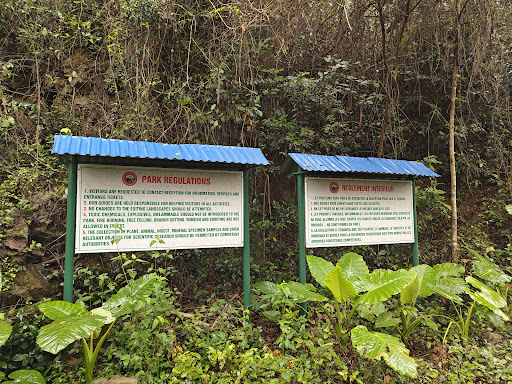
About 18 miles away from Cat Ba town lies this place full of greenery and excellent views which has adequate number of facilities and proper sign boards. The journey throughout the route is surrounded by varieties of trees and the road is very good, clean and quite wide.
Taking the motorbike is the most flexible and reasonable option given that the two caves are miles away from the park gate ( and outside the park premises ). The busses are very limited and bike taxis only come for half day meaning that there becomes a limit on the extent to which one can explore the park.
I took a bus at 8 am( which was going to Haiphong ) to go here, and it was pretty cheap at 40,000 VND and reached in ~1/2hr. The park opens at 8 am and closes at 5:30 pm as per their website, and the entry fee is decent at 80,000 VND which also includes the entrance to Trung Trang Cave which is about a 3/4th mile from the park gate. When asked for, I was told that the last bus comes around 4pm. So, going by that it gives a good 7-odd hours to explore the whole park ( and the caves ) with plenty of trail options to consider.
The shortest one Ngu Lam trek which was a mile ( 1-way ) is what I began with ( A separate review is available on the Ngu Lam Peak ). Other options being the Viet Hai village trek which I didn't attempt given that I learned it is c 6 miles and takes ~4.5hrs, and has multiple diversions which increases the possibility of getting lost when not going with a guide.
I attempted another trek to a pond too, from the park gate, which showed ~2.25 miles and turns out that it was a botched one. Not because I couldn't complete it, but because it simply ended with no pond around. From the second diversion point, this trek asks you to take a left and shows about 0.625 miles, but both me and another guy with me started the distance tracking on the map, and it almost touched a mile. Forget the distance inaccuracy, but the disappointment was the pond never came and the route ended. There were boards, half of which were rusted with nothing visible, and half of them having only local language displayed on them. The route was incline and decline, but no stones to climb.
One of the very few things which disappointed me was the absence of toilet maintenance. Not only was it unclean, it neither had the spray nor a water supply and there was an absence of tissue paper too. The taps too had no water. If this wasn't enough, there was no latch to the door, and also didn't seem to have a flush button. It is highly recommended for anyone to carry a bunch of tissue papers.
Another thing of a complain is, contrary to what the park website or board says, I didn't see much of plant, insect or animal species ( although there were plethora of large trees ). This could be limited to the two trails which I attempted or maybe could depend on the whether pattern, so can't say more on it.
Overall, the national park is clean, and evergreen and the whether was perfect, which didn't make the walk feel boring or tiring, and I do recommend to visit this place. There are also guesthouses available in case one want to stay in the park. And bicycles are available too, although they would be of limited use in the park premises, but can be used to go to the two caves ( reviews of these caves are available on their apposite pages ) which are...
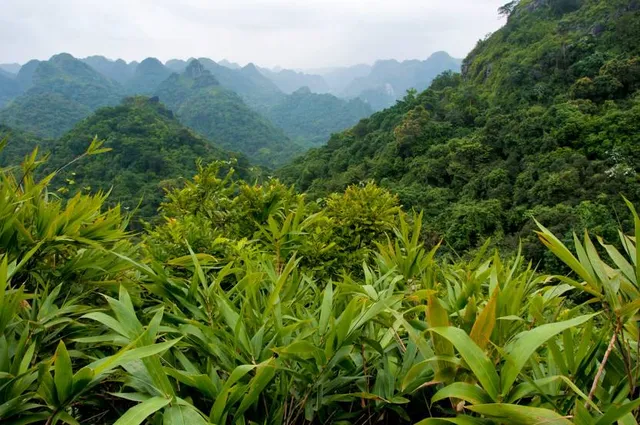
Read moreCát Bà National Park is a World Heritage Site designated as a biosphere reserve in northern Vietnam. The park is part of Cát Bà Island in Hạ Long Bay and is administered by the city of Haiphong. The park is located approximately 30 kilometres (19 mi) east of Hai Phong, covering about 263 square kilometres (102 sq mi) and comprising 173 square kilometres (67 sq mi) of land and 90 square kilometres (35 sq mi) of inshore water.
The Cát Bà langur, also known as the white-headed langur (Trachypithecus poliocephalus) is resident within the park and is classified by the International Union for Conservation of Nature as a critically endangered primate; one of the rarest in the world.
Cát Bà National Park was established on 31 March 1986 under No.79/CP decision of the Council of Ministers of Vietnam (now the government). The park has been a popular tourist destination, since the mid-1990s with wealthy Chinese and Vietnamese tourists. The tourists created a demand for traditional medicine and development and logging led to the near extinction of the white-headed langur with numbers falling from 2600 to just 40 in 2003. In 2016 there are 67 Cát Bà National Park is situated off the north-east shore of Viet-nam and covers most of Cát Bà island; the park headquarters are at Trung Trang. The island is mainly limestone with alternating narrow valleys running north-east to south-west. There are many rugged hills with elevation to 500 metres (1,600 ft); most are in the range 50–200 metres (160–660 ft).
The geographic coordinates are:
20 ° 43'50 "-20 ° 51'29" north latitude. 106 ° 58'20 "-107 ° 10'50" east. There are five main soil groups:
The limestone soil: It is weathered soils or brown reddish-brown limestone and sandstone, soil 50 centimetres (20 in), pH = 6.5 to 7. Distributed under the forest canopy, scattered in the garden. The hills are forested with brown soil or weathered limestone, less acidic or near neutral. In this soil white or gray yellow brown clay shale development on the hills, with thin and rocky soil. The valleys have soil on limestone, concentrated in the valleys, the natural forest cover. The Thing Valley land flooding, mainly developed by the accretion process, the rainy season usually submerged, surface soil medium or thin. The accretion of land submerged by product deposition in the estuary, the mangrove area development on the Cai Vieng, Phu Long. The area of the park is 16,196.8 hectares (40,023 acres), of which 10,931.7 hectares (27,013 acres) is forest and 5,265.1 hectares (13,010 acres) of sea. Forest includes primary, secondary...
Read moreCat Ba National Park, located on Cat Ba Island in Northern Vietnam, is a stunning natural reserve that offers visitors a mix of rugged landscapes, rich biodiversity, and adventurous trails. This UNESCO World Biosphere Reserve spans approximately 263 square kilometers and is home to a variety of ecosystems, including limestone karsts, tropical limestone forests, freshwater swamp forests, and coastal marine waters.
Traveling to the park from Bar Hotel Quiri by motorcycle adds an extra layer of adventure to the experience. The ride itself is scenic, offering panoramic views of the surrounding area and a thrilling way to immerse yourself in the local landscape.
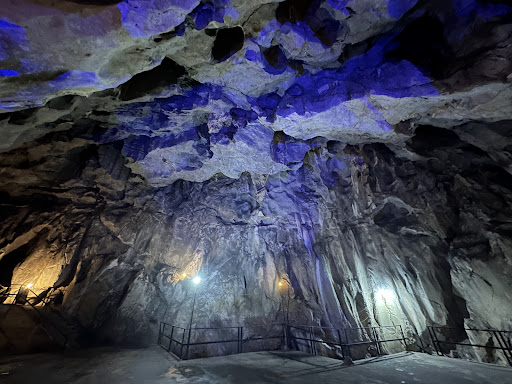
One of the park's historical highlights is the Cave Hospital, also known as Hospital Cave. This three-story hospital was built during the Vietnam War to serve as a bomb-proof shelter and a safe haven for Viet Cong leaders. The cave is a marvel of human ingenuity and resilience, with facilities that included an operating room, a cinema, and even a small swimming pool, all carved directly into the rock.
Visiting the national park provides a holistic experience of both nature and history. The park's trails range from moderate to challenging, offering something for every level of hiker. The wildlife in the area is also a major draw, with the possibility of spotting some rare species like the Cat Ba langur, one of the world's most critically endangered primates.
The Cave Hospital itself is a sobering reminder of the past, giving visitors a glimpse into the harsh realities of war while showcasing the determination and resourcefulness of the Vietnamese people. It's well-preserved and serves as an educational site, with guided tours available to help visitors understand its history and significance.
Overall, Cat Ba National Park and the Cave Hospital combine natural beauty with historical depth, making it a must-visit for anyone...
Read more