HTML SitemapExplore
logo
Find Things to DoFind The Best Restaurants

Mausoleum of Emperor Khai Dinh — Attraction in Hue City

Name
Mausoleum of Emperor Khai Dinh
Description
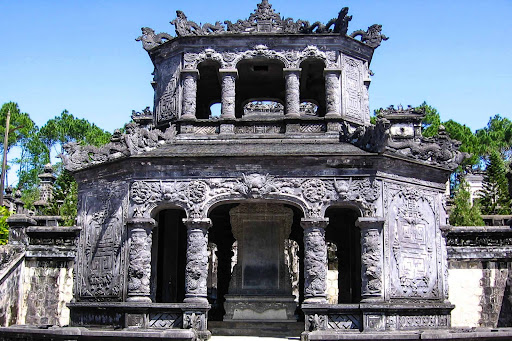
The Tomb of Khải Định, officially Ứng Mausoleum is a tomb built for Khải Định, the twelfth Emperor of the Nguyễn dynasty of Vietnam. It features a blend of Vietnamese architecture with Western styles. The tomb was completed in 1931 after 11 years of construction.
Nearby attractions
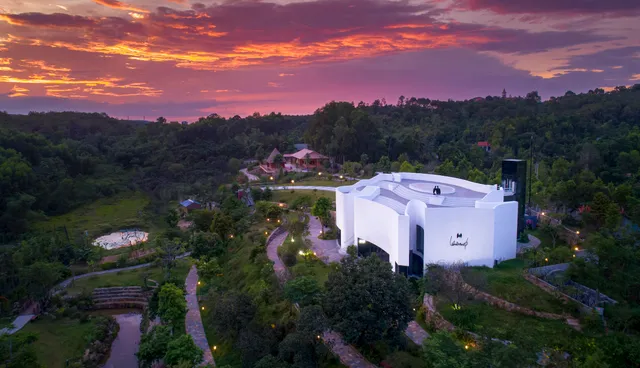
Lebadang Memory Space
Thôn, Kim Sơn, Thành phố Huế, Vietnam
Nearby restaurants
Nearby hotels
Related posts
Keywords
Mausoleum of Emperor Khai Dinh tourism.Mausoleum of Emperor Khai Dinh hotels.Mausoleum of Emperor Khai Dinh bed and breakfast. flights to Mausoleum of Emperor Khai Dinh.Mausoleum of Emperor Khai Dinh attractions.Mausoleum of Emperor Khai Dinh restaurants.Mausoleum of Emperor Khai Dinh travel.Mausoleum of Emperor Khai Dinh travel guide.Mausoleum of Emperor Khai Dinh travel blog.Mausoleum of Emperor Khai Dinh pictures.Mausoleum of Emperor Khai Dinh photos.Mausoleum of Emperor Khai Dinh travel tips.Mausoleum of Emperor Khai Dinh maps.Mausoleum of Emperor Khai Dinh things to do.
Mausoleum of Emperor Khai Dinh things to do, attractions, restaurants, events info and trip planning
Mausoleum of Emperor Khai Dinh
VietnamThừa Thiên Huế ProvinceHue CityMausoleum of Emperor Khai Dinh

Basic Info

Mausoleum of Emperor Khai Dinh

Núi, Châu Chữ, quận Thuận Hóa, Thành phố Huế 530000, Vietnam
4.5(6K)
Open 24 hours
Save
spot

Ratings & Description

Info

The Tomb of Khải Định, officially Ứng Mausoleum is a tomb built for Khải Định, the twelfth Emperor of the Nguyễn dynasty of Vietnam. It features a blend of Vietnamese architecture with Western styles. The tomb was completed in 1931 after 11 years of construction.

Cultural
Family friendly
attractions: Lebadang Memory Space, restaurants:
logoLearn more insights from Wanderboat AI.
Website
ticketcheap.shop

Plan your stay

hotel
Pet-friendly Hotels in Hue City
Find a cozy hotel nearby and make it a full experience.
hotel
Affordable Hotels in Hue City
Find a cozy hotel nearby and make it a full experience.
hotel
The Coolest Hotels You Haven't Heard Of (Yet)
Find a cozy hotel nearby and make it a full experience.
hotel
Trending Stays Worth the Hype in Hue City
Find a cozy hotel nearby and make it a full experience.

Reviews

Nearby attractions of Mausoleum of Emperor Khai Dinh

Lebadang Memory Space

Lebadang Memory Space

Lebadang Memory Space

4.6

(193)

Open 24 hours
Click for details

Things to do nearby

Hue Imperial and Forbidden City Walking Tour
Sat, Dec 6 • 11:00 AM
Thị xã Hương Trà, Thành phố Huế, 530000, Vietnam
View details
Hue Food walking tour and nightlife
Sat, Dec 6 • 5:30 PM
Hue, Thua Thien Hue, 530000, Vietnam
View details
Meditation cooking class
Sat, Dec 6 • 5:15 PM
Hue, Thua Thien Hue, 53000, Vietnam
View details
Get the Appoverlay
Get the AppOne tap to find yournext favorite spots!
Wanderboat LogoWanderboat

Your everyday Al companion for getaway ideas

CompanyAbout Us
InformationAI Trip PlannerSitemap
SocialXInstagramTiktokLinkedin
LegalTerms of ServicePrivacy Policy

Get the app

© 2025 Wanderboat. All rights reserved.
logo

Reviews of Mausoleum of Emperor Khai Dinh

4.5
(5,959)
avatar
2.0
2y

Khai Dinh Tomb, officially known as the Ứng Mausoleum, is situated in Chau Chu mountain, about 10km away from Hue city, Vietnam. The tomb is the smallest, but most costly and recent one in comparison with other tombs of Nguyen royals. It was established by Emperor Khai Dinh, the 12th Emperor of the Nguyễn Dynast, during the period from 1920 to 1931. This 11-year-to-complete tomb is located hillside and has a combination of Eastern and Western style in terms of architecture. Khai Dinh Tomb is considered one of the most worth-visiting

History of Khai Dinh Tomb Khai Dinh Tomb, officially known as the Ứng Mausoleum, is situated in Chau Chu mountain, about 10km away from Hue city, Vietnam. The tomb is the smallest, but most costly and recent one in comparison with other tombs of Nguyen royals. It was established by Emperor Khai Dinh, the 12th Emperor of the Nguyễn Dynast, during the period from 1920 to 1931. This 11-year-to-complete tomb is located hillside and has a combination of Eastern and Western style in terms of architecture. Khai Dinh Tomb is considered one of the most worth-visitingSimilar to some Vietnamese emperors, Khai Dinh also prepared a tomb carefully in anticipation of his death. The monument was impacted strongly by French architecture style, shown through the Oriental mausoleum, as the most noticeable proof of this European influence. To be able to complete the mausoleum, the principles had to increase the national tax to 30%. This tomb was accomplished in 1931 by Bao Dai, the successor of Khai Dinh.

Best Time to Visit Khai Dinh Tomb Tourists can visit Khai Dinh tomb all year round. The ticket price is even free during big holidays like National Day (September 2nd) and the first of Lunar New Year.

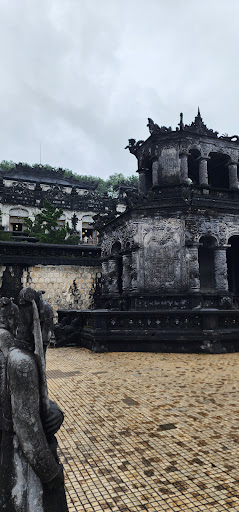
Architecture of Khai Dinh Tomb The tomb is a rectangular monument leaning against Chau Chu Mountain in the rural area of Hue city. Built from modern materials like slates, concrete and wrought iron, the tomb has a relatively gray and imposing appearance. Inside the tomb, side walls are featured with the biggest sculptures of dragons throughout Vietnam.

Most of the grandiose exterior of the tomb is covered in the weathered, darkened concrete, with an unexpectedly Gothic air. In contrast, the interiors look like explosions of colorful ceramic mosaics.

Stepping into the Honour Courtyard, you will see many mandarin honour guards with a mixture of European and Vietnamese features. Going up further 3 flights of stairs, you will head to the most notable place of the tomb named Thien Dinh palace, the stupendous main building, with the ceiling and walls decorated with murals of the Four Seasons, Eight Precious Objects and the Eight Immortals.

Below the graceless, gold-speckled concrete canopy, there is a gilt bronze statue of the King Khai Dinh, who was thought to have homosexual despite he produced a heir. The remains of the King were interred about 18 meters below the statue. Indeed, the hard, isolated materials, through the skillful hands of artisans, have become vivid, soft and brilliant works of art.

All of the decoration inside Thien Dinh not only reflects the cultural and art values, but also represents the concept of the establishment and the idea of the King. In addition to the decorative items drawn from Confucian texts and royal life, there are also Taoist decorations, particularly hundreds of swastikas, a symbol of the Buddha, produced by the Green glass. Artist Phan Van Tanh was the main person responsible for the creation of the masterpieces of art in Khai Dinh mausoleum. He was also the author of the three almost largest murals in Vietnam, “Cửu Long ẩn vân” (Nine dragons amidst fleeting clouds) decorated under the ceiling of the three middle house of...

   Read more
avatar
5.0
19w

Located just outside the ancient capital of Hue, the Tomb of Khai Dinh stands as a stark and fascinating departure from the other royal mausoleums of the Nguyen Dynasty. While other tombs, like those of Minh Mang and Tu Duc, are known for their harmony with nature and traditional Vietnamese architecture, Khai Dinh's tomb is a monument to opulence and a remarkable fusion of East and West. Its distinct style makes it one of the most memorable historical sites in Vietnam.

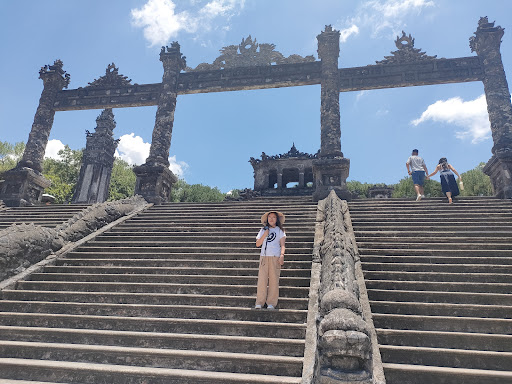
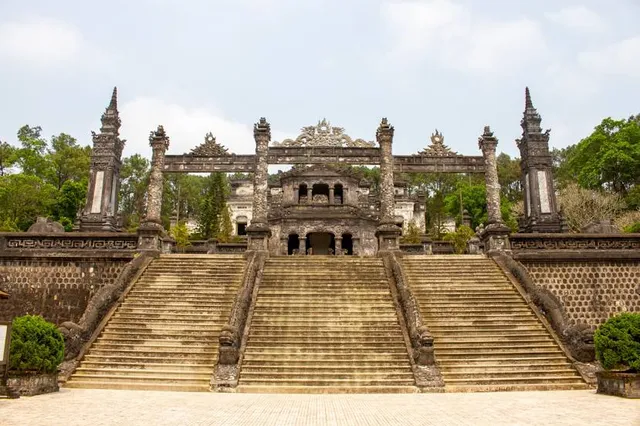
The first impression is one of overwhelming grandeur. To reach the main complex, visitors must ascend a long, sweeping staircase flanked by dragon statues and intricate stone carvings. Unlike the serene, natural settings of other tombs, Khai Dinh's is built entirely of reinforced concrete, giving it a solid, almost fortress-like appearance. The tomb’s most captivating feature is undoubtedly its interior. The walls, ceilings, and columns are adorned with a dazzling array of mosaics crafted from millions of pieces of porcelain and colored glass, depicting flowers, dragons, and other mythical creatures. The vibrant colors and shimmering surfaces create an almost surreal atmosphere.

The heart of the tomb is the Thien Dinh Palace, where a gilded statue of Emperor Khai Dinh sits majestically. The level of detail here is breathtaking, from the intricate lacquer work to the sculpted dragons on the ceiling. The tomb’s architecture reflects the period in which it was built (1920-1931), incorporating elements of French Baroque, Roman Gothic, and even Hindu styles, all masterfully blended with traditional Vietnamese design. This eclectic mix was highly controversial at the time due to its lavishness and foreign influence, but it now serves as a unique historical record.

Visiting Khai Dinh's tomb is an experience of contrasting emotions. There is a sense of awe at the sheer scale and artistry, but also a quiet reflection on the emperor's final resting place, a testament to his controversial personality and the complex history of Vietnam under colonial rule. It’s a stunning example of royal extravagance and a definite must-see for anyone interested in the final chapter of Vietnam's imperial past. Its unique blend of cultures ensures it leaves a lasting impression on...

   Read more
avatar
5.0
10w

Perched on Chau Chu Mountain, about ten kilometres from Hue, it’s a compact masterpiece that punches way above its weight. Climbing the 127 steps is a warm-up; the real show is inside. Dark, blackened stone outside, mosaics exploding with colour inside—porcelain, glass, and tiles collide in a riot of East meets West, French colonial bravado meets Vietnamese tradition.

It’s the mausoleum of the 12th Nguyen emperor, a man infamous for taxing his people into grumbles while building a tomb so over-the-top it makes Versailles look like a backyard shed. The exterior is solemn, mossy, and a little melancholy, especially on a rainy day. Step inside and the shock hits: the walls, ceilings, and columns gleam with intricate mosaics, dragons, and swastikas, every inch screaming power and vanity. Even the concrete curtains look soft, but nope—they’re hard as rock.

The main palace, Thiên Định, has French arches, Confucian quotes, and a bronze statue of the emperor that’s almost life-size. There’s an altar, a crypt, and relics from his brief reign: gifts from France, swords, belts, dinner sets—you name it. Every corner is detailed, meticulously curated, a little insane, but somehow compelling.

It’s not big. It takes about 30 minutes to do properly, unless you’re lingering over the mosaics or trying not to sweat like a fool in the midday sun. No shade here, so bring a hat, an umbrella, and water. Ticket prices are high for what is, technically, a small adventure, but worth it if you’re already in Hue and want to see something unique. Combo tickets with the Imperial Citadel save money and sanity.

Prepare for heat, a crowd, and the occasional scowl from staff. The payoff: panoramic mountain views and architecture unlike anywhere else in Hue. History geeks and casual tourists alike will marvel at the tomb’s flamboyant mix of cultures and absurdly over-the-top style. It’s a spectacle of ego, colour, and craftsmanship—utterly...

   Read more
Page 1 of 7
Previous
Next

Posts

Mr. Victorious Jaffar WattooMr. Victorious Jaffar Wattoo
Khai Dinh Tomb, officially known as the Ứng Mausoleum, is situated in Chau Chu mountain, about 10km away from Hue city, Vietnam. The tomb is the smallest, but most costly and recent one in comparison with other tombs of Nguyen royals. It was established by Emperor Khai Dinh, the 12th Emperor of the Nguyễn Dynast, during the period from 1920 to 1931. This 11-year-to-complete tomb is located hillside and has a combination of Eastern and Western style in terms of architecture. Khai Dinh Tomb is considered one of the most worth-visiting History of Khai Dinh Tomb Khai Dinh Tomb, officially known as the Ứng Mausoleum, is situated in Chau Chu mountain, about 10km away from Hue city, Vietnam. The tomb is the smallest, but most costly and recent one in comparison with other tombs of Nguyen royals. It was established by Emperor Khai Dinh, the 12th Emperor of the Nguyễn Dynast, during the period from 1920 to 1931. This 11-year-to-complete tomb is located hillside and has a combination of Eastern and Western style in terms of architecture. Khai Dinh Tomb is considered one of the most worth-visitingSimilar to some Vietnamese emperors, Khai Dinh also prepared a tomb carefully in anticipation of his death. The monument was impacted strongly by French architecture style, shown through the Oriental mausoleum, as the most noticeable proof of this European influence. To be able to complete the mausoleum, the principles had to increase the national tax to 30%. This tomb was accomplished in 1931 by Bao Dai, the successor of Khai Dinh. Best Time to Visit Khai Dinh Tomb Tourists can visit Khai Dinh tomb all year round. The ticket price is even free during big holidays like National Day (September 2nd) and the first of Lunar New Year. Architecture of Khai Dinh Tomb The tomb is a rectangular monument leaning against Chau Chu Mountain in the rural area of Hue city. Built from modern materials like slates, concrete and wrought iron, the tomb has a relatively gray and imposing appearance. Inside the tomb, side walls are featured with the biggest sculptures of dragons throughout Vietnam. Most of the grandiose exterior of the tomb is covered in the weathered, darkened concrete, with an unexpectedly Gothic air. In contrast, the interiors look like explosions of colorful ceramic mosaics. Stepping into the Honour Courtyard, you will see many mandarin honour guards with a mixture of European and Vietnamese features. Going up further 3 flights of stairs, you will head to the most notable place of the tomb named Thien Dinh palace, the stupendous main building, with the ceiling and walls decorated with murals of the Four Seasons, Eight Precious Objects and the Eight Immortals. Below the graceless, gold-speckled concrete canopy, there is a gilt bronze statue of the King Khai Dinh, who was thought to have homosexual despite he produced a heir. The remains of the King were interred about 18 meters below the statue. Indeed, the hard, isolated materials, through the skillful hands of artisans, have become vivid, soft and brilliant works of art. All of the decoration inside Thien Dinh not only reflects the cultural and art values, but also represents the concept of the establishment and the idea of the King. In addition to the decorative items drawn from Confucian texts and royal life, there are also Taoist decorations, particularly hundreds of swastikas, a symbol of the Buddha, produced by the Green glass. Artist Phan Van Tanh was the main person responsible for the creation of the masterpieces of art in Khai Dinh mausoleum. He was also the author of the three almost largest murals in Vietnam, “Cửu Long ẩn vân” (Nine dragons amidst fleeting clouds) decorated under the ceiling of the three middle house of Thien Dinh palace
Roop SinghRoop Singh
The Mausoleum of Emperor Khai Dinh in Hue, Vietnam, stands as a captivating testament to the fusion of traditional Vietnamese and European architectural styles. Completed in 1931, this imperial tomb is renowned for its intricate design, marked by a striking blend of mosaic, concrete, and marble. The mausoleum's exterior is adorned with elaborate reliefs and statues, showcasing a meticulous attention to detail that reflects the emperor's vision for a lasting legacy. The grandeur of the site is further enhanced by the panoramic views of the surrounding landscape, offering visitors a serene and contemplative atmosphere. Upon entering the mausoleum, one is greeted by a series of opulent chambers adorned with colorful stained glass windows, delicate ceramics, and ornate carvings. The interior of the tomb serves as a reflection of Khai Dinh's flamboyant personality and eclectic taste, creating a unique sensory experience for those who explore its halls. The tomb's underground chamber houses the intricately crafted sarcophagus of the emperor, adding a solemn touch to the overall ambiance. While some may find the blend of styles overwhelming, others appreciate it as a symbol of Khai Dinh's attempt to bridge cultural influences in a changing era. Despite the controversy surrounding the construction methods and the perceived extravagance of the mausoleum, it undeniably stands as a significant cultural and historical landmark in Vietnam. The Mausoleum of Emperor Khai Dinh offers a fascinating glimpse into the artistic and architectural choices of a bygone era, leaving an indelible mark on the landscape of Hue and inviting visitors to ponder the legacy of this enigmatic ruler.
Mark BeattieMark Beattie
Khai dinhs reign had been one of peace and the general progress that goes with it yet his reputation remains one of the forgotten victims of the ultimate Communist victory. The architecture of the Khai Dinh Tomb, a blend of European brag (French possibly) and Vietnamese eloquence, in Hue it has been described as both influenced by Buddhist culture as well as Roman Gothic. In the 1920s, the tomb was commissioned by the Vietnamese Emperor, as his own future tomb, very keen to ensure himself to be remembered for the right reasons. Emperor Khai Dinh died in 1925. The entrance of the complex leads to the Honour Courtyard and then the main building known as the Thien Dinh. Emperor Kai Dinh’s resting spot is located by a bronze statue, which is within the surroundings of the most beautiful and stunning murals, definitely a perfect place to spend Eternity. The Tomb is exquisitely beautiful, bordering on Heavenly. One must indulge in visual drunkenness and absorb the beauty, golden lighting, murals of history not taught in schools. Emotionally one could be overcome by the resting place but very busy atmosphere brings you back to reality. Worthy of a visit and a wonderful site of remembrance. Cost in pounds UK, roughly an easily affordable £3.50 (no doubt a debate for others) and location-wise, plan well, ahead and safely, (followed the rules of tourism.) NOT IDEAL FOR THOSE WITH MOBILITY PROBLEMS (REQUIRES NATURAL TERRAIN) , ILL-MANNERED MINORS OR INDIVIDUALS WHO MAY NOT APPRECIATE THE TRUE SENSE OF VIETNAMESE CULTURE AND HISTORICAL SIGNIFICANCE. (THINK BEFORE THE WAR.).
See more posts
See more posts
hotel
Find your stay

Pet-friendly Hotels in Hue City

Find a cozy hotel nearby and make it a full experience.

Khai Dinh Tomb, officially known as the Ứng Mausoleum, is situated in Chau Chu mountain, about 10km away from Hue city, Vietnam. The tomb is the smallest, but most costly and recent one in comparison with other tombs of Nguyen royals. It was established by Emperor Khai Dinh, the 12th Emperor of the Nguyễn Dynast, during the period from 1920 to 1931. This 11-year-to-complete tomb is located hillside and has a combination of Eastern and Western style in terms of architecture. Khai Dinh Tomb is considered one of the most worth-visiting History of Khai Dinh Tomb Khai Dinh Tomb, officially known as the Ứng Mausoleum, is situated in Chau Chu mountain, about 10km away from Hue city, Vietnam. The tomb is the smallest, but most costly and recent one in comparison with other tombs of Nguyen royals. It was established by Emperor Khai Dinh, the 12th Emperor of the Nguyễn Dynast, during the period from 1920 to 1931. This 11-year-to-complete tomb is located hillside and has a combination of Eastern and Western style in terms of architecture. Khai Dinh Tomb is considered one of the most worth-visitingSimilar to some Vietnamese emperors, Khai Dinh also prepared a tomb carefully in anticipation of his death. The monument was impacted strongly by French architecture style, shown through the Oriental mausoleum, as the most noticeable proof of this European influence. To be able to complete the mausoleum, the principles had to increase the national tax to 30%. This tomb was accomplished in 1931 by Bao Dai, the successor of Khai Dinh. Best Time to Visit Khai Dinh Tomb Tourists can visit Khai Dinh tomb all year round. The ticket price is even free during big holidays like National Day (September 2nd) and the first of Lunar New Year. Architecture of Khai Dinh Tomb The tomb is a rectangular monument leaning against Chau Chu Mountain in the rural area of Hue city. Built from modern materials like slates, concrete and wrought iron, the tomb has a relatively gray and imposing appearance. Inside the tomb, side walls are featured with the biggest sculptures of dragons throughout Vietnam. Most of the grandiose exterior of the tomb is covered in the weathered, darkened concrete, with an unexpectedly Gothic air. In contrast, the interiors look like explosions of colorful ceramic mosaics. Stepping into the Honour Courtyard, you will see many mandarin honour guards with a mixture of European and Vietnamese features. Going up further 3 flights of stairs, you will head to the most notable place of the tomb named Thien Dinh palace, the stupendous main building, with the ceiling and walls decorated with murals of the Four Seasons, Eight Precious Objects and the Eight Immortals. Below the graceless, gold-speckled concrete canopy, there is a gilt bronze statue of the King Khai Dinh, who was thought to have homosexual despite he produced a heir. The remains of the King were interred about 18 meters below the statue. Indeed, the hard, isolated materials, through the skillful hands of artisans, have become vivid, soft and brilliant works of art. All of the decoration inside Thien Dinh not only reflects the cultural and art values, but also represents the concept of the establishment and the idea of the King. In addition to the decorative items drawn from Confucian texts and royal life, there are also Taoist decorations, particularly hundreds of swastikas, a symbol of the Buddha, produced by the Green glass. Artist Phan Van Tanh was the main person responsible for the creation of the masterpieces of art in Khai Dinh mausoleum. He was also the author of the three almost largest murals in Vietnam, “Cửu Long ẩn vân” (Nine dragons amidst fleeting clouds) decorated under the ceiling of the three middle house of Thien Dinh palace
Mr. Victorious Jaffar Wattoo

Mr. Victorious Jaffar Wattoo

hotel
Find your stay

Affordable Hotels in Hue City

Find a cozy hotel nearby and make it a full experience.

Get the Appoverlay
Get the AppOne tap to find yournext favorite spots!
The Mausoleum of Emperor Khai Dinh in Hue, Vietnam, stands as a captivating testament to the fusion of traditional Vietnamese and European architectural styles. Completed in 1931, this imperial tomb is renowned for its intricate design, marked by a striking blend of mosaic, concrete, and marble. The mausoleum's exterior is adorned with elaborate reliefs and statues, showcasing a meticulous attention to detail that reflects the emperor's vision for a lasting legacy. The grandeur of the site is further enhanced by the panoramic views of the surrounding landscape, offering visitors a serene and contemplative atmosphere. Upon entering the mausoleum, one is greeted by a series of opulent chambers adorned with colorful stained glass windows, delicate ceramics, and ornate carvings. The interior of the tomb serves as a reflection of Khai Dinh's flamboyant personality and eclectic taste, creating a unique sensory experience for those who explore its halls. The tomb's underground chamber houses the intricately crafted sarcophagus of the emperor, adding a solemn touch to the overall ambiance. While some may find the blend of styles overwhelming, others appreciate it as a symbol of Khai Dinh's attempt to bridge cultural influences in a changing era. Despite the controversy surrounding the construction methods and the perceived extravagance of the mausoleum, it undeniably stands as a significant cultural and historical landmark in Vietnam. The Mausoleum of Emperor Khai Dinh offers a fascinating glimpse into the artistic and architectural choices of a bygone era, leaving an indelible mark on the landscape of Hue and inviting visitors to ponder the legacy of this enigmatic ruler.
Roop Singh

Roop Singh

hotel
Find your stay

The Coolest Hotels You Haven't Heard Of (Yet)

Find a cozy hotel nearby and make it a full experience.

hotel
Find your stay

Trending Stays Worth the Hype in Hue City

Find a cozy hotel nearby and make it a full experience.

Khai dinhs reign had been one of peace and the general progress that goes with it yet his reputation remains one of the forgotten victims of the ultimate Communist victory. The architecture of the Khai Dinh Tomb, a blend of European brag (French possibly) and Vietnamese eloquence, in Hue it has been described as both influenced by Buddhist culture as well as Roman Gothic. In the 1920s, the tomb was commissioned by the Vietnamese Emperor, as his own future tomb, very keen to ensure himself to be remembered for the right reasons. Emperor Khai Dinh died in 1925. The entrance of the complex leads to the Honour Courtyard and then the main building known as the Thien Dinh. Emperor Kai Dinh’s resting spot is located by a bronze statue, which is within the surroundings of the most beautiful and stunning murals, definitely a perfect place to spend Eternity. The Tomb is exquisitely beautiful, bordering on Heavenly. One must indulge in visual drunkenness and absorb the beauty, golden lighting, murals of history not taught in schools. Emotionally one could be overcome by the resting place but very busy atmosphere brings you back to reality. Worthy of a visit and a wonderful site of remembrance. Cost in pounds UK, roughly an easily affordable £3.50 (no doubt a debate for others) and location-wise, plan well, ahead and safely, (followed the rules of tourism.) NOT IDEAL FOR THOSE WITH MOBILITY PROBLEMS (REQUIRES NATURAL TERRAIN) , ILL-MANNERED MINORS OR INDIVIDUALS WHO MAY NOT APPRECIATE THE TRUE SENSE OF VIETNAMESE CULTURE AND HISTORICAL SIGNIFICANCE. (THINK BEFORE THE WAR.).
Mark Beattie

Mark Beattie

See more posts
See more posts