CHINHOYI CAVES
HISTORY – "The Pool of the Fallen"
Chinhoyi Caves, traditionally known as Chirorodziva, meaning “The Pool of the Fallen,” owe their name to a tragic event that occurred in the 1830s. During that time, the Angoni tribe, while migrating northward, ambushed the local community and threw many of them into the pool.
These caves consist of a complex system of channels and caverns, which are gradually collapsing—a process evident from the presence of sinkholes and ground depressions in the surrounding area.
It is also believed that the caves once served as a stronghold for a feared outlaw named Nyamakwere, who was infamous for murdering his victims by casting them into the silent pool. Nyamakwere was eventually defeated by a local herdsman named Chinhoyi, who later became a Mashona chief. The nearby town was subsequently named in his honor.
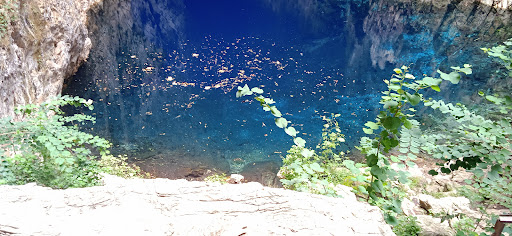
The caves’ most famous feature is the Wonder Hole—a large collapsed cavern roof forming an open sinkhole. Archaeological excavations have confirmed human settlement in and around the caves dating back to around AD 650, with discoveries including pottery and human remains.
THE CAVES
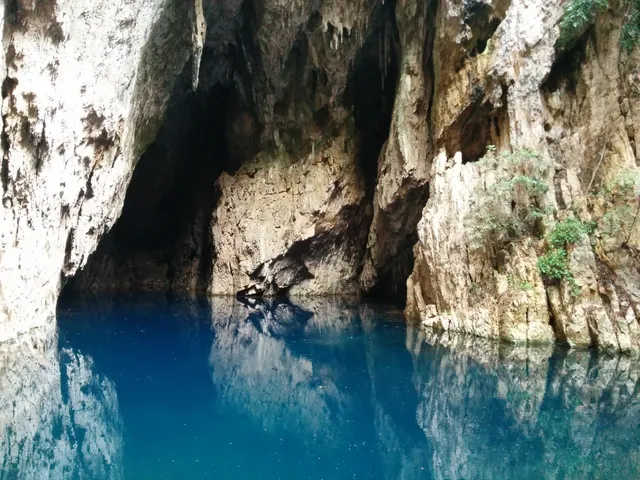
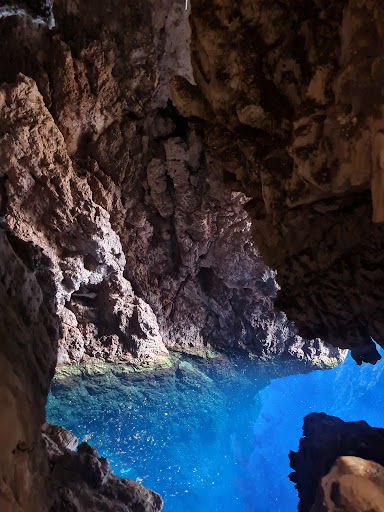
Inside the Wonder Hole, the cave walls descend vertically down 150 feet (46 meters) to a serene, crystal-clear pool known as the Sleeping Pool. The water is deep blue and incredibly clear, with no visible movement, suggesting great depth and an underground source.
The Sleeping Pool is accessible via two routes:
The Main Entrance – This path features an inclined passage descending to the pool. The clarity and color of the water here have been likened to Italy’s famous Blue Grotto of Capri.
The Dark Cave Route – This involves navigating steep steps and a narrow passage above the pool. The route is physically demanding, and less agile visitors are advised to avoid it.
Near the end of the Dark Cave lies a small cavern called the Blind Cave, accessible only to divers. A second significant tunnel also connects to the Sleeping Pool, 58 meters below the surface.
RESEARCH AND EXPLORATION
Scientific exploration of the Sleeping Pool has recorded water depths ranging from 80 to 91 meters, with seasonal variations attributed to rainfall levels. Several submerged passages have been discovered; however, all explored routes lead back to the Sleeping Pool.
The caves comprise two main sections:
The Sunlit Sleeping Pool
The Artificially Lit Dark Cave
Research indicates that the water in the caves is connected to a larger underground water body. This is supported by the fact that the water temperature in the Sleeping Pool remains a constant 22°C...
Read more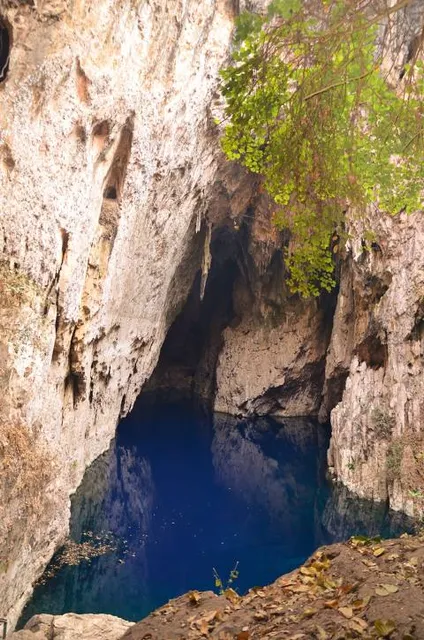

 Learn more insights from Wanderboat AI.