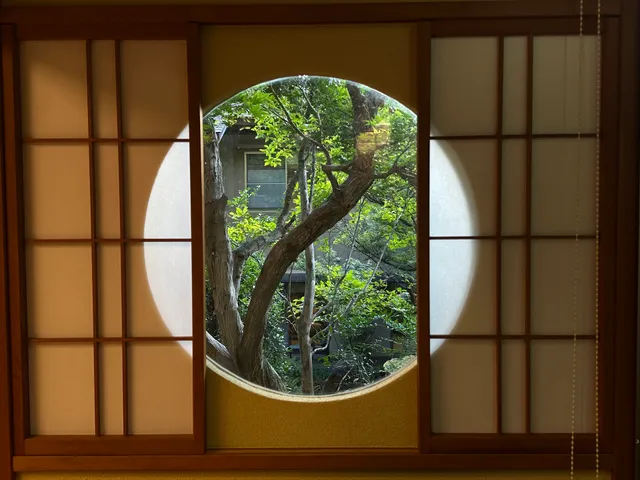
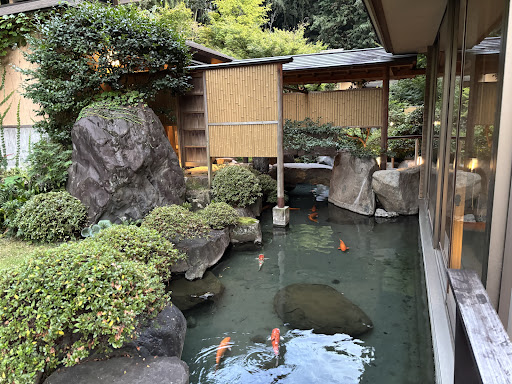
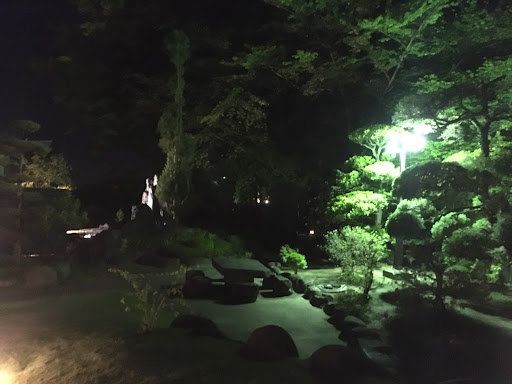
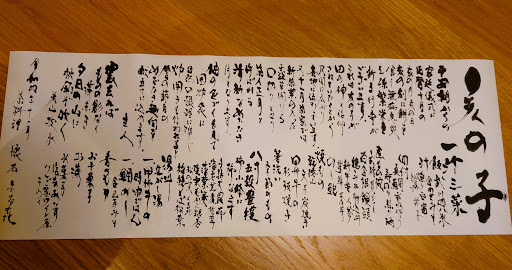
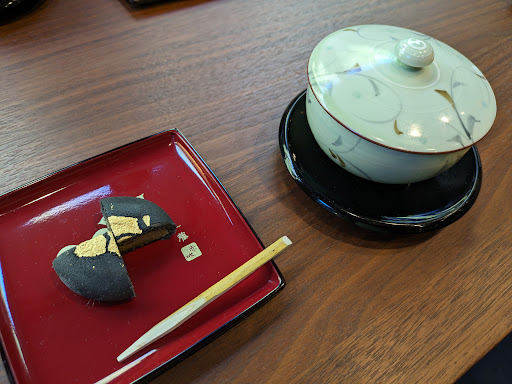
We had a fairy tale-like experience last month at Fuefukigawa Onsen Zabou (the full name of the ryokan.) The grounds and views are mesmerizing, the architecture is traditional and charming, the view from our room was Instagram-worthy and the Onsen hot springs baths - both in the room as well as the communal onsen - were glorious.||It's located in Koshu in Yamanashi Prefecture, and near Kofu, which is its capital city. The area might not be on the short list of places for travelers to visit, but it's not too far from Tokyo - a 90-minute limited express train ride from Shinjuku gets you to Enzan Station, and from there it's a 10 minute drive to the ryokan. As a basis for comparison, the time investment to get there is not much different than going to Hakone or Izu.||The ryokan was established about 25 years ago, but it was not until 2015 that Zabou was transformed into a luxury establishment. It changed ownership in 2022 - Maruki (aka "Marquis") Winery, a subsidiary of Group Raison, is the oldest currently-operating winery in Japan (established in 1891), and they've done a terrific job in turning Zabou into the pride of Koshu.||The property grounds are not super expansive, but what's there is very well manicured. There's a view of a beautiful garden and small lake from the reception lounge area and is full of Koi fish as well as a male and female duck couple. While walking around the property, you'll be treated by views of mountains and hills all around, both lush and rugged at the same time.||When deciding which room to book, we were particularly smitten by the photos of two rooms in their website - Kotogawa and Tsuzumigawa - both are Japanese-Western Suites with 73m² of space. It's not so much the room that was delightful - it definitely does the job - it was the spectacular view from the room that won us over. These two rooms are the only ones that offer the same gorgeous garden and lake view as the lobby area, but even better, as they're more centrally situated to the lake. The balcony has an amazing onsen in a hinoki bathtub, as well as two lounge chairs. The ryokan even had treats placed in a jar so that we could feed the fish and ducks from the deck. Everything - the pond, the well-groomed vegetation, the privacy, was simply captivating.... to the point where we were able to overlook a few flaws in the room itself.||To begin with, Kotogawa (our room) had just one sink, and the toilet with washlet was not recent vintage (by Japan standards) - there was no button on the control panel that allowed the user to lift/lower the seat with the press of a button. First world problem, I know, but once you get used to Japanese hygiene standards, there's no going back. Secondly, the shower is out on the deck (next to the Onsen bath), which is fine (except, perhaps, when it's freezing cold outside), and the shower head holder is placed low on the balcony railing - I suppose there's no other place to put it. If it was affixed on the room wall (away from the pond), that would mean that the shower water would be splashing into the pond, which would be a no-no since soap and shampoo would also find its way there. While the shower head can be hand held, it's not easy to wash and rinse while having one hand holding the shower head. I ended up crouching low to effectively wash and rinse myself before taking a soak in the bath (which is the de-facto way of doing things - jumping into the bath without first cleaning yourself is scorned upon and bad etiquette in Japan.)||Aside from those two (admittedly first world) issues, everything else was terrific. The room itself was traditionally and tastefully decorated and furnished, and in muted tones. And the toiletries were very high quality. Everything from the two sets of individually packaged items (shampoo, conditioner, body soap, moisturizer, lotion, etc.) were Laura Ashley-branded. Not only that, but there was also a set of cleansing gel, wash foam, rejuvenating essence & moisturizing gel from Japanese maker First Skincare. Finally, Zabou has women/men sets of razor/shaving cream/aftershave (single-use for the latter two), toothbrush/toothpaste & hair brush/comb and cotton swabs. Basically, you will not be left wanting, and you can easily leave all of your toiletries at home.||There is also a Daiyokujo - communal, gender-segregated hot springs baths, which offer a large indoor onsen as well as a massive, unique outdoor open-air "bath" - it's more of a hybrid pool/river... you can literally swim in it, and at the far end of the outdoor onsen is an onsen cave. In the evening, the entire outdoor bathing area is lit-up, giving the place an hauntingly beautiful vibe. The temperature of the outdoor Onsen was a bit lukewarm for my tastes, but on the other hand, it will probably allow you to spend a longer time enjoying the bath, just as you would a standard swimming pool or Western-style hot tub.||Meals are served either in a restaurant, in a charming kominka (traditional farmhouse) style structure, although there is a separate area with several "koshitsu" (private rooms.) They accept koshitsu dining requests on a first-asked, first-served basis, so make sure you ask for it if it's important to you.||Zabou's meals are "Cha-kaiseki," which are meals served in the context of Japanese tea ceremonies, and traditionally precedes the serving of the tea at a formal tea function. While there are actual differences in the names of each serving as well as the order in which they are served, it's effectively not much different than the "standard" kaiseki that is usually served in ryokans. And, unfortunately, this was the weakest point of the Zabou experience. While a few of the dishes were unique and delicious - especially the clear soup that contained Lily Bulb Mochi stuffed with Chicken, together with Abalone and seasonal vegetables - some of the other servings were unimaginative and not particularly mind-blowing. The grilled Japanese Amberjack was nothing special, and the Koshu Beef thigh grilled while covered in Cedar wood was a bit tough and lacked flavor. Furthermore, the quantity of food was less than most other ryokan kaiseki meals that we've had. Overall, we were "satisfied" with the dining experience but it was not one of the main highlights of our stay.||Service is elegant and graceful - since we speak Japanese to ryokan staff, I cannot comment on the quality of service in other languages. However, everyone seemed eager to please, and many of the employees were locally born and raised, took pride in their work and had immense knowledge of the area.||One note about the rooms. If you have the budget, I highly recommend either Kotogawa or Tsuzumigawa. While entry level rooms are not super cramped, they are not in any way special. Some of the higher category rooms are spacious and have Onsen in the room, but lack the spellbinding setting and views of Kotogawa and Tsuzumigawa. The quality of experience at Zabou might differ depending on your room choice.||While Fuefukigawa Onsen Zabou is not perfect, it's unique, mystical and worthy of a stay. I just wish that the food quality (and quantity) met or exceeded the other aspects of the incredible ryokan...
Read moreWe had a fairy tale-like experience last month at Fuefukigawa Onsen Zabou (the full name of the ryokan.) The grounds and views are mesmerizing, the architecture is traditional and charming, the view from our room was Instagram-worthy and the Onsen hot springs baths - both in the room as well as the communal onsen - were glorious.||It's located in Koshu in Yamanashi Prefecture, and near Kofu, which is its capital city. The area might not be on the short list of places for travelers to visit, but it's not too far from Tokyo - a 90-minute limited express train ride from Shinjuku gets you to Enzan Station, and from there it's a 10 minute drive to the ryokan. As a basis for comparison, the time investment to get there is not much different than going to Hakone or Izu.||The ryokan was established about 25 years ago, but it was not until 2015 that Zabou was transformed into a luxury establishment. It changed ownership in 2022 - Maruki (aka "Marquis") Winery, a subsidiary of Group Raison, is the oldest currently-operating winery in Japan (established in 1891), and they've done a terrific job in turning Zabou into the pride of Koshu.||The property grounds are not super expansive, but what's there is very well manicured. There's a view of a beautiful garden and small lake from the reception lounge area and is full of Koi fish as well as a male and female duck couple. While walking around the property, you'll be treated by views of mountains and hills all around, both lush and rugged at the same time.||When deciding which room to book, we were particularly smitten by the photos of two rooms in their website - Kotogawa and Tsuzumigawa - both are Japanese-Western Suites with 73m² of space. It's not so much the room that was delightful - it definitely does the job - it was the spectacular view from the room that won us over. These two rooms are the only ones that offer the same gorgeous garden and lake view as the lobby area, but even better, as they're more centrally situated to the lake. The balcony has an amazing onsen in a hinoki bathtub, as well as two lounge chairs. The ryokan even had treats placed in a jar so that we could feed the fish and ducks from the deck. Everything - the pond, the well-groomed vegetation, the privacy, was simply captivating.... to the point where we were able to overlook a few flaws in the room itself.||To begin with, Kotogawa (our room) had just one sink, and the toilet with washlet was not recent vintage (by Japan standards) - there was no button on the control panel that allowed the user to lift/lower the seat with the press of a button. First world problem, I know, but once you get used to Japanese hygiene standards, there's no going back. Secondly, the shower is out on the deck (next to the Onsen bath), which is fine (except, perhaps, when it's freezing cold outside), and the shower head holder is placed low on the balcony railing - I suppose there's no other place to put it. If it was affixed on the room wall (away from the pond), that would mean that the shower water would be splashing into the pond, which would be a no-no since soap and shampoo would also find its way there. While the shower head can be hand held, it's not easy to wash and rinse while having one hand holding the shower head. I ended up crouching low to effectively wash and rinse myself before taking a soak in the bath (which is the de-facto way of doing things - jumping into the bath without first cleaning yourself is scorned upon and bad etiquette in Japan.)||Aside from those two (admittedly first world) issues, everything else was terrific. The room itself was traditionally and tastefully decorated and furnished, and in muted tones. And the toiletries were very high quality. Everything from the two sets of individually packaged items (shampoo, conditioner, body soap, moisturizer, lotion, etc.) were Laura Ashley-branded. Not only that, but there was also a set of cleansing gel, wash foam, rejuvenating essence & moisturizing gel from Japanese maker First Skincare. Finally, Zabou has women/men sets of razor/shaving cream/aftershave (single-use for the latter two), toothbrush/toothpaste & hair brush/comb and cotton swabs. Basically, you will not be left wanting, and you can easily leave all of your toiletries at home.||There is also a Daiyokujo - communal, gender-segregated hot springs baths, which offer a large indoor onsen as well as a massive, unique outdoor open-air "bath" - it's more of a hybrid pool/river... you can literally swim in it, and at the far end of the outdoor onsen is an onsen cave. In the evening, the entire outdoor bathing area is lit-up, giving the place an hauntingly beautiful vibe. The temperature of the outdoor Onsen was a bit lukewarm for my tastes, but on the other hand, it will probably allow you to spend a longer time enjoying the bath, just as you would a standard swimming pool or Western-style hot tub.||Meals are served either in a restaurant, in a charming kominka (traditional farmhouse) style structure, although there is a separate area with several "koshitsu" (private rooms.) They accept koshitsu dining requests on a first-asked, first-served basis, so make sure you ask for it if it's important to you.||Zabou's meals are "Cha-kaiseki," which are meals served in the context of Japanese tea ceremonies, and traditionally precedes the serving of the tea at a formal tea function. While there are actual differences in the names of each serving as well as the order in which they are served, it's effectively not much different than the "standard" kaiseki that is usually served in ryokans. And, unfortunately, this was the weakest point of the Zabou experience. While a few of the dishes were unique and delicious - especially the clear soup that contained Lily Bulb Mochi stuffed with Chicken, together with Abalone and seasonal vegetables - some of the other servings were unimaginative and not particularly mind-blowing. The grilled Japanese Amberjack was nothing special, and the Koshu Beef thigh grilled while covered in Cedar wood was a bit tough and lacked flavor. Furthermore, the quantity of food was less than most other ryokan kaiseki meals that we've had. Overall, we were "satisfied" with the dining experience but it was not one of the main highlights of our stay.||Service is elegant and graceful - since we speak Japanese to ryokan staff, I cannot comment on the quality of service in other languages. However, everyone seemed eager to please, and many of the employees were locally born and raised, took pride in their work and had immense knowledge of the area.||One note about the rooms. If you have the budget, I highly recommend either Kotogawa or Tsuzumigawa. While entry level rooms are not super cramped, they are not in any way special. Some of the higher category rooms are spacious and have Onsen in the room, but lack the spellbinding setting and views of Kotogawa and Tsuzumigawa. The quality of experience at Zabou might differ depending on your room choice.||While Fuefukigawa Onsen Zabou is not perfect, it's unique, mystical and worthy of a stay. I just wish that the food quality (and quantity) met or exceeded the other aspects of the incredible ryokan...
Read moreWe made a plan to stop by Kosho in between our trip from Karuizawa to Kawaguchiko. Couldn’t have been more glad to visit this more traditional ryokan, after days of staying at a modern Ryokan/Hotel at Fufu groups. Service here was great and the staff tried very hard. Even though a lot of them didn’t speak English, it wasn’t an issue at all, in fact it made the stay more authentic for foreigners like us! The winery visit was well organised, again even though it was in Japanese, we were given a detailed translation of the tour. The wines were understandably not the best wines one could ever find (lack of concentration, complexity and depth and generally too sweet), it was still very interesting to see how they produce wines in this part of the world. They also organised a night view tour every night but we didn’t partake.|The room itself was the main highlight, we stayed in Kotogawa which had a balcony and shower/onsen right next to the koi pond. They even kindly provided fish food as well. We also quite liked the onsen there as we felt the quality was pretty good, to our untrained and foreign sense anyway. F&B was decent, although not outstanding, but you wouldn’t expect to find world class cuisine in Kosho anyway. Overall we enjoyed the stay and I think it’s worth visiting at least once just for the outdoor onsen with the koi pond. Erinji temple in the area is also stunning.|Room: We stayed in 琴川 (Kotogawa). This is a place where I feel you have to stay at the top category rooms to make it worthwhile. We were worried about the coldness of an outdoor shower and having to couch down to avoid splashing water into the koi pond, but it was actually not much of a chore and didn’t impact the...
Read more