Satoyama Jujo is a 14-room ryokan that opened in 2014, and is owned and operated by Jiyujin Hotels, who run an eclectic mix of 6 properties in places like Matsumoto (Matsumoto Jujo), Shiga (KOO Otsuhyakucho) and Hakone (Hakone Honbako.) Jiyujin Hotels itself is owned by Karatt Inc., which has subsidiaries specializing in things like magazines (especially on sustainable agriculture) and organically-grown food products.||In addition to 12 rooms in the main property, there are two "houses" that are an extension of the ryokan - The House Izumi and The House Sen. These two houses are restored "kominka" (old farmhouse) and accept one group of guests per night. Sen, however, is 30 minutes away (as opposed to Izumi, which is 10-15 minutes by shuttle), meaning Sen guests are not afforded shuttle service nor can they dine on Keiko Kuwakino's famous cuisine. Rather, they have a choice between BBQ, Spicy Hot Pot or Shabu Shabu in the house itself. There is also The House Kiroku, which accommodates two groups of guests per night; however, the rooms are small, rustic, has no Onsen and are actually the cheapest accommodations in the entire Satoyama Jujo collection of rooms. The rooms in the main Satoyama Jujo building are 35-50 square meters in size, seem kind of bland (especially compared to the main lobby/lounge area), and only a handful of them offered Onsen (there is a communal Daiyokujo on site, however.) Also, House Izumi guests who arrive via rental car can go directly to Izumi itself (a person is assigned to greet the guests upon their arrival and manage all of the check-in formalities there), but we erred by visiting the main property first. No problem - we explored Satoyama Jujo for a while before heading over to Izumi. Note - The House Izumi guests are offered private shuttle service between their accommodations and Satoyama Jujo (about 10-15 minutes drive time), which you will use at least one time, since dinner is served at "Sanaburi," the ryokan's signature restaurant. Get all of that? Yes, it's rather confusing - I'd get right to it and suggest you snag The House Izumi if it's available. One final note before getting into The House Izumi - the main ryokan, while charming, was in the middle of having its grounds completely redone, meaning there were cranes and bulldozers everywhere and the landscaping and koi ponds were ripped apart to shreds when we were there. They've probably completed the work by now, so you are unlikely to share the same disappointment we experienced upon arriving at the main building.||The House Izumi was huge (182m²), private, comfortable and just quirky enough to be memorable without getting in the way of our comfort. Location wise, it sits atop a small hill that overlooks the Minamiuonuma valley as well as the mountains surrounding it. They've managed to maintain the old folk house vibe while sufficiently modernizing the interior to suit the needs of contemporary luxury travelers. It has bathrooms in both of the two floors, several living rooms and tatami rooms, an indoor sitting area to enjoy the valley views, a dedicated counter dining area, a sauna and an open-air Onsen bath. Izumi gets its hot springs source directly below its land, and therefore is the only one that has access to "Echigo Yukiguni Onsen," a unique type of Onsen. Another perk: breakfast is served in Izumi itself, so we at least got one use out of Izumi's dining room during our stay.||Dinner is served at "Organic & Creation Sanaburi," the renowned restaurant that was awarded one star in the Michelin Guide Niigata 2020 Special Edition. Additionally, the head chef Keiko Kuwakino was recently anointed as the world's best lady chef at the We're Smart Awards in Brussels - We're Smart is a culinary organization, and supposedly a leader in the culinary world of fruits and vegetables. As expected most of the courses were vegetable-based, although there were several fish dishes, so there was still plenty of animal protein on the menu. At times Sanaburi offers game meat such as wild boar and wild deer, although it was not part of our evening's offerings. Additionally, for an additional 5,500 yen guests can chose to have A5 Japanese Tankaku Gyu (Shorthorn cattle beef from Myoko, Niigata) Shabu Shabu, Tankaku Gyu filet steak or Tankaku Gyu Roast Beef; I opted for the Shabu Shabu and Steak, and I'm glad I ordered them. The rest of the courses were similarly impressive - the Kotake Mushroom Risotto (made with Minamiuonuma Koshihikari rice, naturally) was incredible - light but flavorful, and not just from the mushroom broth... the rice itself really aided in making this dish a masterpiece. The the (lightly) charcoal-grilled Sado Island (an island off Niigata's mainland) Bonito with grated Murasaki (purple) Daikon and Kagura Nanban green chili peppers played very well together. The sweet (yes, sweet and not at all bitter) radish together with a touch of spiciness from the peppers really worked well with the fish. Finally, the variety of fungi used in Ms. Kuwakino's dishes was astonishing... Japan truly is a treasure trove for mountain vegetable foraging, whether it's roots, flowers, mushrooms or leafy plants. Overall, we loved the contrast of the cuisine here relative to the kaiseki meals that are typically served at ryokans. And while we did pig out, none of what we consumed made us feel at all bloated. Breakfast was also heavily vegetable-based; the vast majority of the rice condiments were simmered, pickled or steamed plants from the land and sea.||It is worth mentioning that Sanaburi has three koshitsu (private rooms), with two of the three being "special private" koshitsu. The special private rooms are the only ones that come with a surcharge (10%.) Additionally, there are a handful of semi-private koshitsu - everyone else is served in the main dining room, so if you'd like a private experience, make sure to request one of the koshitsu in advance.||From talking with the GM, I was informed that about 1/3 of the guests are foreigners, and the ratio increases to about 70% during the Winter ski season (they do have English speaking staff on hand.) I also learned that a new, 10-house property is opening near Oze National Park (bordering Gunma and Fukushima), and more accommodations based on restored abandoned farmhouses are in the works. While I'd expect some extensive research will be necessary to weigh the pros and cons of each of their ryokans (and the rooms/houses), we love their mission statement: to help revitalize rural communities and comfort and enjoyment to those...
Read more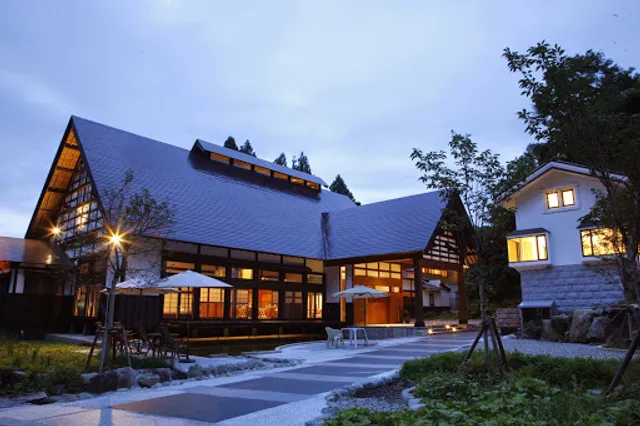
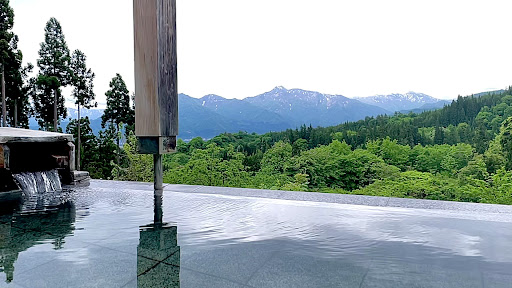
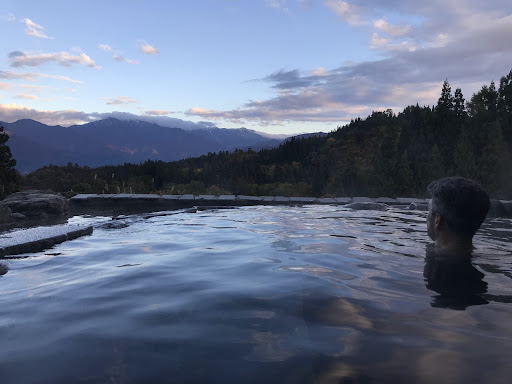
 Learn more insights from Wanderboat AI.