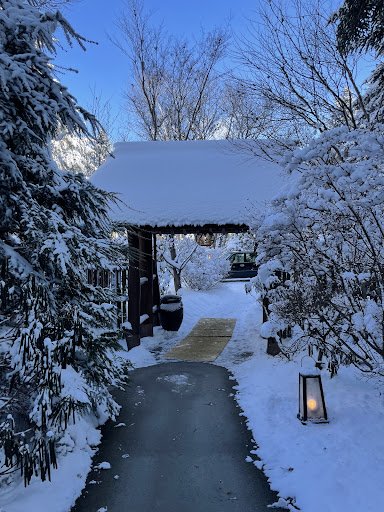
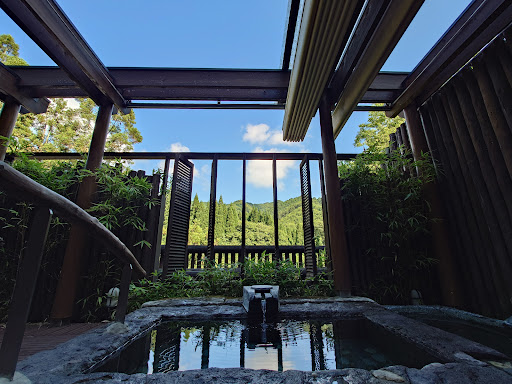
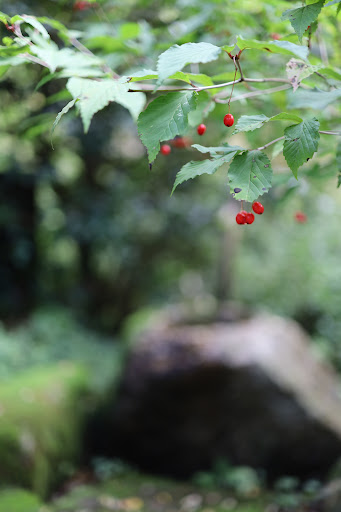
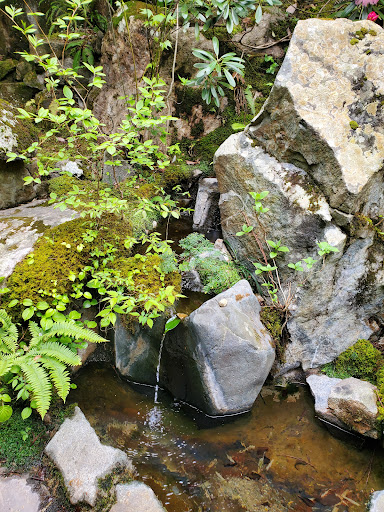
We've always wanted to visit Iwanoyu for as long as we've been into ryokans, but it's extremely difficult to reserve, at least online. Determined to get the best room type (Senzantei), 9 months prior to our hoped-for arrival date I decided to call them to ask when they begin accepting reservations. To my surprise, if done by phone guests can reserve 11 months in advance! When trying to book online - either through their own website or via Japanese booking engines, very rarely is there any availability, so it's never been clear to me how far ahead they even start accepting reservations. Upon speaking to staff at Iwanoyu, I was told that they prioritize repeat guests and people who book by phone. Closer in, they MIGHT release a few rooms online, but they rarely do it. NOW I know the trick, and if you're interested in staying here, that's the best way to do it. Like Tawaraya, Iwanoyu does not even have an official website - either they don't feel the need to have one given the high occupancy, or they consider it as a badge of honor in a weird way. So... is it worth going through all of the frustrating hassle to stay at Iwanoyu? IMO, it depends on what your priorities are. For us, it was definitely a mixed bag of high highs and low lows, but if we can get a Senzantei room next time, we wouldn't rule out a return visit.||||TL;DR:||Pros: Amazing Onsen (including a 24-hour Daiyokujo gender-segregated communal bath, a co-ed "cave bath" and four private rental baths), delectable cuisine, koshitsu (private room) dining, floor heating in the rooms, friendly and eager service personnel, 4 rental baths, extremely picturesque property grounds, multiple lounge areas, charming cafe/bar.||Cons: No in-room Onsen (in fact, no baths at all, except for Senzantei rooms, although they're not Onsen), no WiFi in the rooms (only in a few designated public areas), one sink, cheap and small in-room showers||Pro or Con: Onsen is more lukewarm than the typical, piping hot baths in most other ryokans; futons on tatami floors only (no real bed options); Taisho-era decor||||Iwanoyu is one of the highest rated ryokans in the country, and often finds itself on many "ryokans to stay before you die" lists. It mainly has to do with its soothing Onsen quality, mystical property grounds, enchanting atmosphere and reasonable pricing by luxury standards. The latter was the part that gave us pause... at about 40,000 yen per person/night, Iwanoyu half board is a screaming bargain by top ryokan standards, even if it was a middle-category room, so we were bracing for some major gotchas.||||Upon entering the property we were stunned by the sheer beauty of the immediate landscape surrounding Iwanoyu. We were at the very tail end of the Fall foliage season, so many of the leaves had long since fallen, and the colors of the leaves that still remained were less vibrant than at its typical peak. Even then, we were captivated by its charm, which was also helped by strategically placed installations along the path to the main building, including picnic tables, foot baths and wondrous floral arrangements in large pots dotting the area. Upon entering the second gate, we were treated to charming view of the river from the bridge that bisects Iwanoyu from the walkway side of the river. Inside, it's old Japan charm... not from feudal times, but rather Taisho era (a mix of Japanese and Western decor that harkens back to the turn of the 20th Century.) We are more into contemporary design, but given the setting, we felt it fit the mood nicely.||||Iwanoyu was established 65 years ago, but was newly rebuilt to its present state in 1989, and the property grounds were expanded at the same time. As an 18 room ryokan, it's medium-sized by luxury ryokan standards, allowing it to have amenities like a proper cafe and bar, multiple lounge areas with free coffee and treats, and even a massive co-ed "Cave" Onsen (more on this later.) Iwanoyu has a much larger staff count than other ryokans of the same size, and it also does not have an Okami-san (proprietress) on site. All of the staff are "family members" and behave as if they are part owners of the establishment, even though they are not. Guests are not assigned a dedicated room attendant, either. None of this detracted from the high quality of service we experienced at the ryokan. Everyone seemed to take pride in working there, and appeared to genuinely care about the guest experience.||||There are three room types at Iwanoyu, Senjutei (entry level with 6 rooms total), Sengotei (midrange with 8 rooms) and Senzantei (the highest category room type with just 4 rooms total.) As mentioned earlier, we were unable to secure reservations at Sengotei and had to settle for Senjutei. The main difference between the two: while both have a dedicated living room, Sengotei's tatami room doubles as a bedroom whereas Senzantei has separate ones. Senzantei rooms also have a more commanding position above the river, so you'll get better views. One additional Senzantei amenity: one of the 5 private rental Onsen is specifically set aside for exclusive use by its Senzantei guests, and I'm told it has the best view of the bunch, too. All rooms have heated floors, which is essential for a place that is in a mountainous region of Nagano.||||We found there to be three shocking and teeth-gnashing aspects of Sengotei - no WiFi, no bath and a cheap, plastic-laden shower that is about the size of a porta potty. For a place that is considered a destination onsen ryokan, I am amazed that reviews of Iwanoyu are so universally positive. For a ryokan that has such drawbacks, I would expect it to have more polarizing opinions, but for some reason it does not. It's a shame, really, since just about every other aspect of the ryokan is top notch. There are 3 different lounges (each with WiFi), as well as an alluringly beautiful cafe and bar that serves everything from top-flight whiskey to delectable cakes. There are gorgeous, man-made creeks and mini waterfalls as you walk outside from one structure to the next, and pretty art installments are littered throughout the property. Even the hallway in the main restaurant is bewitching (see accompanying photo.)||||There is an abundance of Onsen options at Iwanoyu, which is a necessity here given that none of the rooms have in-room Onsen. There is a large Daiyokujo (gender-segregated communal, open-air Onsen), 4 private rental baths (5 if you count the private bath available for exclusive use for Senzantei guests) that are available on a first-come, first-served basis, and an expansive, co-ed underground cave bath that looks like it was pulled from Istanbul's Basilica Cistern, complete with Romanesque columns. The changing rooms and showers are still separate, and they offer free swimwear before entering the co-ed section, so you can explore the Onsen caves with members of the opposite sex without having to expose yourself. One thing to note about all Onsens that we experienced - they tend to be lukewarm rather than hot, which is a plus or a minus. On the one hand, this allowed us to spend a longer period of time enjoying the baths. However, for our tastes, the Onsen could've benefitted from a few degrees higher temperature.||||All meals are served in private rooms in the main building, and the kaiseki cuisine at Iwanoyu was exquisite. As in most ryokans in middle Japan, the servings focused on mountain vegetables (many of them foraged), freshwater fish and locally-sourced rice and beef. The trio of sashimi - Yukimasu (Snow Trout), Scalded Iwana (White-spotted Char) and Carp were delectable, but the big surprise was the Dobinmushi that featured Maitake mushrooms instead of Matsutake. Dobinmushi is typically served in the Fall and is a dish of broth and seasonal ingredients steamed in a Dobin teapot and usually includes Matsutake mushrooms, Chicken, Shrimp, Gingko nuts and Mitsuba (honewort.) At Iwanoyu, however, they substituted Matsutake for Maitake; the former is known for its truffles-like aroma, but we were shocked at how awesome the Dobinmushi smelled and tasted with Maitake. While we didn't feel that many of the ingredients were massive delicacies and particulary expensive, we felt the kitchen staff did a terrific job in bringing out the best from the humble, rural Nagano ingredients. Our server was the charming Ms. Ogasawara, a local woman who speaks decent English. If you choose to visit Iwanoyu and don't speak Japanese, you could do worse than to specifically asked for her to serve you.||||Given how the positives and negatives are so extreme here, it's hard to make an objective judgment on whether Iwanoyu is worth one's time. We left the property with net positive impressions, inspite of its shocking and unforgivable flaws. If we are able secure a booking in one of the Senzantei rooms, we wouldn't rule out a future...
Read more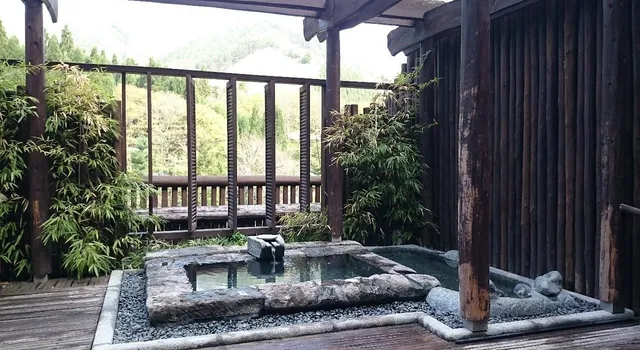
 Learn more insights from Wanderboat AI.