HTML SitemapExplore

Hardinge Bridge — Local services in Rajshahi Division

Name
Hardinge Bridge
Description
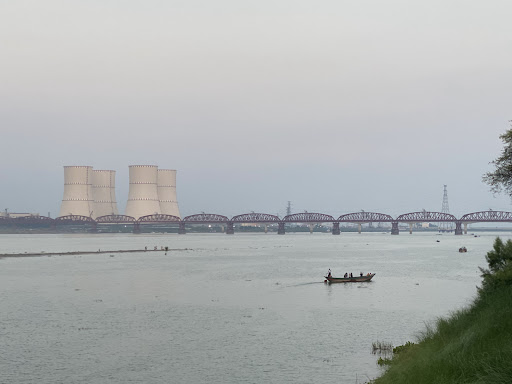
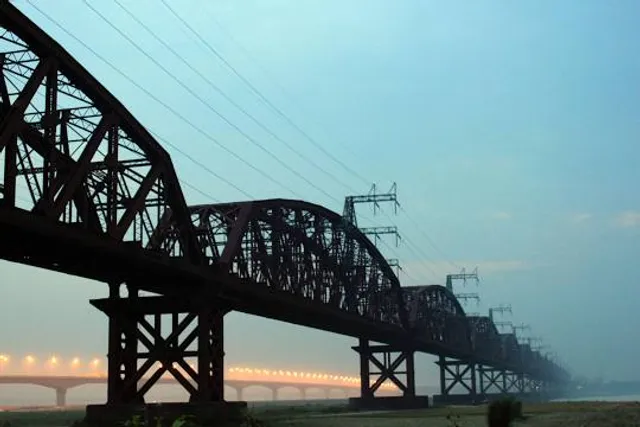
Hardinge Bridge is a steel railway truss bridge over the Padma River located at Ishwardi, Pabna and Bheramara, and Kushtia in Bangladesh. It is named after Lord Hardinge, who was the Viceroy of India from 1910 to 1916. The bridge is 1.8 km long.
Nearby attractions
Nearby restaurants
Nearby local services
Nearby hotels
Related posts
Keywords
Hardinge Bridge tourism.Hardinge Bridge hotels.Hardinge Bridge bed and breakfast. flights to Hardinge Bridge.Hardinge Bridge attractions.Hardinge Bridge restaurants.Hardinge Bridge local services.Hardinge Bridge travel.Hardinge Bridge travel guide.Hardinge Bridge travel blog.Hardinge Bridge pictures.Hardinge Bridge photos.Hardinge Bridge travel tips.Hardinge Bridge maps.Hardinge Bridge things to do.
Hardinge Bridge things to do, attractions, restaurants, events info and trip planning
Hardinge Bridge
BangladeshRajshahi DivisionHardinge Bridge

Basic Info

Hardinge Bridge

Hardinge Bridge, 6622 Lalon Shah Bridge, পাকশী, Bangladesh
4.7(359)
Save
spot

Ratings & Description

Info

Hardinge Bridge is a steel railway truss bridge over the Padma River located at Ishwardi, Pabna and Bheramara, and Kushtia in Bangladesh. It is named after Lord Hardinge, who was the Viceroy of India from 1910 to 1916. The bridge is 1.8 km long.

Cultural
Scenic
attractions: , restaurants: , local businesses:
logoLearn more insights from Wanderboat AI.
Website
nmst.gov.bd

Plan your stay

hotel
Pet-friendly Hotels in Rajshahi Division
Find a cozy hotel nearby and make it a full experience.
hotel
Affordable Hotels in Rajshahi Division
Find a cozy hotel nearby and make it a full experience.
hotel
The Coolest Hotels You Haven't Heard Of (Yet)
Find a cozy hotel nearby and make it a full experience.
hotel
Trending Stays Worth the Hype in Rajshahi Division
Find a cozy hotel nearby and make it a full experience.

Reviews

Get the Appoverlay
Get the AppOne tap to find yournext favorite spots!
Wanderboat LogoWanderboat

Your everyday Al companion for getaway ideas

CompanyAbout Us
InformationAI Trip PlannerSitemap
SocialXInstagramTiktokLinkedin
LegalTerms of ServicePrivacy Policy

Get the app

© 2025 Wanderboat. All rights reserved.

Reviews of Hardinge Bridge

4.7
(359)
avatar
5.0
2y

Hundred years are over and still counting! The 1.8-kilometre long Hardinge Bridge, one of the country's historical attractions, stands still and steady over the Padma river even today with its beauty and pride, running between the railway stations of Pabna's Paksey and Kushtia's Bheramara.

Those who have seen the bridge on their way over the river must have mesmerized with its beauty, but very few can imagine that it has completed its centenary on March 4, 2015. Even those who had guaranteed its centenary are no longer alive!

The steel railway bridge is one of the many British structures in the country. From now, 138 years ago, the bridge plan was proposed by Eastern Bengal Railway in 1889 for better rail communication of the Indian subcontinent, especially Assam, according to official records.

It took 20 years of talks to finally start its construction in 1910. A total of 24,400 construction workers worked till 1914 to complete the mighty bridge. A train had undergone a trial run on its down line on January 1, 1915, and the passenger trains went on operation two months later on March 4.

Though the bridge is also known as Paksey Bridge, it was initially named after Lord Hardinge, the then Vice Roy of this continent who had inaugurated it.

Digging down wells, 15 trusses were founded weighing 1,250 tonnes each to build the bridge. While it took almost three lakh bricks, 30 lakh tonnes of steel, 1,70,000 drums of regular cement and 12 lakh drums of different types of cement to complete the entire construction. The total amount of cost was Tk 3,51,32,164.

British Chief Engineer Robert William Gales was honoured with 'Sir' title for his significant work to design the beautiful, attractive bridge, and for its deepest base of that time.

However, in 1971, the bridge was damaged, especially the ninth and 12th span by Pakistan army's air bombing destroying the communication system of northern region to the south. Later, it was reconstructed with the joint efforts of India and Bangladesh Railway.

This bridge is not only historically but also economically significant, which makes it more important to the people of Pabna. Witnessing history of more than 100 years, it has turned to be one of the popular tourist attractions of the country over the time. Every day many visitors gather there to enjoy the wonderful beauty of the bridge.

And all can only wish that the iconic bridge crosses...

   Read more

avatar
5.0
32w

Engineering & Construction Secrets • Lost Bridge Spans During WWI: The main trusses were fabricated in Britain and shipped from Liverpool, but during WWI, three spans were lost at sea due to naval disruptions—German raiders like the cruiser Emden targeted these shipments . • On-site Power Generation: Temporary power plants were built at both banks to feed electricity for cranes, pile drivers, and field workshops during construction—this isn’t widely mentioned in local sources . • River Stabilisation via Bell-Bunds: Massive “guide banks” of Bell-bund design, stretching over 4,000 ft, were engineered to protect piers and permanently stabilize the shifting Padma currents .

⸻

Natural Hazards & Wartime Damage • Severe Erosion in 1933: That year, extreme flooding washed away 490 m of riverbank along the bridge. It took two years to reinforce the foundation and restore safety . • Wartime Bombing & Reconstruction: On 13 December 1971, Indian Air Force bombs hit the 4th span. While emergency repairs reopened it in Oct 1972, full restoration continued until around 1975, aided by Japan .

Material & Labor Details • Span & Weight: Each truss span covered ~345 ft (105 m) and weighed about 1,250 t—1300 t including tracks . • Material Volume: Construction used an astonishing volume: 30 million kg of steel, 300 k bricks, 170,000 cement drums, and 120,000 specialized cement drums . • Massive Workforce: Over 24,000 laborers worked during peak, across 5 years, making it a major regional employer .

Strategic Importance & Legacy • First Cross-Gauge Rail Link: For decades, Hardinge was the sole connection between metre-gauge (North Bengal & Assam) and broad-gauge (South Bengal)—a critical logistics spine until post-1998 Jamuna Bridge expansion . • Symbol of Paksey: As local folklore notes, “the heart and history” of Paksey town—the bridge’s completion transformed it into a bustling rail hub, and a centenary celebration in 2015 highlighted its socio-cultural impact .

Summary • Engineering feats: wartime cargo loss, self-generated electricity, river engineering. • Resilience: survived floods, war damage, and resumed service swiftly. • Impact: created deep labor employment ties, spurred Paksey’s rise, and served as vital...

   Read more
avatar
5.0
1y

Harding Bridge, officially known as the Hardinge Bridge, is a significant railway bridge spanning the mighty Padma River in Bangladesh. Located near the town of Pabna, the bridge connects the western and northern regions of the country, playing a crucial role in Bangladesh's transportation infrastructure. Named after Lord Hardinge, the then Viceroy of India, the bridge was constructed during the British colonial period and was completed in 1915.

The bridge is an engineering marvel of its time, stretching over 1.8 kilometers with 15 steel spans resting on massive piers. Its construction involved a combination of cutting-edge engineering techniques and skilled labor, making it one of the longest bridges in the Indian subcontinent at the time. The Hardinge Bridge was crucial in facilitating trade and communication across the Padma River, which had been a significant barrier.

Over the years, the bridge has withstood natural calamities, including devastating floods and the challenges posed by the fast-flowing Padma River. It remains a vital railway link, connecting the capital Dhaka with the northern and western districts of Bangladesh.

Beyond its functional importance, Harding Bridge stands as a historical landmark and a symbol of Bangladesh's colonial past, reflecting the country's rich heritage and resilience. Its majestic structure against the backdrop of the Padma River continues to captivate those...

   Read more
Page 1 of 7
Previous
Next

Posts

Sifat PathanSifat Pathan
Hundred years are over and still counting! The 1.8-kilometre long Hardinge Bridge, one of the country's historical attractions, stands still and steady over the Padma river even today with its beauty and pride, running between the railway stations of Pabna's Paksey and Kushtia's Bheramara. Those who have seen the bridge on their way over the river must have mesmerized with its beauty, but very few can imagine that it has completed its centenary on March 4, 2015. Even those who had guaranteed its centenary are no longer alive! The steel railway bridge is one of the many British structures in the country. From now, 138 years ago, the bridge plan was proposed by Eastern Bengal Railway in 1889 for better rail communication of the Indian subcontinent, especially Assam, according to official records. It took 20 years of talks to finally start its construction in 1910. A total of 24,400 construction workers worked till 1914 to complete the mighty bridge. A train had undergone a trial run on its down line on January 1, 1915, and the passenger trains went on operation two months later on March 4. Though the bridge is also known as Paksey Bridge, it was initially named after Lord Hardinge, the then Vice Roy of this continent who had inaugurated it. Digging down wells, 15 trusses were founded weighing 1,250 tonnes each to build the bridge. While it took almost three lakh bricks, 30 lakh tonnes of steel, 1,70,000 drums of regular cement and 12 lakh drums of different types of cement to complete the entire construction. The total amount of cost was Tk 3,51,32,164. British Chief Engineer Robert William Gales was honoured with 'Sir' title for his significant work to design the beautiful, attractive bridge, and for its deepest base of that time. However, in 1971, the bridge was damaged, especially the ninth and 12th span by Pakistan army's air bombing destroying the communication system of northern region to the south. Later, it was reconstructed with the joint efforts of India and Bangladesh Railway. This bridge is not only historically but also economically significant, which makes it more important to the people of Pabna. Witnessing history of more than 100 years, it has turned to be one of the popular tourist attractions of the country over the time. Every day many visitors gather there to enjoy the wonderful beauty of the bridge. And all can only wish that the iconic bridge crosses 100 years more!
Your browser does not support the video tag.
S.M. Nazmus SakibS.M. Nazmus Sakib
110 year age of this railway bridge. This bridge is a beautiful & world Heritage bridge in Bangladesh. Most oldest bridge in Bangladesh.
Arafatul IslamArafatul Islam
Engineering & Construction Secrets • Lost Bridge Spans During WWI: The main trusses were fabricated in Britain and shipped from Liverpool, but during WWI, three spans were lost at sea due to naval disruptions—German raiders like the cruiser Emden targeted these shipments . • On-site Power Generation: Temporary power plants were built at both banks to feed electricity for cranes, pile drivers, and field workshops during construction—this isn’t widely mentioned in local sources . • River Stabilisation via Bell-Bunds: Massive “guide banks” of Bell-bund design, stretching over 4,000 ft, were engineered to protect piers and permanently stabilize the shifting Padma currents . ⸻ Natural Hazards & Wartime Damage • Severe Erosion in 1933: That year, extreme flooding washed away 490 m of riverbank along the bridge. It took two years to reinforce the foundation and restore safety . • Wartime Bombing & Reconstruction: On 13 December 1971, Indian Air Force bombs hit the 4th span. While emergency repairs reopened it in Oct 1972, full restoration continued until around 1975, aided by Japan . Material & Labor Details • Span & Weight: Each truss span covered ~345 ft (105 m) and weighed about 1,250 t—1300 t including tracks . • Material Volume: Construction used an astonishing volume: 30 million kg of steel, 300 k bricks, 170,000 cement drums, and 120,000 specialized cement drums . • Massive Workforce: Over 24,000 laborers worked during peak, across 5 years, making it a major regional employer . Strategic Importance & Legacy • First Cross-Gauge Rail Link: For decades, Hardinge was the sole connection between metre-gauge (North Bengal & Assam) and broad-gauge (South Bengal)—a critical logistics spine until post-1998 Jamuna Bridge expansion . • Symbol of Paksey: As local folklore notes, “the heart and history” of Paksey town—the bridge’s completion transformed it into a bustling rail hub, and a centenary celebration in 2015 highlighted its socio-cultural impact . Summary • Engineering feats: wartime cargo loss, self-generated electricity, river engineering. • Resilience: survived floods, war damage, and resumed service swiftly. • Impact: created deep labor employment ties, spurred Paksey’s rise, and served as vital rail lifeline.
See more posts
See more posts
hotel
Find your stay

Pet-friendly Hotels in Rajshahi Division

Find a cozy hotel nearby and make it a full experience.

Hundred years are over and still counting! The 1.8-kilometre long Hardinge Bridge, one of the country's historical attractions, stands still and steady over the Padma river even today with its beauty and pride, running between the railway stations of Pabna's Paksey and Kushtia's Bheramara. Those who have seen the bridge on their way over the river must have mesmerized with its beauty, but very few can imagine that it has completed its centenary on March 4, 2015. Even those who had guaranteed its centenary are no longer alive! The steel railway bridge is one of the many British structures in the country. From now, 138 years ago, the bridge plan was proposed by Eastern Bengal Railway in 1889 for better rail communication of the Indian subcontinent, especially Assam, according to official records. It took 20 years of talks to finally start its construction in 1910. A total of 24,400 construction workers worked till 1914 to complete the mighty bridge. A train had undergone a trial run on its down line on January 1, 1915, and the passenger trains went on operation two months later on March 4. Though the bridge is also known as Paksey Bridge, it was initially named after Lord Hardinge, the then Vice Roy of this continent who had inaugurated it. Digging down wells, 15 trusses were founded weighing 1,250 tonnes each to build the bridge. While it took almost three lakh bricks, 30 lakh tonnes of steel, 1,70,000 drums of regular cement and 12 lakh drums of different types of cement to complete the entire construction. The total amount of cost was Tk 3,51,32,164. British Chief Engineer Robert William Gales was honoured with 'Sir' title for his significant work to design the beautiful, attractive bridge, and for its deepest base of that time. However, in 1971, the bridge was damaged, especially the ninth and 12th span by Pakistan army's air bombing destroying the communication system of northern region to the south. Later, it was reconstructed with the joint efforts of India and Bangladesh Railway. This bridge is not only historically but also economically significant, which makes it more important to the people of Pabna. Witnessing history of more than 100 years, it has turned to be one of the popular tourist attractions of the country over the time. Every day many visitors gather there to enjoy the wonderful beauty of the bridge. And all can only wish that the iconic bridge crosses 100 years more!
Sifat Pathan

Sifat Pathan

hotel
Find your stay

Affordable Hotels in Rajshahi Division

Find a cozy hotel nearby and make it a full experience.

Get the Appoverlay
Get the AppOne tap to find yournext favorite spots!
110 year age of this railway bridge. This bridge is a beautiful & world Heritage bridge in Bangladesh. Most oldest bridge in Bangladesh.
S.M. Nazmus Sakib

S.M. Nazmus Sakib

hotel
Find your stay

The Coolest Hotels You Haven't Heard Of (Yet)

Find a cozy hotel nearby and make it a full experience.

hotel
Find your stay

Trending Stays Worth the Hype in Rajshahi Division

Find a cozy hotel nearby and make it a full experience.

Engineering & Construction Secrets • Lost Bridge Spans During WWI: The main trusses were fabricated in Britain and shipped from Liverpool, but during WWI, three spans were lost at sea due to naval disruptions—German raiders like the cruiser Emden targeted these shipments . • On-site Power Generation: Temporary power plants were built at both banks to feed electricity for cranes, pile drivers, and field workshops during construction—this isn’t widely mentioned in local sources . • River Stabilisation via Bell-Bunds: Massive “guide banks” of Bell-bund design, stretching over 4,000 ft, were engineered to protect piers and permanently stabilize the shifting Padma currents . ⸻ Natural Hazards & Wartime Damage • Severe Erosion in 1933: That year, extreme flooding washed away 490 m of riverbank along the bridge. It took two years to reinforce the foundation and restore safety . • Wartime Bombing & Reconstruction: On 13 December 1971, Indian Air Force bombs hit the 4th span. While emergency repairs reopened it in Oct 1972, full restoration continued until around 1975, aided by Japan . Material & Labor Details • Span & Weight: Each truss span covered ~345 ft (105 m) and weighed about 1,250 t—1300 t including tracks . • Material Volume: Construction used an astonishing volume: 30 million kg of steel, 300 k bricks, 170,000 cement drums, and 120,000 specialized cement drums . • Massive Workforce: Over 24,000 laborers worked during peak, across 5 years, making it a major regional employer . Strategic Importance & Legacy • First Cross-Gauge Rail Link: For decades, Hardinge was the sole connection between metre-gauge (North Bengal & Assam) and broad-gauge (South Bengal)—a critical logistics spine until post-1998 Jamuna Bridge expansion . • Symbol of Paksey: As local folklore notes, “the heart and history” of Paksey town—the bridge’s completion transformed it into a bustling rail hub, and a centenary celebration in 2015 highlighted its socio-cultural impact . Summary • Engineering feats: wartime cargo loss, self-generated electricity, river engineering. • Resilience: survived floods, war damage, and resumed service swiftly. • Impact: created deep labor employment ties, spurred Paksey’s rise, and served as vital rail lifeline.
Arafatul Islam

Arafatul Islam

See more posts
See more posts