HTML SitemapExplore

Mahasthan Archaeological Museum — Local services in Rajshahi Division

Name
Mahasthan Archaeological Museum
Description
Nearby attractions
Nearby restaurants
Nearby local services
Nearby hotels
Related posts
Keywords
Mahasthan Archaeological Museum tourism.Mahasthan Archaeological Museum hotels.Mahasthan Archaeological Museum bed and breakfast. flights to Mahasthan Archaeological Museum.Mahasthan Archaeological Museum attractions.Mahasthan Archaeological Museum restaurants.Mahasthan Archaeological Museum local services.Mahasthan Archaeological Museum travel.Mahasthan Archaeological Museum travel guide.Mahasthan Archaeological Museum travel blog.Mahasthan Archaeological Museum pictures.Mahasthan Archaeological Museum photos.Mahasthan Archaeological Museum travel tips.Mahasthan Archaeological Museum maps.Mahasthan Archaeological Museum things to do.
Mahasthan Archaeological Museum things to do, attractions, restaurants, events info and trip planning
Mahasthan Archaeological Museum
BangladeshRajshahi DivisionMahasthan Archaeological Museum

Basic Info

Mahasthan Archaeological Museum

X87V+3HF, 5810, Bangladesh
4.3(1.2K)
Closed
Save
spot

Ratings & Description

Info

Cultural
Accessibility
attractions: , restaurants: , local businesses:
logoLearn more insights from Wanderboat AI.
Phone
+880 1842-477878
Open hoursSee all hours
Wed10 AM - 6 PMClosed

Plan your stay

hotel
Pet-friendly Hotels in Rajshahi Division
Find a cozy hotel nearby and make it a full experience.
hotel
Affordable Hotels in Rajshahi Division
Find a cozy hotel nearby and make it a full experience.
hotel
The Coolest Hotels You Haven't Heard Of (Yet)
Find a cozy hotel nearby and make it a full experience.
hotel
Trending Stays Worth the Hype in Rajshahi Division
Find a cozy hotel nearby and make it a full experience.

Reviews

Get the Appoverlay
Get the AppOne tap to find yournext favorite spots!
Wanderboat LogoWanderboat

Your everyday Al companion for getaway ideas

CompanyAbout Us
InformationAI Trip PlannerSitemap
SocialXInstagramTiktokLinkedin
LegalTerms of ServicePrivacy Policy

Get the app

Š 2025 Wanderboat. All rights reserved.

Reviews of Mahasthan Archaeological Museum

4.3
(1,156)
avatar
5.0
6y

Mahasthangarh museum (“Mahastangor jadughar”) is located at the Mahasthangarh of Shibganj of Bogra. It’s just 15 kilometer apart from the main town. You can reach there using any publicly available vehicles. The museum is profound with numerous objects (status, coins, weapon, etc.) those are found after the excavation from the archaeological spots around the Mahasthangarh. Dating back to at least the 4th century BCE, Mahasthangarh is the earliest urban archaeological site that has been discovered in Bangladesh.

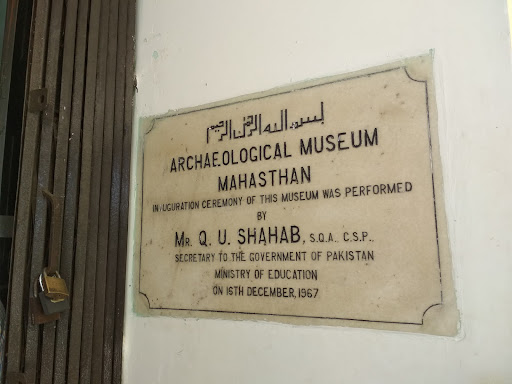
Several historical sites are located within the rampart wall, including a mausoleum (Mausoleum of Shah Sultan Mahisawar Balkhi), a temple site (Bairgir Bhita), remnants of an ancient palace (Parshuram’s Palace) with an ancient well (Jiyat Kunda) as well as residential blocks in the eastern rampart area. One of the highlights of Mahasthangarh is Govinda Bhita, where remnants of two Buddhist temples can be visited. The main temple was erected in the 6th century and next to it is a slightly smaller temple, which was built in the 11th century. Opposite Govinda Bhita, near the north side of the citadel is the Mahasthan Archaeological Museum. The museum is quite small but has a well-maintained collection of pieces recovered from the archaeological site. These include the statues of Hindu and Buddhist gods and goddesses, terracotta plaques depicting daily life, as well as some well-preserved bronze images found in nearby monastery ruins that date back to the pre-Pala period. There are even some fragments of ring-stones which were used for rituals in the Mauryan period.

Mahasthan means a place that has excellent sanctity and garh means fort. Mahasthan was first mentioned in a Sanskrit text of the 13th century entitled Vallalcharita. It is also mentioned in an anonymous text Karatoya mahatmya, circumstantially placed in 12th–13th century. The same text also mentions two more names to mean the same place – Pundrakshetra, land of the Pundras, and Pundranagara, city of the Pundras. In 1685, an administrative decree mentioned the place as Mastangarh, a mixture of Sanskrit and Persian meaning fortified place of an auspicious personage. Subsequent discoveries have confirmed that the earlier name was Pundranagara or Paundravardhanapura, and that the present name of Mahasthangarh is of later origin. Several personalities contributed to the discovery and identification of the ruins at Mahasthangarh. Francis Buchanan Hamilton was the first to locate and visit Mahasthangarh in 1808, C.J.O'Donnell, E.V.Westmacott, and Beveridge followed. Alexander Cunningham was the first to identify the place as the capital of Pundravardhana. He visited the site in 1879. xcavated mounds: Gobhindo Bhita, a temple close to the north-eastern corner of the citadel Khulnar Dhap, a temple 1 km north of the citadel Mangalkot, a temple 400m south of Khulnar Dhap Godaibari Dhap, a temple 1 km south of Khulnar Dhap Totaram Panditer Dhap, a monastery 4 km north-west of the citadel Noropotir Dhap (Vashu Bihara), a group of monasteries 1 km north-west of Totaram Ponditer Dhap (said to be the place where Po-shi-po Bihara mentioned by Xuanzang (Hieun Tsang) was located) Gokul Medh (Lokhindorer Bashor Ghor), a temple 3 km south of the citadel Shkonder Dhap, a temple 2 km south-east of Gokul Medh......

Major unexcavated mounds:

Shiladebir Ghat Chunoru Dighi Dhap Kaibilki Dhap Juraintala Poroshuramer Shobhabati Balai Dhap Prochir Dhibi Kanchir Hari Dhibi Lohonar Dhap Khujar Dhap Doshatina Dhap Dhoniker Dhap Mondirir Dorgah Bishmordana Dhibi Malinar Dhap Malpukuria Dhap Jogir Dhap Podmobhatir Dhap Kanai Dhap Dulu Mojhir Bhita Podda Debhir Bhita Rastala Dhap Shoshitola Dhap Dhonbandhor Dhap Chader Dhap Shindinath Dhap Shalibahon Rajar Kacharibari Dhipi Kacher Angina Mongolnather Dhap ChhoutoTengra/ Babur Dhap/ Kethar Dhap

entrance of mahasthangarh Boro Tengra/ Shonyashir Dhap

Systematic archaeological excavation of Mahasthangarh was first started in 1928–29 under the guidance of K.N.Dikshit of the Archaeological...

   Read more

avatar
5.0
7y

Mahasthangarh – A Window to the Past the entrance to the oldest archaeological site of the 3rd century B.C.

The ancient archeological site of Mahasthangarh is believed to date back as far as 700 BC and appears to have been occupied right up to the 1700s. Mahasthangarh is located in the Shibganj Upzila (subdistrict) of the Bogra District of Bangladesh, near the village of Mahasthan. It is the oldest urban-style fortified settlement discovered in Bangladesh to date, and includes a temple with the tomb of Shah Sultan Balkhi Mahisawar, a dervish (Muslim saint) of royal lineage who traveled to the area in the 14th century with the aim of converting the locals to the Islamic religion.

The name of the site is taken from the words Mahasthan meaning a place of exceptional sacredness, and garh, meaning fort. Later discoveries have led researchers to the conclusion that the name of the area was initially Paundravardhanapura or Pundranagara, referring to the Pundra Kingdom in Indian epic literature, which was said to rule over an area stretching from West Bengal, to Bangladesh and into the area of India now known as Bihar.

The archeological site of Mahasthangarh is located on one of the highest pieces of land in Bangladesh, along the Bogra-Rangpur highway, allowing easy access for visitors. The site was discovered in the early 1800s and a number of world-renowned archeologists were instrumental in uncovering its cultural and historical significance. Visitors to the site will note that the Karatoya River flows to the east of the rectangular citadel. Although this river is currently not much more than a stream, it was once a mighty river, considered to be sacred. It has been suggested that the proximity of the Karatoya River may have been one of the deciding factors when the founders of the settlement chose the site.

Within the fortifications of the city are a number of interesting features, including a well said to possess life and impart power known as Jiat Kunda; a palace called Parasuramer Basgriha dedicated to a king by the name of Parasuram; a place of stone said to be bestowed by God known as Khodar Pathar Bhita; and a bastion named Munir Ghon. There are gateways on all four sides and a flight of steps in the north-eastern corner.

Outside the fortifications are up to a hundred mounds spread over a radius of around nine kilometers, many of which still need to be excavated. On the banks of the Karatoya River is a temple dedicated to Govinda, as well as a museum displaying some of the fascinating artifacts discovered in and around the settlement. These include a limestone slab inscribed with words in Brahmi script dating back to the 3rd century BC; silver punch market coins from between the 4th century BC and the 1st to 2nd century AD; coins of the British East India Company which was founded in 1600; shards of ceramics; a 5th century stone sculpture of Buddha; and terracotta plaques. Mahasthangarh is a fascinating place to visit from a historical and cultural perspective, and from its elevated position it offers spectacular views of the...

   Read more
avatar
5.0
31w

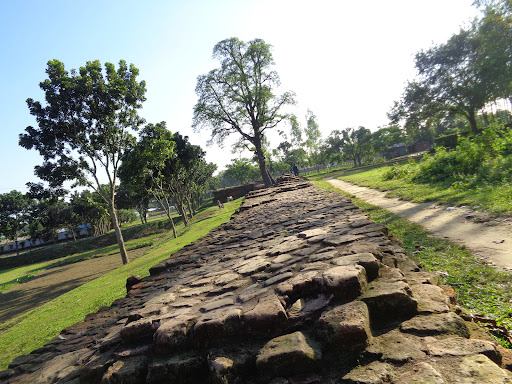
The vast ruined wall of Mahasthangarh is a silent witness to the glorious history of Pundranagar, the capital of Pundravardhanbhukti, for nearly two and a half thousand years. These ruins are located on the west bank of the Karatoya River, 13 km north of Bogra district town. This most important and oldest fort city in the whole of Bengal is protected by successive earth and brick ramparts, which are 1525 m long in the north-south direction and 1370 m wide in the east-west direction and 5 m high from the plains on all four sides. In addition to the ramparts, the river on the east and a deep moat on the other three sides have been used as additional defenses for the city. Archaeological evidence shows that for several centuries this place was the provincial capital of the mighty Maurya, Gupta and Pala rulers and later the capital of the Hindu Samantarajas. Outside the fort, within 7/8 km to the north, west, south and southwest, there are still many ancient signs of various kinds which bear witness to the existence of a sub-city. It is worth mentioning that the famous Chinese traveler Huen Tsang visited Pundranagar during his visit to India (639-645). The famous British archaeologist Sir Alexander Cunningham correctly identified the ruins of Mahasthan Garh in 1879 AD as the Pundu Nagar described by Phuen Tsang.

The first archaeological excavations were started in Mahasthangarh in 1928-1929. During this time, excavations were carried out at three places inside the city, namely Beiragir Vita, Munir Ghon and Govinda Vita. After a long time, various parts of the fort were excavated regularly in 1960-1961 and later from 1988 onwards. Since 1993, the Bangladesh and French governments have jointly begun excavations at Mahasthangarh, bringing a new dimension to archaeological research here. In the first phase, excavations were carried out in the area between the eastern fort walls until 1999. In the second phase, excavations have been carried out on the western side of the shrine since 2000.

As a result of extensive research and excavations over a long period of time, settlement patterns have been uncovered almost continuously within the fort city from the 4th century AD to the Muslim era. In 18 layers, mud-brick houses, roads, sewers, drains, temples, mosques, arcades, towers, etc. of the pre-Mauryan, Gupta, Pala and Muslim eras have been uncovered. In addition to these architectural structures, Various movable cultural artifacts of the then urban life such as Mauryan era tapi-shaped stone fragments, engraved silver coins and molded copper coins, black and beech chairs, bulleted ware, northern black smooth pottery, Mandi terracotta plaques with Shunga characteristics, plates and terracotta figurines, less valuable plates, beads, net sticks and clay and metal products, abundant common pottery and a plate with Arabic inscriptions are...

   Read more
Page 1 of 7
Previous
Next

Posts

Delower HosainDelower Hosain
Mahasthangarh museum (“Mahastangor jadughar”) is located at the Mahasthangarh of Shibganj of Bogra. It’s just 15 kilometer apart from the main town. You can reach there using any publicly available vehicles. The museum is profound with numerous objects (status, coins, weapon, etc.) those are found after the excavation from the archaeological spots around the Mahasthangarh. Dating back to at least the 4th century BCE, Mahasthangarh is the earliest urban archaeological site that has been discovered in Bangladesh. Several historical sites are located within the rampart wall, including a mausoleum (Mausoleum of Shah Sultan Mahisawar Balkhi), a temple site (Bairgir Bhita), remnants of an ancient palace (Parshuram’s Palace) with an ancient well (Jiyat Kunda) as well as residential blocks in the eastern rampart area. One of the highlights of Mahasthangarh is Govinda Bhita, where remnants of two Buddhist temples can be visited. The main temple was erected in the 6th century and next to it is a slightly smaller temple, which was built in the 11th century. Opposite Govinda Bhita, near the north side of the citadel is the Mahasthan Archaeological Museum. The museum is quite small but has a well-maintained collection of pieces recovered from the archaeological site. These include the statues of Hindu and Buddhist gods and goddesses, terracotta plaques depicting daily life, as well as some well-preserved bronze images found in nearby monastery ruins that date back to the pre-Pala period. There are even some fragments of ring-stones which were used for rituals in the Mauryan period. Mahasthan means a place that has excellent sanctity and garh means fort. Mahasthan was first mentioned in a Sanskrit text of the 13th century entitled Vallalcharita. It is also mentioned in an anonymous text Karatoya mahatmya, circumstantially placed in 12th–13th century. The same text also mentions two more names to mean the same place – Pundrakshetra, land of the Pundras, and Pundranagara, city of the Pundras. In 1685, an administrative decree mentioned the place as Mastangarh, a mixture of Sanskrit and Persian meaning fortified place of an auspicious personage. Subsequent discoveries have confirmed that the earlier name was Pundranagara or Paundravardhanapura, and that the present name of Mahasthangarh is of later origin. Several personalities contributed to the discovery and identification of the ruins at Mahasthangarh. Francis Buchanan Hamilton was the first to locate and visit Mahasthangarh in 1808, C.J.O'Donnell, E.V.Westmacott, and Beveridge followed. Alexander Cunningham was the first to identify the place as the capital of Pundravardhana. He visited the site in 1879. xcavated mounds: Gobhindo Bhita, a temple close to the north-eastern corner of the citadel Khulnar Dhap, a temple 1 km north of the citadel Mangalkot, a temple 400m south of Khulnar Dhap Godaibari Dhap, a temple 1 km south of Khulnar Dhap Totaram Panditer Dhap, a monastery 4 km north-west of the citadel Noropotir Dhap (Vashu Bihara), a group of monasteries 1 km north-west of Totaram Ponditer Dhap (said to be the place where Po-shi-po Bihara mentioned by Xuanzang (Hieun Tsang) was located) Gokul Medh (Lokhindorer Bashor Ghor), a temple 3 km south of the citadel Shkonder Dhap, a temple 2 km south-east of Gokul Medh...... Major unexcavated mounds: Shiladebir Ghat Chunoru Dighi Dhap Kaibilki Dhap Juraintala Poroshuramer Shobhabati Balai Dhap Prochir Dhibi Kanchir Hari Dhibi Lohonar Dhap Khujar Dhap Doshatina Dhap Dhoniker Dhap Mondirir Dorgah Bishmordana Dhibi Malinar Dhap Malpukuria Dhap Jogir Dhap Podmobhatir Dhap Kanai Dhap Dulu Mojhir Bhita Podda Debhir Bhita Rastala Dhap Shoshitola Dhap Dhonbandhor Dhap Chader Dhap Shindinath Dhap Shalibahon Rajar Kacharibari Dhipi Kacher Angina Mongolnather Dhap ChhoutoTengra/ Babur Dhap/ Kethar Dhap entrance of mahasthangarh Boro Tengra/ Shonyashir Dhap Systematic archaeological excavation of Mahasthangarh was first started in 1928–29 under the guidance of K.N.Dikshit of the Archaeological Survey of India.
Your browser does not support the video tag.
Alamgir HossainAlamgir Hossain
āĻŦāĻžāĻ‚āϞāĻžāĻĻ⧇āĻļ⧇āϰ āĻŽāĻšāĻžāĻ¸ā§āĻĨāĻžāύāĻ—āĻĄāĻŧ āĻāĻ•āϟāĻŋ āϐāϤāĻŋāĻšāĻžāϏāĻŋāĻ• āĻĒā§āϰāĻ¤ā§āύāϤāĻžāĻ¨ā§āĻ¤ā§āϰāĻŋāĻ• āύāĻŋāĻĻāĻ°ā§āĻļāύ āϏāĻŽā§ƒāĻĻā§āϧ āĻāĻ•āϟāĻŋ āĻ…āĻžā§āϚāϞāĨ¤ āĻāĻ–āĻžāύ⧇ āφāϏāϞ⧇ āφāĻĒāύāĻŋ āĻļāϤ āĻļāϤ āĻŦāĻ›āϰ āĻĒāĻŋāĻ›āύ⧇ āĻĢāĻŋāϰ⧇ āϝ⧇āϤ⧇ āĻŦāĻžāĻ§ā§āϝ āĻšāĻŦ⧇āύāĨ¤ āĻļāϤ āĻļāϤ āĻŦāĻ›āϰ āφāϗ⧇āϰ āĻĒ⧁āϰāύ⧋ āϜāĻŋāύāĻŋāϏ āϗ⧁āϞ⧋ āĻĻ⧇āϖ⧇ āφāĻĒāύāĻžāϕ⧇ āĻŦāĻŋāĻ¸ā§āĻŽāĻŋāϤ āĻšāϤ⧇ āĻšāĻŦ⧇āĨ¤
Sadman SakibSadman Sakib
Mahasthangarh – A Window to the Past the entrance to the oldest archaeological site of the 3rd century B.C. The ancient archeological site of Mahasthangarh is believed to date back as far as 700 BC and appears to have been occupied right up to the 1700s. Mahasthangarh is located in the Shibganj Upzila (subdistrict) of the Bogra District of Bangladesh, near the village of Mahasthan. It is the oldest urban-style fortified settlement discovered in Bangladesh to date, and includes a temple with the tomb of Shah Sultan Balkhi Mahisawar, a dervish (Muslim saint) of royal lineage who traveled to the area in the 14th century with the aim of converting the locals to the Islamic religion. The name of the site is taken from the words Mahasthan meaning a place of exceptional sacredness, and garh, meaning fort. Later discoveries have led researchers to the conclusion that the name of the area was initially Paundravardhanapura or Pundranagara, referring to the Pundra Kingdom in Indian epic literature, which was said to rule over an area stretching from West Bengal, to Bangladesh and into the area of India now known as Bihar. The archeological site of Mahasthangarh is located on one of the highest pieces of land in Bangladesh, along the Bogra-Rangpur highway, allowing easy access for visitors. The site was discovered in the early 1800s and a number of world-renowned archeologists were instrumental in uncovering its cultural and historical significance. Visitors to the site will note that the Karatoya River flows to the east of the rectangular citadel. Although this river is currently not much more than a stream, it was once a mighty river, considered to be sacred. It has been suggested that the proximity of the Karatoya River may have been one of the deciding factors when the founders of the settlement chose the site. Within the fortifications of the city are a number of interesting features, including a well said to possess life and impart power known as Jiat Kunda; a palace called Parasuramer Basgriha dedicated to a king by the name of Parasuram; a place of stone said to be bestowed by God known as Khodar Pathar Bhita; and a bastion named Munir Ghon. There are gateways on all four sides and a flight of steps in the north-eastern corner. Outside the fortifications are up to a hundred mounds spread over a radius of around nine kilometers, many of which still need to be excavated. On the banks of the Karatoya River is a temple dedicated to Govinda, as well as a museum displaying some of the fascinating artifacts discovered in and around the settlement. These include a limestone slab inscribed with words in Brahmi script dating back to the 3rd century BC; silver punch market coins from between the 4th century BC and the 1st to 2nd century AD; coins of the British East India Company which was founded in 1600; shards of ceramics; a 5th century stone sculpture of Buddha; and terracotta plaques. Mahasthangarh is a fascinating place to visit from a historical and cultural perspective, and from its elevated position it offers spectacular views of the surrounding areas.
See more posts
See more posts
hotel
Find your stay

Pet-friendly Hotels in Rajshahi Division

Find a cozy hotel nearby and make it a full experience.

Mahasthangarh museum (“Mahastangor jadughar”) is located at the Mahasthangarh of Shibganj of Bogra. It’s just 15 kilometer apart from the main town. You can reach there using any publicly available vehicles. The museum is profound with numerous objects (status, coins, weapon, etc.) those are found after the excavation from the archaeological spots around the Mahasthangarh. Dating back to at least the 4th century BCE, Mahasthangarh is the earliest urban archaeological site that has been discovered in Bangladesh. Several historical sites are located within the rampart wall, including a mausoleum (Mausoleum of Shah Sultan Mahisawar Balkhi), a temple site (Bairgir Bhita), remnants of an ancient palace (Parshuram’s Palace) with an ancient well (Jiyat Kunda) as well as residential blocks in the eastern rampart area. One of the highlights of Mahasthangarh is Govinda Bhita, where remnants of two Buddhist temples can be visited. The main temple was erected in the 6th century and next to it is a slightly smaller temple, which was built in the 11th century. Opposite Govinda Bhita, near the north side of the citadel is the Mahasthan Archaeological Museum. The museum is quite small but has a well-maintained collection of pieces recovered from the archaeological site. These include the statues of Hindu and Buddhist gods and goddesses, terracotta plaques depicting daily life, as well as some well-preserved bronze images found in nearby monastery ruins that date back to the pre-Pala period. There are even some fragments of ring-stones which were used for rituals in the Mauryan period. Mahasthan means a place that has excellent sanctity and garh means fort. Mahasthan was first mentioned in a Sanskrit text of the 13th century entitled Vallalcharita. It is also mentioned in an anonymous text Karatoya mahatmya, circumstantially placed in 12th–13th century. The same text also mentions two more names to mean the same place – Pundrakshetra, land of the Pundras, and Pundranagara, city of the Pundras. In 1685, an administrative decree mentioned the place as Mastangarh, a mixture of Sanskrit and Persian meaning fortified place of an auspicious personage. Subsequent discoveries have confirmed that the earlier name was Pundranagara or Paundravardhanapura, and that the present name of Mahasthangarh is of later origin. Several personalities contributed to the discovery and identification of the ruins at Mahasthangarh. Francis Buchanan Hamilton was the first to locate and visit Mahasthangarh in 1808, C.J.O'Donnell, E.V.Westmacott, and Beveridge followed. Alexander Cunningham was the first to identify the place as the capital of Pundravardhana. He visited the site in 1879. xcavated mounds: Gobhindo Bhita, a temple close to the north-eastern corner of the citadel Khulnar Dhap, a temple 1 km north of the citadel Mangalkot, a temple 400m south of Khulnar Dhap Godaibari Dhap, a temple 1 km south of Khulnar Dhap Totaram Panditer Dhap, a monastery 4 km north-west of the citadel Noropotir Dhap (Vashu Bihara), a group of monasteries 1 km north-west of Totaram Ponditer Dhap (said to be the place where Po-shi-po Bihara mentioned by Xuanzang (Hieun Tsang) was located) Gokul Medh (Lokhindorer Bashor Ghor), a temple 3 km south of the citadel Shkonder Dhap, a temple 2 km south-east of Gokul Medh...... Major unexcavated mounds: Shiladebir Ghat Chunoru Dighi Dhap Kaibilki Dhap Juraintala Poroshuramer Shobhabati Balai Dhap Prochir Dhibi Kanchir Hari Dhibi Lohonar Dhap Khujar Dhap Doshatina Dhap Dhoniker Dhap Mondirir Dorgah Bishmordana Dhibi Malinar Dhap Malpukuria Dhap Jogir Dhap Podmobhatir Dhap Kanai Dhap Dulu Mojhir Bhita Podda Debhir Bhita Rastala Dhap Shoshitola Dhap Dhonbandhor Dhap Chader Dhap Shindinath Dhap Shalibahon Rajar Kacharibari Dhipi Kacher Angina Mongolnather Dhap ChhoutoTengra/ Babur Dhap/ Kethar Dhap entrance of mahasthangarh Boro Tengra/ Shonyashir Dhap Systematic archaeological excavation of Mahasthangarh was first started in 1928–29 under the guidance of K.N.Dikshit of the Archaeological Survey of India.
Delower Hosain

Delower Hosain

hotel
Find your stay

Affordable Hotels in Rajshahi Division

Find a cozy hotel nearby and make it a full experience.

Get the Appoverlay
Get the AppOne tap to find yournext favorite spots!
āĻŦāĻžāĻ‚āϞāĻžāĻĻ⧇āĻļ⧇āϰ āĻŽāĻšāĻžāĻ¸ā§āĻĨāĻžāύāĻ—āĻĄāĻŧ āĻāĻ•āϟāĻŋ āϐāϤāĻŋāĻšāĻžāϏāĻŋāĻ• āĻĒā§āϰāĻ¤ā§āύāϤāĻžāĻ¨ā§āĻ¤ā§āϰāĻŋāĻ• āύāĻŋāĻĻāĻ°ā§āĻļāύ āϏāĻŽā§ƒāĻĻā§āϧ āĻāĻ•āϟāĻŋ āĻ…āĻžā§āϚāϞāĨ¤ āĻāĻ–āĻžāύ⧇ āφāϏāϞ⧇ āφāĻĒāύāĻŋ āĻļāϤ āĻļāϤ āĻŦāĻ›āϰ āĻĒāĻŋāĻ›āύ⧇ āĻĢāĻŋāϰ⧇ āϝ⧇āϤ⧇ āĻŦāĻžāĻ§ā§āϝ āĻšāĻŦ⧇āύāĨ¤ āĻļāϤ āĻļāϤ āĻŦāĻ›āϰ āφāϗ⧇āϰ āĻĒ⧁āϰāύ⧋ āϜāĻŋāύāĻŋāϏ āϗ⧁āϞ⧋ āĻĻ⧇āϖ⧇ āφāĻĒāύāĻžāϕ⧇ āĻŦāĻŋāĻ¸ā§āĻŽāĻŋāϤ āĻšāϤ⧇ āĻšāĻŦ⧇āĨ¤
Alamgir Hossain

Alamgir Hossain

hotel
Find your stay

The Coolest Hotels You Haven't Heard Of (Yet)

Find a cozy hotel nearby and make it a full experience.

hotel
Find your stay

Trending Stays Worth the Hype in Rajshahi Division

Find a cozy hotel nearby and make it a full experience.

Mahasthangarh – A Window to the Past the entrance to the oldest archaeological site of the 3rd century B.C. The ancient archeological site of Mahasthangarh is believed to date back as far as 700 BC and appears to have been occupied right up to the 1700s. Mahasthangarh is located in the Shibganj Upzila (subdistrict) of the Bogra District of Bangladesh, near the village of Mahasthan. It is the oldest urban-style fortified settlement discovered in Bangladesh to date, and includes a temple with the tomb of Shah Sultan Balkhi Mahisawar, a dervish (Muslim saint) of royal lineage who traveled to the area in the 14th century with the aim of converting the locals to the Islamic religion. The name of the site is taken from the words Mahasthan meaning a place of exceptional sacredness, and garh, meaning fort. Later discoveries have led researchers to the conclusion that the name of the area was initially Paundravardhanapura or Pundranagara, referring to the Pundra Kingdom in Indian epic literature, which was said to rule over an area stretching from West Bengal, to Bangladesh and into the area of India now known as Bihar. The archeological site of Mahasthangarh is located on one of the highest pieces of land in Bangladesh, along the Bogra-Rangpur highway, allowing easy access for visitors. The site was discovered in the early 1800s and a number of world-renowned archeologists were instrumental in uncovering its cultural and historical significance. Visitors to the site will note that the Karatoya River flows to the east of the rectangular citadel. Although this river is currently not much more than a stream, it was once a mighty river, considered to be sacred. It has been suggested that the proximity of the Karatoya River may have been one of the deciding factors when the founders of the settlement chose the site. Within the fortifications of the city are a number of interesting features, including a well said to possess life and impart power known as Jiat Kunda; a palace called Parasuramer Basgriha dedicated to a king by the name of Parasuram; a place of stone said to be bestowed by God known as Khodar Pathar Bhita; and a bastion named Munir Ghon. There are gateways on all four sides and a flight of steps in the north-eastern corner. Outside the fortifications are up to a hundred mounds spread over a radius of around nine kilometers, many of which still need to be excavated. On the banks of the Karatoya River is a temple dedicated to Govinda, as well as a museum displaying some of the fascinating artifacts discovered in and around the settlement. These include a limestone slab inscribed with words in Brahmi script dating back to the 3rd century BC; silver punch market coins from between the 4th century BC and the 1st to 2nd century AD; coins of the British East India Company which was founded in 1600; shards of ceramics; a 5th century stone sculpture of Buddha; and terracotta plaques. Mahasthangarh is a fascinating place to visit from a historical and cultural perspective, and from its elevated position it offers spectacular views of the surrounding areas.
Sadman Sakib

Sadman Sakib

See more posts
See more posts