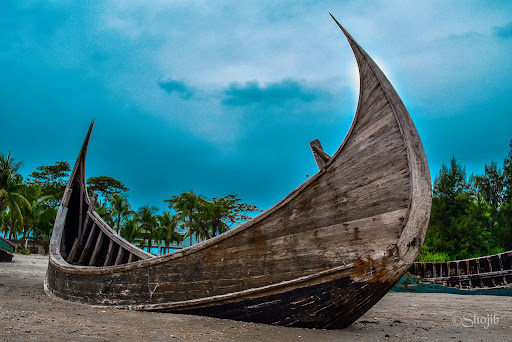
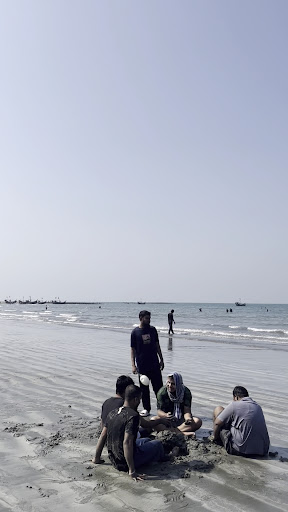
St Martin’s Island a small island in the northeast of the bay of bengal, about 9 km south of the Cox’s Bazar-Teknaf. It is about 8 km west of the northwest coast of Myanmar at the mouth of the river naf.The local people call it Narikel Jinjira. It is almost flat and is 3.6m above the mean sea level. The 9.66 km wide channel between the mainland and the island is much shallower than the open sea southwest of the island. There are reefs from 10-15 km to the west-northwes. The island is 7.315 km long.
The population is about 3,700 and most of them are fishermen belonging to 535 families and most of them muslim. One hundred eighty-two species of wildlife are recorded from the island. Of these, 4 species are amphibians, 28 reptiles, 130 birds and 20 mammals. tourism to the northern part of the island exists during four months (November to February). The most densely populated part is Jinjira. There is scarcity of sweet water on the island. Only a few ponds and a number of tubewells supply sweet water for drinking as well as for cultivation. Though the island falls in the monsoon zone, the climate is much influenced by the sea. The main vegetation is coconut, betel nut and bamboo. Coconut trees are abundant and more concentrated in the Jinjira area. The soil of the island is not so fertile. The main agricultural products are onion, watermelon and some rices. In this Island, the most amazing and joyous thing for tourists would be to take a bath to the sea beach. The waves are subliminal when they arrive at full throttle and makes one fully wet with sea water. There are places to sit just near the sea beach, and amazing natural coconuts are available in Probal Dip. The frontal view of the area consists of the magnificent sea, and on the other side, Probal Dip is filled with trees. Although there is not much greenery except for tropical tress to see in St. Martin’s Island in Cheera Dip and Probal Dip many trees can be noticed. Apart from that, the coral is another fascinating thing in the Probal Dip.
At first, you have to come to Teknaf, if you want to go to St. Martine from Dhaka, or Chittagong or Cox’s Bazar. If you are particularly going from Dhaka, many bus services are available in Saydabad and Fakirapur bus station. It will cost you 1100tk (A/C Bus) and 560tk (Non-A/C Bus) It must be remembered that you have to tell your bus stuff before to let you down at Teknaf Ship Station, in case tourists want to go to St. Martin’s Island from Teknaf. Once you reach Teknaf, you have to take a ride on sea truck or ship to go to St. Martine. But sea trucks are the safest and comfortable. It will take 3 hours to reach there, and the cost will be 750tk, or more, per person in the economy class with a return ticket. Carie Sinbad is the most comfortable sea truck. These sea trucks usually leave at 9.00 pm every morning and return from St. Martine at 3.00pm on the same day.
Rickshaw vans are only available on the island, and they will cost you 100tk + in the peak hour, but in the off-peak hours, the vans will cost 20tk. If you particularly want to visit Chhera Island, speed boats and shallow engines go to this island every morning around 8-9 am. About 15-20 minutes in Speed boats and they will cost 100tk for each person. 50 minutes in the Shallow engines.
Chera Dip, or Island, is an extension of St. Martin’s island. At some time of the year the island is divided by sea tides, however, at other times tourists can walk to Chera Dip. For those tourists who dislike walking for them, there are local motorboats which can take them to Chera Dip. Chera Dip is a wonderful place to visit with friends and families. Tourists can visit both Chera Dip and Probal Dip by walking from their hotels in St Martin’s Island.These are fabulous places to visit. Chera Dip is a natural paradise. In sunset the whole appearance of the sky changes which can be observed both in Chera Dip...
Read moreSaint Martin’s Island, often hailed as the "Gem of the Bay of Bengal," is an exquisite atoll of unparalleled beauty and tranquility, distinguished as Bangladesh's only coral island. This diminutive yet resplendent landmass, spanning approximately 8 square kilometers, is an ecological wonder, where the terrestrial and marine environments coalesce in a dazzling display of biodiversity and natural splendor. Its crystalline waters, shimmering under the sun, reveal an intricate underwater world teeming with coral reefs, marine life, and kaleidoscopic hues, creating a veritable aquatic paradise.
The island’s shores are adorned with velvety white sands, their alabaster hue sharply juxtaposed against the azure expanse of the surrounding waters. These sands, sculpted by the ebb and flow of the tides, provide a serene foreground to the island’s dense canopy of coconut palms and mangroves, which sway languidly in the coastal breeze, casting dappled shadows upon the ground. The island's verdant flora, with its luxuriant foliage, adds a touch of tropical exuberance to this secluded oasis.
Saint Martin's geological formation is itself a subject of fascination. It is primarily a coral island, meaning its very foundation is composed of the skeletal remains of marine invertebrates, creating a unique and fragile ecosystem. The coral reefs, which fringe the island’s periphery, act as a natural barrier, absorbing the ocean’s energy and protecting the island from the erosive forces of the sea. These reefs, home to an array of marine species such as parrotfish, starfish, and sea anemones, offer a rare opportunity for snorkelers and divers to witness the intricate symbiosis of marine life in its undisturbed state.
The island’s biodiversity extends beyond its coral reefs. It is also a crucial habitat for migratory seabirds, turtles, and various marine mammals, all of which contribute to the ecological significance of this small but vital ecosystem. During the breeding season, the island becomes a sanctuary for endangered sea turtles, who return to its secluded beaches to lay their eggs—a natural spectacle that underscores the island’s environmental importance.
Yet, despite its idyllic beauty, Saint Martin’s Island is not without its challenges. The delicate equilibrium of its ecosystem is threatened by unsustainable tourism practices, overfishing, and coral bleaching, all exacerbated by the growing influx of visitors drawn to its unspoiled beauty. The fragility of its coral reefs, in particular, demands rigorous conservation efforts to ensure that this marine wonderland remains intact for future generations.
The human element of Saint Martin’s Island is equally intriguing. The local population, composed of fishermen and traders, live in harmony with the island’s natural rhythms, their livelihoods intrinsically linked to the bounties of the sea. The island’s cultural tapestry is woven with the simplicity of rural life, where small fishing boats dot the coastline, and local markets offer freshly caught seafood and handmade crafts. The pace of life here is slow and unhurried, a stark contrast to the frenetic energy of mainland Bangladesh.
In conclusion, Saint Martin’s Island is a sublime manifestation of nature’s artistry, a place where the terrestrial meets the marine in a harmonious fusion of form and function. Its serene beaches, vibrant coral reefs, and verdant landscapes render it a destination of rare beauty and ecological importance. However, its fragility necessitates a mindful approach to tourism and conservation, as the delicate balance of this coral island hangs in the balance. For those who seek an immersion into a world of natural wonder and peaceful isolation, Saint Martin’s offers an experience that is both awe-inspiring and humbling, a reminder of the intricate and ephemeral nature of the planet’s most...
Read morePlace: Saint Martin Island Bangladesh Traveled: 2016 & 2017
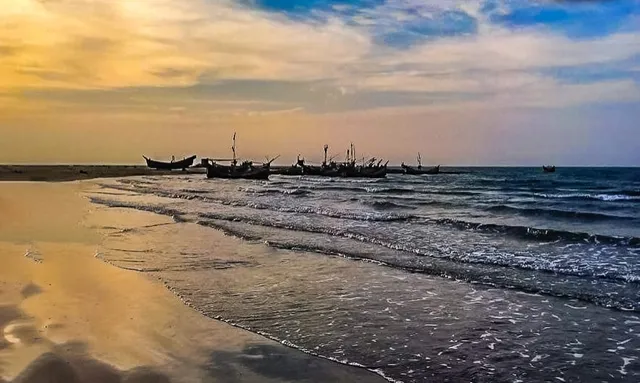
St. Martin Island The only Coral Island of Bangladesh is located in the Bay of Bengal surrounded by huge black stone.
The total area of this tiny island is only 14 km and 20km distance from the mainland of Shahpari Island on the southern tip of Teknaf.
1st settlement started just 250 years ago by some Arabian Sailors and named as ‘Zajira’. Subsequent the local settlers named as Narikel Jinjira. During British occupation the island was named as St. Martin Island. The characteristic of 12km long sandy sea beach is very pleasant having with gentle slope. Crystal clean water with rich biodiversity and unpolluted nature play the vital role to attract the tourists. The southern trip of the island is forested by some mangrove species like Keya, Khalshi, Kirpa, Horgoza and Jhao. Planted trees are also there with coconut, battle nut , bamboo, mango and other local vegetation. There are now more than 6500 people permanently settled there and their main occupation is fishing. The marine life of the island is very rich with different type of sea fishes like Pamfret, Maccaral, Tona, Gruiter etc. There are also various type of shruips, lobstar, King crab and rare species of giant crab can be found in an ideal habitat. This island is specially attracted the natural scientists to be a safe refuge for hatching of different type of sea turtles like olive ridley turtle, Hocksbill turtle, leatherback turtle and loggerhead turtle.
The island is now accessible by newly introduced of regular Sea Truck everyday at 10 am and return by 3 pm along side with many private fishing trawlers.
There are only few 5/6 private tourist lodge and the only standard Hotel Prashad Paradise has opened up to accommodation the most enthusiastic tourists who ventured to cross the 20 km blue water of the Bay of Bengal bordering the south-eastern side by the Myanmar High Hill ranges and the turbulent waves of the Bay. But the natural surrounding of the remote island is considered as the paradise for the nature loving tourist who can enjoy the virgin coral beach and pass leisure time or go for snorkeling in the blue water. The brilliant sunrise and colorful sun set has no match any where in the world. To enjoy the moonlit might sitting on any black stone along side the beach will be life time experience for any tourist.
The adjacent small island Cheradeep is very attractive for rich marine life shells, pearl and corals.
It is about seven kilometer of Cox's Bazar and about nine square kilometer in area. The western side of the island is sandy and different kinds of shells are found on the beach. Off the northern part of the island, there are beds of windowpane oysters. During winter, fisherman set up temporary camps on the island and Dries Sea fishes, which they...
Read more