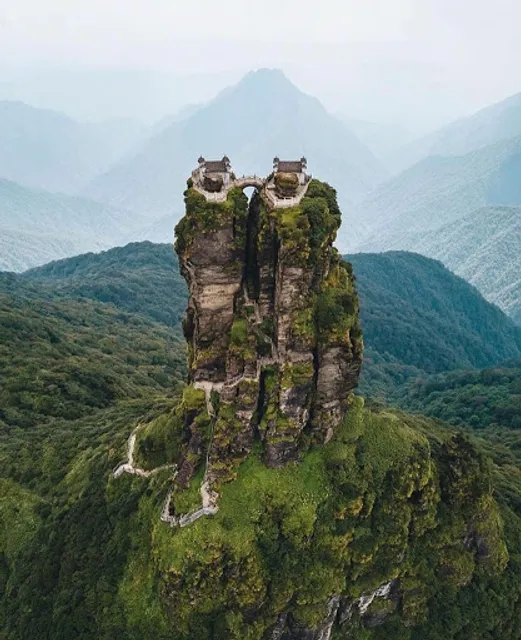
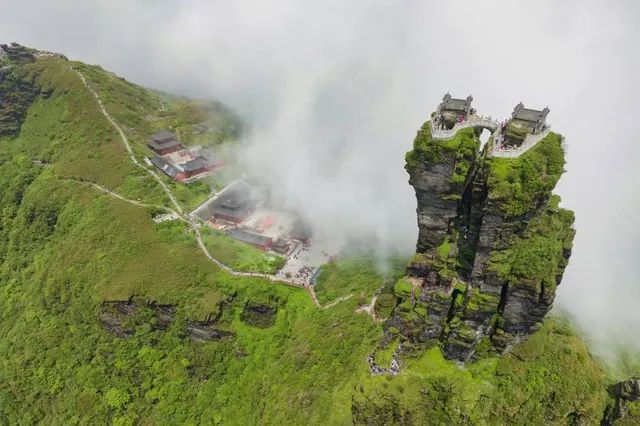
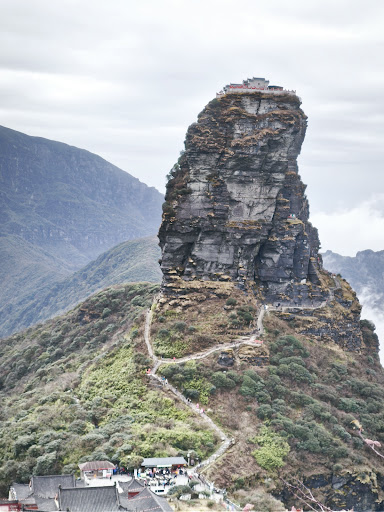
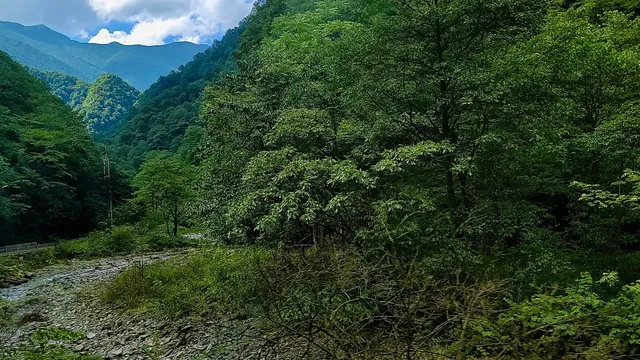
The Fanjingshan World Heritage property is located in South-West China, covering a total area of 40,275 ha, fully enclosed by a buffer zone of 37,239 ha. Fanjingshan is located in a monsoonal climatic context and is an important source of water for the surrounding landscapes and beyond, with some 20 rivers and streams feeding the Wujiang and Yuanjiang River systems, both of which ultimately drain into the Yangtze River.
The property consists of two parts, namely the Jian Nan subtropical evergreen forests ecoregion (64%) and the Guizhou Plateau broadleaf and mixed forests ecoregion (36%). The highest peak, Mt Fenghuangshan, has an elevation of 2,570 m above sea level (masl) and the property covers and an altitudinal range of more than 2,000 m. The resulting vertical stratification of vegetation falls within three major altitudinal vegetation zones: evergreen broadleaf forest (2,200 masl).
Fanjingshan is an island of metamorphic rock in a sea of karst and is home to many ancient and relict plant and animal species which originated in the Tertiary period, between 65 million and 2 million years ago. The property’s geologic and climatic characteristics have shaped its flora which behaves as if it were on an island. This has led to a high degree of endemism, with a total of 46 locally endemic plant species, 4 endemic vertebrate species and 245 endemic invertebrate species. The most prominent endemic species are Fanjingshan Fir (Abies fanjingshanensis - EN) and Guizhou Snub-nosed Monkey (Rhinopithecus brelichi - EN), both of which are entirely restricted to the property. Three species of Fagus (F. longipetiolata, F. lucida, and F. engleriana) are the dominant species of what is understood to be the largest primary beech forest in the subtropical region.
A total of 3,724 plant species have been recorded in the property, an impressive 13% of China’s total flora. The property is characterized by an exceptionally high richness in bryophytes as well as one of the distribution centres for gymnosperms in China. The diversity of invertebrates is also very high with 2,317 species. A total of 450 vertebrate species are found inside the property. Fanjingshan being the only habitat in the world for Fanjingshan Fir and Guizhou Snub-nosed Monkey, as well as 64 plant and 38 animal species that are listed as globally threatened, including the tree Bretschneidera sinensis (EN), Chinese Giant Salamander (Andrias davidianus - CR), Forest Musk Deer (Moschus berezovskii - EN), Reeves’s Pheasant (Syrmaticus reevesii - VU), and Asiatic Black Bear (Ursus...
Read moreAmazing place with a beautiful climb suitable for most fitness levels, would recommend. Or you can just take the cable car up.
The east gate is where you want to climb from. Go to Fanjingshan village, north of Jiangkou and that is where you can get tickets if it is not busy (which it likely will), but I recommend you buy them online instead. If you cannot buy them online, you’ll most likely be fine to buy on site. Still, avoid national holidays and try to go on a weekday so it’s less busy.
Mountain has a closure time so stay the night before in the local village if you expect to arrive later in the day.
From the east gate you’ll get a 20 minute bus to the foot of the mountain as a part of your ticket. From the foot of the mountain, you can go left to begin your climb or go right to take the cable car. Best combination is to climb up and take the 10 minute cable car down (so that’s a mountain + bus + cable car combined ticket).
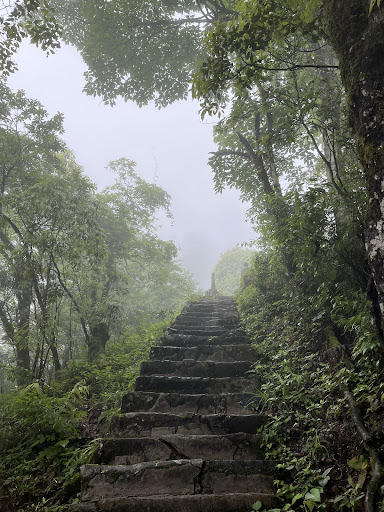
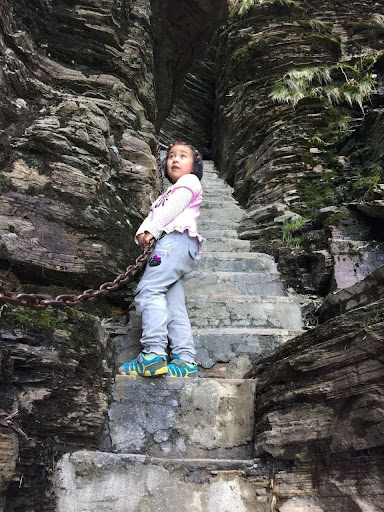
The climb is beautiful and not particularly hard as it is stairs the whole way. Will take anywhere between 4 to 6 hours depending on fitness level. Bring water, food, gloves and a jacket, but other than that you don’t need to pack too heavily.
The peak of the mountain will usually always be quite busy as most people take the cable car up and take a billion photos then leave, so the climb itself is probably the best part of it. Cannot recommend climbing it enough.
Note: to get to the very last peak with the two temples, you’ll need to get an access ticket at the top and wait in a virtual queue. If you don’t plan to go up here, there’s plenty of other temples and shrines at the top...
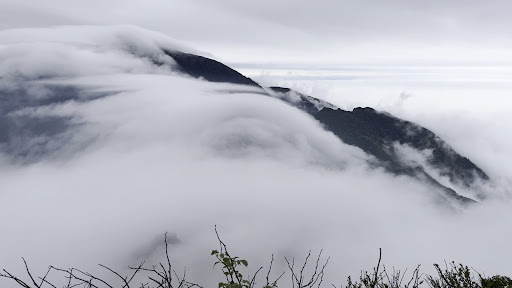
Read moreUm in Chinas Fanjingshan Tempel zu erlangen benötigt es etwas körperliche Kondition. Denn der Tempel des Buddha und Maitreya Tempel sitzen zwischen den Wolken auf dem Berg Fanjing. Es liegt in Tongren City in der Provinz Guizhou, China. Es ist das derzeit höchste Gebäude und der höchste von Menschen geschaffene Tempel der Welt. Der Burj Khalifa in Dubai, erreicht erstaunliche 828 Meter. Das ist sicherlich beeindruckend, aber ein Jahr hunderte altes buddhistisches Tempel Paar auf einem Berggipfel im Südosten Chinas bietet eine noch spektakulärere Aussicht, wenn auch ohne Fahrstuhl. Dafür aber mit ca. 9000 Stufen. Desshalb zu Anfang an gesagt man brauch etwas Kondition. Der Fanjingshan Tempel liegt auf dem Fanjing Berg. Er liegt auf einer spindeldürren Felsformation namens Red Clouds Golden Summit. Mutige Besucher und mit guter Kondition können den Gipfel besteigen, um von Nebel und Wolkenmeer umgeben zu sein. Der Fanjingshan Tempel hat eine Geschichte. Er hat den UNESCO Weltkulturerbe Status. Eigentlich besteht er aus zwei Tempel, die mehr als 2.336 Meter über dem Meeresspiegel liegen. Sie sind nur durch eine Reihe von Stufen erreichbar. Die sich den Berg hinauf winden. Fanjingshan ist ein chinesisches Wort, das "buddhistische Ruhe" bedeutet. Der Tempel des Buddha, der der Verehrung von Shakyamuni (Buddha) gewidmet ist, repräsentiert die Gegenwart, und der Maitreya-Tempel repräsentiert die Zukunft. Der Tempel des Buddha wird zuerst erreicht der auch den Zugang zum anderen bietet. Um zu seinem Partnertempel zu gelangen, überqueren Sie einfach die Gold Schwert Schlucht über eine Steinbrücke, die zwischen den beiden Gipfeln verläuft. Die auch bei schönen Wetter eine wahrhaftig schöne Aussicht präsentiert. Ich habe mal zwei Ansichten, Schnee und Eis. Oder wenn es warm...
Read more