HTML SitemapExplore

Mt Nyiragongo — Local services in Bukumu

Name
Mt Nyiragongo
Description
Nearby attractions
Nearby restaurants
Nearby local services
Mount Nyiragongo
Congo - Kinshasa
Nearby hotels
Related posts
Keywords
Mt Nyiragongo tourism.Mt Nyiragongo hotels.Mt Nyiragongo bed and breakfast. flights to Mt Nyiragongo.Mt Nyiragongo attractions.Mt Nyiragongo restaurants.Mt Nyiragongo local services.Mt Nyiragongo travel.Mt Nyiragongo travel guide.Mt Nyiragongo travel blog.Mt Nyiragongo pictures.Mt Nyiragongo photos.Mt Nyiragongo travel tips.Mt Nyiragongo maps.Mt Nyiragongo things to do.
Mt Nyiragongo things to do, attractions, restaurants, events info and trip planning
Mt Nyiragongo
Democratic Republic of the CongoNorth KivuBukumuMt Nyiragongo

Basic Info

Mt Nyiragongo

Congo - Kinshasa
4.4(253)
Save
spot

Ratings & Description

Info

Outdoor
Adventure
Scenic
Off the beaten path
attractions: , restaurants: , local businesses: Mount Nyiragongo
logoLearn more insights from Wanderboat AI.

Plan your stay

hotel
Pet-friendly Hotels in Bukumu
Find a cozy hotel nearby and make it a full experience.
hotel
Affordable Hotels in Bukumu
Find a cozy hotel nearby and make it a full experience.
hotel
The Coolest Hotels You Haven't Heard Of (Yet)
Find a cozy hotel nearby and make it a full experience.
hotel
Trending Stays Worth the Hype in Bukumu
Find a cozy hotel nearby and make it a full experience.

Reviews

Nearby local services of Mt Nyiragongo

Mount Nyiragongo

Mount Nyiragongo

Mount Nyiragongo

4.4

(227)

Click for details
Get the Appoverlay
Get the AppOne tap to find yournext favorite spots!
Wanderboat LogoWanderboat

Your everyday Al companion for getaway ideas

CompanyAbout Us
InformationAI Trip PlannerSitemap
SocialXInstagramTiktokLinkedin
LegalTerms of ServicePrivacy Policy

Get the app

© 2025 Wanderboat. All rights reserved.

Reviews of Mt Nyiragongo

4.4
(253)
avatar
5.0
8y

In August this year I visited the Nyiragongo volcano in the Democratic Republic of Congo. This volcano hasn’t had a regular outbreak since 2002, but it has an exciting lava lake within its crater.

The summit of Mount Nyiragongo is located about 20 km north of Lake Kivu and the city of Goma. The elevation of Lake Kivu is 1460 metres above mean sea level. To get to Nyiragongo you need to book a volcano trek with the Virunga National Park, and there’s also a fee to pay for a permit to climb the mountain. The starting point of the trek is Kibati Station, a ranger station within the park, somehow located at the foot of the mountain, at an elevation of about 1995 metres; and only about half an hour’s drive from Goma. The track from Kibati to the top is 7.8 km, and the crater edge is located at an elevation of 3470 meters; thus you have a quite steep climb of almost 1500 vertical metres to get there. In addition, the altitude ensures the air that you breathe while climbing is quite thin; so don’t embark on this trek unless you’ve trained sufficiently in advance of your journey.

For the trek you may bring your own food, or you may include a small, medium or large food package in your booking with the park. Likewise, you may bring your own equipment, or you may rent a backpack with jacket, raincoat, sleeping bag etc. from the park. Accommodation in a shelter at the top is included, and if needed, you may hire a porter for an additional cost.

We started from Kibati at 10:30 a.m., and followed a forest track in a northwest direction. The ground on which we walked was volcanic for the entire climb. Initially it was black lava soil that was quite OK to walk on. Higher up it was loose stones of solidified lava that tended to roll under your feet, and made walking a bit more tricky; and in the upper part it was lava rock that wouldn’t roll away under you, but tended to be a bit slippery, especially when wet. Five stops were scheduled for food and rest during the climb.

At an elevation of about 2700 metres, we passed the crater of Shaheru, and older volcano that is interconnected with Nyiragongo, and shortly after we came to a large fissure in the mountain side of Nyiragongo; the eruption site of 1977 and 2002. The fissure was created back in 1977 as lava melted its way through the mountainside, the mountainside being solidified lava of about the same composition as the fluid lava. The fissure is quite fascinating, and there was steam coming out of it; but the park rangers told us it isn’t possible to walk through it into the crater. In 1977 lava emerging from the fissure was flowing down towards Kibati, whereas in 2002, I was told, part of the lava stream found its way into the Shaheru crater, melted its way through that crater, emerged through another fissure on the southern slopes of Shaheru, and found its way to Goma, where it buried a large part of the city. Currently, the surface of the lava lake in Nyiragongo is safely below the mountainside fissure, but no one can really predict when the lava level will increase again, and make another eruption inevitable.

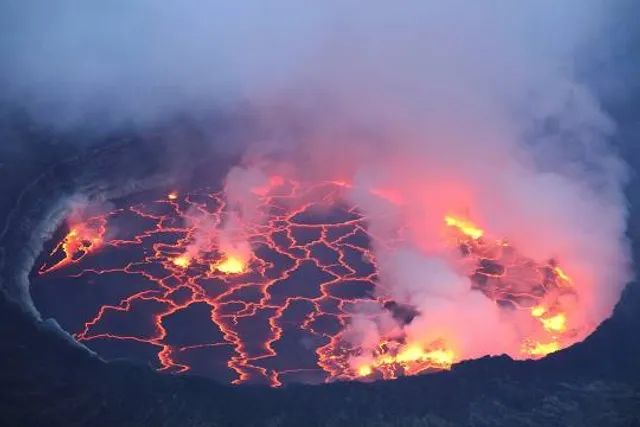
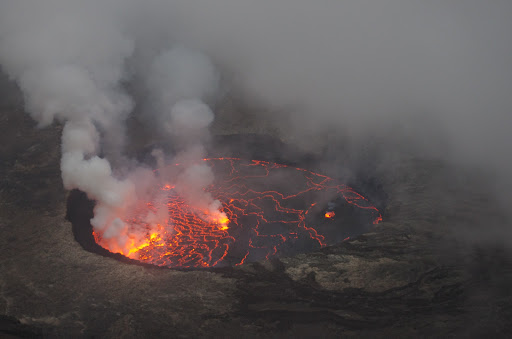
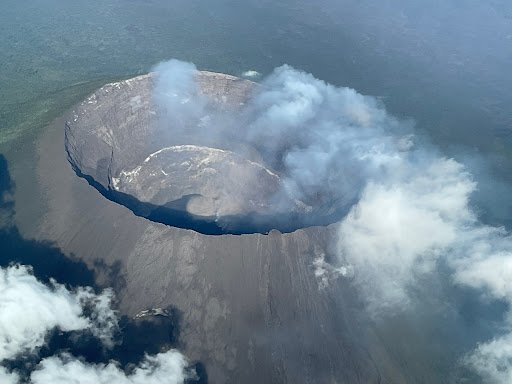
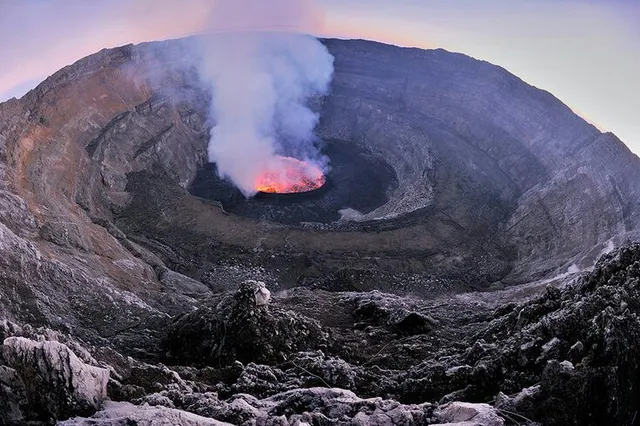
We arrived at the crater edge at early twilight, and right away I shot a few pictures of the lava lake and of my wife standing on the edge of the crater. Less than five minutes later, however, the view of the lava lake was closed by dense clouds that covered the crater, and the walls of the crater are so steep, that you can’t climb down into the crater, unless you acquired a special permit from the park authorities and also brought with you some advanced climbing equipment. There is a small risk, that you may climb Nyiragongo just to encounter a view totally obscured by clouds. The problem is not just vapor from the volcano, as that blows away whenever it’s windy. The big problem, unless it’s dry season, is adiabatic cloud formation caused by humid air from Lake Kivu or from the rain forest when it hits the mountain. These clouds don’t blow away; they increase with...

   Read more

avatar
5.0
6y

We booked our tour package directly with Virunga national park. We opted for the mount nyiragongo trek only because the gorilla tracking is cheaper in Uganda (although their gorillas are smaller apparently, so you get what you pay for).

We stayed at gisenyi the night before (rwanda side) and went to the virunga office at 8am the following morning after going through customs. A driver picked us up and we were on our way, another vehicle with rangers was following close behind the whole time. When we arrived to the beginning of the trail we bought a hiking stick for 5USD which was a GREAT investment considering how many falls it prevented, we also took it home after as a souvenir. We paid for the backpack through virunga which cost $100. The pack included 3L water, some small snacks for the hike up, a sleeping bag, fleece liner, fleece sweater, jacket, and poncho. We used everything in the bag it's a great investment. It's alsp extremely heavy so you need to hire a porter for 25USd.

We began the trek at around 1030 after a quick briefing of what to expect. There was 8 tourist in our group. The trek starts off in the jungle with a mild incline, this portion took us about 50 mins. Near the end of the first part it began raining heavily, our guide told us to put our ponchos on. After a brief rest at the first stop you go out of the jungle and begin trekking on loose volcanic rocks. Unfortunately for us, there was a full on rainstorm, it was insane. We were all wet from head to toe despite having a poncho. I lost track of the timing of each section at this point. The climb gets steeper and steeper. The rain wouldn't let up. It was also getting colder and colder. The worst segment for me was from 3-4 as it seemed it would never end! We finally reached the porters cabin (4th rest stop I believe..) and I was freezing to death!! Wet clothes and freezing temperatures, the morale was certainly low at this point. Some changed into dry clothes and put warm jackets on in the cabin. I ate my lunch because at least we weren't out in the rain although I was hungry earlier. The previous stops were all out in the open with benches, they may have been enjoyable if it was a sunny day, but it was not! There's also a bathroom at 4th rest stop. The final part of the trek is estimated to take about 30 mins, it is incredibly steep but you can see the cabins from afar and that is motivation enough to keep moving.

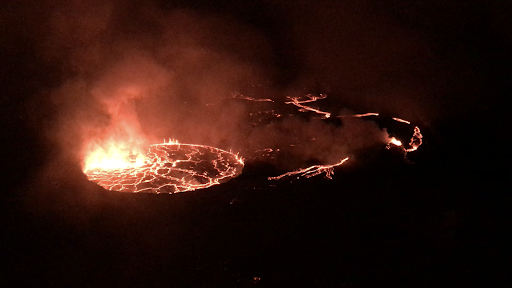
We finally arrived to the top, I was surprised to find out that it only took us about 4-4.5 hour altogether. The cabins look well maintained, there is 2 comfortable sleeping mats inside each of them. I changed into my dry and warm clothes, I brought a pair of flip flops and warm dry socks. Make sure to bring extra clothes or you'll regret it! Everyone's hiking shoes were soaked through so we dried them off near the fire. The crater was amazing and the volcano was getting more and more active as the sun was coming down. I could watch the volcano for hours but it was freezing so we spent a lot of time near the fire while the cook was preparing dinner. The backpack also includes food. We had soup, a big piece of steak and rice for dinner. It was delicious. We went to bed after watching the volcano some more, it actually felt a bit warmer at night after eating.

The next morning we had breakfast at 6am and set out at 645am. The ranger is quite strict with time, not sure if we had to be out before the next group begins. The trek down was steep and slippery. Everyone had many near falls and at least 1 actual fall. Luckily it wasn't raining! It took 3hrs and we were done by 10am.

We were worried about safety and ebola initially but came to realize that it was actually pretty safe and the ebola was far away (300km away they told us). Mount nyiragongo was the most memorable part of our...

   Read more
avatar
5.0
6y

This is the hardest hike many of us will ever complete, but it's absolutely worth it. The pictures can not come close to capturing the beauty and, for me, utter shock, of peering over the rim of Nyurigongo and staring a mile down into the most active lava lake in the world. After a downright challenging hike, there are few experiences more rewarding than gradually coming into earshot of the faint roar of Nyurigongo's summit. For those travelling here, remember three things: (a) it's colder up top than you think, so have layers for after the hike; (b) stay hydrated and pace the way up -- it starts off feeling easy, but the slope only increases as you go up, and the volcanic rock really starts to wear out your feet/shoes; and (c) bring toilet paper, just sayin'. The Virunga rangers are respected, professional, and in complete control of the hike's route -- I felt perfectly safe. Lastly, the porters, who assist with carrying items up the mountain, are Nyurigongo's true heroes -- you can't thank/tip them enough for all of the hard work they put in over the course...

   Read more
Page 1 of 7
Previous
Next

Posts

Atle SolholmAtle Solholm
In August this year I visited the Nyiragongo volcano in the Democratic Republic of Congo. This volcano hasn’t had a regular outbreak since 2002, but it has an exciting lava lake within its crater. The summit of Mount Nyiragongo is located about 20 km north of Lake Kivu and the city of Goma. The elevation of Lake Kivu is 1460 metres above mean sea level. To get to Nyiragongo you need to book a volcano trek with the Virunga National Park, and there’s also a fee to pay for a permit to climb the mountain. The starting point of the trek is Kibati Station, a ranger station within the park, somehow located at the foot of the mountain, at an elevation of about 1995 metres; and only about half an hour’s drive from Goma. The track from Kibati to the top is 7.8 km, and the crater edge is located at an elevation of 3470 meters; thus you have a quite steep climb of almost 1500 vertical metres to get there. In addition, the altitude ensures the air that you breathe while climbing is quite thin; so don’t embark on this trek unless you’ve trained sufficiently in advance of your journey. For the trek you may bring your own food, or you may include a small, medium or large food package in your booking with the park. Likewise, you may bring your own equipment, or you may rent a backpack with jacket, raincoat, sleeping bag etc. from the park. Accommodation in a shelter at the top is included, and if needed, you may hire a porter for an additional cost. We started from Kibati at 10:30 a.m., and followed a forest track in a northwest direction. The ground on which we walked was volcanic for the entire climb. Initially it was black lava soil that was quite OK to walk on. Higher up it was loose stones of solidified lava that tended to roll under your feet, and made walking a bit more tricky; and in the upper part it was lava rock that wouldn’t roll away under you, but tended to be a bit slippery, especially when wet. Five stops were scheduled for food and rest during the climb. At an elevation of about 2700 metres, we passed the crater of Shaheru, and older volcano that is interconnected with Nyiragongo, and shortly after we came to a large fissure in the mountain side of Nyiragongo; the eruption site of 1977 and 2002. The fissure was created back in 1977 as lava melted its way through the mountainside, the mountainside being solidified lava of about the same composition as the fluid lava. The fissure is quite fascinating, and there was steam coming out of it; but the park rangers told us it isn’t possible to walk through it into the crater. In 1977 lava emerging from the fissure was flowing down towards Kibati, whereas in 2002, I was told, part of the lava stream found its way into the Shaheru crater, melted its way through that crater, emerged through another fissure on the southern slopes of Shaheru, and found its way to Goma, where it buried a large part of the city. Currently, the surface of the lava lake in Nyiragongo is safely below the mountainside fissure, but no one can really predict when the lava level will increase again, and make another eruption inevitable. We arrived at the crater edge at early twilight, and right away I shot a few pictures of the lava lake and of my wife standing on the edge of the crater. Less than five minutes later, however, the view of the lava lake was closed by dense clouds that covered the crater, and the walls of the crater are so steep, that you can’t climb down into the crater, unless you acquired a special permit from the park authorities and also brought with you some advanced climbing equipment. There is a small risk, that you may climb Nyiragongo just to encounter a view totally obscured by clouds. The problem is not just vapor from the volcano, as that blows away whenever it’s windy. The big problem, unless it’s dry season, is adiabatic cloud formation caused by humid air from Lake Kivu or from the rain forest when it hits the mountain. These clouds don’t blow away; they increase with increasing wind.
Eunice UEunice U
We booked our tour package directly with Virunga national park. We opted for the mount nyiragongo trek only because the gorilla tracking is cheaper in Uganda (although their gorillas are smaller apparently, so you get what you pay for). We stayed at gisenyi the night before (rwanda side) and went to the virunga office at 8am the following morning after going through customs. A driver picked us up and we were on our way, another vehicle with rangers was following close behind the whole time. When we arrived to the beginning of the trail we bought a hiking stick for 5USD which was a GREAT investment considering how many falls it prevented, we also took it home after as a souvenir. We paid for the backpack through virunga which cost $100. The pack included 3L water, some small snacks for the hike up, a sleeping bag, fleece liner, fleece sweater, jacket, and poncho. We used everything in the bag it's a great investment. It's alsp extremely heavy so you need to hire a porter for 25USd. We began the trek at around 1030 after a quick briefing of what to expect. There was 8 tourist in our group. The trek starts off in the jungle with a mild incline, this portion took us about 50 mins. Near the end of the first part it began raining heavily, our guide told us to put our ponchos on. After a brief rest at the first stop you go out of the jungle and begin trekking on loose volcanic rocks. Unfortunately for us, there was a full on rainstorm, it was insane. We were all wet from head to toe despite having a poncho. I lost track of the timing of each section at this point. The climb gets steeper and steeper. The rain wouldn't let up. It was also getting colder and colder. The worst segment for me was from 3-4 as it seemed it would never end! We finally reached the porters cabin (4th rest stop I believe..) and I was freezing to death!! Wet clothes and freezing temperatures, the morale was certainly low at this point. Some changed into dry clothes and put warm jackets on in the cabin. I ate my lunch because at least we weren't out in the rain although I was hungry earlier. The previous stops were all out in the open with benches, they may have been enjoyable if it was a sunny day, but it was not! There's also a bathroom at 4th rest stop. The final part of the trek is estimated to take about 30 mins, it is incredibly steep but you can see the cabins from afar and that is motivation enough to keep moving. We finally arrived to the top, I was surprised to find out that it only took us about 4-4.5 hour altogether. The cabins look well maintained, there is 2 comfortable sleeping mats inside each of them. I changed into my dry and warm clothes, I brought a pair of flip flops and warm dry socks. Make sure to bring extra clothes or you'll regret it! Everyone's hiking shoes were soaked through so we dried them off near the fire. The crater was amazing and the volcano was getting more and more active as the sun was coming down. I could watch the volcano for hours but it was freezing so we spent a lot of time near the fire while the cook was preparing dinner. The backpack also includes food. We had soup, a big piece of steak and rice for dinner. It was delicious. We went to bed after watching the volcano some more, it actually felt a bit warmer at night after eating. The next morning we had breakfast at 6am and set out at 645am. The ranger is quite strict with time, not sure if we had to be out before the next group begins. The trek down was steep and slippery. Everyone had many near falls and at least 1 actual fall. Luckily it wasn't raining! It took 3hrs and we were done by 10am. We were worried about safety and ebola initially but came to realize that it was actually pretty safe and the ebola was far away (300km away they told us). Mount nyiragongo was the most memorable part of our africa trip!
Kristín Helga MagnúsdóttirKristín Helga Magnúsdóttir
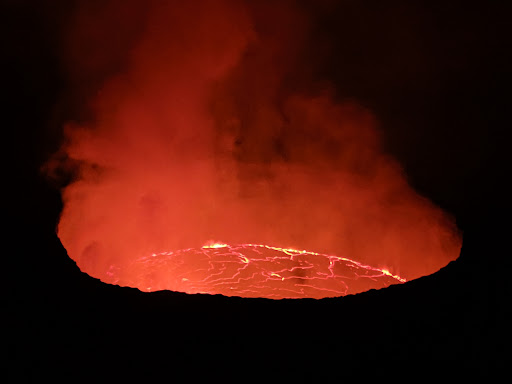
Breathtaking. The most memorable experience from my whole trip in Africa. Everything about this was just perfect. We hiked in a beautiful weather (we were so lucky it didn’t rain, apparently it always rains - so bring very warm clothes!) and when we got to the top we were just mesmerized by the lava. We just stared for a couple of hours until we had amazing dinner cooked by our chef (included in the package). Then we just sat by the crater (literally 5 meters from the cabins) and watched the lava until bedtime. Don’t miss out on this!
See more posts
See more posts
hotel
Find your stay

Pet-friendly Hotels in Bukumu

Find a cozy hotel nearby and make it a full experience.

In August this year I visited the Nyiragongo volcano in the Democratic Republic of Congo. This volcano hasn’t had a regular outbreak since 2002, but it has an exciting lava lake within its crater. The summit of Mount Nyiragongo is located about 20 km north of Lake Kivu and the city of Goma. The elevation of Lake Kivu is 1460 metres above mean sea level. To get to Nyiragongo you need to book a volcano trek with the Virunga National Park, and there’s also a fee to pay for a permit to climb the mountain. The starting point of the trek is Kibati Station, a ranger station within the park, somehow located at the foot of the mountain, at an elevation of about 1995 metres; and only about half an hour’s drive from Goma. The track from Kibati to the top is 7.8 km, and the crater edge is located at an elevation of 3470 meters; thus you have a quite steep climb of almost 1500 vertical metres to get there. In addition, the altitude ensures the air that you breathe while climbing is quite thin; so don’t embark on this trek unless you’ve trained sufficiently in advance of your journey. For the trek you may bring your own food, or you may include a small, medium or large food package in your booking with the park. Likewise, you may bring your own equipment, or you may rent a backpack with jacket, raincoat, sleeping bag etc. from the park. Accommodation in a shelter at the top is included, and if needed, you may hire a porter for an additional cost. We started from Kibati at 10:30 a.m., and followed a forest track in a northwest direction. The ground on which we walked was volcanic for the entire climb. Initially it was black lava soil that was quite OK to walk on. Higher up it was loose stones of solidified lava that tended to roll under your feet, and made walking a bit more tricky; and in the upper part it was lava rock that wouldn’t roll away under you, but tended to be a bit slippery, especially when wet. Five stops were scheduled for food and rest during the climb. At an elevation of about 2700 metres, we passed the crater of Shaheru, and older volcano that is interconnected with Nyiragongo, and shortly after we came to a large fissure in the mountain side of Nyiragongo; the eruption site of 1977 and 2002. The fissure was created back in 1977 as lava melted its way through the mountainside, the mountainside being solidified lava of about the same composition as the fluid lava. The fissure is quite fascinating, and there was steam coming out of it; but the park rangers told us it isn’t possible to walk through it into the crater. In 1977 lava emerging from the fissure was flowing down towards Kibati, whereas in 2002, I was told, part of the lava stream found its way into the Shaheru crater, melted its way through that crater, emerged through another fissure on the southern slopes of Shaheru, and found its way to Goma, where it buried a large part of the city. Currently, the surface of the lava lake in Nyiragongo is safely below the mountainside fissure, but no one can really predict when the lava level will increase again, and make another eruption inevitable. We arrived at the crater edge at early twilight, and right away I shot a few pictures of the lava lake and of my wife standing on the edge of the crater. Less than five minutes later, however, the view of the lava lake was closed by dense clouds that covered the crater, and the walls of the crater are so steep, that you can’t climb down into the crater, unless you acquired a special permit from the park authorities and also brought with you some advanced climbing equipment. There is a small risk, that you may climb Nyiragongo just to encounter a view totally obscured by clouds. The problem is not just vapor from the volcano, as that blows away whenever it’s windy. The big problem, unless it’s dry season, is adiabatic cloud formation caused by humid air from Lake Kivu or from the rain forest when it hits the mountain. These clouds don’t blow away; they increase with increasing wind.
Atle Solholm

Atle Solholm

hotel
Find your stay

Affordable Hotels in Bukumu

Find a cozy hotel nearby and make it a full experience.

Get the Appoverlay
Get the AppOne tap to find yournext favorite spots!
We booked our tour package directly with Virunga national park. We opted for the mount nyiragongo trek only because the gorilla tracking is cheaper in Uganda (although their gorillas are smaller apparently, so you get what you pay for). We stayed at gisenyi the night before (rwanda side) and went to the virunga office at 8am the following morning after going through customs. A driver picked us up and we were on our way, another vehicle with rangers was following close behind the whole time. When we arrived to the beginning of the trail we bought a hiking stick for 5USD which was a GREAT investment considering how many falls it prevented, we also took it home after as a souvenir. We paid for the backpack through virunga which cost $100. The pack included 3L water, some small snacks for the hike up, a sleeping bag, fleece liner, fleece sweater, jacket, and poncho. We used everything in the bag it's a great investment. It's alsp extremely heavy so you need to hire a porter for 25USd. We began the trek at around 1030 after a quick briefing of what to expect. There was 8 tourist in our group. The trek starts off in the jungle with a mild incline, this portion took us about 50 mins. Near the end of the first part it began raining heavily, our guide told us to put our ponchos on. After a brief rest at the first stop you go out of the jungle and begin trekking on loose volcanic rocks. Unfortunately for us, there was a full on rainstorm, it was insane. We were all wet from head to toe despite having a poncho. I lost track of the timing of each section at this point. The climb gets steeper and steeper. The rain wouldn't let up. It was also getting colder and colder. The worst segment for me was from 3-4 as it seemed it would never end! We finally reached the porters cabin (4th rest stop I believe..) and I was freezing to death!! Wet clothes and freezing temperatures, the morale was certainly low at this point. Some changed into dry clothes and put warm jackets on in the cabin. I ate my lunch because at least we weren't out in the rain although I was hungry earlier. The previous stops were all out in the open with benches, they may have been enjoyable if it was a sunny day, but it was not! There's also a bathroom at 4th rest stop. The final part of the trek is estimated to take about 30 mins, it is incredibly steep but you can see the cabins from afar and that is motivation enough to keep moving. We finally arrived to the top, I was surprised to find out that it only took us about 4-4.5 hour altogether. The cabins look well maintained, there is 2 comfortable sleeping mats inside each of them. I changed into my dry and warm clothes, I brought a pair of flip flops and warm dry socks. Make sure to bring extra clothes or you'll regret it! Everyone's hiking shoes were soaked through so we dried them off near the fire. The crater was amazing and the volcano was getting more and more active as the sun was coming down. I could watch the volcano for hours but it was freezing so we spent a lot of time near the fire while the cook was preparing dinner. The backpack also includes food. We had soup, a big piece of steak and rice for dinner. It was delicious. We went to bed after watching the volcano some more, it actually felt a bit warmer at night after eating. The next morning we had breakfast at 6am and set out at 645am. The ranger is quite strict with time, not sure if we had to be out before the next group begins. The trek down was steep and slippery. Everyone had many near falls and at least 1 actual fall. Luckily it wasn't raining! It took 3hrs and we were done by 10am. We were worried about safety and ebola initially but came to realize that it was actually pretty safe and the ebola was far away (300km away they told us). Mount nyiragongo was the most memorable part of our africa trip!
Eunice U

Eunice U

hotel
Find your stay

The Coolest Hotels You Haven't Heard Of (Yet)

Find a cozy hotel nearby and make it a full experience.

hotel
Find your stay

Trending Stays Worth the Hype in Bukumu

Find a cozy hotel nearby and make it a full experience.

Breathtaking. The most memorable experience from my whole trip in Africa. Everything about this was just perfect. We hiked in a beautiful weather (we were so lucky it didn’t rain, apparently it always rains - so bring very warm clothes!) and when we got to the top we were just mesmerized by the lava. We just stared for a couple of hours until we had amazing dinner cooked by our chef (included in the package). Then we just sat by the crater (literally 5 meters from the cabins) and watched the lava until bedtime. Don’t miss out on this!
Kristín Helga Magnúsdóttir

Kristín Helga Magnúsdóttir

See more posts
See more posts