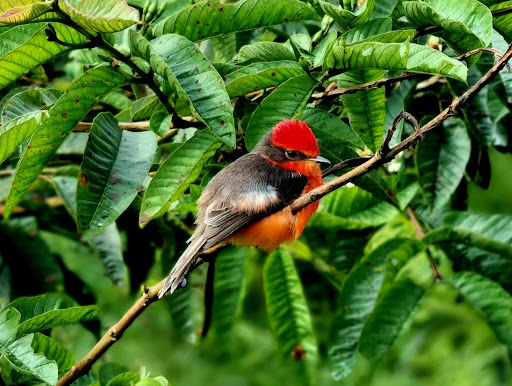
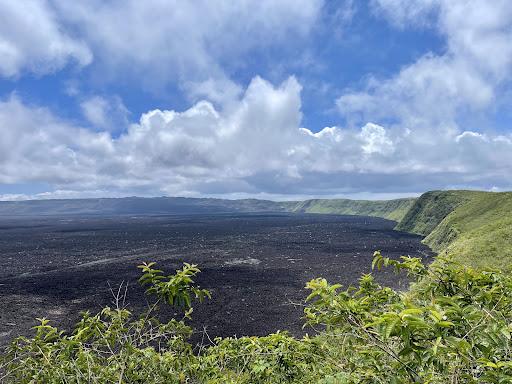
Beautiful and exciting experience. We've had an amazing English speaking guide who told us all about the volcano, the processes of lava and magma, and nature. He is very knowledgeable. At the beginning of the hike, we saw a Vermilion Flycather, which is on the brink of extinction, according to our guide. But this is the best area to spot this beautiful little bird. The hike is beautiful with a different landscape every half our. The hike is doable from a moderate physical condition and up. The guides take good care of you and make sure you rest enough. We've booked with the tour operator Rosedelco, which I would...
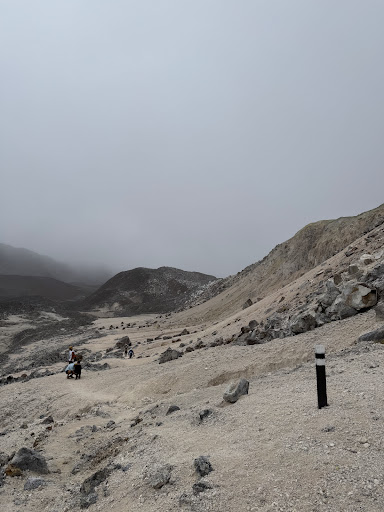
Read moreSierra Negra Volcano is an absolute must-see in the Galápagos - it truly feels like you’ve landed on another planet. The landscape is surreal: vast stretches of black lava rock, sulfur vents, and craters that seem to go on forever. As you hike, the shapes and colors of the rocks change dramatically, giving you a front-row seat to the raw, volcanic power that shaped these islands.
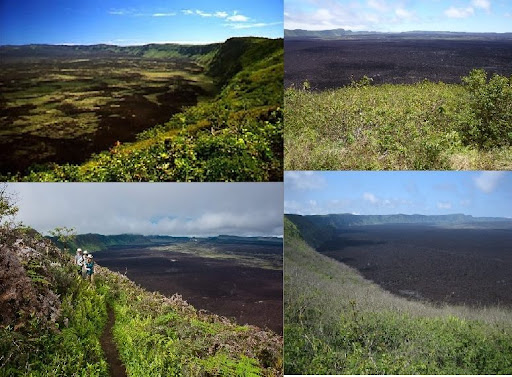
The views from the caldera are breathtaking - one of the largest volcanic craters in the world; and on a clear day, you can see for miles. The trail is not too difficult, but it can get hot, so bring water, good shoes, and...
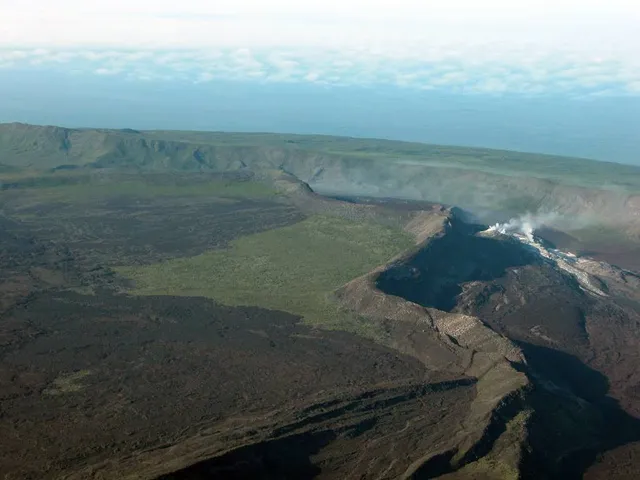
Read moreREALMENTE O EH ESTADO AHI Y TAMPOCO ENCONTRE INFORMACION ACTUALOZADA DEBIDO A QUE ES UN LUGAR SEMI PELIGROSO POR SU ACTIVIDAD Volcán Chico, provincia de Galápagos. Volcán Chico es un cono de salpicadura que se formó durante la erupción de 1979 del volcán Sierra Negra. La zona de volcán Chico, ubicada al nororiente de la Caldera, es la más activa del volcán Sierra Negra. El volcán Sierra Negra (1124 msnm, 0.83°S, 91.17°W) es un volcán escudo elíptico de 60 × 40 km ubicado en la parte Sur de la isla Isabela, archipiélago de Galápagos (Ecuador). Tiene una amplia caldera de 110 m de profundidad con una forma elíptica (9.3 × 7.4 km). Dentro de la caldera se encuentra una cresta sinusoidal en forma de C de hasta 100 m de alto localizada en la parte Sur y Occidental. En la historia reciente (últimos 200 años), las zonas más activas del volcán se encuentran en la región norte de la caldera y corresponden a fisuras circunferenciales, el borde de la caldera y la zona conocida como Volcán Chico. Tuvo unas 12 erupciones desde 1813. Su última erupción ocurrió entre el 22 y el 30 de octubre de 2005 y emitió ~150 millones de m³ de lava. En el sector suroccidental de la cresta sinuosa se encuentra la zona de Minas de Azufre, un campo fumarólico activo con importantes depósitos de azufre nativo. En esta zona, las temperaturas de las fumarolas alcanzan más de 250°C. (Foto: Antonio Proaño,...
Read more