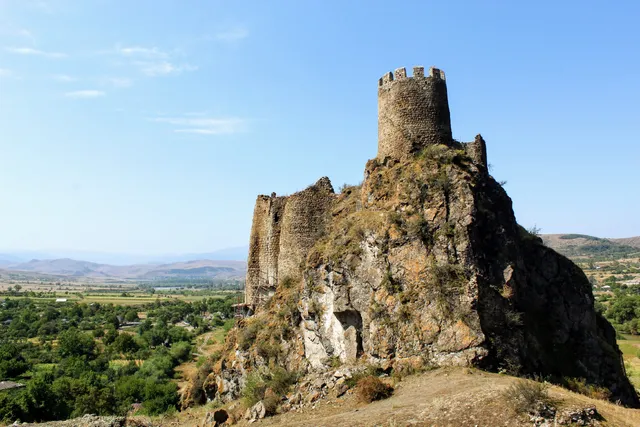
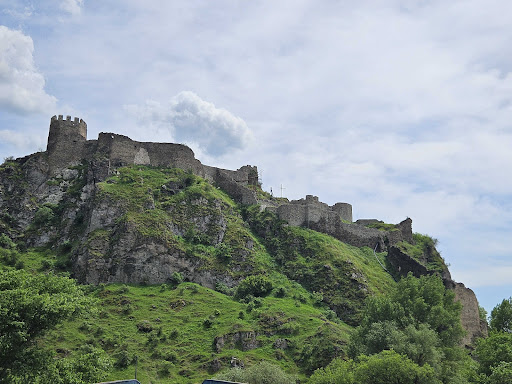
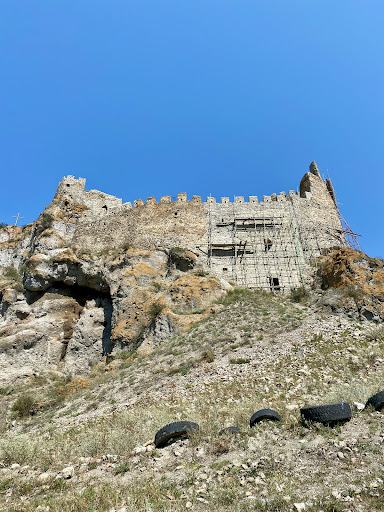
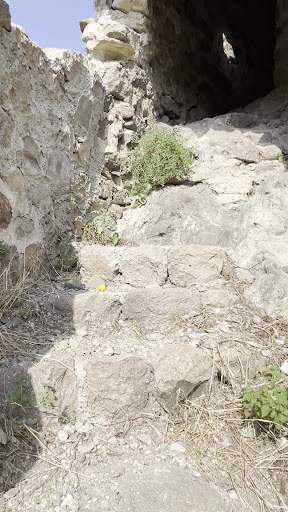
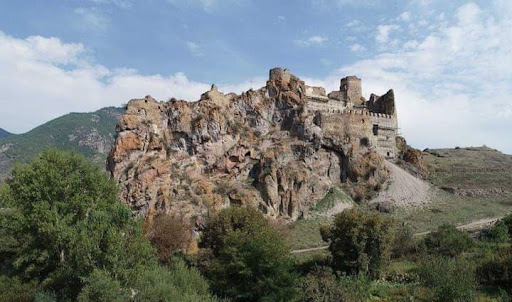
Atskuri fortress is an important fortification guarding the main caravan road going from south to the Georgia proper. One of several fortifications built to protect the area it survived to this day. It is rugged, adventurous and well worth the climb you need to get to the top. The views are stunning and the valley is like on the palm of your hand. We visited in late spring, so the vegetation was overgrown, the grass was pretty high and the idea that snakes could have been lingering nearby was on our mind when we navigated through the grass, but fears were unfounded :) You need to climb some dodgy looking scaffolding to get to the second and the higher ground of the citadel, but it is easily doable. The lower part of the fortress is easily accessible. I guess you can go up to the lower part of the fortress with children (we did not, it was quite hot). Overall the climb and the views was...
Read moreThe Atskuri Fortress protected the Borjomi Gorge from the south. In the second half of the XVI century, the fortress Ottomans occupied. In 1770, the Atskuri Fortress had a joint army of Russian-Georgians, but it was impossible to take over. In accordance with the Treaty of Adrianopol in 1829, it was liberated from Ottoman domination.
The Atskuri fortress constructors used a high and hard-to-climb relief and created a very complex and interesting structure of construction. You can enter the prison with a narrow tunnel in the rock. The internal structure was so difficult to understand that the enemy could not easily be subdued even after the invasion of the tunnel. Now the castle is no longer the whole structure. There are many constructions of different...
Read morePevnosť sa nachádza na skale nad riekou Kurou v rokline Borjomi, presnejšie pri južnom vchode do rokliny. V stredoveku slúžil hrad, ako významné strážne a colné miesto na prechod roklinou no predtým tu bolo veľké mesto. Archeológovia sa domnievajú, že ľudia sa tu usadili v dobe bronzovej, okolo roku 1700 pred n. L. V prvých storočiach nášho letopočtu tu už bolo mesto, ktoré navštívil apoštol Ondrej Prvopočetný.
Aj, keď sa nám pôvodne pevnosť zachovala ako zrúcanina, ktorej posledná podoba bola zo stavebných aktivít z XIV. - XVIII. storočia dnes je celá v rekonštrukcii. Takže sa máme na čo tešiť, už teraz je vidno kus práce, ktorí tu odviedli. Som zvedavý do akej podoby chcú rekonštrukciu dotiahnuť.
Zaujímavý záznam o pevnosti nájdeme u francúzskeho cestovateľa Jeana Chardina. V roku 1672 prešiel okolo pevnosti a spomína ju pod menom Usker a píše, že sa bál, že mu colníci pokazia život (Turecko-iránska hranica bola severne niekde pri Dviri.), ale jeho sprievodcom bol Gorian a bez problémov ich pustili dovnútra, pretože „gruzínsky chán“ má s achaltsikh pašom dobré vzťahy, takže sa tu ku Gruzíncom správajú dobre.
A napríklad Evlia Chelebi napísala o pevnosti v polovici XVII. Storočia takto: Hovorí sa mu „Alexandrova priepasť“. Podľa Šeref-nama ide o prvú pevnosť, ktorá bola postavená v Gürjistane. Postavil ho Alexander Veľký, čo naznačuje jeho veľkosť, štvoruholníkový tvar a žulové kamene. Táto štvoruholníková stará pevnosť je miestodržiteľom v krajine Gyurjistan, v rámci hraníc s Akhaltsikhe. Pevnosť má bránu otočenú na juh. Tu vládne aha [pevnosti], ktorá má dvesto bojovníkov. Nachádza sa tu katedrálna mešita, hostinec a sauna, asi štyridsať až päťdesiat obchodov. Existuje veľa krásnych viníc a záhrad. Keďže miesta tu sú medzi ľuďmi Shavsheti, obyvateľstvo...
Read more