Arriving at the Corinth Canal was a deeply rewarding experience that combined natural beauty, engineering marvel, and nostalgia.
My wife and I made this stop during our journey through the Peloponnese, having just left the charming town of Arachova behind, timing it perfectly with the dimming lights of the sunset, we knew this iconic location was the perfect way to conclude our day.
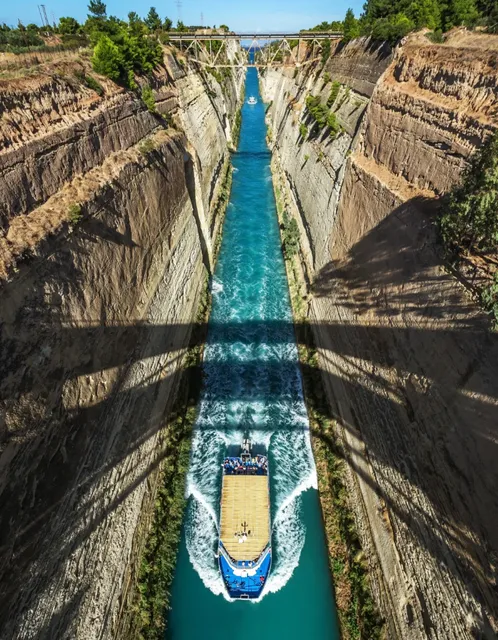
We parked at a coffee shop located close to an old bridge spanning the canal aside Palea EO Athinon Korinthou Highway. The parking was convenient, and the coffee shop made for a nice place to relax after exploring. The bridge itself, with its rugged structure, offered stunning views of the Corinth Canal below. Standing on the bridge, we marvelled at the waterway’s steep limestone walls, an impressive 79 metres high, and couldn’t help but reflect on its extraordinary history.
The Corinth Canal, completed in 1893, was a project centuries in the making. The idea of connecting the Aegean and Ionian seas dates back to ancient Greece, with early plans proposed as far back as the 7th century BCE. Although technology at the time made such a feat impossible, the Greeks ingeniously built the Diolkos, a paved trackway used to transport ships across the isthmus. This innovative spirit lived on, and the modern canal stands as a testament to human determination, finally realised after numerous attempts during Roman, Byzantine, and later eras.
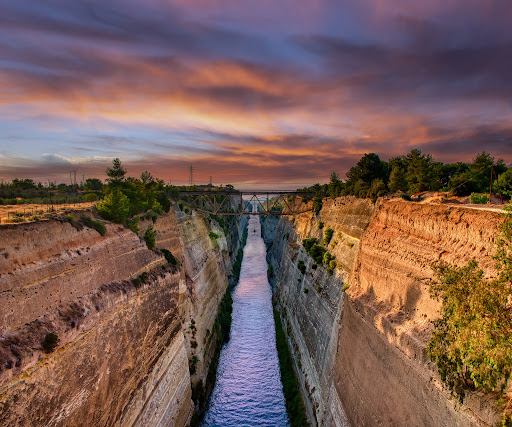
The historical richness of the canal added depth to our experience as we watched a boat glide through its narrow, 6.4-kilometre channel, surrounded by the serene hues of sunset. It was a sight that brought both the ancient and modern significance of this place vividly to life. It felt almost surreal to witness this, a sight we had only read about in history classes years ago, now coming to life right in front of our eyes.
To capture the moment, we launched our drone, taking aerial shots of the bridge, the canal, and the surrounding landscape. The drone offered a unique perspective of the canal’s straight cut and the golden light painting the horizon, a timeless and truly memorable view.
The Corinth Canal is an awe-inspiring place to visit, blending history, engineering brilliance, and natural beauty. Whether you’re a photography enthusiast, a history buff, or simply someone looking to enjoy a peaceful sunset, this location offers something for everyone. Highly recommended for anyone travelling through...
Read moreA Stunning Engineering Marvel – A Must-See in Greece
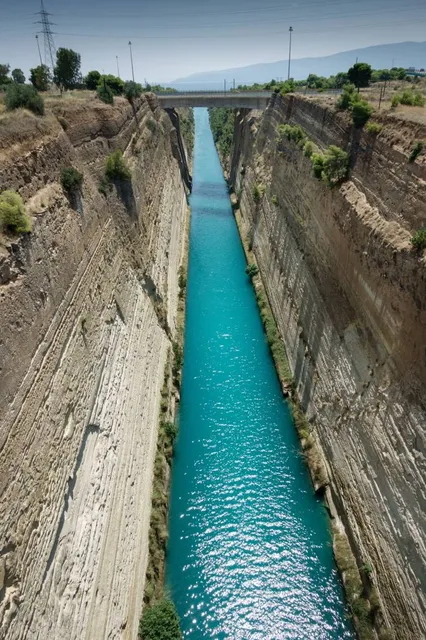
The Corinth Canal is one of Greece’s most impressive engineering feats and a must-visit if you’re traveling between the Peloponnese and mainland Greece. While it may be a quick stop for many, the sight of this narrow, deep canal cutting dramatically through solid rock is unforgettable.
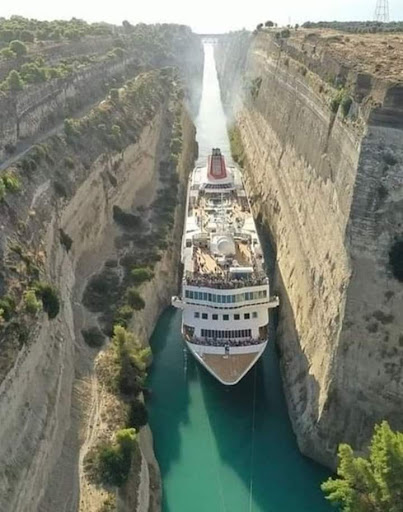
History & Engineering: Though dreamed of since ancient times (even by Nero!), the canal wasn’t completed until the late 19th century. It stretches about 6.4 kilometers (4 miles) long and only 21 meters wide at the base, making it too narrow for modern cargo ships—but that only adds to its charm. You’ll marvel at how it was carved through limestone, with steep vertical walls rising around 80 meters (260 feet) high.
The View: The best way to experience the canal is from the old bridge at Isthmia or the pedestrian bridge near the submersible bridges at either end. The view from the top is absolutely breathtaking. The vivid blue water slicing through sheer cliffs makes for incredible photos and a true “wow” moment. You can also often spot bungee jumpers plunging from the bridge—an exhilarating sight in itself!
Boat Trips & Activities: If you have time, consider taking a boat cruise through the canal, which offers a whole new perspective from the waterline. There are also occasional organized bungee jumping opportunities for thrill-seekers.
Accessibility & Facilities:
Very easy to access by car—located just off the main Athens-Corinth highway (about an hour from Athens). Free to visit and walk around. Ample parking near the bridge area. There are a few cafés and souvenir shops nearby, making it a good pit stop on your journey. Insider Tips:
Best time to visit is early morning or late afternoon for great lighting and fewer crowds. Bring a camera or drone if you can—the aerial shots are spectacular. The nearby Archaeological Museum of Ancient Corinth and the Heraion of Perachora make for a great day-trip combo. Final Thoughts: The Corinth Canal may be a quick stop for some, but it leaves a lasting impression. Whether you’re a history buff, engineering enthusiast, or just looking for a striking photo op, this is a must-see spot in Greece. It's a powerful reminder of human ambition and ingenuity—and an iconic link between two great...
Read moreI was amazed by the Corinth canal when I visited it on my way to Athens. It is an artificial canal that connects two gulfs, cutting through a narrow strip of land. It separates the Peloponnese from the mainland of Greece, making it easier for ships to travel between the Ionian and Aegean seas. I had always wanted to see the canal, as I had heard about its history and engineering. The canal is 6.4 kilometers long and 24.6 meters wide at sea level. It has steep walls that rise up to 90 meters above the water. It is impressive to see how the canal was dug through the solid rock of the land, using explosives and machinery. The canal was completed in 1893, after many centuries of attempts and failures by different rulers and engineers. The canal is a popular tourist attraction and a busy waterway. There are bridges that cross over the canal, offering stunning views of the canal and the surrounding landscape. There are also boat tours that take you through the canal, giving you a close-up look at its structure and history. I enjoyed seeing the canal from different perspectives and learning about its fascinating story. The Corinth canal was a nice stop on my way to Athens and a worthwhile destination for me. I took many photos and videos of the canal and shared them with my friends and family. They were also impressed by the canal...
Read more