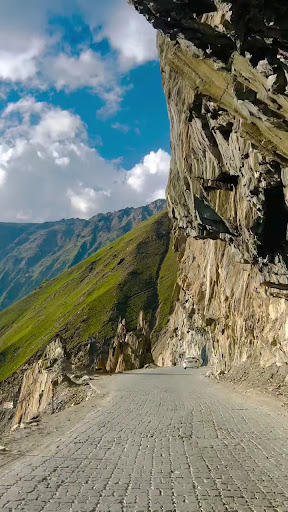
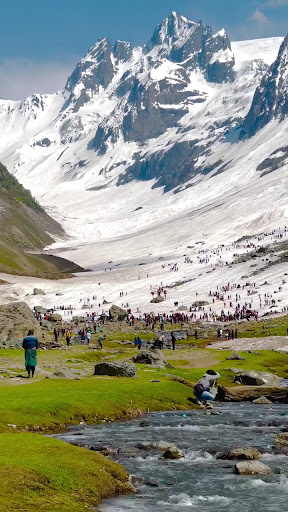
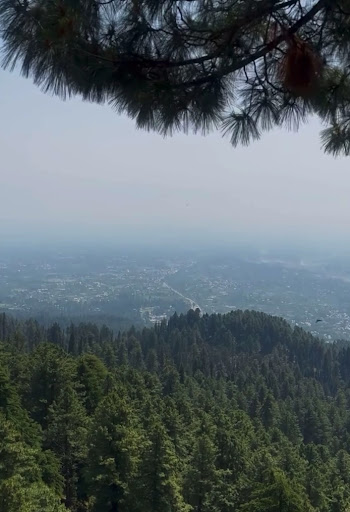
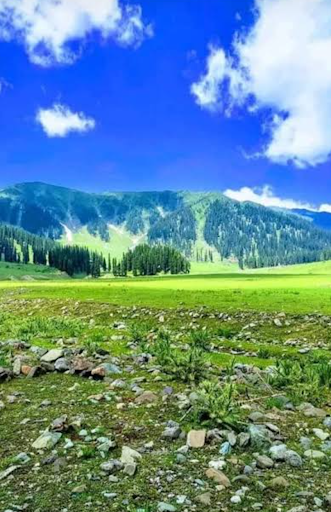
🏞️ 1. Overview: What is Kashmir?
Kashmir is a region in the northern part of the Indian subcontinent. It’s divided among India, Pakistan, and China, with the Kashmir Valley being the most well-known and beautiful part, located in India-administered Jammu & Kashmir.
Main Cities: Srinagar (summer capital), Gulmarg, Pahalgam, Sonmarg, Anantnag
Languages: Kashmiri, Urdu, Hindi, English
Best time to visit:
Summer (May–August) – pleasant, green, floral beauty
Winter (December–February) – snow, skiing, frozen lakes
Autumn (October–November) – golden chinar trees and crisp air
🌄 2. Natural Beauty
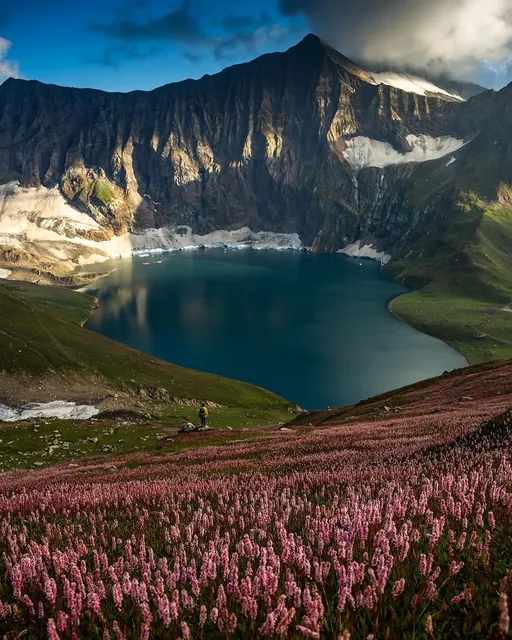
Kashmir is often called "Paradise on Earth" for a reason:
🌳 Valleys:
Kashmir Valley: Surrounded by the Himalayas and Pir Panjal ranges, filled with rice fields, apple orchards, and flower gardens.
Betaab Valley: Lush meadows and pine-covered mountains—popularized by Bollywood.
Aru Valley & Yusmarg: Less crowded, untouched beauty.
🏔️ Mountains & Meadows:
Gulmarg: World-class skiing, cable car (Gondola), lush summer meadows.
Sonmarg: “Meadow of Gold” – gateway to glaciers and treks.
💧Lakes & Rivers:
Dal Lake: Iconic houseboats, shikara rides, floating vegetable markets.
Nigeen Lake: Quieter and cleaner alternative to Dal.
Wular Lake: One of the largest freshwater lakes in Asia.
Jhelum River: Flows through the valley—adds charm to Srinagar.
🕌 3. Culture & People
🎭 Art & Traditions:
Kashmiri handicrafts: World-famous pashmina shawls, papier-mâché art, carpets, walnut wood carving.
Cuisine: Wazwan – a royal multi-course Kashmiri Muslim meal. Must-try dishes: Rogan Josh, Yakhni, Gushtaba, Kashmiri Kahwa (green tea with saffron and almonds).
🧕 Local People:
Known for their hospitality, resilience, and pride in their traditions.
Mix of Muslim majority, with Hindu, Sikh, and Buddhist minorities.
🛕 4. Religious and Historical Significance
Shankaracharya Temple, Hazratbal Shrine, Jamia Masjid, and Amarnath Cave Temple are places of spiritual importance.
Historical sites include Mughal Gardens, Hari Parbat Fort, Pari Mahal, and Avantipur ruins.
🚠 5. Adventure & Tourism
Skiing in Gulmarg (winter)
Trekking to Great Lakes, Tarsar Marsar, or Kolahoi Glacier
River rafting in Lidder River
Camping in Sonmarg and Pahalgam
Fishing, golf, paragliding, and nature photography
🧭 6. Travel Experience
Accessibility:
Flights from major Indian cities to Srinagar.
Road trips via Jammu–Srinagar highway offer scenic views.
Gondolas, shikaras, and pony rides are common in tourist areas.
Safety:
Security has improved significantly in recent years.
Army presence is visible, but tourism zones are peaceful.
Still, it's wise to check latest travel advisories before planning.
🧳 7. Pros & Cons
✅ Pros ⚠️ Cons
Jaw-dropping natural beauty Political tensions in the region Unique cultural experience Army checkpoints may feel restrictive to some Friendly locals and rich traditions Internet restrictions occur occasionally Budget and luxury travel options Winter travel can face delays due to snow
🏞️ 8. Azad Kashmir (Pakistan-administered) — A Quick Look
Popular places: Muzaffarabad, Neelum Valley, Rawalakot, Leepa Valley, Banjosa Lake
Highlights: Equally beautiful with rivers, lakes, green mountains; popular among domestic Pakistani tourists
Access: More limited for international travelers; proximity to Line of Control (LoC) means security concerns during border tensions
🌟 Final Thoughts: Is Kashmir Worth Visiting?
Absolutely. Kashmir is not just a destination—it’s an emotional, visual, and spiritual journey. Whether you want a romantic retreat, a family trip, a spiritual getaway, or an adrenaline-filled adventure, Kashmir has it all.
Despite political sensitivities, it remains one of the most beautiful places on Earth with a timeless charm, rich culture, and...
Read moreKashmir (IPA: [kaʃmiːr]) is the northernmost geographical region of the Indian subcontinent. Until the mid-19th century, the term "Kashmir" denoted only the Kashmir Valley between the Great Himalayas and the Pir Panjal Range. Today, the term encompasses a larger area that includes the India-administered territories of Jammu and Kashmir and Ladakh, the Pakistan-administered territories of Azad Kashmir and Gilgit-Baltistan, and the Chinese-administered territories of Aksai Chin and the Trans-Karakoram Tract.
In 1820, the Sikh Empire, under Ranjit Singh, annexed Kashmir. In 1846, after the Sikh defeat in the First Anglo-Sikh War, and upon the purchase of the region from the British under the Treaty of Amritsar, the Raja of Jammu, Gulab Singh, became the new ruler of Kashmir. The rule of his descendants, under the paramountcy (or tutelage) of the British Crown, lasted until the Partition of India in 1947, when the former princely state of the British Indian Empire became a disputed territory, now administered by three countries: China, India, and Pakistan. The word Kashmir is thought to have been derived from Sanskrit and was referred to as káśmīra. A popular local etymology of Kashmira is that it is land desiccated from water.
An alternative etymology derives the name from the name of the Vedic sage Kashyapa who is believed to have settled people in this land. Accordingly, Kashmir would be derived from either kashyapa-mir (Kashyapa's Lake) or kashyapa-meru (Kashyapa's Mountain).
The word has been referenced to in a Hindu scripture mantra worshipping the Hindu goddess Sharada and is mentioned to have resided in the land of kashmira, or which might have been a reference to the Sharada Peeth.
The Ancient Greeks called the region Kasperia, which has been identified with Kaspapyros of Hecataeus of Miletus (apud Stephanus of Byzantium) and Kaspatyros of Herodotus (3.102, 4.44). Kashmir is also believed to be the country meant by Ptolemy's Kaspeiria. The earliest text which directly mentions the name Kashmir is in Ashtadhyayi written by the Sanskrit grammarian Pāṇini during the 5th century BC. Pāṇini called the people of Kashmir Kashmirikas. Some other early references to Kashmir can also be found in Mahabharata in Sabha Parva and in puranas like Matsya Purana, Vayu Purana, Padma Purana and Vishnu Purana and Vishnudharmottara Purana.
Huientsang, the Buddhist scholar and Chinese traveller, called Kashmir kia-shi-milo, while some other Chinese accounts referred to Kashmir as ki-pin (or Chipin or Jipin) and ache-pin.
Cashmeer is an archaic spelling of modern Kashmir, and in some countries[which?] it is still spelled this way. Kashmir is called Cachemire in French, Cachemira in Spanish, Caxemira in Portuguese, Caixmir in Catalan, Casmiria in Latin, Cașmir in Romanian, and Cashmir in Occitan.
In the Kashmiri language, Kashmir itself is...
Read moreAfter the Indo-Pakistani War of 1947–1948, the princely state of Jammu and Kashmir was divided between India (which controlled the regions of Jammu, Kashmir Valley, and Ladakh) and Pakistan (which controlled Gilgit–Baltistan and Azad Kashmir). The Indian-administered territories elected a constituent assembly in 1951, which ratified the accession of the state to India in 1954.8
In 1956–57, China constructed a road through the disputed Aksai Chin area of Ladakh. India's belated discovery of this road culminated in the Sino-Indian War of 1962; China has since administered Aksai Chin.8] Following the Indo-Pakistani War of 1971, India and Pakistan signed the Simla Agreement, recognising a Line of Control in Kashmir, and committing to a peaceful resolution of the dispute through bilateral negotiations.[10]
Kashmir insurgency
In the late 1980s, discontent over the high-handed policies of the union government and allegations of the rigging of the 1987 Jammu and Kashmir Legislative Assembly election[11] triggered a violent uprising and armed insurgency[12 which was backed by Pakistan.14] Pakistan claimed to be giving its "moral and diplomatic" support to the separatist movement.[15] The Inter-Services Intelligence of Pakistan has been accused by India and the international community of supporting, supplying arms and training mujahideen,[16 to fight in Jammu and Kashmir.18[19] In 2015, former President of Pakistan Pervez Musharraf admitted that Pakistan had supported and trained insurgent groups in the 1990s.[20] India has repeatedly called Pakistan to end its "cross-border terrorism" in Kashmir.[15]
Since 1989, a prolonged, bloody conflict between the Islamic militant separatists and the Indian Army took place, both of whom have been accused of widespread human rights abuses, including abductions, massacres, rapes and armed robbery.[note 1] Several new militant groups with radical Islamic views emerged and changed the ideological emphasis of the movement to Islamic. This was facilitated by a large influx of Islamic "Jihadi" fighters (mujahadeen) who had entered the Kashmir valley following the end of the Soviet–Afghan War in...
Read more