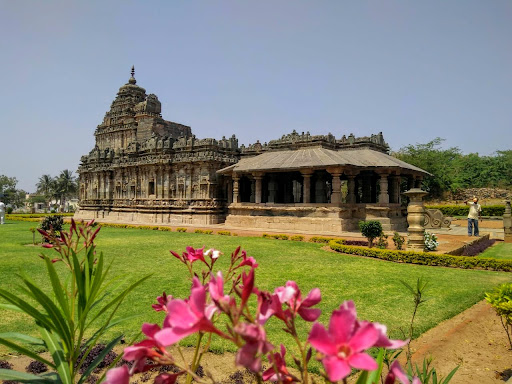
The Jain Temple Brahma Jinalaya or Lakkund is located in the historically important temple town Lakkundi in the Gadag District of Karnataka. Known as Lokkigundi in medieval times, the town was of considerable importance during the 11-12th century A.D. Western Chalukya rule. With the waning of their power, in 1191 A.D., the noted Hoysala empire king Veera Ballala II made this town an important garrison. The temple is protected as a monument of national importance by the Archaeological Survey of India.
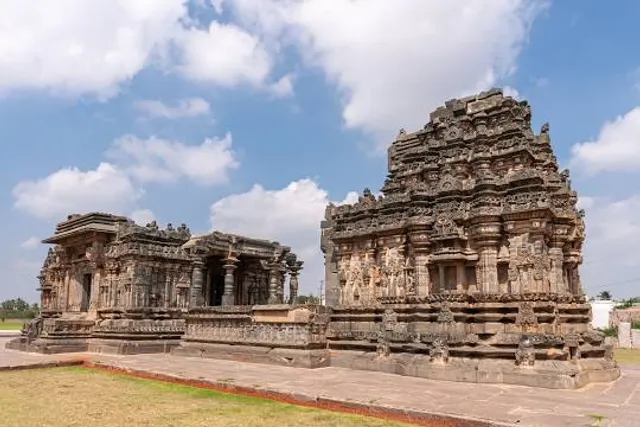
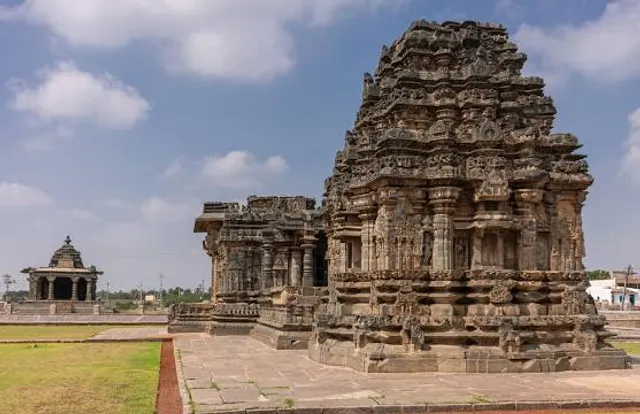
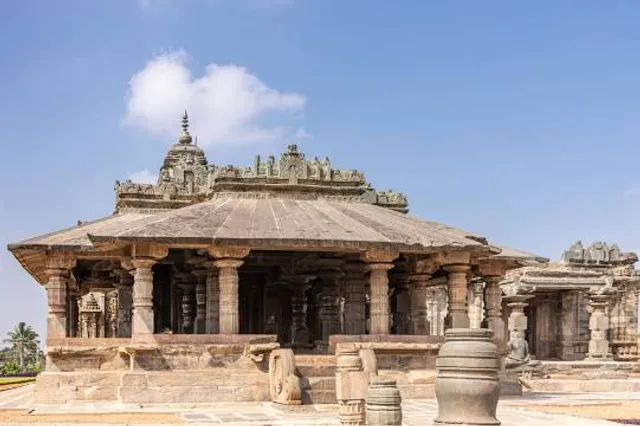
According to the art historian Adam Hardy, the architectural style of the temple can be classified as "Later Chalukya style, mainstream Lakkundi school of mid-11th century with late 11th century superstructure (shikhara)". The temple has single shrine (ekakuta vimana) connected to a closed mantapa hall via a vestibule (sukanasi or ardhamantapa) that is connected to another, open mantapa. According to art critic Percy Brown, these units are found commonly in all Western Chalukya temples. The building material is soapstone, which according to Percy Brown became the standard in later Hoysala architecture as well. According to art historians Henry Cousens and Om Prakash, the most conspicuous feature of the Western Chalukya temples is the decrease in the size of masonry and the resulting decrease in the overall height of the temples compared to those built by the Badami Chalukyas at Pattadakal. This was a result of a shift in the basic building material, from sandstone to the more workable soapstone (Chloritic Shist). In the coming decades, this transformation was to lead Vesara architecture toward increased ornamentation and articulation.
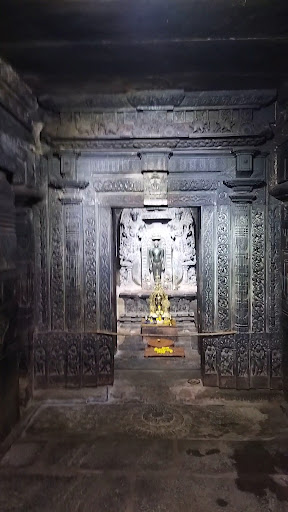
There are three notable freestanding sculptures in the temple. An image of Mahavira that is a little over 4 feet tall, made of black polished stone and seated on a "lion throne" (simhaasana) is found outside the temple. Cousens feels it may have been taken out and left there. The saint has an attendant on either side, holding a chowri (a type of brush) in one hand a fruit in another. An exceptionally well rendered image of the god Brahma stands in the inner hall, and that of the goddess Saraswati stands at the entrance to the vestibule. In each of her four hands she holds an attribute; a ankusa (elephant goad), a petaled flower, a book and a citron. In addition to these sculptures, the relief of a Jaina is carved on to the door lintel of the sanctum and outer hall, and an image of Gajalakshmi (Lakshmi with elephants on either side) exists over entrance to...
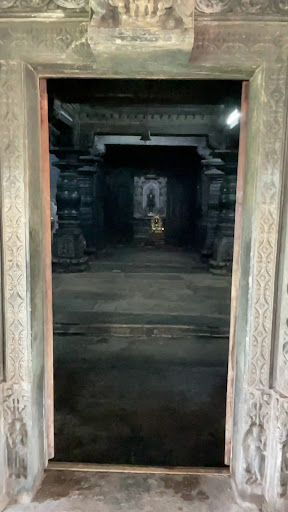
Read moreMultiple road towards the temple was under constuction. The GPS kept on re routing and that made me wonder about its existence at the pinpointed location. I was even more uncertain while I was nearer to the location as the place is too much calm. I could see the tower and finial from a few hundred metres away and was finally relieved. Anyone travelling towards Gadag from Hospete direction can visit here. This temple is one of the oldest Jain temple and it is open to visitors only and not functioning unlike Saraswati Temple and Trikuteswar Temple of Gadag but it is well preserved than two of them. It is of Chalukyan architecture. Basadi is constructed wholly with soaprock.Gudhamandapa (Inside of the temple) is having three idols(pratistha). The prime deity worshipped is Tirthankara(standing position) which is placed at the centre. Saraswati at the left and Brahma(multi-faced) on the right. It is one of the very few temple where Brahma is also worshipped. Mukhamandapa consist of ornamentally decorated walls, beautifully carved pillars(appears to be monoliths),tower and the ancient architecture and inscriptions. In the North-East Corner of the temple, idol of Mahavir with missing head and left knee is placed .It is said to be desecrated in the past. The temple is now well maintained,surrounded by a small meadow and neatly trimmed shrubs enhancing the view. The atmostphere is serene. Temple is very worth visiting. I love historical places so we spent around 3 hours at the temple premises. There was a guide but he was attending a small group and was shortly disappeared after allowing us to explore. Entry fee is limited only...
Read moreBeautiful ancient Jain temple in Lakkundi (Basadi) around 12 kms from Gadag. Quite well preserved, managed and maintained temple and surroundings. It is located just next to Archaeological Museum of Lakkundi. Though there was nobody guarding Jinalaya, felt secure to park car along the museum which had a guard placed. Also there was no entrance fee for the temple but I guess the fee was included with entry fee of the museum. Museum had quite nice exhibits with explanation to understand the classification of the main types of architecture and carvings etc. They also had a room where scores of sculptures/ some broken ones were being restored. The temple, being in stone and in open must be hot during summers in afternoon to walk barefoot. The architecture includes flat sloping roof in the front, large open pillared hall Intricate carvings on the pillars and walls. Outside walls though not so intricately carved, still decent enough to take a round. Don't forget to view the temple from opposite side which is not as plain as the entrance roof. You may also go out of the boundaries on the front side and have a look at...
Read more