The tradition that Col Arthur Wellesley, later to be the Duke of Wellington, leading a British detachment from Vandiperiyar to Bodinayakanur, then over the High Range and into the Coimbatore plains to cut off Tippu Sultanâs retreat from Travancore, was the first Englishman in the High Range appears to be belied by the dates involved. If the story is a dozen years too early for Wellesley, it is quite possible that some other officer in General Meadowâs Army may have had that distinction. Unfortunately, no record of that pioneering mountain crossing has been traced. What is available is a record of that pioneering mountain crossing has been traced. What is available is a record of the surveying of this terrain in 1816-17 by Lt Benjamin Swayne Ward, son of Col Francis Swayne Ward to whom we owe many of the early views of Madras and South India Now available in lithprints. It was to be nearly 50 years later that Sir Charles Trevelyan, Governor of Madras, instructed Col Douglas Hamilton to explore the hill country in the western part of the Madras Presidency, requesting special advice on the feasibility of establishing sanatoria for the British in the South and of developing revenue- earning projects without endangering the environment, as had happened in Ceylon where coffee had destroyed not only the rain forest but also paddy cultivation in the north â central rice bowl of ancient Ceylon.
Marching south along the Anamallai, Hamilton saw ââthe grandest and most extensive (view) I have ever beheld; some of the precipices are of stupendous magnitude and the charming variety of scenery comprising undulating grassy hills, wooded valleys, rocky crags, overhanging precipices, the green rice fields far below in the valley of the Anchanad, the grand mass of the Pulunies (beyond) and the blue ranges in the far distance, present a view far beyond my power to describeâŚââ
On May 7, 1862, Hamilton set out to climb Anaimudi, following a ââwell worn elephant path, ascending the opposite slope by a series of short zigzags that were so perfect and regular that we could scarcely Eravikulam plateau (later Hamiltonâs Plateau), watered by two streams, one of which bordered the Eravikulam swamp before cascading down 1000 feet in a beautiful waterfall. Separating the plateau from Anaimudi was a deep, thickly forested ravine â later called Inaccessible Valley and, detouring it, they began the climb from the east to the peak. ââOn our return, we followed an elephant path for several miles, the gradient of this path was truly wonderful, these sagacious animals avoiding every steep or difficult ascent, except at one hill which was cleverly zigzagged, owing to masses of sheer rock preventing a regular incline being taken.ââ
It was to be 15 years later before another report came in. But this was more significant from the viewpoint of this history, for though it came as a result of the shikar expeditions of the ever-exploring John Daniel Munro, he was an opener â up of land and a pioneering planter first and a shikari second. Reporting on the High Range in 1877, he wrote, ââ Exclusive of the low Unjenaad valley which is not above 3100 feet, the area within these boundaries may be roughly estimated at 200 square miles with an elevation over 5000 ft ⌠Much of this is worthless land, but there is a good deal fit for cultivation ⌠Coffee ⌠would succeed well at a somewhat lower elevation, and Tea and Cinchona would grow miles available for these purposes, and there being the great inducement of a good climate, it will doubtless not be many years before these fine hills...
   Read moreAnamudi
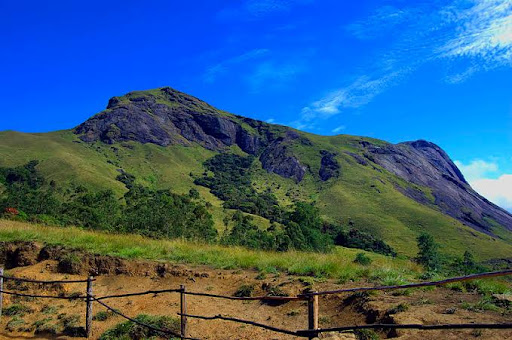
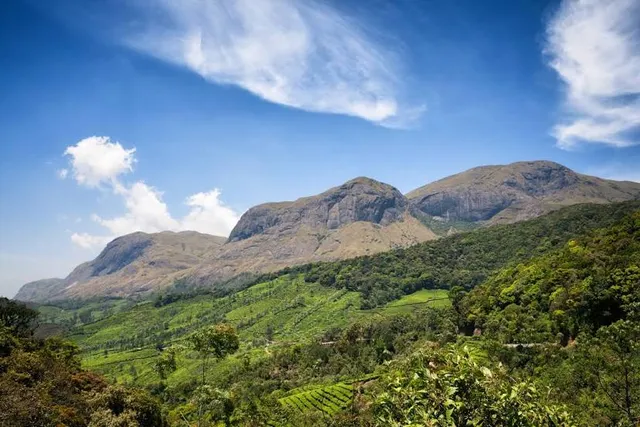
Rising to a towering height of 8,842 feet, Anamudi is the highest peak in Southern India. It is a photographerâs delight and a trekkerâs paradise. Situated in the Western Ghats in the district of Idukki, Kerala, the mountain offers a breathtaking experience to entice tourists from India as well as international travellers. Since it is located in the subtropical region, the peak does not experience any snowfall in spite of being the tallest in the Western Ghats.
Covered with dense evergreen forests and meandering rivers, it is home for innumerable species of animals and birds. It is phenomenal in hosting the endangered Asian elephants, Nilgiri Tahr and Gaur. You can also find the rare Neelakurinji flowers in the forests.
Anamudi in colloquial language is known as âelephantâs foreheadâ, the shape of the mountain resembling the head of an elephant. Being the tallest peak in the Western Ghats, it is also named as the âEverest of South Indiaâ. Within India, the peak is said to possess the largest topographic isolation.
Anamudi peak is a place for adventurous activities like trekking and hiking. It is one of the most exciting trekking trails in Southern India. The captivating beauty of the peak with wild life attracts many photographers. It serves as a perfect picnic spot for the locals and the people staying in the adjacent cities. Many tourists prefer it as an ideal place for a weekend getaway. There are camping sites near the peak to stay in tents and enjoy the beauty of the peak in its vicinity.
How to Reach Anamudi
From Munnar City Center-
The road connectivity is excellent between Anamudi and Munnar city center. There are two options which you can avail for the trip. The first option is to reach the Eravikulam national park from Munnar in a private cab or a local bus. It takes approximately only 26 minutes to reach the park from Munnar bus station, covering a distance of 10.6 km via the Munnar â Udumalpet Road.
From the entrance of Eravikulam national park, you can easily trek to reach the Anamudi peak.
If you want a relaxed trip to the peak, then you can also take the guided minibus tour of the park which will take you to the nearest viewpoint of the peak. You can experience the panoramic landscape of Anamudi and other adjacent peaks.
The second option is to drive directly to Anamudi Peak from Munnar. The drive will last for almost 60 minutes approximately. You need to hire a private cab to reach your designated destination.
Best Time to Visit Anamudi
The best time to visit Anamudi Peak is in the winter and spring season in the months from November to May. The temperature is pleasant and cool with a mild soothing breeze. It is neither very cold nor very hot, an ideal time to visit the place.
In the spring, the flowers bloom in abundance and the foliage around presents a stunning lush green view. The beauty of the mountains flourishes multiple times with the flora and fauna of the forests.
It takes a time of 2 to 3 hours to visit the peak. The ideal time for trekking is from November till February in the winters, since the peak does not experience any snow fall. Monsoons are to be avoided as the roads become slippery and insecure to walk across the...
   Read moreTitle: A Majestic Summit that Takes Your Breath Away!
Rating: âď¸âď¸âď¸âď¸âď¸
Review: Anaimudi Peak in Munnar deserves nothing short of a five-star rating for its awe-inspiring beauty and the incredible experience it offers. This majestic summit left me speechless and created memories that will last a lifetime.
Anaimudi Peak is the highest peak in South India, and reaching its summit is an adventure like no other. The journey to the peak takes you through lush green forests, winding trails, and picturesque landscapes that showcase the true essence of Munnar's natural splendor. Every step along the way is filled with anticipation and excitement.
The trek to Anaimudi Peak is challenging but immensely rewarding. The path is well-marked, and the verdant surroundings make the climb truly enchanting. As you ascend, the panoramic vistas unfold, offering breathtaking views of the surrounding valleys, mist-clad mountains, and cascading waterfalls. The sense of accomplishment upon reaching the summit is indescribable.
The view from Anaimudi Peak is nothing short of a spectacle. Standing at the pinnacle, surrounded by clouds and beholding the vastness of the landscape below, I felt a profound connection with nature. The sheer grandeur and tranquility of the place are awe-inspiring, making it a perfect spot for photographers, nature enthusiasts, and those seeking a spiritual connection with the mountains.
The biodiversity found on Anaimudi Peak is remarkable. The peak is part of the Eravikulam National Park, home to various flora and fauna, including the endangered Nilgiri Tahr. The sight of these magnificent creatures roaming freely in their natural habitat is a privilege to witness.
Safety measures are well-implemented, with experienced guides accompanying trekkers. They provide valuable insights into the local ecology and ensure a safe and enjoyable experience. It's advisable to carry essentials like water, snacks, and appropriate trekking gear to fully enjoy the journey.
Visiting Anaimudi Peak is an opportunity to immerse yourself in the raw beauty of nature and experience the true majesty of Munnar. It is a must-visit for adventure seekers and nature lovers alike. I cannot recommend it enough, and I give it a resounding five-star rating. Prepare to be awestruck and humbled by the magnificence of Anaimudi Peakâit's an experience you will...
   Read more