The stay experience at Olappamanna Mana during January 2020; was an unforgettable experience, as I could never imagine in my life that I could stay in such a Mana which is a symbol of feudalism of Kerala. Manas are the residence of Namboodiri joint families in Kerala. Namboodiries are Kerala Brahmins, who occupy the topmost slot in the ‘Chatur Varnya’ system (Caste hierarchy) in Kerala and they were mostly feudal landlords, who possess hundreds of acres of agricultural land and administration of many temples. The Kerala land reform act brought by the democratically elected Governments had put an end to the feudal system in Kerala during late nineteen fifties and sixties.||Olappamanna Mana occupies a coveted position in cultural landscape of Kerala due its immense contribution to the art and literature of Kerala. Mahakavi Vallathol established the ‘Kerala Kalamandalam’ by replicating the Kathakali School run by the Olappamanna Mana. The famous ‘Kalluvazhi Chitta’ of Kathakali was originated in this Mana. The monumental contribution to literature was made by Shri OMC Narayanan Namboodiripad who translated Rigveda from Sanskrit to Malayalam (Bhasha Bhashyam also known as Deviprasadam). OMC’s work was a revolutionary step to bring the Rigveda which was confined only to Brahmins to the common people, who are interested to access the treasure of Vedic literature. Other prominent literary figures from this Mana are famous poet and former Chairman of Kerala Kalamandalam Shri Olappamanna Subramanian Namboodiripad, Smt. Sumangala, children’s story writer and Dr.OM Anujan, poet and scholar.||Me and my wife drove down from Kochi via Shornur, Ottapalam, Cherpulassery route. The 130 Km journey to Vellinezhi took three and half hours. We started post lunch and reached Vellinezhi in the evening. Our host Mr.Navaneeth kept on guiding us to take the best route to his Mana. On arrival Mr.Navneeth was waiting in front of the Mana to receive us. Since it was getting dark he gave us a quick orientation of the 20 acres of the lush green campus of the Mana.||Olappamanna Mana is a three hundred year old grand heritage complex which represents the typical Kerala architecture. The Mana located in Vellinezhi Village in Palakkad District is about 22 Km from Ottapalam. The sprawling campus of the Mana houses an ‘Ettukettu’ (Eight halled house with two central courtyards), three ‘Pathayapuras’ (Granary), a temple complex, a large Pond and many annex buildings. Now no one lives at the Ettukettu, which houses the ‘Bhagavathi Temple’, ‘Sastha Temple’, a large hall where ‘Kalamezhuthu Pattu’ is performed. One of the Pathaya Puras is converted into a homestay by Shri. O N Damodaran Namboodiripad son of OMC in 2006.||The Pathayapura has three rooms on the first floor, One Double Room to accommodate two persons, One Family Room for three persons and One Large Room, which can accommodate five persons. They also have thoughtfully kept one room in the ground floor to accommodate the driver or guide who escorts the guests. The Pathaya pura was transformed to a ‘home stay’ without disturbing the original characteristics of that heritage building. The building is constructed lavishly with teak and jackfruit tree wood. From the traditional locking system (Similar to ‘Manichitra Thazhu’) at the main entrance door at the ground floor to the spiral wooden staircase to the first floor then the long veranda in front of the sleeping rooms and the décor inside the bedrooms, everywhere you feel the original characteristic of a heritage building. The rooms are well appointed with western toilets and shower area, beds are provided with comfortable mattress, pillows and fresh linen. Due to the woodworks and specialty of architecture the rooms are very cool even during hot summers, but ceiling fans and air conditioners are provided for the comfort of the guests. There is a small pantry at the staircase landing, where tea/coffee making facility and mini refrigerator are provided. The veranda is decorated with many antique items those were the status symbols of Namboodiri aristocracy. The walls are decorated with modern oil paintings drawn by Ms.Vani wife of Mr.Navaneeth son of ON Damodaran Namboodiripad and our host.||We were lucky to witness the 41 days ‘Kalamezhuthu Pattu’ Festival (happens every year during January/February months) which was in progress at the Ettukettu building. Mr.Navaneet invited us to witness this unique ritual in the evening. We both had a quick shower and got ready fast to witness the festival. We first had a good darshan at the Bhagavathy (Goddess) Temple inside the Mana complex during deeparadhana (evening Pooja with lamps). The Goddess is their family deity, Sri Thirumandham Kunnu Bhagavathy. Thirumandham Kunnu is a famous Goddess temple in Kerala located in Angadippuram, Malappuram District. The legend says, being the family deity of Olappamanna Mana, one of the ‘Karanavars’ (Head of the family) was a regular visitor to Thirumandham Kunnu Temple. The Karanavar became very old and during one of his visits, he told the Goddess during his prayer at Thirumandam Kunnu with tears that this may be his last visit to see the Goddess, as he was too old to travel all the way from Mana. When the Karanavar returned to Mana he felt some special grace inside the Mana. When conducted ‘Devaprashnam’ (an astrological reasoning to find out certain things that happen in a temple or place) it was revealed that the Goddess from Thirumandham Kunnu had travelled along with the Karanavar and sat inside a room near the central courtyard of the Mana. There onwards the regular poojas to the temple were administered in that room for the Goddess. ||Kalamezhuthu Pattu was a retreat to our eyes and ears. A large kalam (Similar to a Rangoli) of Goddess with colors were made at the large hall near to the main door to the Mana. Natural colors, flowers and tender coconut leaves were used for making the Kalam. Pattu (Songs) praising Thirumandham Kunnu Bhagavathy was recited by a folklorist who also play a string instrument called ‘Nanthuni’ as an accompanying music. The songs are written in pure Malayalam unlike many folksongs those are mixed with local dialects. The percussionists with Chenda, Maddalam and Edakka were there to create the perfect ambience for the ritual festival. A few inmates of the Mana, less than ten persons, were there to witness this unique ritual. It took around 45 minutes to complete Kalamezhuthu Pattu. At the end of the pattu the priest gave ‘prasadam’ first to Mr.Navaneeth, subsequently to all those who gathered there including us. ||Mr.Navaneeth took us to his home, which is another independent building in the Mana Complex for dinner. We were welcomed by Ms.Sridevi his mother, Ms. Vani his wife and their two children. They were so humble and genuinely hospitable. Ms.Sridevi played the role of the host so gracefully, we could really feel the ‘Tharavaditham’ (Unfortunately there is no equivalent word for the same in English language, may be because this may be a unique characteristic only belongs Keralite) in every single action and spoken words of that mother. Namboodiri Brahmins are strict vegetarians so you would get only vegetarian here. Food is a major highlight of our experience at Mana. We had dinner on arrival day and breakfast on the departure day. It is a fixed menu but whatever they serve on the plantain leaf have a divine taste, which you don’t find elsewhere. We had Appam, Crispy Ghee Dosa, Ultrasoft Idli, Pulao Rice, Sambar, Four different varieties of chutneys, Veg Curry, Payasam and Filter Coffee during this two meals. ||On our departure day, we took a morning walk in the Mana Campus, there is a cultivating paddy field close to the Pond area and rest of the campus is devoted for mainly for coconut and rubber cultivation. We saw young children below the age of 12 years practicing Kathakali Music at the Kathakali School functioning at one part of the Ettukettu. Mr.Navaneeth was there in the early morning hours to give us a further detailed tour of the estate. Mr.Navaneeth is a Computer Engineer in his thirties who had taken over this mantle accidently due to the untimely demise of his father in 2017. He and his wife Ms.Vani an alumnus of College of Fine Arts, Trivandrum are now supporting Ms.Sridevi to manage the activities at the Mana. While checking out the Mana, we never felt like leaving a hotel, but like a home, that was the unique mix of rich heritage, unique experiences and warm hospitality that we had received from the...
Read moreNice heritage house. Its very old and a traditional space. Olappamanna Mana, one of the centuries old feudal Namboothiri homestead, located at Vellinezhi, a small village 40 kms away from Palakkad town in Kerala, less than 100 kms away from Cochin / Coimbatore / Calicut airports. Vellinezhi surrounded by the unpolluted river Kunthi on northern and western side, is literarily known as ‘Thourathrika Gramam’ meaning the village with a perfect blend of Music, Rhythm and Dance.
Olappamanna is the family name of feudal lords belonging to the priestly Brahmin Caste of Kerala, namely Namboothiris. They were patrons of art forms like Kathakali, Percussion, Classical Music, and Literature, Vedic and Sanskrit education, and were immensely rich, till the Land Reforms Act was implemented in Kerala during 1965-70.
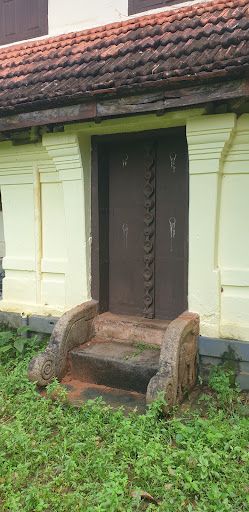
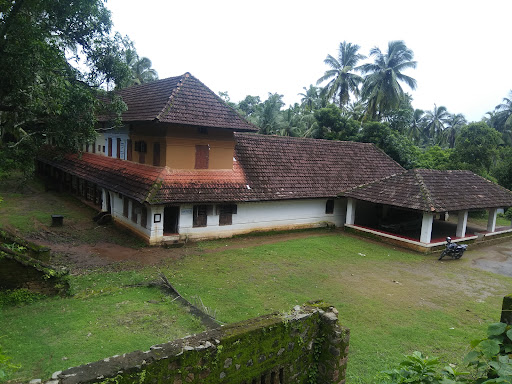
The ancient illam is an ettukettu structure, having 2 central courtyards or nadumuttams, open to the sky. In an ettukettu, literally 8 parts, there are typically two rectangular structures, each having 4 halls facing four directions, joined together with a central courtyard.
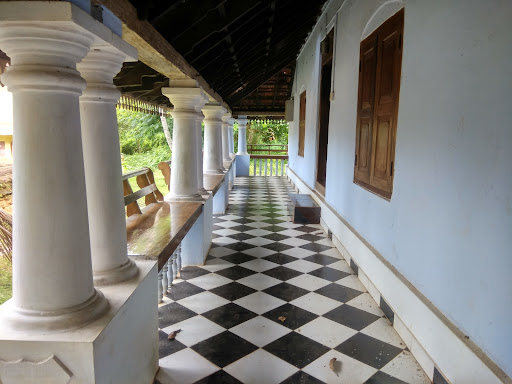
The present most popular form of Kathakali, namely Kalluvazhi Chitta named after the village of Kalluvazhi nearby, originated at Olappamanna Mana nearly 150-200 years ago. The Olappamanna Kaliyogam (School of Kathakali) where the style stemmed from, was relocated to Kerala Kalamandalam at Cheruthuruthy by founder & poet Vallathol for perfection of teaching the Art form. Similarly a magazine exclusively for Poetry was published from this Mana during early 20th century. O.M.C. Narayanan Namboothiri Pad has translated the whole Rig Veda into Malayalam from Sanskrit. Olappamanna Mana has given birth to famous Malayalam poet Olappamanna Subramanian Namboothirippad, Malayalam poet Dr. O.M.Anujan, Children's book writer Mrs. Sumangala among others. World famous Carnatic Musician Chembai Vaidya Natha Bhagavathar used to teach in this Mana. The unique Rig Vedic institution at Thrissur namely Brahmaswam Madham is very closely connected with the members of this family for the last 200 years, and is still continuing..
There is a temple inside Olappamanna mana, and annually in February, a temple festival is celebrated with elephants, melam and other rituals.
Since the land ceiling act came, the inmates had to leave all the splendour, as thousands of acres of land owned by them were taken over by the Government, without any compensation. Such a stringent land ceiling law was implemented only in Kerala State in India.
It has become impossible for the owners to stay in such a big house without sufficient servants and inmates. Now the main building is kept under lock and key, except for opening it every day morning and evening for conducting rituals to their family deity. The maintenance of the building itself has become very costly and the present owners are struggling for want of funds. It’s a pity that such architectural treasures has to face negligence from the authorities. Now and then, the premises are given out for film shoots.
Now home stay facilities have been arranged for tourists inside the mana.
Olappamanna Dhamodharan Namboothiri is the present owner who takes care of this...
Read moreOlappamanna Mana is categorised as Experiential Heritage Homestay
Olappamanna Mana is an experiential heritage homestay located at Vellinezhi, a small village, surrounded by unpolluted river Kunthi on northern and western sides and is literarily renowned as Thourathrika Gramam (village with the perfect blend of music, rhythm and dance).
Reasons to Visit
Experiential heritage homestay located at Palakkad, built 300 years ago and spread over 20 acres
Rooms are categorised as Double, Family and a Suite
Double room consists of a family room, 2 single cots, attached bath and closet, kitchen
Family room consists of a double room, one single cot and one swing cot, attached bath and closet, kitchen
Suite, a spacious room with one double cot and two single cots, attached bath and closet and kitchen
Homely Kerala vegetarian food is served on traditional plantain leaf. Filtered and boiled water, packed mineral water, tender coconut water can be served
Recreational facilities include watching KalamEzhuthi Pattu (picture of Goddess Kali drawn by hand, using natural colours and certain rituals performed), traditional dance and music performances (Kathakali, Thayampaka)
Other facilities include washing machine and electric iron
Recommended for heritage travellers looking for authentic Kerala homestay experience
Know It
Mosquito net/repellent is provided on request
Footwear is not allowed in the main building, to preserve the sanctity of the family deity
Non-vegetarian food and alcoholic is prohibited
Traditional Kerala dance and musical forms can be arranged at an extra cost on prior request
Videos showcasing functions and festivals can be...
Read more