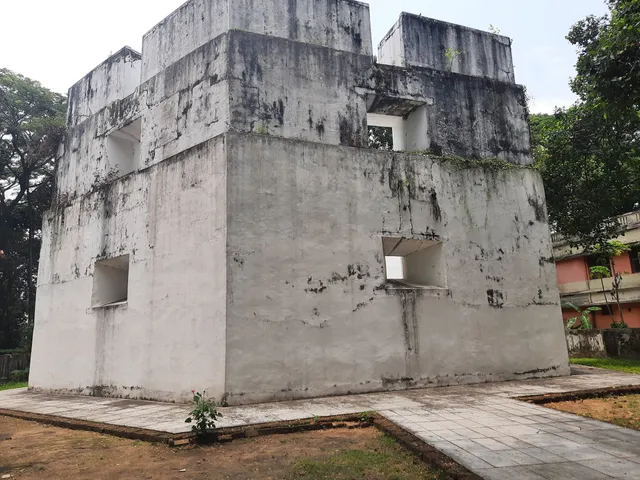
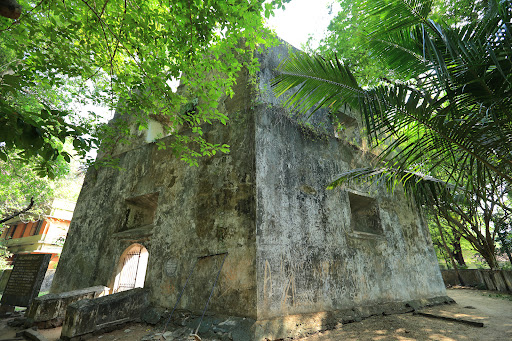
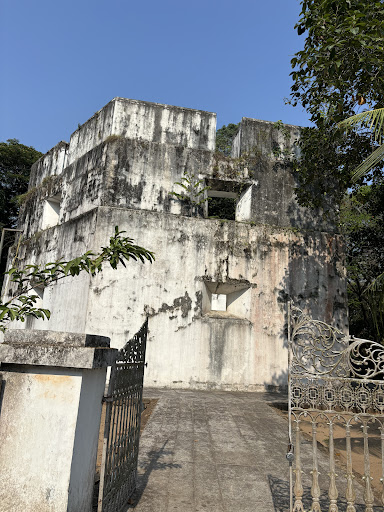
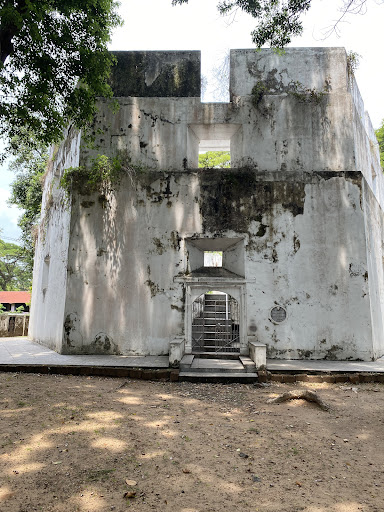
Pallippuram Fort (Castelo em Cima) is a fort in Pallippuram, Vyppin, Ernakulam district of Kerala, south India. It was built by the Portuguese on 27th September 1503 using Timber wood, and later renovated in 1505 by replacing timber structure with stone. It is the oldest existing European fort in India. The Dutch captured the fort in 1661 and sold it to the Kingdom of Travancore in 1789. The fort is situated in the northern extremity of Vypeen island and is hexagonal in shape, a form popularly known as ayikkotta or alikotta.Hexagonal in shape, the lowest internal floor of the fort is raised to a height of 5 feet (1.5 m). The gate and the door posts, and the lintels are finely dressed and arched while underground there is a cellar that was used to store gunpowder. A 3.25 by 3.25 feet (0.99 m ร 0.99 m) well provided a source of fresh water.
There is an opening to the north which leads to the cellar. There is a circular slab stone, on which was installed a pillar on which the radiating wooden struts supporting the upper two floors must have rested.
Each face of the fort measures 32 feet (9.8 m) long and 34 feet (10 m) high while the walls are six feet thick. Each face of the fort has three embrasures, one above the other. The central opening of the embrasures measures 2 by 2.5 feet (0.61 m ร 0.76 m). The fort could have mounted as many as guns commanding all quarters round it. There is an open space inside affording easy passage to the cellar.
The fort is constructed using laterite, chunam, and wood. The walls are thickly plastered using mortar. The door way in the central circular slab is made of granite. All the six sides of the fort are overgrown with vegetation.
It has an underground path which connects to some other openings. It was saying that the route goes under rivers and lands which they used to escape from enemies when needed. The underground path is permanently...
ย ย ย Read morePallippuram Fortย is a fort inย Pallippuram,ย Vyppin,ย Ernakulamย district ofย Kerala, southย India. It was built by theย Portugueseย in 1503 and is the oldest existingย Europeanย fort in India. Theย Dutchย captured the fort in 1661 and sold it to the Kingdom ofย Travancoreย in 1789. The fort is situated in the northern extremity ofย Vypeen islandย and is hexagonal in shape, a form popularly known asย ayikkottaย orย alikotta.[
Hexagonal in shape, the lowest internal floor of the fort is raised to a height of 5 feet (1.5ย m). The gate and the door posts, and the lintels are finely dressed and arched while underground there is a cellar that was used to store gunpowder. A 3.25 by 3.25 feet (0.99ย m รย 0.99ย m) well provided a source of fresh water.
There is an opening to the north which leads to the cellar. There is a circular slab stone, on which was installed a pillar on which the radiating wooden struts supporting the upper two floors must have rested.
Each face of the fort measures 32 feet (9.8ย m) long and 34 feet (10ย m) high while the walls are six feet thick. Each face of the fort has three embrasures, one above the other. The central opening of the embrasures measures 2 by 2.5 feet (0.61ย m รย 0.76ย m). The fort could have mounted as many as guns commanding all quarters round it. There is an open space inside affording easy passage to the cellar.
The fort is constructed using laterite,ย chunam, and wood. The walls are thickly plastered using mortar. The door way in the central circular slab is made of granite. All the six sides of the fort are overgrown...
ย ย ย Read moreThe Pallippuram Fort is located in Pallippuram, on the northern extremity of the Vypin Island in the Ernakulam district of Kerala in southern India. The Portuguese built the mighty fort in 1503 and today, it stands majestically as the oldest surviving European monument in India.
The architecture of the Pallippuram Fort never fails to strike the visitor. The fascinating monument is complete with a hexagonal outpost, and the lowest floor is raised to a height of five feet. The fort is hexagonal, a form which is popularly known as ayikkotta or alikotta in southern India. The fort is made out of mortar, wood and laterite.
There is an open space inside the fort which allows secure passage to the cellar. According to local legends, this cellar is a tunnel which leads to the Cheraman Masjid in Kodungallur. The Pallippuram Fort was captured by the Dutch in the year 1661, following which it was sold off to the Kingdom of Travancore in 1789. As of now,ย it is a protected monument of the Kerala State Department of...
ย ย ย Read more