After Atmarpan of Veer Savarkar on 26/2/1966, his followers throughout India came together and decided to erect a National Memorial to Savarkar which would reflect his abiding thoughts and ideas. Once the decision to erect the Memorial was taken, there was a hub of activity throughout the country and a Memorial Committee was formed. The MumbaiĀ Municipal Corporation gave the present plot of land of 6650 sq. meters on a nominal lease rent. Through relentless efforts of innumerable persons and institutions, the Smarak took shape. But even before the building came up, work on propagating Savarkar's thoughts had almost immediately begun. Militarisation, reconversion to Hinduism, Air rifle shooting, teaching of martial arts and other activities began and are continuing with great vigour. New activities like mountaineering, trekking, boxing, Rashtriya Geet Manch and teaching of classical music have been since added. In history, only a few leaders can claim the distinction of their ideology continuing to be relevant years after their time. Savarkar is one of them. Needless to say that the Smarak is sparing no efforts in propagating Savarkar's thoughts.
The Smarak was inaugurated in great style on Veer Savarkars' Birth Anniversary, that is 28th May 1989 by no less a luminary than the then Vice President of India, Dr. Shankar Dayal Sharma, His Excellency the Governor of Maharashtra Shri K. Bramhanand Reddy and the Chief Minister Shri. Sharad Pawar graced the occasion. Since then the Smarak holds a lecture series, on the occasion of Veer Savarkar's birth anniversary, every year between the 22nd and 28th of May. On 26th February each year Veer Savarkar's Atmarpan Smruti Din is observed with due solemnity. It is a matter of pride for the Smarak that extremely eminent personalities from various fields have delivered lectures at the Smarak. The Chief Ministers of Maharashtra and the Mayors of Mumbai have from time to time visited the Smarak and wholeheartedly participated in...
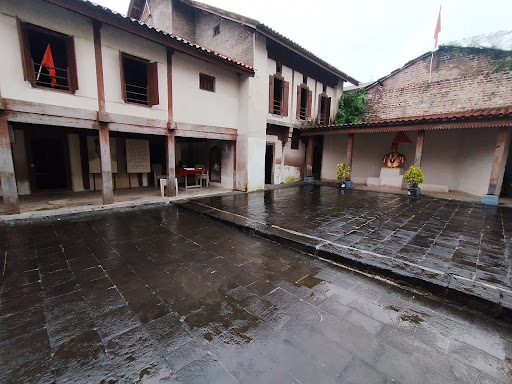
Ā Ā Ā Read moreSavarkar Wada Bhagur. Located in the Bhagur village of Nashik district, this wada (traditional Indian house) is the birthplace and ancestral home of the legendary freedom fighter, Vinayak Damodar Savarkar. Let's dive into the history and explore this iconic place!"
History of Savarkar Wada "As we step inside the wada, we're transported back in time to the late 19th century. This is where Vinayak Savarkar was born in 1883 and spent his childhood. The wada has been beautifully restored to its original glory, showcasing the traditional Marathi architecture of the era. The walls are adorned with photographs and memorabilia of Savarkar's life, giving us a glimpse into his remarkable journey."
Exploring the Wada "As we explore the wada, we come across various rooms that have been converted into mini-museums. Each room is dedicated to a different aspect of Savarkar's life, from his early days as a revolutionary to his time in prison and eventual release. The wada also houses a beautiful temple, where Savarkar's family would perform daily prayers."
The Surrounding Village "After exploring the wada, we take a stroll around the charming village of Bhagur. The village is surrounded by lush green fields and rolling hills, making it a picturesque destination. We interact with the locals, who share stories about Savarkar's life and legacy, giving us a deeper understanding of the man and his impact on Indian history."
Conclusion "As we conclude our visit to Savarkar Wada Bhagur, we're left with a sense of awe and reverence for the legendary freedom fighter. This historic destination is a must-visit for anyone interested in Indian history and culture. The wada not only showcases Savarkar's life but also serves as a reminder of the sacrifices made by our freedom fighters. Thank you for joining me on this journey, and I'll see you in the...
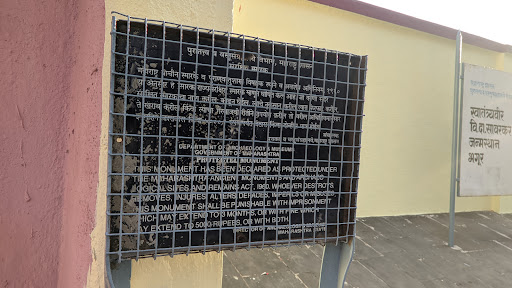
Ā Ā Ā Read moreBirthplace of Vinayak Damodar Savarkar, popularly known as Veer Savarkar. It's ancestral place of Savarkar and is century old. Now the place has been turned into museum. It's under the management of Archeological Department of Government of Maharashtra. The department has placed one person in-charge of the place. The place is clean and well lighted. There is no guide to explain various sections in the museum. Visitors are on their own inside. A person who has knowledge of history or of ancient places must be accompanied! The ground floor has several original pictures of V. D. Savarkar with proper captions depicting his journey. Storage system of grains is a noteworthy thing on the first floor. One may also get astonished while understanding the air circulation system which was present in those days. Also, when you reach at the third floor, you can go to the other side of the house - a different section altogether. It's like two different section in one house. They are reachable only through the ground floor or the third floor. It's a brilliant piece of architecture! Also, there was a tunnel inside the house, which led to the outskirts of the village. This was helpful during pre-independence era. Now the tunnel has been closed but yes, one can observe it, open the lid, watch the steps. Another brilliant piece of architecture. Unfortunately, one is not allowed to take pictures inside the museum. Also, the surrounding houses condition are poor. It doesn't feel that we are visiting an historical place. Timely cleaning and maintenance work are carried out which is a...
Ā Ā Ā Read more