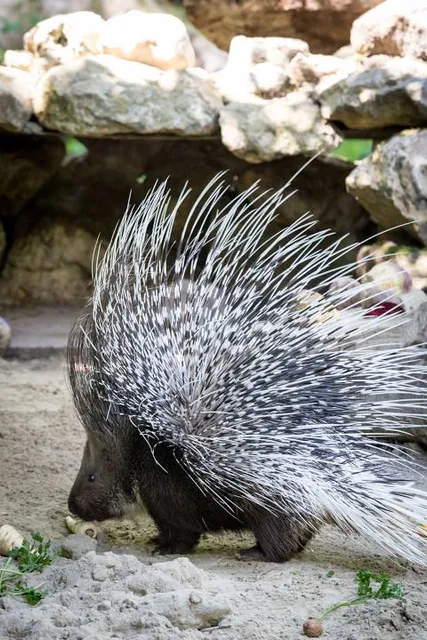
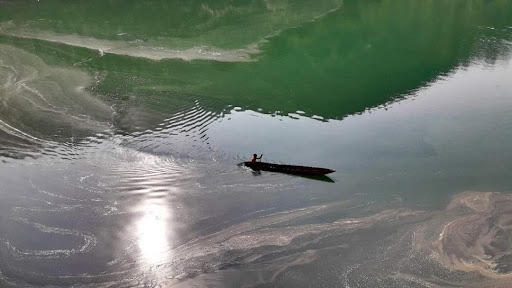
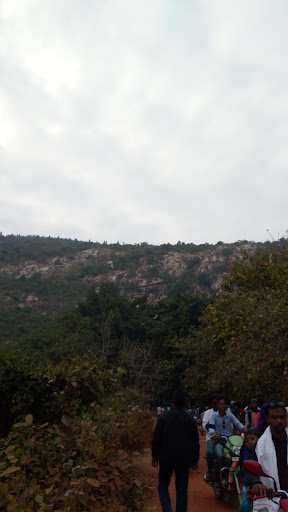
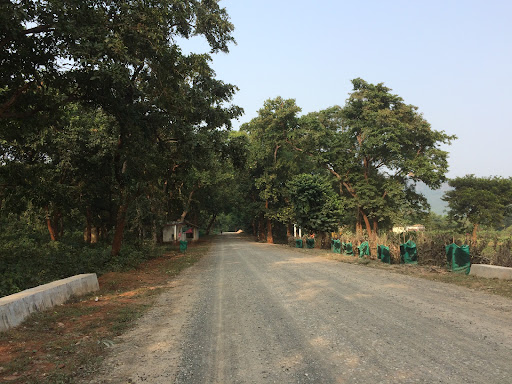
The conservation area of Hadagarh Wildlife Sanctuary is very popular with the tourists who wish to relish the wild and unspoilt natural environment. The quiet tranquility of Hadagarh Wildlife Sanctuary weaves magic that has to be experienced to believe. So, in order to enjoy all these and more, visit Hadagarh Wildlife Sanctuary, Orissa at your earliest. Dense Sal forests with patches of vast grasslands in between, Hadahgarh Wildlife Sanctuary offers a picture perfect setting with its breathtaking beauty. It is located barely 20 kilometres from Bhadrak, in the Kendujhar district and is home to several species of avifauna in addition to other animals that include tigers, leopards, fishing cats, jungle cats, pangolin, hyena, wolf, porcupine, and langur. Founded in 1978, the Hadagarh Wildlife Sanctuary spans across an area of 191.6 square kilometres. The Salandi River, passing through the forest is its lifeline. There is a dam on the river named Salandi Dam. The Salandi River is home to the Muggar Crocodiles. Hadagarh Wildlife Sanctuary is a popular tourist spot attracting substantial number of tourists round the year. While winters are the best time to visit the sanctuary, it is also advisable to avoid the summer months altogether. Hadagarh sanctuary in the district of Keonjhar and Mayurbhanj is close to Hadagarh reservoir of Salandi dam. The area is rich in mixed deciduous forests and wildlife which includes tiger, leopard, fishing cat, hyena, elephant, langur, pangolin, a variety of birds and reptiles. The Baula hill range lying on the east and west of Salandi river, the valley occupied by the reservoir and its catchments are the main features. Situated in the district of Kendujhar, Hadagarh sanctuary spans over an area of 191.6 sq km and is one of the most strategically located sanctuaries from wildlife conservation point of view which is described in later part of this write up. Hadagarh falls under the purview of Divisional Forest Officer, Anandpur and comprises of one Range office at Hadagarh. There are two entry points to the sanctuary. One at Hadagarh situated about 20 odd kilometres from Anandpur ( Andapur as spelled in Oriya) and the other at Kathakata in Hatadihi Block , around 26kms from the DFOs office. Similipal lies north of Hadagarh and is connected to it by a thin patch of forests rich in Sal and its associated family of trees. On the east lies the Hadagarh dam and again a very thin line of corridor connecting with Kuldiha wildlife sanctuary. This means Hadagarh can act as a very vital path for seasonal migration of Elephants from Similipal to the Forests of Kuldiha and vice versa. In fact Hadagarh Sanctuary can act as a solid patch of forests for Tigers and Leopards of South Similipal which wander in search of new habitats in case there is spillage from south Similipal ( this statement does not have any value presently with Similipal reporting as less as 20 Tigers in the latest census published NTCA in 2011). But very less studies in this direction has happened and there has been no scientific data maintained or published in this...
Read moreHadgarh Wildlife Sanctuary wildlife sanctuary situated Keonjhar district in Odisha, India, covering an area of 191 km2 was established in 1978. Hadgarh Wildlife Sanctuary was declared vide F.F.A.H. notification dated the 6th December 1978 S.R.O. No.213/80 – In exercise of powers conferred by Section 18 of the Wildlife (Protection) Act, 1972 (53 of 1972), the State Government. Executive orders declared the most important and large forest blocks as reserved forests during the 1910-15 settlement operation. Forest blocks, i.e., Benamunda, Bandhanjhari, and Ranibeda, were reserved during 1925-26. The proposal for constituting Hadagarh sanctuary was initiated during 1976-77 when the task force committee on crocodile farming in Orissa decided to release the mugger (freshwater crocodile) in the reservoir of Salandi dam (Hadagarh) because of favorable climatic conditions for that species. It was decided to declare the reservoir and peripheral forests under Anandapur and Karanjia Forest Division as Sanctuary and suspend the rights of local people under the Wildlife (Protection) Act 1972. Thus the Hadagarh sanctuary came into existence by notification no. SF (W) - 160/78- 34113/FFAH dated 6.12.78 of Forest Department, Orissa. The above sanctuary comprises Boula RF in Anandapur and Satakosia R.F. (part) of Karanjia Forest Divisions. Later, its potential as an elephant reserve was recognized, and improvement work was started through Project Elephant to develop the sanctuary. Now, this sanctuary has been included in Mayurbhanj Elephant Reserve. The sanctuary lies in the catchment of Salandi river, a major tributary of the river Baitarani. Besides the Salandi river, the other perennial and seasonal streams are Mukta stream, Ghagara stream, Pitanau stream, Andheri stream, Suranga stream, Chakratirtha stream and Bentokholi stream. A large stagnant water body (31.83 km2) of river Salandi, called as Hadagarh reservoir is found inside the Sanctuary and is the important wetlands of this Sanctuary that attracts a variety of water birds both migratory and resident.[citation needed] Hadgarh sanctuary is linked to Similipal tiger reserve and Kuladiha wildlife sanctuary.
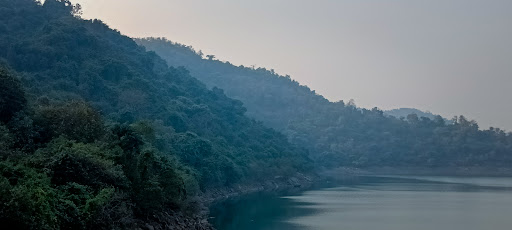
It is located on the Chota Nagpur Plateau in northeastern Odisha. The primary plant community is mixed deciduous forests, including Sal (Shorea robusta).[3] It is in the Eastern Highlands moist deciduous forests ecoregion. The Salandi River here flows between two mountains, the Hadgarh Dam was not accidentally built right here, today it is the biggest tourist attraction...
Read moreHadgarh Dam was a beautiful Dam and best tourist place in Keonjhar.
History :-
Hadgarh Wildlife Sanctuary wildlife sanctuary situated Keonjhar district in Odisha, India was established in 1978. The sanctuary lies in the catchment of Salandi river, a major tributary of the river Baitarani. Besides the Salandi river, the other perennial and seasonal streams are Mukta stream, Ghagara stream, Pitanau stream, Andheri stream, Suranga stream, Chakratirtha stream and Bentokholi stream.
A large stagnant water body (31.83 km2) of river Salandi, called as Hadagarh reservoir is found inside the Sanctuary and is the important wetlands of this Sanctuary that attracts variety of water birds both migratory and resident.
Hadgarh sanctuary is linked to Similipal tiger reserve and Kuladiha wildlife sanctuary.
The Salandi River here flows between two mountains, the Hadgarh Dam was not accidentally built right here, today it is the biggest tourist attraction of this area.
This sanctuary has a wide range of fauna, such as leopard, tiger, fishing cat, jungle cat, langur, pangolin and hyena.
Governing body of the Dam :-
Divisional Forest Officer,Kendujhar Division, Kendujhar district
Ministry of Forest and...
Read more