HTML SitemapExplore

Lalitagiri Buddhist Complex — Local services in Odisha

Name
Lalitagiri Buddhist Complex
Description
Lalitagiri is a major Buddhist complex in the Indian state of Odisha. The complex is home to stupas, 'esoteric' Buddha images, and monasteries, which is the oldest site in the region. Significant finds at this complex include Buddha's relics. Tantric Buddhism was practiced at this site.
Nearby attractions
Nearby restaurants
Nearby local services
Nearby hotels
Related posts
Keywords
Lalitagiri Buddhist Complex tourism.Lalitagiri Buddhist Complex hotels.Lalitagiri Buddhist Complex bed and breakfast. flights to Lalitagiri Buddhist Complex.Lalitagiri Buddhist Complex attractions.Lalitagiri Buddhist Complex restaurants.Lalitagiri Buddhist Complex local services.Lalitagiri Buddhist Complex travel.Lalitagiri Buddhist Complex travel guide.Lalitagiri Buddhist Complex travel blog.Lalitagiri Buddhist Complex pictures.Lalitagiri Buddhist Complex photos.Lalitagiri Buddhist Complex travel tips.Lalitagiri Buddhist Complex maps.Lalitagiri Buddhist Complex things to do.
Lalitagiri Buddhist Complex things to do, attractions, restaurants, events info and trip planning
Lalitagiri Buddhist Complex
IndiaOdishaLalitagiri Buddhist Complex

Basic Info

Lalitagiri Buddhist Complex

H7R2+4X2, Lalitagiri, Odisha 754205, India
4.5(698)
Open until 12:00 AM
Save
spot

Ratings & Description

Info

Lalitagiri is a major Buddhist complex in the Indian state of Odisha. The complex is home to stupas, 'esoteric' Buddha images, and monasteries, which is the oldest site in the region. Significant finds at this complex include Buddha's relics. Tantric Buddhism was practiced at this site.

Cultural
Scenic
Family friendly
Accessibility
attractions: , restaurants: , local businesses:
logoLearn more insights from Wanderboat AI.
Open hoursSee all hours
FriClosedOpen

Plan your stay

hotel
Pet-friendly Hotels in Odisha
Find a cozy hotel nearby and make it a full experience.
hotel
Affordable Hotels in Odisha
Find a cozy hotel nearby and make it a full experience.
hotel
The Coolest Hotels You Haven't Heard Of (Yet)
Find a cozy hotel nearby and make it a full experience.
hotel
Trending Stays Worth the Hype in Odisha
Find a cozy hotel nearby and make it a full experience.

Reviews

Get the Appoverlay
Get the AppOne tap to find yournext favorite spots!
Wanderboat LogoWanderboat

Your everyday Al companion for getaway ideas

CompanyAbout Us
InformationAI Trip PlannerSitemap
SocialXInstagramTiktokLinkedin
LegalTerms of ServicePrivacy Policy

Get the app

© 2025 Wanderboat. All rights reserved.

Reviews of Lalitagiri Buddhist Complex

4.5
(698)
avatar
5.0
10y

Very Beautiful place of lalitagiriLalitgiri is a major center of Buddhism hemmed between the Parabhadi and Landa sandstone hills in the standalone Assian hill range. It is situated in the Mahanga Tahsil in Cuttack district . Bhubaneswar , the state capital of Odisha, is 90 kilometres (56 mi) from the site, 2 while Cuttack is 60 kilometres (37 mi) away; Udaigiri is 89 kilometres (55 mi) from Lalitgiri and Ratnagiri is 12 kilometres (7.5 mi) away. 3] Bhubaneswar is well connected by road, rail and air services with the rest of the country. History Lalitgiri Ruins The first identification of archaeological antiquities from the Diamond Triangle sites was conducted in 1905 by M.M. Chakravarty, the then Sub Divisional Officer in Jajpur . Later, in 1927 and 1928, R.P. Chanda of the Indian Museum in Kolkata documented the site in the Memoirs of Archaeological Survey of India (ASI). In 1937, the site was officially declared a protected monument by the central government. In 1977, some excavations were done at the site by the Utkal University . Detailed excavations by the Bhubaneswar Circle of the Archaeological Survey of India were conducted between 1985 and 1991. From these investigations, it has been inferred that Lalitgiri, one of the earliest Buddhist sites in Orissa, maintained a continuous cultural sequence starting from the post Mauryan period (322–185 BC) till 13th century AD. [2] It is also inferred that this site maintained a continuous of presence of Buddhism, unbroken, from 3rd century BC to 10th century AD. [6] In 1985, the Archaeological Survey of India (ASI) started excavation at Lalitgiri to locate Pushpagiri, an important Buddhist site mentioned in the writings of the Chinese traveler Xuanzang. The excavation led to several important archaeological discoveries, but none of these confirmed the identification of Lalitgiri with Pushpagiri. Later, excavations at Langudi Hill suggested that Pushpagiri was located there. [7] Archaeological finds Lalitgiri Mahastupa The excavations carried out by the ASI at Lalitgiri have unearthed remnants of a large stupa on the hill. Within the stupa, two rare stone caskets were found with relics of Buddha; this was the first such find in Eastern India. The stone caskets, like Chinese Puzzle boxes, made of Khondalite stone, revealed three other boxes within them, made of steatite , silver and gold respectively; the gold casket, which is the last one, contained a relic or dhatu in the form of a small piece of bone.[2] Another interesting find is that of an east facing apsidal chaityagriha , built of bricks, 33 by 11 metres (108 ft × 36 ft) in size with 3.3 metres (11 ft)-thick walls. This edifice, the first such Buddhist structure found in Odisha, contains a circular stupa at its center. Also found were a series of Kushana Brahmi inscriptions made on shells with cuts on moonstone at the periphery of the edifice. Another find is a piece of a pillar railing with a lens-shaped decoration with the theme of a half lotus medallion. From these finds it is inferred that such structures belonged from the early Christian era to 6th–7th century period. Lalitgiri ( Odia : ଲଳିତଗିରି) (also known as Naltigiri ) is a major Buddhist complex in the Indian state of Odisha comprising major stupas , 'esoteric' Buddha images, and monasteries ( viharas ), one of the oldest sites in the region. Together with the Ratnagiri and Udayagiri sites, Lalitgiri is part of Puspagiri University located on top of hills of the same names. [1[3] The three complexes are known as the "Diamond Triangle". [4] Significant finds at this complex include Buddha's relics. [3] Tantric Buddhism was practiced...

   Read more
avatar
5.0
7y

Lalitgiri | Cuttack | Odisha | India

Laiitgiri is situated on the Birupa Gobari Chitrotpala(rivers) valley under the Mahanga Thana (P.S.) of Cuttack district Odisha and 40 kms away from the city of Cuttack . This place has been archaeologically attested to be one of the fore most and formidable Buddhist establishments in the world, on the basis of the latest archaeological finds unearthed from the excavations, the antiquity of the splendid Buddhist site may well go back to the Maurya period* (3rd Century B.C.) The site is amply corroborated not only by the huge bulk of the loose Buddhist sculptures and monolithic votive stupas lying scattered all over the hills.

From these investigations, it has been inferred that Lalitgiri, one of the earliest Buddhist sites in Orissa, maintained a continuous cultural sequence starting from the post Mauryan period (322–185 BC) till 13th century AD.It is also inferred that this site maintained a continuous of presence of Buddhism, unbroken, from 3rd century BC to 10th century AD - 900 years.

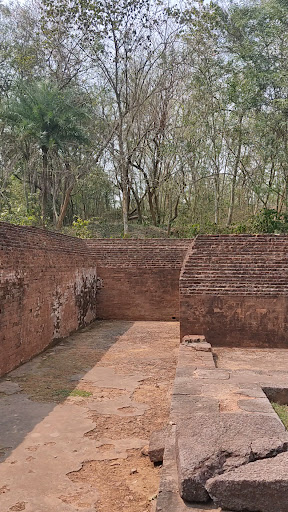
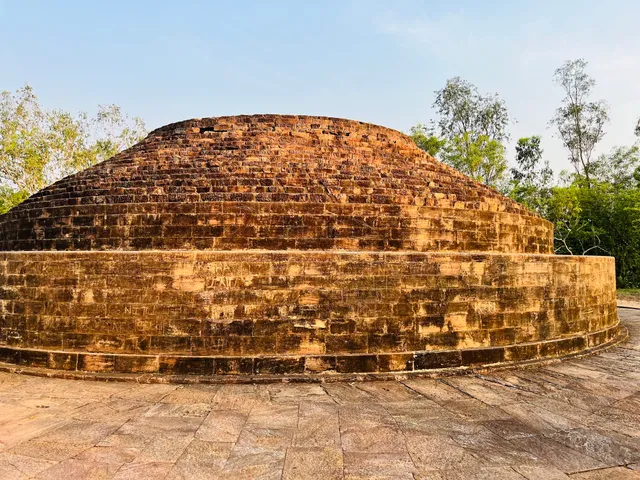
The excavations carried out by the ASI at Lalitgiri have unearthed remnants of a large stupa on the hill. Within the stupa, two rare stone caskets were found with relics of Buddha; this was the first such find in Eastern India. The stone caskets, like Chinese Puzzle boxes, made of Khondalite stone, revealed three other boxes within them, made of steatite, silver and gold respectively; the gold casket, which is the last one, contained a relic or dhatu in the form of a small piece of bone. Another interesting find is that of an east facing apsidal chaityagriha, built of bricks, 33 by 11 metres (108 ft × 36 ft) in size with 3.3 metres (11 ft)-thick walls. This edifice, the first such Buddhist structure found in Odisha, contains a circular stupa at its center. Also found were a series of Kushana Brahmi inscriptions made on shells with cuts on moonstone at the periphery of the edifice. Another find is a piece of a pillar railing with a lens-shaped decoration with the theme of a half lotus medallion. From these finds it is inferred that such structures belonged from the early Christian era to 6th–7th century period. Also found were remnants of four monasteries. The first and the largest monastery, facing east, a two storied structure measuring 36 square metres (390 sq ft), has at its center a 12.9 metres (42 ft) square open space; it is dated to 10th–11th century AD. Adjoining the monastery at the rear end is a rainwater cistern built of bricks. The second monastery, in the northern extremity of the hill, is believed to have been built when Buddhism was losing its importance in Lalitgiri. The third monastery faces south-east and has dimensions of 28 by 27 metres (92 ft × 89 ft) with a central open space of 8 square metres (86 sq ft) and represents the end stages of apsidal chaitya. The fourth monastery, 30 square metres (320 sq ft), in size, has many large sized Buddha heads diefied in the sanctum sanctorum. A terracotta monastic seal with the inscription "Sri Chandraditya Vihara Samagra Arya Vikshu Sanghasa" is dated to the 9th–10th century AD. The antiquities unearthed include a plethora of images of Buddha in different meditative forms from the Mahayana Buddhism period. The finds also include a gold pendant, silver jewellery, stone tablets with imprints of Ganesha and Mahisasurmardini, a seal matrix-cum-pendant, and a small image of Avalokiteśvara.

References from - Buddhist Heritage of Orissa- Dr Bimalendu Mohanty , Wikipedia , Shodhganga ,...

   Read more

avatar
5.0
5y

Lalitagiri (ଲଳିତଗିରି) (also known as Naltigiri) is a major Buddhist complex in the Indian state of Odisha comprising major stupas, 'esoteric' Buddha images, and monasteries (viharas), one of the oldest sites in the region. Together with the Ratnagiri and Udayagiri sites, Lalitagiri is part of Puspagiri University located on top of hills of the same names. The three complexes are known as the "Diamond Triangle". Significant finds at this complex include Buddha's relics. Tantric Buddhism was practiced at this site. Lalitagiri is a major center of Buddhism hemmed between the Parabhadi and Landa sandstone hills in the standalone Assian hill range. It is situated in the Mahanga Tahsil in Cuttack district. Bhubaneswar, the state capital of Odisha, is 90 kilometres (56 mi) from the site, while Cuttack, the former state capital is 60 kilometres (37 mi) away; Udaigiri is 8 kilometres (5.0 mi) from Lalitagiri and Ratnagiri is 12 kilometres (7.5 mi) away. Cuttack is well connected by road, rail and air services with the rest of the country. The first identification of archaeological antiquities from the Diamond Triangle sites was conducted in 1905 by M.M. Chakravarty, the then Sub Divisional Officer in Jajpur. Later, in 1927 and 1928, R.P. Chanda of the Indian Museum in Kolkata documented the site in the Memoirs of Archaeological Survey of India (ASI). In 1937, the site was officially declared a protected monument by the central government. In 1977, some excavations were done at the site by the Utkal University. Detailed excavations by the Bhubaneswar Circle of the Archaeological Survey of India were conducted between 1985 and 1991. From these investigations, it has been inferred that Lalitgiri, one of the earliest Buddhist sites in Orissa, maintained a continuous cultural sequence starting from the post Mauryan period (322–185 BC) till 13th century AD. It is also inferred that this site maintained a continuous of presence of Buddhism, unbroken, from 3rd century BC to 10th century AD. In 1985, the Archaeological Survey of India (ASI) started excavation at Lalitgiri to locate Pushpagiri, an important Buddhist site mentioned in the writings of the Chinese traveler Xuanzang. The excavation led to several important archaeological discoveries, but none of these confirmed the identification of Lalitgiri with Pushpagiri. Later, excavations at Langudi Hill suggested that Pushpagiri was...

   Read more
Page 1 of 7
Previous
Next

Posts

Bikash DasBikash Das
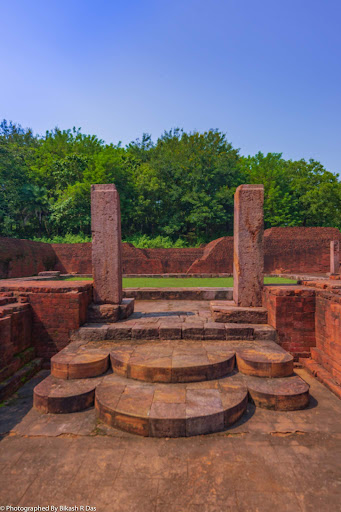
Lalitgiri | Cuttack | Odisha | India Laiitgiri is situated on the Birupa Gobari Chitrotpala(rivers) valley under the Mahanga Thana (P.S.) of Cuttack district Odisha and 40 kms away from the city of Cuttack . This place has been archaeologically attested to be one of the fore most and formidable Buddhist establishments in the world, on the basis of the latest archaeological finds unearthed from the excavations, the antiquity of the splendid Buddhist site may well go back to the Maurya period* (3rd Century B.C.) The site is amply corroborated not only by the huge bulk of the loose Buddhist sculptures and monolithic votive stupas lying scattered all over the hills. From these investigations, it has been inferred that Lalitgiri, one of the earliest Buddhist sites in Orissa, maintained a continuous cultural sequence starting from the post Mauryan period (322–185 BC) till 13th century AD.It is also inferred that this site maintained a continuous of presence of Buddhism, unbroken, from 3rd century BC to 10th century AD - 900 years. The excavations carried out by the ASI at Lalitgiri have unearthed remnants of a large stupa on the hill. Within the stupa, two rare stone caskets were found with relics of Buddha; this was the first such find in Eastern India. The stone caskets, like Chinese Puzzle boxes, made of Khondalite stone, revealed three other boxes within them, made of steatite, silver and gold respectively; the gold casket, which is the last one, contained a relic or dhatu in the form of a small piece of bone. Another interesting find is that of an east facing apsidal chaityagriha, built of bricks, 33 by 11 metres (108 ft × 36 ft) in size with 3.3 metres (11 ft)-thick walls. This edifice, the first such Buddhist structure found in Odisha, contains a circular stupa at its center. Also found were a series of Kushana Brahmi inscriptions made on shells with cuts on moonstone at the periphery of the edifice. Another find is a piece of a pillar railing with a lens-shaped decoration with the theme of a half lotus medallion. From these finds it is inferred that such structures belonged from the early Christian era to 6th–7th century period. Also found were remnants of four monasteries. The first and the largest monastery, facing east, a two storied structure measuring 36 square metres (390 sq ft), has at its center a 12.9 metres (42 ft) square open space; it is dated to 10th–11th century AD. Adjoining the monastery at the rear end is a rainwater cistern built of bricks. The second monastery, in the northern extremity of the hill, is believed to have been built when Buddhism was losing its importance in Lalitgiri. The third monastery faces south-east and has dimensions of 28 by 27 metres (92 ft × 89 ft) with a central open space of 8 square metres (86 sq ft) and represents the end stages of apsidal chaitya. The fourth monastery, 30 square metres (320 sq ft), in size, has many large sized Buddha heads diefied in the sanctum sanctorum. A terracotta monastic seal with the inscription "Sri Chandraditya Vihara Samagra Arya Vikshu Sanghasa" is dated to the 9th–10th century AD. The antiquities unearthed include a plethora of images of Buddha in different meditative forms from the Mahayana Buddhism period. The finds also include a gold pendant, silver jewellery, stone tablets with imprints of Ganesha and Mahisasurmardini, a seal matrix-cum-pendant, and a small image of Avalokiteśvara. References from - Buddhist Heritage of Orissa- Dr Bimalendu Mohanty , Wikipedia , Shodhganga , History of Orissa
Your browser does not support the video tag.
sangay gurungsangay gurung
Ancient monastery built in 3rd century..One of the three diamond triangle and the oldest of all. Beautiful arts and statues . The museum adjacent has very good corrections of statues and Buddhas relic unearthed from the compound.
Manoranjan MallickManoranjan Mallick
Lalitagiri is a major Buddhist complex in the Indian state of Odisha. The complex is home to stupas, 'esoteric' Buddha images, and monasteries, which is the oldest site in the region. Significant finds at this complex include Buddha's relics. Tantric Buddhism was practiced at this site. Lalitgiri is the oldest of the Buddhist Diamond Triangle triad built in the 1st Century AD. Experience 360 degree views. Lalitgiri Lalitgiri is believed to be the most sacred among the three sites as it unearthed a massive stupa where a relic of Buddha was discovered inside a stone casket. During excavation structural remains of a large brick built apsidal chaitya griha with a circular stupa in the center was found. The discovery of such edifice is first of its kind in the Buddhist context in Orissa. Majority of the sculptures unearthed from excavation are the figures of Buddha in different postures belonging to Mahayanistic phase of Buddhism. Inscribed potsherds belonging to different time spans i.e. post Mauryan period to 8th-9th century A.D. have been found which suggest that the Lalitgiri was under occupation by the both Hinayana and Mahayana sects. In subsequent period the site came under the control of Vajrayana faith of Buddhism patronized by the ruling Bhaumakaras (9th-10th cent A.D). It is evident how Hinduism made an entry into Buddhism through Vajrayana. All Buddhist gods and goddesses have replicas of various Hindu gods. Some of them like Aparajita Tara, Padmapani, Hariti, Vajrapani, Manjusri are close to common Hindu gods. Lalitgiri is one of the earliest Buddhist sites of Orissa shows the cultural continuity right from the post Mauryan period to 13th century A.D without any break.
See more posts
See more posts
hotel
Find your stay

Pet-friendly Hotels in Odisha

Find a cozy hotel nearby and make it a full experience.

Lalitgiri | Cuttack | Odisha | India Laiitgiri is situated on the Birupa Gobari Chitrotpala(rivers) valley under the Mahanga Thana (P.S.) of Cuttack district Odisha and 40 kms away from the city of Cuttack . This place has been archaeologically attested to be one of the fore most and formidable Buddhist establishments in the world, on the basis of the latest archaeological finds unearthed from the excavations, the antiquity of the splendid Buddhist site may well go back to the Maurya period* (3rd Century B.C.) The site is amply corroborated not only by the huge bulk of the loose Buddhist sculptures and monolithic votive stupas lying scattered all over the hills. From these investigations, it has been inferred that Lalitgiri, one of the earliest Buddhist sites in Orissa, maintained a continuous cultural sequence starting from the post Mauryan period (322–185 BC) till 13th century AD.It is also inferred that this site maintained a continuous of presence of Buddhism, unbroken, from 3rd century BC to 10th century AD - 900 years. The excavations carried out by the ASI at Lalitgiri have unearthed remnants of a large stupa on the hill. Within the stupa, two rare stone caskets were found with relics of Buddha; this was the first such find in Eastern India. The stone caskets, like Chinese Puzzle boxes, made of Khondalite stone, revealed three other boxes within them, made of steatite, silver and gold respectively; the gold casket, which is the last one, contained a relic or dhatu in the form of a small piece of bone. Another interesting find is that of an east facing apsidal chaityagriha, built of bricks, 33 by 11 metres (108 ft × 36 ft) in size with 3.3 metres (11 ft)-thick walls. This edifice, the first such Buddhist structure found in Odisha, contains a circular stupa at its center. Also found were a series of Kushana Brahmi inscriptions made on shells with cuts on moonstone at the periphery of the edifice. Another find is a piece of a pillar railing with a lens-shaped decoration with the theme of a half lotus medallion. From these finds it is inferred that such structures belonged from the early Christian era to 6th–7th century period. Also found were remnants of four monasteries. The first and the largest monastery, facing east, a two storied structure measuring 36 square metres (390 sq ft), has at its center a 12.9 metres (42 ft) square open space; it is dated to 10th–11th century AD. Adjoining the monastery at the rear end is a rainwater cistern built of bricks. The second monastery, in the northern extremity of the hill, is believed to have been built when Buddhism was losing its importance in Lalitgiri. The third monastery faces south-east and has dimensions of 28 by 27 metres (92 ft × 89 ft) with a central open space of 8 square metres (86 sq ft) and represents the end stages of apsidal chaitya. The fourth monastery, 30 square metres (320 sq ft), in size, has many large sized Buddha heads diefied in the sanctum sanctorum. A terracotta monastic seal with the inscription "Sri Chandraditya Vihara Samagra Arya Vikshu Sanghasa" is dated to the 9th–10th century AD. The antiquities unearthed include a plethora of images of Buddha in different meditative forms from the Mahayana Buddhism period. The finds also include a gold pendant, silver jewellery, stone tablets with imprints of Ganesha and Mahisasurmardini, a seal matrix-cum-pendant, and a small image of Avalokiteśvara. References from - Buddhist Heritage of Orissa- Dr Bimalendu Mohanty , Wikipedia , Shodhganga , History of Orissa
Bikash Das

Bikash Das

hotel
Find your stay

Affordable Hotels in Odisha

Find a cozy hotel nearby and make it a full experience.

Get the Appoverlay
Get the AppOne tap to find yournext favorite spots!
Ancient monastery built in 3rd century..One of the three diamond triangle and the oldest of all. Beautiful arts and statues . The museum adjacent has very good corrections of statues and Buddhas relic unearthed from the compound.
sangay gurung

sangay gurung

hotel
Find your stay

The Coolest Hotels You Haven't Heard Of (Yet)

Find a cozy hotel nearby and make it a full experience.

hotel
Find your stay

Trending Stays Worth the Hype in Odisha

Find a cozy hotel nearby and make it a full experience.

Lalitagiri is a major Buddhist complex in the Indian state of Odisha. The complex is home to stupas, 'esoteric' Buddha images, and monasteries, which is the oldest site in the region. Significant finds at this complex include Buddha's relics. Tantric Buddhism was practiced at this site. Lalitgiri is the oldest of the Buddhist Diamond Triangle triad built in the 1st Century AD. Experience 360 degree views. Lalitgiri Lalitgiri is believed to be the most sacred among the three sites as it unearthed a massive stupa where a relic of Buddha was discovered inside a stone casket. During excavation structural remains of a large brick built apsidal chaitya griha with a circular stupa in the center was found. The discovery of such edifice is first of its kind in the Buddhist context in Orissa. Majority of the sculptures unearthed from excavation are the figures of Buddha in different postures belonging to Mahayanistic phase of Buddhism. Inscribed potsherds belonging to different time spans i.e. post Mauryan period to 8th-9th century A.D. have been found which suggest that the Lalitgiri was under occupation by the both Hinayana and Mahayana sects. In subsequent period the site came under the control of Vajrayana faith of Buddhism patronized by the ruling Bhaumakaras (9th-10th cent A.D). It is evident how Hinduism made an entry into Buddhism through Vajrayana. All Buddhist gods and goddesses have replicas of various Hindu gods. Some of them like Aparajita Tara, Padmapani, Hariti, Vajrapani, Manjusri are close to common Hindu gods. Lalitgiri is one of the earliest Buddhist sites of Orissa shows the cultural continuity right from the post Mauryan period to 13th century A.D without any break.
Manoranjan Mallick

Manoranjan Mallick

See more posts
See more posts