Batala is the eighth largest city in the state of Punjab. Batala is a municipal council in Gurdaspur District.
The city was founded in 1465 CE by Raja Ram Deo, a Bhati Rajput, during the reign of Bahlul Lodi on a piece of land given by Tatar Khan who was the Governor of Lahore. Later, during the mughal rule, Akbar gave it in jagir to his foster brother, Shamsher Khan.
The city grew and developed under Shamsher Khan. The whole city was within a large fort. It had 12 entrance gates which are still known by their old names, e.g. Sheran Wala Gate, Khajuri Gate, Bhandari Gate, Ohri Gate, Thathiari Gate, Hathi Gate, Pahari Gate, etc. Some of them still survive although their condition is in need of attention.
In 1947, at the time of India's partition, Batala was included in Pakistan. But later Indian leaders realized that in this way the nearby major city of Amritsar would be surrounded by Pakistan on two sides. To avoid this danger to Amritsar, Batala was negotiated back to India from the British. For a total of 3 days, Batala was part of Pakistan, then added to Indian territory. During the political integration of India, Batala was included in the Punjab state.
There are 3 Historic Sikh Gurdwaras in Batala.
Sri Guru Nanak Sahib Ji had travelled to Batala to marry Bibi Sulakhani in 1487. Gurdwara Sri Dera Sahib Batala is said to be where the home of Bibi Sulakhani was and where the wedding took place.
Guru Nanak and his bride took four rounds instead of the prescribed seven around the sacred fire. It is said that he also spoke a few words at the ceremony. Unfortunately, these words were not duly recorded and nothing has been written regarding Bibi Sulakhani's thoughts or sentiments on the subject.
Guru Nanak refused to follow the marriage rituals dictated by the brahmins of the day. He stated that any time would be an auspicious time for the wedding. There was no need to cast horoscopes as he was not superstitious.
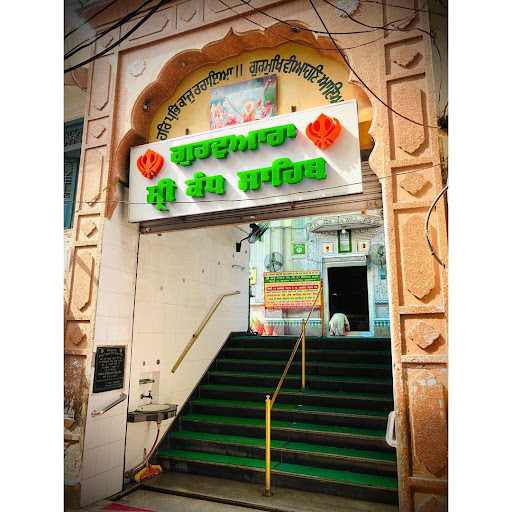
Gurdwara Sri Kandh Sahib was built at the place where the marriage party of Sri Guru Nanak Sahib Ji rested before the wedding took place. Mool Chand (Guru Nanak's father-in-law) arranged for the brahmin priests to debate the exact marriage rituals to be followed with the Guru.
The Guru was sitting besides a crooked mud wall (kandh) discussing the marriage plans with the brahmin clergy. As the wall was damaged and in a poor state, and there had been recent rains, some in the bride's party thought that it may fall on top of the Guru. An elderly lady was asked by the bride's family to warn Guru Nanak about the danger. The old woman approached the Guru and warned him of the pending danger from the damaged wall.
Guru Nanak just smiled and said "Mata Ji, ehh kand sadeeya layah nehee digdee..." - "This wall will not fall for a long time. The will of God shall prevail." The wall so consecrated by the Guru became an object of veneration for Sikhs who also constructed a memorial platform near it. A symbolic mud wall, neatly plastered, 3 x 5 x 1.5 feet approximately, encased in glass, next to the Guru Granth Sahib at the ground floor, now represents the original wall.
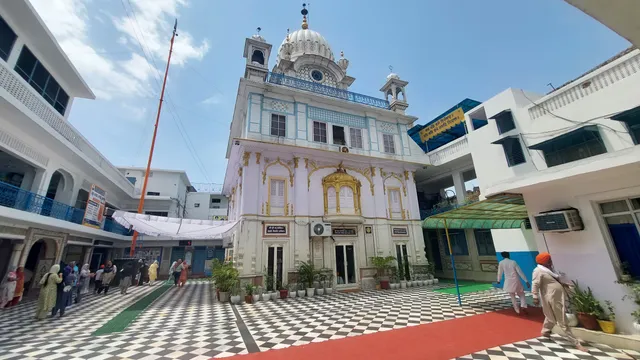
The Gurdwara was maintained in a private house by a line of resident Granthis until it was acquired during the 1950's by the Seva Committee Gurdwara Kandh Sahib. The foundation of the present building was laid on 17 December 1956. Standing in a marble-paved compound about 2 metres above the street level, it consists of a 10 metre square hall, with a square sanctum in the middle. The room at the second floor level is used for continuous readings of the Guru Granth Sahib. Above it and over the sanctum is a room with a dome covered with white glazed tiles and decorated with a tall gold plated pinnacle and umbrella shaped finial. Arched copings decorate the top room and decorative pinnacled domes surround the central dome, while square domed kiosks at the corners adorn the top.
Waheguru ji ka khalsa Waheguru ji ki fateh Dhan shri guru...
Ā Ā Ā Read moreGurudwara Shri Kandh Sahib is a sacred place located in Batala, Punjab, India. It holds great significance for the Sikh community and attracts devotees from all over. The Gurudwara is beautifully designed, with intricate architecture and peaceful surroundings. As you enter, you are greeted with a serene atmosphere and the soothing sound of prayers being recited. The main prayer hall, known as the Darbar Sahib, is a place of tranquility and spirituality. The holy scripture, Guru Granth Sahib, is respectfully placed here. The Gurudwara also has a langar hall, where a communal meal is served to all visitors, regardless of their background. This tradition of selfless service and equality is truly inspiring. The volunteers at Gurudwara Shri Kandh Sahib are warm and welcoming, ensuring that everyone feels comfortable and cared for. The management of the Gurudwara is well-organized, and the facilities are clean and well-maintained. The spiritual experience and sense of unity that one feels at Gurudwara Shri Kandh Sahib are truly remarkable. It's a place where you can find solace, seek guidance, and connect with your faith. I highly recommend visiting Gurudwara Shri Kandh Sahib to experience the rich Sikh culture and spiritual. Absolutely! I'd be delighted to share more about Gurudwara Shri Kandh Sahib. This Gurudwara holds a special place in the hearts of Sikhs and is considered a significant pilgrimage site. The architecture of the Gurudwara is simply breathtaking, with intricate details and vibrant colors that reflect the rich Sikh heritage. Inside, the atmosphere is filled with devotion and reverence. The melodious hymns and prayers that echo through the halls create a sense of peace and spiritual connection. One of the most remarkable aspects of Gurudwara Shri Kandh Sahib is the langar, where a free meal is served to all visitors. This tradition of sharing food promotes equality and selfless service, embodying the core values of Sikhism. The langar hall is bustling with volunteers who work tirelessly to prepare and serve the delicious vegetarian meals. It's a heartwarming experience to sit together with people from all walks of life, enjoying a meal as equals. The management of the Gurudwara ensures that the premises are well-maintained, clean, and accessible to all. They also organize various religious and community events that bring people together. Whether you're seeking spiritual solace or simply want to immerse yourself in the rich Sikh culture, Gurudwara Shri Kandh Sahib is a must-visit...
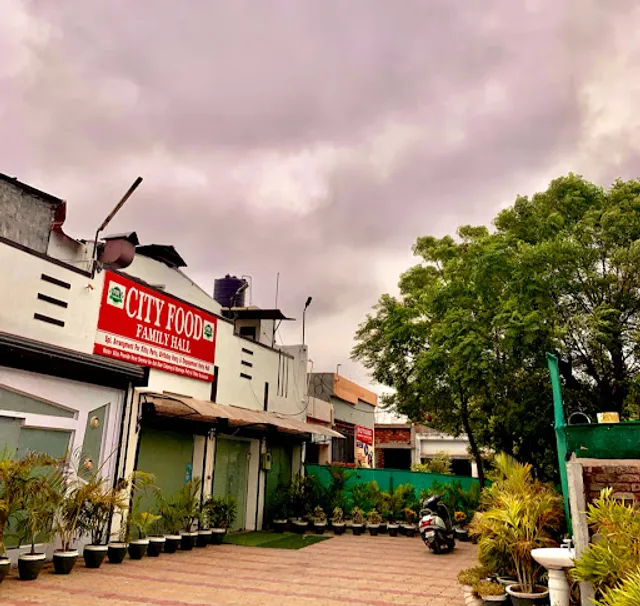
Ā Ā Ā Read moreGurudwara Kandh Sahib derives its name from kachchi kandh, i.e. mud wall, which, according to local tradition, stood on this site at the time of Guru Nanak's marriage. It is said that as the wedding party arrived and stopped a little distance short of Bhai Mul Chand's house, waiting for formal reception by the host. Guru Nanak sat down close to the wall. An old lady living near by, pointing to the dilapidated state of the wall, told him to move away from the spot lest the crumbling wall should fall on him. Guru Nanak assured her that there was no cause for alarm for the wall would stay intact for a long time. The wall so consecrated by the Guru became an object of veneration for the devotees who also constructed a memorial platform near it. A symbolic mud wall, neatly plastered, 3 x 5 x 1.5 feet approximately, encased in glass, next to the Guru Granth Sahib at the ground floor, now represents the original wall. The shrine was maintained in a private house by a line of resident priests until it was acquired during the 1950's by the Seva Committee Gurdwara Kandh Sahib. The foundation of the present building was laid on 17 December 1956. Standing in a marble-paved compound about 2 metres above the street level, it consists of a 10 metre square hall, with a square sanctum in the middle. The room at the second floor level is used for continuous readings of the Guru Granth Sahib. Above it and over the sanctum is a room with a dome covered with white glazed tiles and decorated with a tall goldplated pinnacle and umbrellashaped finial. Arched copings decorate the top room and decorative pinnacled domes surround the central dome, while square domed kiosks at the corners adorn the top. The verandah to the left, as one enters, has wall paintings depicting scenes from the life of Guru Nanak. Guru ka Langar is across the street, opposite the main entrance. The Gurdwara is administered by the Seva Committee Gurdwara Kandh Sahib. Largely attended congregations take place on every full-moon day.
All major anniversaries on the Sikh calendar are observed, but the most important function of the year is the fair held to mark the marriage anniversary of Guru Nanak on the seventh day of the light half of the lunar month of Bhadon...
Ā Ā Ā Read more