In the Mahabharata, Hastinapur is portrayed as the capital of the Kuru Kingdom of the Kauravas. Many incidents in the Mahabharata were set in the city of Hastinapur. According to the Mahabharata, the 100 Kaurava brothers were born in this city to their mother, Queen Gandhari, the wife of King Dhritarashtra. On the bank of the Budhi Ganga, two places near Hastinapur (Draupadi Ghat[4] and Karna Ghat) reference Mahabharata personages.
Balarama pulling Hastinapur toward the Ganges, shown on a page from a "Bhagavata Dasamskanda" series
Yudhisthira arrives in Hastinapur at the end of Kurukshetra War in the epic Mahabharata. The first reference to Hastinapur in the Puranas presents the city as the capital of Emperor Bharata's kingdom. King Samprati (also referred to as Samrat Samprati), grandson of the emperor Asoka the Great of the Mauryan Empire, built many temples here during his reign.[citation needed]
A 2nd century stone relief of 170 Jain Tirthankars in lotus position excavated in Hastinapur Excavations at Hastinapur were carried out in the early 1950s by B.B. Lal, Director General of the Archaeological Survey of India. Although the main aim of this excavation, according to Lal himself, was to determine the stratigraphic position of Painted Grey Ware concerning other known ceramic industries of the early historical period, Lal found correlations between the text of the Mahabharata and the material remains that he unearthed at Hastinapur. This led him to historicize some of the traditions mentioned in the Mahabharata as well as link the appearance of the Painted Grey Ware with Aryans in the upper Ganges basin areas.
Hastinapur is listed in the Ain-i-Akbari as a pargana under Delhi sarkar, producing a revenue of 4,466,904 dams for the imperial treasury and supplying a force of 300 infantry and 10 cavalry. The author Abu'l-Fazl ibn Mubarak describes it "an ancient Hindu settlement" lying on the Ganges.[6]
During British India, Hastinapur was ruled by Raja Nain Singh Nagar, who built many Hindu temples in and around...
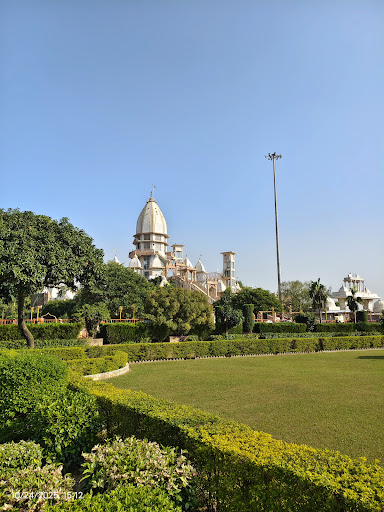
Read moreKailash Parvat is a Jain temple situated in Hastinapur, Uttar Pradesh. Located in the Bada Digambar Jain Temple Complex, it is one of the most significant Hastinapur places to visit.
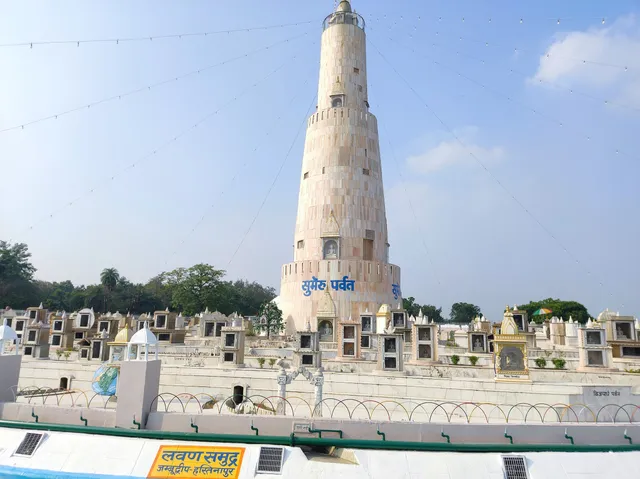
Kailash Parvat in Hastinapur shares its name with the renowned snow-clad mountain in the Himalayas. It is believed by the Jain devotees that the first Tirthankar of the Jain religion, Bhagwan Rishabhdev attained salvation on the snow-clad mountain of the Himalayas. Since common devotees can't reach the actual Kailash Parvat, the Jain community decided to build its replica in Hastinapur, the birthplace of Bhagwan Rishabhdev, so that the pilgrims have an easily accessible alternative.
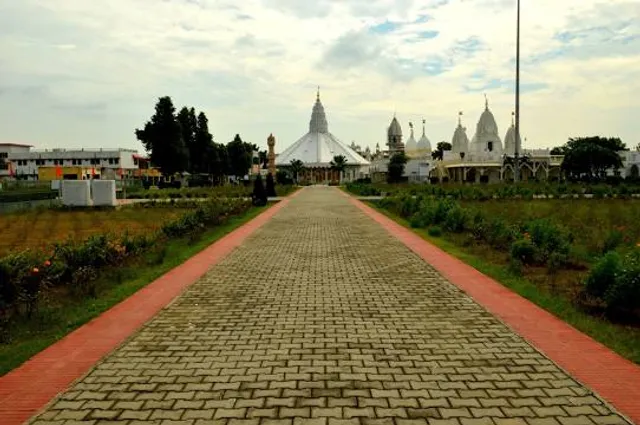
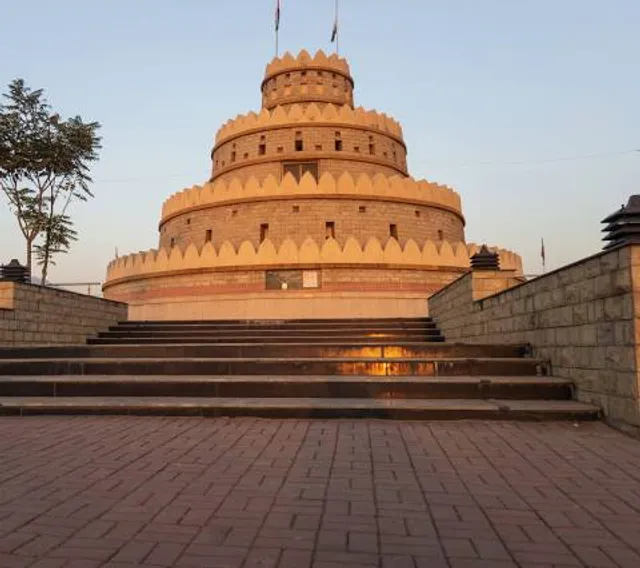
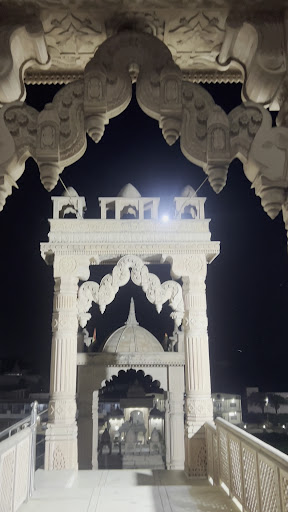
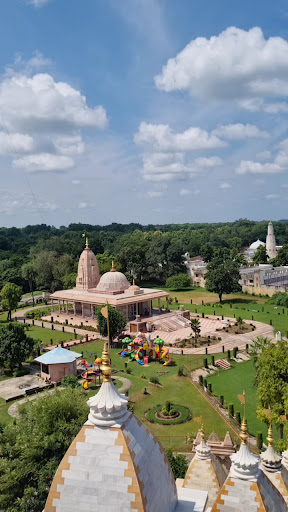
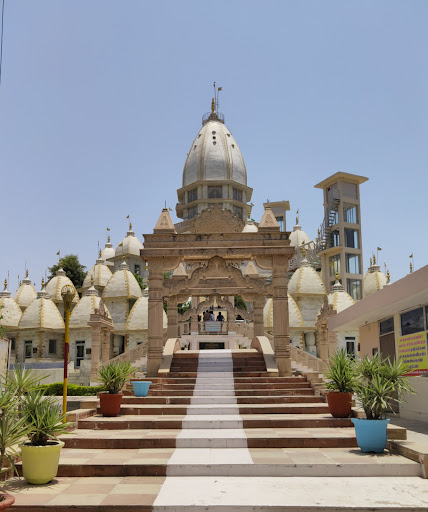
The Kailash Parvat in Hastinapur is an extension of the oldest Jain Temple known as Bada Jain Mandir. It is made up of a total of three stages. The middle-top 131 feet high temple houses the 11.25 feet tall seated idol of Bhagwan Rishabhdev surrounded by four layers of 72 temples in circular steps. The 72 temples or Jinayalas represent the Shri Trikal Chaubesee (24*3) i. e. the 24 hours of the day multiplied to the 3 kaals- past, present, and the future. The building has exquisitely engraved gates, decorated ceilings, pillars, and panels. It has many idols depicting the punishments received by sinners in hell. The temple complex also consists of many well-maintained and beautiful lawns.
The Kailash Parvat offers a spectacular view of the city from the top. The complex also offers many fun activities such as boat rides, elephant rides, etc. One can stay overnight in the Dharamshala and enjoy the early morning in the beautiful lawns of the temple.
🛑 Inside the main compound of temple, people who follow Jain religion...
Read moreKailash Parvat Jain Temple in Hastinapur, Uttar Pradesh, is a prominent 131-feet high structure dedicated to the first Jain Tirthankara, Rishabhanatha. It was built under the Shri Digambar Jain Teerth Kshetra Committee and completed its Panch-kalyanak Pratishtha in April 2006. a. The temple complex includes several Jain temples, Yatri Niwas, Bhojanshala, an auditorium. It is located about 2 km from Hastinapur Bus Station and is part of the larger Jain pilgrimage site in Hastinapur, which is known for its many ancient Jain temples and religious significance as the birthplace of three Jain Tirthankara, while first teerthankar Bhagwan Aadinath broke his fast after penance here. b. The Kailash Parvat Temple is an extension of the older Digamber Jain Bada Mandir complex, which dates back to 1801 and is dedicated to Shantinatha, the 16th Tirthankara. It’s also known as laghu Kailash which is reminiscent of main Kailasha parvat. So those who are not physically fit or have mobility issues, they can visit this kailash parvat to shed their karma. c. The entire area is rich with Jain heritage, including other temples managed by the Shri Digambar Jain Teerth Kshetra Committee. d. Beware of Monkeys who often steal items...
Read more