HTML SitemapExplore

Nanda Devi — Local services in Uttarakhand

Name
Nanda Devi
Description
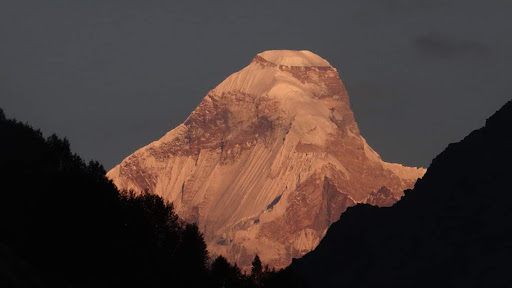
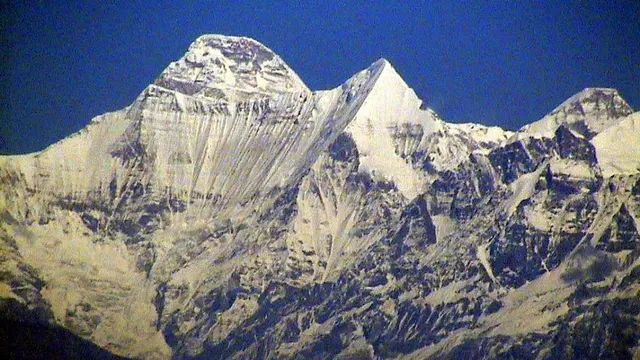
Nanda Devi is the second-highest mountain in India, after Kangchenjunga, and the highest located entirely within the country. Nanda Devi is the 23rd-highest peak in the world. Nanda Devi was considered the highest mountain in the world before computations in 1808 proved Dhaulagiri to be higher.
Nearby attractions
Nearby restaurants
Nearby local services
Nearby hotels
Related posts
Keywords
Nanda Devi tourism.Nanda Devi hotels.Nanda Devi bed and breakfast. flights to Nanda Devi.Nanda Devi attractions.Nanda Devi restaurants.Nanda Devi local services.Nanda Devi travel.Nanda Devi travel guide.Nanda Devi travel blog.Nanda Devi pictures.Nanda Devi photos.Nanda Devi travel tips.Nanda Devi maps.Nanda Devi things to do.
Nanda Devi things to do, attractions, restaurants, events info and trip planning
Nanda Devi
IndiaUttarakhandNanda Devi

Basic Info

Nanda Devi

Chamoli, Uttarakhand 246483, India
4.5(328)
Save
spot

Ratings & Description

Info

Nanda Devi is the second-highest mountain in India, after Kangchenjunga, and the highest located entirely within the country. Nanda Devi is the 23rd-highest peak in the world. Nanda Devi was considered the highest mountain in the world before computations in 1808 proved Dhaulagiri to be higher.

Outdoor
Adventure
Scenic
Off the beaten path
attractions: , restaurants: , local businesses:
logoLearn more insights from Wanderboat AI.

Plan your stay

hotel
Pet-friendly Hotels in Uttarakhand
Find a cozy hotel nearby and make it a full experience.
hotel
Affordable Hotels in Uttarakhand
Find a cozy hotel nearby and make it a full experience.
hotel
The Coolest Hotels You Haven't Heard Of (Yet)
Find a cozy hotel nearby and make it a full experience.
hotel
Trending Stays Worth the Hype in Uttarakhand
Find a cozy hotel nearby and make it a full experience.

Reviews

Get the Appoverlay
Get the AppOne tap to find yournext favorite spots!
Wanderboat LogoWanderboat

Your everyday Al companion for getaway ideas

CompanyAbout Us
InformationAI Trip PlannerSitemap
SocialXInstagramTiktokLinkedin
LegalTerms of ServicePrivacy Policy

Get the app

© 2025 Wanderboat. All rights reserved.

Posts

Bablox 001Bablox 001
Nanda Devi is the second-highest mountain in India, located in the Garhwal Himalayas of Uttarakhand. It stands at an elevation of 25,643 feet (7,816 meters) above sea level. Nanda Devi is not only a majestic mountain but also a sacred site for Hindus. The name "Nanda Devi" means "Bliss-Giving Goddess" in Sanskrit. According to Hindu mythology, Nanda Devi is the goddess of happiness and prosperity. The mountain is surrounded by a national park, which is home to a wide range of flora and fauna, including several endangered species. The Nanda Devi National Park is a UNESCO World Heritage Site and is considered one of the most beautiful and pristine national parks in India. Nanda Devi is a challenging mountain to climb, and its summit was first reached in 1936 by a British-American expedition. Since then, several expeditions have successfully climbed the mountain, but it remains a formidable challenge for even the most experienced mountaineers. In addition to its natural beauty and cultural significance, Nanda Devi is also an important source of inspiration for artists, writers, and musicians. The mountain has been the subject of numerous works of art, literature, and music, and continues to inspire creatives to this day. Overall, Nanda Devi is a majestic and sacred mountain that is steeped in natural beauty, cultural significance, and artistic inspiration.
Vatsal KhonaVatsal Khona
Nanda Devi is the second highest mountain in India, and the highest located entirely within the country. (Kangchenjunga, which is higher, is on the border of India and Nepal.) It is the 23rd-highest peak in the world. It was considered the highest mountain in the world before computations in 1808 proved Dhaulagiri to be higher. It was also the highest mountain in India before 1975 when Sikkim, the state in which Kangchenjunga is located, joined the Republic of India. It is part of the Greater Himalayas, and is located in Chamoli district of Uttarakhand, between the Rishiganga valley on the west and the Goriganga valley on the east. The peak, whose name means "Bliss-Giving Goddess",is regarded as the patron-goddess of the Uttarakhand Himalaya. In acknowledgment of its religious significance and for the protection of its fragile ecosystem, the peak as well as the circle of high mountains surrounding it—the Nanda Devi sanctuary—were closed to both locals and climbers in 1983. The surrounding Nanda Devi National Park was declared a UNESCO World Heritage Site in 1988.
Dr. Soni DafoutiDr. Soni Dafouti
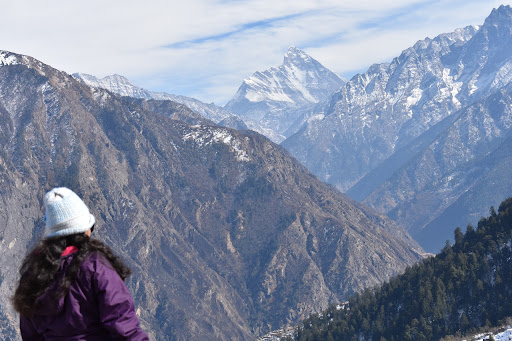
It's a very ancient village near pachhu surrounded by Betula utilis trees. It's the spot from where u can see the magnificent view of Nanda Devi East and start your trek to the Basecamp. It's easy to moderate 5-6 Kms trek to approx 4600 m asl. On the way you can site Monals, Blue sheep, different species of Rhododendron and many more. It's a must visit place. I have uploaded a zoom pic of Nanda Devi East peak from Ganghar
See more posts
See more posts
hotel
Find your stay

Pet-friendly Hotels in Uttarakhand

Find a cozy hotel nearby and make it a full experience.

Nanda Devi is the second-highest mountain in India, located in the Garhwal Himalayas of Uttarakhand. It stands at an elevation of 25,643 feet (7,816 meters) above sea level. Nanda Devi is not only a majestic mountain but also a sacred site for Hindus. The name "Nanda Devi" means "Bliss-Giving Goddess" in Sanskrit. According to Hindu mythology, Nanda Devi is the goddess of happiness and prosperity. The mountain is surrounded by a national park, which is home to a wide range of flora and fauna, including several endangered species. The Nanda Devi National Park is a UNESCO World Heritage Site and is considered one of the most beautiful and pristine national parks in India. Nanda Devi is a challenging mountain to climb, and its summit was first reached in 1936 by a British-American expedition. Since then, several expeditions have successfully climbed the mountain, but it remains a formidable challenge for even the most experienced mountaineers. In addition to its natural beauty and cultural significance, Nanda Devi is also an important source of inspiration for artists, writers, and musicians. The mountain has been the subject of numerous works of art, literature, and music, and continues to inspire creatives to this day. Overall, Nanda Devi is a majestic and sacred mountain that is steeped in natural beauty, cultural significance, and artistic inspiration.
Bablox 001

Bablox 001

hotel
Find your stay

Affordable Hotels in Uttarakhand

Find a cozy hotel nearby and make it a full experience.

Get the Appoverlay
Get the AppOne tap to find yournext favorite spots!
Nanda Devi is the second highest mountain in India, and the highest located entirely within the country. (Kangchenjunga, which is higher, is on the border of India and Nepal.) It is the 23rd-highest peak in the world. It was considered the highest mountain in the world before computations in 1808 proved Dhaulagiri to be higher. It was also the highest mountain in India before 1975 when Sikkim, the state in which Kangchenjunga is located, joined the Republic of India. It is part of the Greater Himalayas, and is located in Chamoli district of Uttarakhand, between the Rishiganga valley on the west and the Goriganga valley on the east. The peak, whose name means "Bliss-Giving Goddess",is regarded as the patron-goddess of the Uttarakhand Himalaya. In acknowledgment of its religious significance and for the protection of its fragile ecosystem, the peak as well as the circle of high mountains surrounding it—the Nanda Devi sanctuary—were closed to both locals and climbers in 1983. The surrounding Nanda Devi National Park was declared a UNESCO World Heritage Site in 1988.
Vatsal Khona

Vatsal Khona

hotel
Find your stay

The Coolest Hotels You Haven't Heard Of (Yet)

Find a cozy hotel nearby and make it a full experience.

hotel
Find your stay

Trending Stays Worth the Hype in Uttarakhand

Find a cozy hotel nearby and make it a full experience.

It's a very ancient village near pachhu surrounded by Betula utilis trees. It's the spot from where u can see the magnificent view of Nanda Devi East and start your trek to the Basecamp. It's easy to moderate 5-6 Kms trek to approx 4600 m asl. On the way you can site Monals, Blue sheep, different species of Rhododendron and many more. It's a must visit place. I have uploaded a zoom pic of Nanda Devi East peak from Ganghar
Dr. Soni Dafouti

Dr. Soni Dafouti

See more posts
See more posts

Reviews of Nanda Devi

4.5
(328)
avatar
4.0
7y

Nanda Devi is the second highest mountain in India, and the highest located entirely within the country. (Kangchenjunga, which is higher, is on the border of India and Nepal.) It is the 23rd-highest peak in the world. It was considered the highest mountain in the world before computations in 1808 proved Dhaulagiri to be higher. It was also the highest mountain in India before 1975 when Sikkim, the state in which Kangchenjunga is located, joined the Republic of India. It is part of the Greater Himalayas, and is located in Chamoli district of Uttarakhand, between the Rishiganga valley on the west and the Goriganga valley on the east. The peak, whose name means "Bliss-Giving Goddess",[4] is regarded as the patron-goddess of the Uttarakhand Himalaya. In acknowledgment of its religious significance and for the protection of its fragile ecosystem, the peak as well as the circle of high mountains surrounding it—the Nanda Devi sanctuary—were closed to both locals and climbers in 1983. The surrounding Nanda Devi National Park was declared a UNESCO World Heritage Site in 1988.Nanda Devi is a two-peaked massif, forming a 2-kilometre-long (1.2 mi) high ridge, oriented east-west. The western summit is higher, and the eastern summit is called Sunanda Devi formerly known as Nanda Devi East is the lower one. The main summit stands guarded by a barrier ring comprising some of the highest mountains in the Indian Himalayas, twelve of which exceed 6,400 m ( 6.4 km) in height, further elevating its sacred status as the daughter of the Himalaya in Indian myth and folklore. The interior of this almost insurmountable ring is known as the Nanda Devi Sanctuary, and is protected as the Nanda Devi National Park. Sunanda Devi lies on the eastern edge of the ring (and of the Park), at the border of Chamoli, Pithoragarh and Bageshwar districts.

Together the peaks may be referred to as the peaks of the goddesses Nanda and Sunanda. These goddesses have occurred together in ancient Sanskrit literature (Srimad Bhagvatam or Bhagavata Purana) and are worshipped together as twins in the Kumaon, Garhwal and as well as elsewhere in India. The first published reference to Nanda Devi East as Sunanda Devi appears to be in a recent novel (Malhotra 2011) that has the Kumaon region as backdrop.

In addition to being the 23rd highest independent peak in the world, Nanda Devi is also notable for its large, steep rise above local terrain. It rises over 3,300 metres (10,800 ft) above its immediate southwestern base on the Dakkhini Nanda Devi Glacier in about 4.2 kilometres (2.6 mi), and its rise above the glaciers to the north is similar. This makes it among the steepest peaks in the world at this scale, closely comparable, for example, to the local profile of K2. Nanda Devi is also impressive when considering terrain that is a bit further away, as it is surrounded by relatively deep valleys. For example, it rises over 6,500 metres (21,300 ft) above the valley of the Goriganga in only...

   Read more
avatar
5.0
3y

Nanda Devi, Uttarakhand: Majestic Peaks and Sacred Beauty

Nanda Devi, the second-highest mountain in India, is a sacred giant standing tall in the Garhwal Himalayas of Uttarakhand. Here's an in-depth review of this majestic peak, along with insights into the best time to visit and its awe-inspiring altitude.

Majestic Peaks and Spiritual Significance: Nanda Devi, with its towering height of 7,816 meters (25,643 feet), commands reverence and awe. Revered as the goddess of bliss, Nanda Devi holds significant cultural and spiritual importance in the region. The Nanda Devi Sanctuary, a UNESCO World Heritage Site, surrounds the peak, creating a sanctuary for biodiversity and preserving the unique ecosystem.

Best Time to Visit: The best time to visit Nanda Devi depends on the traveler's preference and the intended activity. For trekkers and mountaineers, the ideal time is during the pre-monsoon (May to June) and post-monsoon (September to October) periods when the weather is relatively stable. Monsoons (July to August) bring heavy rainfall, making it challenging for outdoor activities. Winters (November to April) are extremely cold and snow-covered, suitable mainly for experienced mountaineers.

Altitude and Himalayan Panorama: Nanda Devi's elevation adds to the challenge and allure for mountaineers. The snow-clad peaks contribute to the stunning panorama of the Garhwal Himalayas. The Nanda Devi Biosphere Reserve, encompassing the sanctuary, shelters diverse flora and fauna, offering a unique opportunity for nature enthusiasts to witness the Himalayan ecosystem.

Climbing Expeditions and Challenges: Nanda Devi has long been a magnet for mountaineers seeking a challenging ascent. The main summit, Nanda Devi East, and surrounding peaks present formidable climbing expeditions. The remoteness, technical difficulty, and unpredictable weather contribute to the challenges, requiring careful planning and experienced guides.

Cultural Heritage and Trekking Trails: The villages around Nanda Devi reflect the rich cultural heritage of the region. Trekking trails leading to the base camps offer glimpses of traditional life, and encounters with local communities provide a cultural immersion. The Nanda Devi Raj Jat Yatra, a pilgrimage held every 12 years, is a significant cultural event, showcasing the deep-rooted connection between the mountain and the people.

In conclusion, Nanda Devi stands as a symbol of both natural grandeur and cultural significance. Whether you seek the thrill of mountaineering, the serenity of trekking trails, or a spiritual connection with the Himalayas, Nanda Devi beckons with its majestic peaks, rugged beauty, and...

   Read more

avatar
5.0
6y

Nanda Devi East (Hindi: नंदा देवी पूर्व) locally known as Sunanda Devi is the lower of the two adjacent peaks of the highest mountain in Uttarakhand and second highest mountain in India; Nanda Devi is its higher twin peak. Nanda Devi and Nanda Devi East are part of the Garhwal Himalayas, and are located in the state of Uttarakhand. The graceful peaks of twin mountains are visible from almost everywhere in Kumaon. The first ascent to Nanda Devi East peak in recorded history appears to be in 1939 by Jakub Bujak and Janusz Klarner. The elevation of Nanda Devi East is 7,434 m (24,390 ft) and its prominence is 260 m (850 ft).

Nanda Devi East is the lower eastern summit of the twin peaks of Nanda Devi a two-peaked massif, forming a 2 kilometres long ridge, oriented east-west. The western summit is higher, and the eastern summit called Nanda Devi East is also locally referred to as Sunanda Devi. Together the peaks may be referred to as the peaks of the goddesses Nanda and Sunanda. These goddesses have occurred together in ancient Sanskrit literature, Srimad Bhagvatam or Bhagavata Purana (Gita Press has a two-volume English and Hindi translation) and are frequently worshipped together in the Kumaon and Garhwal as well as elsewhere in India. Regarding certain mountains as sacred and associating them with specific Gods and Goddesses is a practice prevalent in other parts of Asia as well e.g. the volcanic Mount Fuji in Japan appears to have been named after the fire goddess. The first published reference to Nanda Devi East as Sunanda Devi appears to be in a recent novel (Malhotra 2011) that has the Kumaon region as backdrop. An annual Nanda Devi Raj Jat festival celebrating the two goddesses is popular in Uttarakhand.

The Himalaya have also been personified as the Lord Himavata, the God of snow, who is mentioned in the Mahabharata. He is father of Ganga and Saraswati, that became rivers, and Parvati an avatar of the great Mother Goddess Durga, who married Shiva and the goddesses Nanda and Sunanda who too are avatars or close spiritual associates of the...

   Read more
Page 1 of 7
Previous
Next