HTML SitemapExplore

Aran Islands — Local services in County Galway

Name
Aran Islands
Description
Nearby attractions
Nearby restaurants
Nearby local services
Nearby hotels
Ard Einne House
Ard Einne House, Killeany, Inis Mór, Co. Galway, H91 P266, Ireland
Related posts
Keywords
Aran Islands tourism.Aran Islands hotels.Aran Islands bed and breakfast. flights to Aran Islands.Aran Islands attractions.Aran Islands restaurants.Aran Islands local services.Aran Islands travel.Aran Islands travel guide.Aran Islands travel blog.Aran Islands pictures.Aran Islands photos.Aran Islands travel tips.Aran Islands maps.Aran Islands things to do.
Aran Islands things to do, attractions, restaurants, events info and trip planning
Aran Islands
IrelandCounty GalwayAran Islands

Basic Info

Aran Islands

Co. Galway, Ireland
4.7(143)
Save
spot

Ratings & Description

Info

Cultural
Outdoor
Adventure
Scenic
Family friendly
Off the beaten path
attractions: , restaurants: , local businesses:
logoLearn more insights from Wanderboat AI.

Plan your stay

hotel
Pet-friendly Hotels in County Galway
Find a cozy hotel nearby and make it a full experience.
hotel
Affordable Hotels in County Galway
Find a cozy hotel nearby and make it a full experience.
hotel
The Coolest Hotels You Haven't Heard Of (Yet)
Find a cozy hotel nearby and make it a full experience.
hotel
Trending Stays Worth the Hype in County Galway
Find a cozy hotel nearby and make it a full experience.

Reviews

Live events

A Perfect Day in Ireland
Sun, Feb 22 • 12:30 PM
clare, County Clare, V95 R860, Ireland
View details
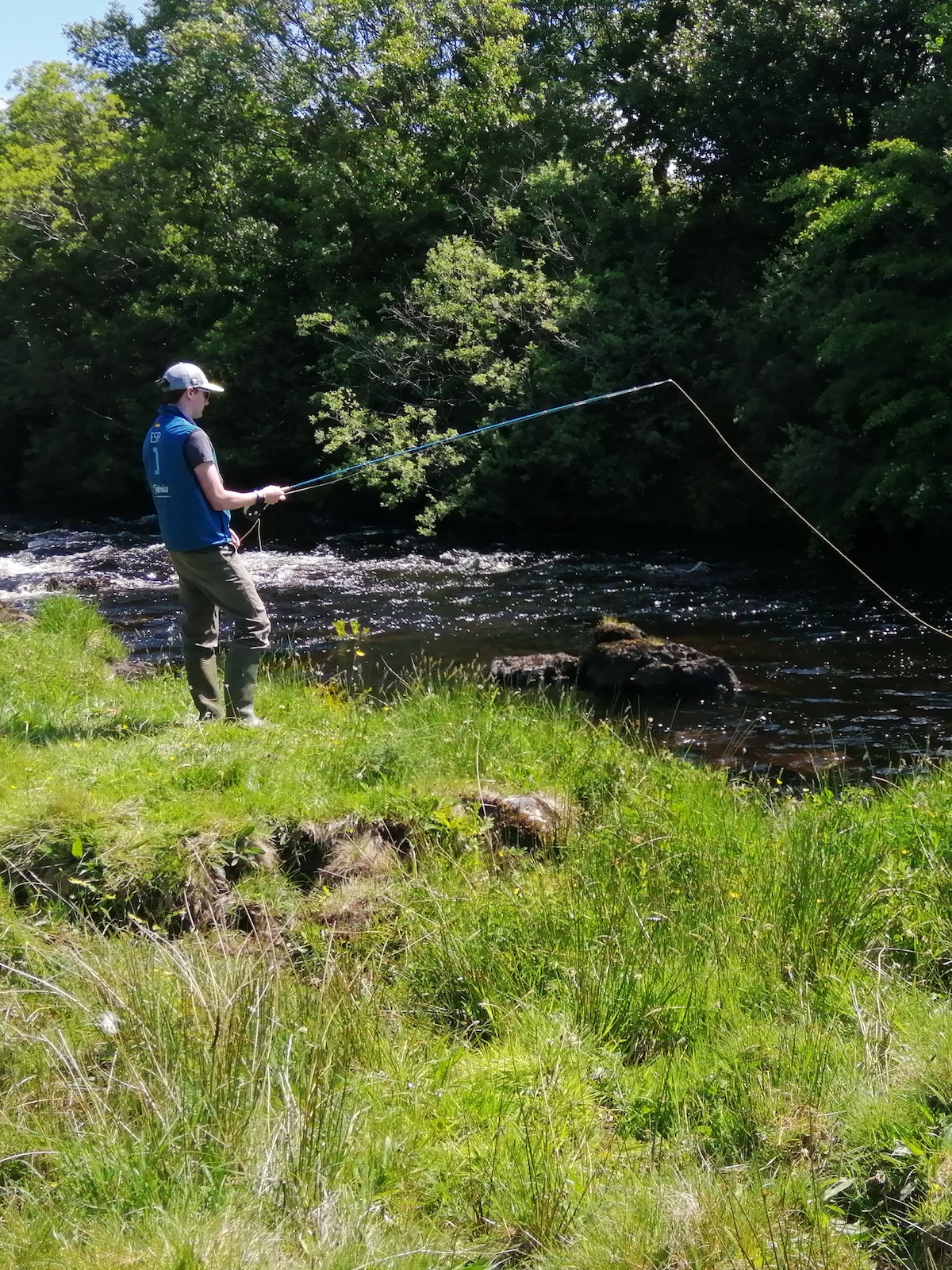
Experience the art of fly-fishing in Connemara
Sat, Feb 28 • 10:00 AM
An Spideal, County Galway, H91 FCD3, Ireland
View details
32nd Russell Festival Weekend | 2026
Thu, Feb 19 • 7:00 PM
Doolin, Doolin, Ireland, Ennis, Ireland
View details
Get the Appoverlay
Get the AppOne tap to find yournext favorite spots!
Wanderboat LogoWanderboat

Your everyday Al companion for getaway ideas

CompanyAbout Us
InformationAI Trip PlannerSitemap
SocialXInstagramTiktokLinkedin
LegalTerms of ServicePrivacy Policy

Get the app

© 2025 Wanderboat. All rights reserved.

Reviews of Aran Islands

4.7
(143)
avatar
2.0
2y

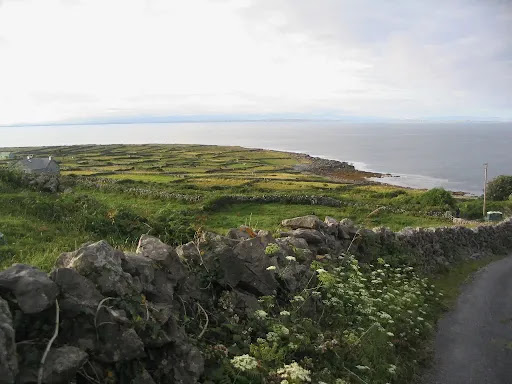
Aran Islands, Irish Oileáin Árainn, three limestone islands—Inishmore, Inishmaan, and Inisheer—comprising 18 square miles (47 square km) and lying across the mouth of Galway Bay on the west coast of Ireland. They are administratively part of County Galway. The islands, whose sheer cliffs face the Atlantic Ocean, are generally bleak. Ships and ferries call mainly at the town of Kilronan on Inishmore, the largest island. The other two islands were long accessible only by currach, a primitive type of boat. The people, who speak Irish, farm and fish under very difficult conditions. The Aran Islands are made up of horizontal sheets of Carboniferous limestone and do not have naturally occurring topsoil. The inhabitants raise crops of oats and potatoes on soil that they have made using seaweed, sand, and manure. Some cattle are raised, and subsistence fishing is carried on. Tourism provides a significant source of income, with visitors attracted by the islands’ austere charm and the impressive remains of prehistoric and early Christian hill forts. Two local Irish clans, the O’Briens and the O’Flahertys, ruled the islands until an English military garrison was built on Inishmore in the late 16th century.

Aspects of the islanders’ life formed the basis of the play Riders to the Sea (1904) and the book of impressions The Aran Islands (1907) by John Millington Synge. Man of Aran, a documentary film (1934) by Robert Flaherty, also depicted island life. The author Liam O’Flaherty was a native of Gort na gCapall, Inishmore. Europe, second smallest of the world’s continents, composed of the westward-projecting peninsulas of Eurasia (the great landmass that it shares with Asia) and occupying nearly one-fifteenth of the world’s total land area. It is bordered on the north by the Arctic Ocean, on the west by the Atlantic Ocean, and on the south (west to east) by the Mediterranean Sea, the Black Sea, the Kuma-Manych Depression, and the Caspian Sea. The continent’s eastern boundary (north to south) runs along the Ural Mountains and then roughly southwest along the Emba (Zhem) River, terminating at the northern Caspian coast. Europe’s largest islands and archipelagoes include Novaya Zemlya, Franz Josef Land, Svalbard, Iceland, the Faroe Islands, the British Isles, the Balearic Islands, Corsica, Sardinia, Sicily, Malta, Crete, and Cyprus. Its major peninsulas include Jutland and the Scandinavian, Iberian, Italian, and Balkan peninsulas. Indented by numerous bays, fjords, and seas, continental Europe’s highly irregular coastline is about 24,000 miles (38,000 km) long.

Among the continents, Europe is an anomaly. Larger only than Australia, it is a small appendage of Eurasia. Yet the peninsular and insular western extremity of the continent, thrusting toward the North Atlantic Ocean, provides—thanks to its latitude and its physical geography—a relatively genial human habitat, and the long processes of human history came to mark off the region as the home of a distinctive civilization. In spite of its internal diversity, Europe has thus functioned, from the time it first emerged in the human consciousness, as a world apart, concentrating—to borrow a phrase from Christopher Marlowe—“infinite riches in a little room.”

As a conceptual construct, Europa, as the more learned of the ancient Greeks first conceived it, stood in sharp contrast to both Asia and Libya, the name then applied to the known northern part of Africa. Literally, Europa is now thought to have meant “Mainland,” rather than the earlier interpretation, “Sunset.” It appears to have suggested itself to the Greeks, in their maritime world, as an appropriate designation for the extensive northerly lands that lay beyond, lands with characteristics vaguely known yet clearly different from those inherent in the concepts of Asia and Libya—both of which, relatively prosperous and civilized, were associated closely with the culture of the Greeks and their...

   Read more

avatar
5.0
6y

OMG - this is an often overlooked, but MUST see island if you are visiting Ireland. Use Aran Island Ferries to get out to the large island (Inis Mór), and then rent a bike when you get there. Skip the first bike place on the pier, and walk toward the left and look for Aran Bike Hire. No deposit required and they were 10 Euros for each bike. They had PLENTY of bikes to choose from, but pick one and ride it a short distance to make sure it is working ok. Check the gears, the breaks, etc. The first bikes we chose worked perfectly and we rode them for 20 miles with zero problems. Be aware, if you are from the states, that the front and rear brakes are opposite from what you expect in the U.S.

I recommend taking the 10:30am ferry out there and returning on the 5:00PM ferry. Even if you are renting a bike, it will take you ALL day to see the island. There are a couple of restaurants and a couple of places for lodging, but if you are there for a day trip, rent a bike when you get off the ferry, or take one of the guided van tours if you are pressed for time.

If you are riding a bike,and trying to tour the entire island, you won’t have time to check out the couple of restaurants or bars that are on the island.

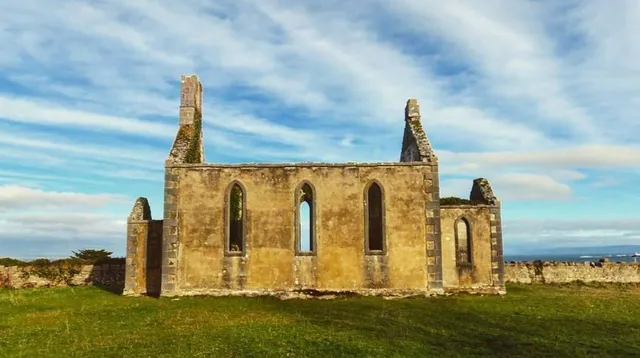
Instead, you should check out the 7 churches (from the 8th, 9th, and 15th century). They are very well preserved and an awesome site to behold.

Another cool site to see (although it is an extra charge) is to park your rental bike and hike the mile and a half to view the pre-historic fort called Dun Aonghasa. You actually have to pay a couple of extra bux to walk up to view this fort, but it’s worth it. It includes a great view of the Atlantic Ocena.

This is an AWESOME bike ride. The weather was kind of misty when I was there, but I wouldn’t trade the experience for ANYTHING in the world! I’m struggling with the decision, but it just MIGHT have been better than my visit to the Cliffs of Moher.

DON’T GET STUCK ON THE ISLAND FOLKS! Get on the last...

   Read more
avatar
4.0
2y

It's beautiful, you will hear interesting stories. Known for famous poets and writers, Aran sweaters, preety cottages and the incredible landscape. The population as per Sep 2023 is 600-650. Once you reach you will have to get a tour guide to take you around, they are usually close to the ferry stop else you could rent a bike if you are well aware of the route. The place is scenic, although routes are quite narrow, you will enjoy watching and listening to the tour guide.

Personally I was tired travelling as we had to take a bus first from Galway and then ferry to Inis mor, it was around close to 2 hours, if the tides are high, you might feel sea sickness. I would prefer to stay in a hotel rest and then go out to hike or the next day, we have a lot more energy. The people who aren't tired by travelling , 1 day trip is...

   Read more
Page 1 of 7
Previous
Next

Posts

Mr. Victorious Jaffar WattooMr. Victorious Jaffar Wattoo
Aran Islands, Irish Oileáin Árainn, three limestone islands—Inishmore, Inishmaan, and Inisheer—comprising 18 square miles (47 square km) and lying across the mouth of Galway Bay on the west coast of Ireland. They are administratively part of County Galway. The islands, whose sheer cliffs face the Atlantic Ocean, are generally bleak. Ships and ferries call mainly at the town of Kilronan on Inishmore, the largest island. The other two islands were long accessible only by currach, a primitive type of boat. The people, who speak Irish, farm and fish under very difficult conditions. The Aran Islands are made up of horizontal sheets of Carboniferous limestone and do not have naturally occurring topsoil. The inhabitants raise crops of oats and potatoes on soil that they have made using seaweed, sand, and manure. Some cattle are raised, and subsistence fishing is carried on. Tourism provides a significant source of income, with visitors attracted by the islands’ austere charm and the impressive remains of prehistoric and early Christian hill forts. Two local Irish clans, the O’Briens and the O’Flahertys, ruled the islands until an English military garrison was built on Inishmore in the late 16th century. Aspects of the islanders’ life formed the basis of the play Riders to the Sea (1904) and the book of impressions The Aran Islands (1907) by John Millington Synge. Man of Aran, a documentary film (1934) by Robert Flaherty, also depicted island life. The author Liam O’Flaherty was a native of Gort na gCapall, Inishmore. Europe, second smallest of the world’s continents, composed of the westward-projecting peninsulas of Eurasia (the great landmass that it shares with Asia) and occupying nearly one-fifteenth of the world’s total land area. It is bordered on the north by the Arctic Ocean, on the west by the Atlantic Ocean, and on the south (west to east) by the Mediterranean Sea, the Black Sea, the Kuma-Manych Depression, and the Caspian Sea. The continent’s eastern boundary (north to south) runs along the Ural Mountains and then roughly southwest along the Emba (Zhem) River, terminating at the northern Caspian coast. Europe’s largest islands and archipelagoes include Novaya Zemlya, Franz Josef Land, Svalbard, Iceland, the Faroe Islands, the British Isles, the Balearic Islands, Corsica, Sardinia, Sicily, Malta, Crete, and Cyprus. Its major peninsulas include Jutland and the Scandinavian, Iberian, Italian, and Balkan peninsulas. Indented by numerous bays, fjords, and seas, continental Europe’s highly irregular coastline is about 24,000 miles (38,000 km) long. Among the continents, Europe is an anomaly. Larger only than Australia, it is a small appendage of Eurasia. Yet the peninsular and insular western extremity of the continent, thrusting toward the North Atlantic Ocean, provides—thanks to its latitude and its physical geography—a relatively genial human habitat, and the long processes of human history came to mark off the region as the home of a distinctive civilization. In spite of its internal diversity, Europe has thus functioned, from the time it first emerged in the human consciousness, as a world apart, concentrating—to borrow a phrase from Christopher Marlowe—“infinite riches in a little room.” As a conceptual construct, Europa, as the more learned of the ancient Greeks first conceived it, stood in sharp contrast to both Asia and Libya, the name then applied to the known northern part of Africa. Literally, Europa is now thought to have meant “Mainland,” rather than the earlier interpretation, “Sunset.” It appears to have suggested itself to the Greeks, in their maritime world, as an appropriate designation for the extensive northerly lands that lay beyond, lands with characteristics vaguely known yet clearly different from those inherent in the concepts of Asia and Libya—both of which, relatively prosperous and civilized, were associated closely with the culture of the Greeks and their predecessors.
Your browser does not support the video tag.
BB
Nice cycling experience 🐳
Brent LBrent L
OMG - this is an often overlooked, but MUST see island if you are visiting Ireland. Use Aran Island Ferries to get out to the large island (Inis Mór), and then rent a bike when you get there. Skip the first bike place on the pier, and walk toward the left and look for Aran Bike Hire. No deposit required and they were 10 Euros for each bike. They had PLENTY of bikes to choose from, but pick one and ride it a short distance to make sure it is working ok. Check the gears, the breaks, etc. The first bikes we chose worked perfectly and we rode them for 20 miles with zero problems. Be aware, if you are from the states, that the front and rear brakes are opposite from what you expect in the U.S. I recommend taking the 10:30am ferry out there and returning on the 5:00PM ferry. Even if you are renting a bike, it will take you ALL day to see the island. There are a couple of restaurants and a couple of places for lodging, but if you are there for a day trip, rent a bike when you get off the ferry, or take one of the guided van tours if you are pressed for time. If you are riding a bike,and trying to tour the entire island, you won’t have time to check out the couple of restaurants or bars that are on the island. Instead, you should check out the 7 churches (from the 8th, 9th, and 15th century). They are very well preserved and an awesome site to behold. Another cool site to see (although it is an extra charge) is to park your rental bike and hike the mile and a half to view the pre-historic fort called Dun Aonghasa. You actually have to pay a couple of extra bux to walk up to view this fort, but it’s worth it. It includes a great view of the Atlantic Ocena. This is an AWESOME bike ride. The weather was kind of misty when I was there, but I wouldn’t trade the experience for ANYTHING in the world! I’m struggling with the decision, but it just MIGHT have been better than my visit to the Cliffs of Moher. DON’T GET STUCK ON THE ISLAND FOLKS! Get on the last ferry out at 5pm!
See more posts
See more posts
hotel
Find your stay

Pet-friendly Hotels in County Galway

Find a cozy hotel nearby and make it a full experience.

Aran Islands, Irish Oileáin Árainn, three limestone islands—Inishmore, Inishmaan, and Inisheer—comprising 18 square miles (47 square km) and lying across the mouth of Galway Bay on the west coast of Ireland. They are administratively part of County Galway. The islands, whose sheer cliffs face the Atlantic Ocean, are generally bleak. Ships and ferries call mainly at the town of Kilronan on Inishmore, the largest island. The other two islands were long accessible only by currach, a primitive type of boat. The people, who speak Irish, farm and fish under very difficult conditions. The Aran Islands are made up of horizontal sheets of Carboniferous limestone and do not have naturally occurring topsoil. The inhabitants raise crops of oats and potatoes on soil that they have made using seaweed, sand, and manure. Some cattle are raised, and subsistence fishing is carried on. Tourism provides a significant source of income, with visitors attracted by the islands’ austere charm and the impressive remains of prehistoric and early Christian hill forts. Two local Irish clans, the O’Briens and the O’Flahertys, ruled the islands until an English military garrison was built on Inishmore in the late 16th century. Aspects of the islanders’ life formed the basis of the play Riders to the Sea (1904) and the book of impressions The Aran Islands (1907) by John Millington Synge. Man of Aran, a documentary film (1934) by Robert Flaherty, also depicted island life. The author Liam O’Flaherty was a native of Gort na gCapall, Inishmore. Europe, second smallest of the world’s continents, composed of the westward-projecting peninsulas of Eurasia (the great landmass that it shares with Asia) and occupying nearly one-fifteenth of the world’s total land area. It is bordered on the north by the Arctic Ocean, on the west by the Atlantic Ocean, and on the south (west to east) by the Mediterranean Sea, the Black Sea, the Kuma-Manych Depression, and the Caspian Sea. The continent’s eastern boundary (north to south) runs along the Ural Mountains and then roughly southwest along the Emba (Zhem) River, terminating at the northern Caspian coast. Europe’s largest islands and archipelagoes include Novaya Zemlya, Franz Josef Land, Svalbard, Iceland, the Faroe Islands, the British Isles, the Balearic Islands, Corsica, Sardinia, Sicily, Malta, Crete, and Cyprus. Its major peninsulas include Jutland and the Scandinavian, Iberian, Italian, and Balkan peninsulas. Indented by numerous bays, fjords, and seas, continental Europe’s highly irregular coastline is about 24,000 miles (38,000 km) long. Among the continents, Europe is an anomaly. Larger only than Australia, it is a small appendage of Eurasia. Yet the peninsular and insular western extremity of the continent, thrusting toward the North Atlantic Ocean, provides—thanks to its latitude and its physical geography—a relatively genial human habitat, and the long processes of human history came to mark off the region as the home of a distinctive civilization. In spite of its internal diversity, Europe has thus functioned, from the time it first emerged in the human consciousness, as a world apart, concentrating—to borrow a phrase from Christopher Marlowe—“infinite riches in a little room.” As a conceptual construct, Europa, as the more learned of the ancient Greeks first conceived it, stood in sharp contrast to both Asia and Libya, the name then applied to the known northern part of Africa. Literally, Europa is now thought to have meant “Mainland,” rather than the earlier interpretation, “Sunset.” It appears to have suggested itself to the Greeks, in their maritime world, as an appropriate designation for the extensive northerly lands that lay beyond, lands with characteristics vaguely known yet clearly different from those inherent in the concepts of Asia and Libya—both of which, relatively prosperous and civilized, were associated closely with the culture of the Greeks and their predecessors.
Mr. Victorious Jaffar Wattoo

Mr. Victorious Jaffar Wattoo

hotel
Find your stay

Affordable Hotels in County Galway

Find a cozy hotel nearby and make it a full experience.

Get the Appoverlay
Get the AppOne tap to find yournext favorite spots!
Nice cycling experience 🐳
B

B

hotel
Find your stay

The Coolest Hotels You Haven't Heard Of (Yet)

Find a cozy hotel nearby and make it a full experience.

hotel
Find your stay

Trending Stays Worth the Hype in County Galway

Find a cozy hotel nearby and make it a full experience.

OMG - this is an often overlooked, but MUST see island if you are visiting Ireland. Use Aran Island Ferries to get out to the large island (Inis Mór), and then rent a bike when you get there. Skip the first bike place on the pier, and walk toward the left and look for Aran Bike Hire. No deposit required and they were 10 Euros for each bike. They had PLENTY of bikes to choose from, but pick one and ride it a short distance to make sure it is working ok. Check the gears, the breaks, etc. The first bikes we chose worked perfectly and we rode them for 20 miles with zero problems. Be aware, if you are from the states, that the front and rear brakes are opposite from what you expect in the U.S. I recommend taking the 10:30am ferry out there and returning on the 5:00PM ferry. Even if you are renting a bike, it will take you ALL day to see the island. There are a couple of restaurants and a couple of places for lodging, but if you are there for a day trip, rent a bike when you get off the ferry, or take one of the guided van tours if you are pressed for time. If you are riding a bike,and trying to tour the entire island, you won’t have time to check out the couple of restaurants or bars that are on the island. Instead, you should check out the 7 churches (from the 8th, 9th, and 15th century). They are very well preserved and an awesome site to behold. Another cool site to see (although it is an extra charge) is to park your rental bike and hike the mile and a half to view the pre-historic fort called Dun Aonghasa. You actually have to pay a couple of extra bux to walk up to view this fort, but it’s worth it. It includes a great view of the Atlantic Ocena. This is an AWESOME bike ride. The weather was kind of misty when I was there, but I wouldn’t trade the experience for ANYTHING in the world! I’m struggling with the decision, but it just MIGHT have been better than my visit to the Cliffs of Moher. DON’T GET STUCK ON THE ISLAND FOLKS! Get on the last ferry out at 5pm!
Brent L

Brent L

See more posts
See more posts