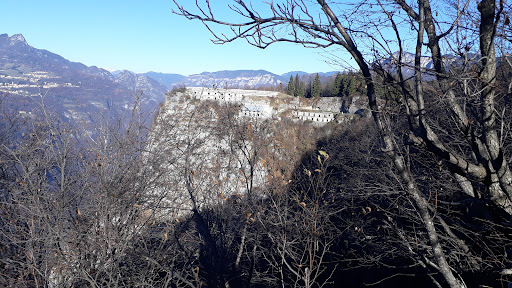
I visited Fort Corbin last April. The fort is accessible via a mountain road that is paved but extremely narrow — in some stretches, it's barely wide enough for a single car. There are several tight corners, so you need to drive with caution. The road ends just before the fort’s entrance, where there’s a free parking area.
To buy a ticket, you need to stop at the local bar nearby. I was warmly welcomed by a very kind lady who handled the tickets.
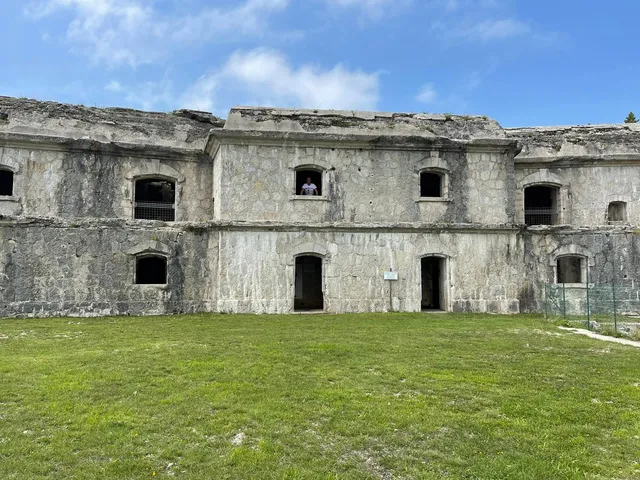
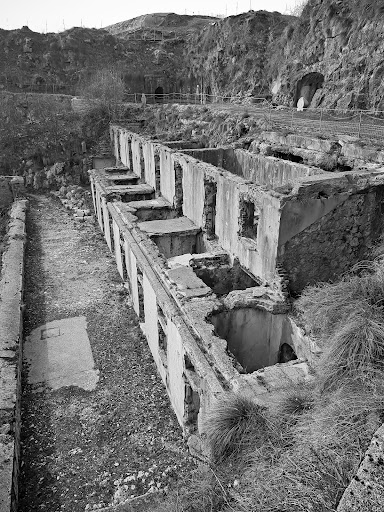
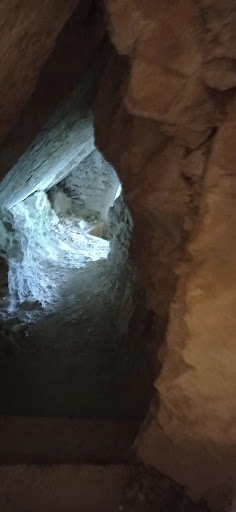
The fort was built by the Royal Italian Army and served during World War I. It was abandoned during a retreat by the Italian troops and then recaptured months later. You can still see the scars of war: large craters caused by heavy bombardment, and several sections of the structure were blown up — first by the retreating Royal Italian Army, and later by the retreating Austro-Hungarian forces.
This is a place where history comes alive — where you can truly feel the impact and reality of war. It is definitely...
Read moreSimply spectacular. Even if you are not interested in military history and architecture, the views are amazing! But its even more interesting to see how the Italians defended themselves in WWI against the Austrians, with a fort that was for all practical purposes outdated the day it was built. There is a self-guided tour, with plenty of signs in English (and they have a brochure which is translated into German and French). The little history museum is also worth a stroll through...not much info, in any language, but neat to see the bits and bobs which they dug up around the place.
Be aware! If you follow your GPS it will lead you to the right place, but not to the actual fort. When you get there look for and follow the signs. The access road is probably a couple kilometers long, narrow, winding, through the forest, and even turns to gravel at one point. Don't despair! Keep going, carefully! There is a parking lot at the fort. ...
Read more1915 - 1918, questo è il periodo nel quale il Forte viene inserito. Il settore era controllato dalla 1°Armata del Generale Brusati. Iniziato nel 1906, come struttura difensiva di sbarramento della Val d'Astico, contro eventuali invasioni Austro-Ungariche, venne terminato nel 1914. Posto a strapiombo ad un'altezza di 1100 mt. sopra la Valle Astico, aveva lo scopo di proteggere le zone occidentali dell'Altopiano di Asiago ed evitare che il dilagare del nemico, verso la pianura Vicentina, tagliasse in due l'esercito Italiano. Il Forte entrò in servizio nel 1915 ma, pochi mesi dopo, venne disarmato dei suoi 6 cannoni calibro 149/35 A, per rifornire il fronte Carsico - Isontino. I maggiori calibri utilizzati dal nemico, che sparava pezzi da 380 mm fino a 14 km di distanza, ebbero fin da subito la meglio sui Forti Italiani. Oggi Forte Corbin, di proprietà della famiglia Panozzo dal 1942, si presenta in buono stato conservativo ed in fase di ulteriori futuri recuperi. Offre sicuramente una vista storico-culturale molto importante, attraverso i numerosi pannelli esplicativi lungo un percorso ben segnalato e che descrivono, oltre i vari settori del Forte, il suo collocamento cronologico durante il Grande Conflitto Mondiale. Passato in mano nemica durante la famosa "Strafexpedition" del 15 Maggio - 27 Giugno 1916, tornò in mano Italiana, quasi subito, grazie alla dedizione ed alle eroiche gesta dei nostri fanti e Granatieri di Sardegna. La visita dura indicativamente 1-2 ore e per comitive o gruppi può avvenire con l'ausilio di una guida molto preparata e coinvolgente. Un parcheggio esterno, a pochi metri dall'ingresso, accoglie i visitatori che, al termine della visita, possono concludere l'esperienza nel piccolo, ma fornito, museo interno del Forte. Consigliato a tutti, grandi e piccoli, per il costo esiguo di €5 per adulti e €3 per minori di 13 anni. Una spesa irrisoria al cospetto di un'opera così significativa. Un piccolo bar interno offre ristoro a tutti. Visitare il loro sito Internet per avere ulteriori dettagli su orari e...
Read more