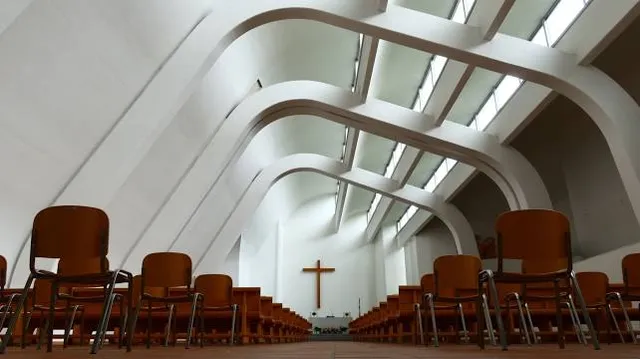
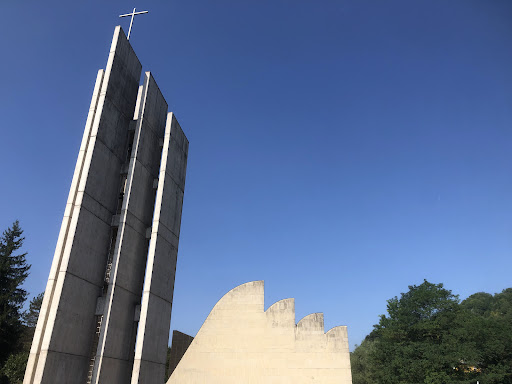
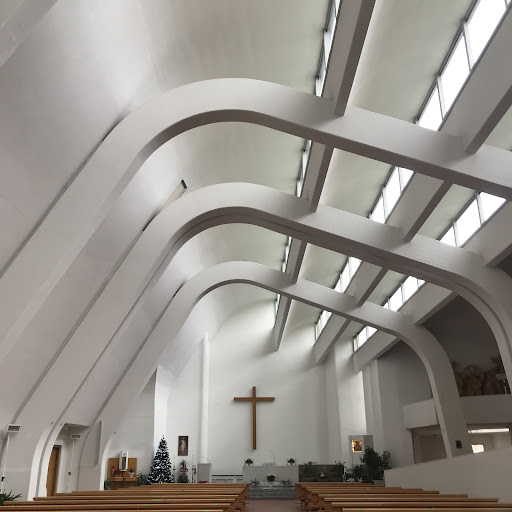
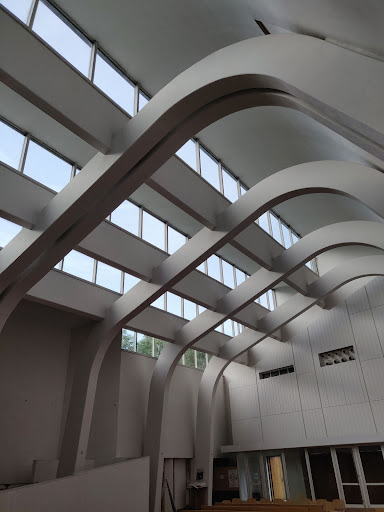
Visitare la Chiesa di Santa Maria Assunta a Riola è molto più che osservare un edificio, è immergersi in un luogo che respira in perfetta sintonia con il paesaggio. Appena arrivati, si viene accolti dall’armonia silenziosa che nasce dall’incontro tra l’opera di Alvar Aalto e il territorio che la custodisce. Non si tratta soltanto di una bellezza architettonica visibile, qui tutto – la luce, le forme, i materiali – comunica con delicatezza e profondità. Ho appreso che fu in una fredda giornata d’inverno, il 10 gennaio 1966, che Aalto vide per la prima volta questa porzione dell’Appennino bolognese. Ispirato dalla vista della cima del Cantaglia, dei monti Montovolo e Vigese, della collina rocciosa di Vigo e dal lento scorrere del fiume Reno, tracciò a matita rossa i primi schizzi della chiesa su un pacchetto di sigarette. Quel gesto semplice ha dato vita a un’opera che sembra nascere direttamente dal paesaggio stesso. Camminando all’interno della chiesa, sfiorando i corrimano e osservando le volte, ho percepito come la luce naturale pervada le pareti bianche e ciò che le fotografie non riescono a restituire: una spazialità fluida, la matericità viva dei materiali – come il legno caldo delle panche o la forma delle maniglie disegnate dal Maestro – e quella sensazione di calma, quasi nordica, che invita a sostare, ascoltare, sentire. Questa chiesa non si visita, si vive. Al centro di questa esperienza sensoriale e intima c’è la persona, immersa in un dialogo profondo di bellezza, fede e umanità, elementi che hanno ispirato Alvar Aalto e guidato Elissa Aalto nel completare il progetto dopo la perdita del suo amato. L’impronta del cardinale Lercaro, che desiderava un’architettura semplice e spirituale per questa terra, è ancora oggi percepibile, come una voce gentile che accompagna ogni visitatore.
Visiting the Church of Santa Maria Assunta in Riola is much more than just observing a building—it’s about immersing yourself in a place that breathes in perfect harmony with the surrounding landscape. From the moment you arrive, you’re embraced by the quiet harmony born from the meeting of Alvar Aalto’s work and the land that holds it. This isn’t just visible architectural beauty; everything here—the light, the shapes, the materials—speaks with subtlety and depth.
I learned that it was on a cold winter day, January 10, 1966, that Aalto first laid eyes on this part of the Bolognese Apennines. Inspired by the view of Cantaglia peak, the Montovolo and Vigese mountains, the rocky hill of Vigo, and the slow flow of the Reno River, he sketched the first red pencil drafts of the church on a pack of cigarettes. That simple act gave life to a work that seems to emerge directly from the landscape itself.
Walking inside the church, touching the handrails and observing the vaults, I felt how natural light fills the white walls and reveals what photographs cannot capture: a fluid sense of space, the living texture of materials—like the warm wood of the pews or the shape of the handles designed by the Master—and that calm, almost Nordic atmosphere inviting you to pause, listen, and feel.
This church isn’t just visited—it’s experienced. At the heart of this intimate, sensory journey is the person, engaged in a deep dialogue of beauty, faith, and humanity—elements that inspired Alvar Aalto and guided Elissa Aalto in completing the project after the loss of her beloved. The imprint of Cardinal Lercaro, who wished for a simple and spiritual architecture for this land, can still be felt today, like a gentle voice accompanying...
Read moreI went there with a train from Bologna, it takes an hour to reach there but the landscape is really beautiful in the train journey. Visit this Church in the morning around 9:30-10:00 it’s very quiet and hardly any visitors. It is also brightly naturally lit in the morning early morning hours.
Take a walk around the church to appreciate its form as it tapers at the end.
The exterior needs maintenance the interior is well conserved.
There is nothing really to do expect see the river and get...
Read moreL’Esglesia de Riola, també coneguda com a “Església de la Transfiguració del Senyor”, és un edifici religiós situat a la localitat de Riola,m. És un disseny de l'arquitecte finlandès Alvar Aalto, que es considera un dels principals representants de l'arquitectura moderna.
. La construcció es va iniciar el 1954 i es va completar el 1957. Aquesta església va ser dissenyada per Alvar Aalto, en col·laboració amb l'arquitecte Elisa Aalto
La seva estructura és un exemple de l'estil arquitectònic de Aalto, que està influït per la natura i la seva capacitat per crear espais harmoniosos. La seva forma es va dissenyar per permetre que la llum natural entri a l'edifici de manera uniforme a través de les seves finestres. El disseny de la cúpula central també permet que la llum reflecteixi als pilars i a les parets, creant un efecte de llum i ombra que dona a l’interior de l’església una sensació de tranquilitat i espiritualitat.
En general, l'Església de Riola és un exemple de l’harmonia entre la natura i l'arquitectura, i l'ús de materials tradicionals com la rajola, la pedra i el ferro, que s’integren en la perfecció del disseny. És un lloc icònic de la província de València, que ofereix un exemple de les darreres tendències de...
Read more