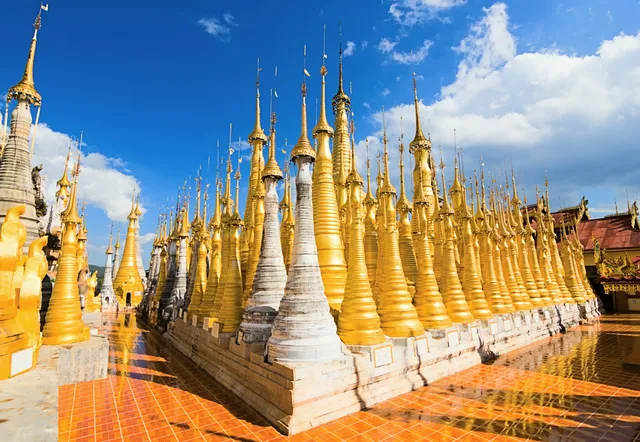
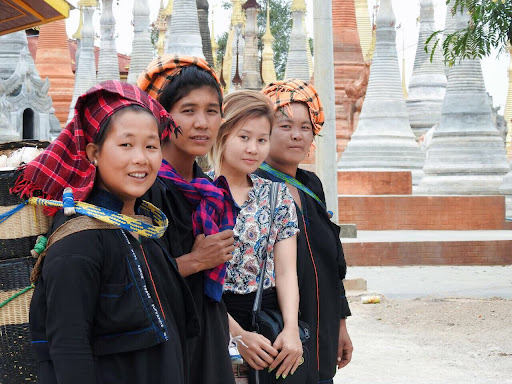
From Nyaung Ohak a climb leads to the second group of pagodas named Shwe Inn Thein located on top of a hill. A 700 meter covered walkway leads up to the pagodas. The walkway is lined with stalls where vendors sell Shan shoulder bags, longyis, shirts and other items.
The site is believed to date back to the days of the Indian emperor Ashoka, who sent out monks in the 3rd century BC across Asia to spread Buddhism. Centuries later two Kings of the Bagan empire, Narapatisithu and Anawrahta built pagodas at the site. The site contains hundreds of pagodas, collectively known as the Shwe Inn Thein pagodas. Most are from the 17th and 18th century; the earliest one with an inscription dates to the 14th century.
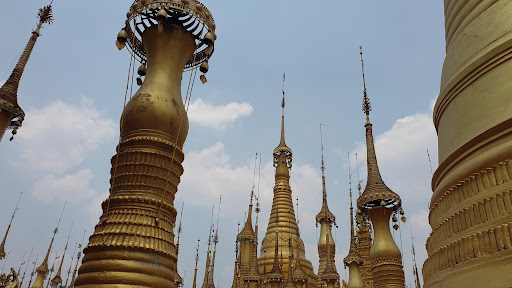
The hti, a top element shaped like an ornamental umbrella is missing at many of the unrestored stupas. A number of stupas have been restored by donors, both Burmese and foreign.
At the center of the Shwe Inn Thein group is the shrine of the Inn Thein Buddha image. The shrine that is believed to have been built by King Ashoka houses a golden Buddha image in the meditation mudra. From the top of the hill visitors have great views of Indein village and the surrounding area. The village is located about 8 kilometers West of the South tip of Inle Lake. It is most easily reached by boat. Tickets can be booked at travel agent or hotel. Alternatively, head for the pier and negotiate a price. Make sure to agree on the places to stop and the duration...
Read moreShwe Inn Thein Pagoda (瑞因登佛塔). It is located on hill side of Inthein village. A long covered corridor near pier, some souvenir stalls on sides, ,leading up the pagoda. Outside the covered corridor is the Nyaung Ohak Monastery of groups of ruined stupas. You can pass through Ohak Monastery instead of goinng directly through the covered corridor to the Pagoda. Shwe Inn Thein have plenty of golden stupas, long thin finials, wind chimes hanging on stupa umbrellas swaying out beautiful sound. Many of stupas were built in present-day by donation of devotees that date and name were mark on stupas. Along river bank, there is also a road to Shwe Inn Thein Pagoda Camera fee for 500Kyat is asked to pay before entering the...
Read moreDo Pagody wyruszyłem po przepłynięciu około 9 km z jeziora Inle. Płynąłem ze świątyni buddyjskiej Phaung Daw Oo Pagoda i dopłynąłem do wioski. Podróż odbyłem szybką łodzią, pokonującą przegrody na rzece, spiętrzające wodę i umożliwiające dopłynięcie w górę rzeki. Wspaniała podróż, niezapomniane wrażenia. Takiej podróży nie da się zapomnieć. Po drodze były świątynie, kaskady, mosty i ludzie żyjący i funkcjonujący w zgodzie z naturą, której u nas prawie już nie ma. Żeby zobaczyć miejsce ustanowione przez królów, miejscem budowy buddyjskich pagód musiałem się trochę natrudzić. Miejsce było zagadkowe. Cały czas byłem pod wrażeniem, co tam może być ukryte, czy znajdziemy to co nam obiecano. Wreszcie jest, dopłynęliśmy do brzegu.wspinamy się do góry, po drodze Nyaung Ohak, dalej piękne wyroby okolicznej społeczności. Pokazują nam wszystko co mają najpiękniejsze, najcenniejsze, dla nich a może i dla nas. To co mogą nam zaoferować, żeby tylko coś zarobić, serce się kraje. Dzieci w hamakach na plecach tulące się, śpiące na plecach mamy lub zdejmowane do karmienia podczas zajmowania się przez mamę sprzedażą pamiątek turystom. Idziemy do góry, wszędzie stupy i pagody/ brązowe, ciemne, jasne, białe, ceglaste z kamienia /, to pagody i stupy w mniejszym lub większym stopniu uszkodzone.Są też odnowione, charakterystyczne, białe. Ogromna ilość świątyń różnych form, kształtów i zdobień. Każda unikalnych projektów i historii. Wreszcie wysoko na wzgórzu pojawia się ogromne zagęszczenie i to prawdopodobnie kompleks Shwe Inn Dain Pagoda. Tak to ona, wchodzę dalej i dalej. Widać odnowione,ozdobione, lśniące wierzchołki. Zastanawiam się dlaczego jest ich tyle w tym miejscu. Ktoś policzył ,że ponad tysiąc.Po co, dlaczego.Myślę do dzisiaj, i to jest...
Read more