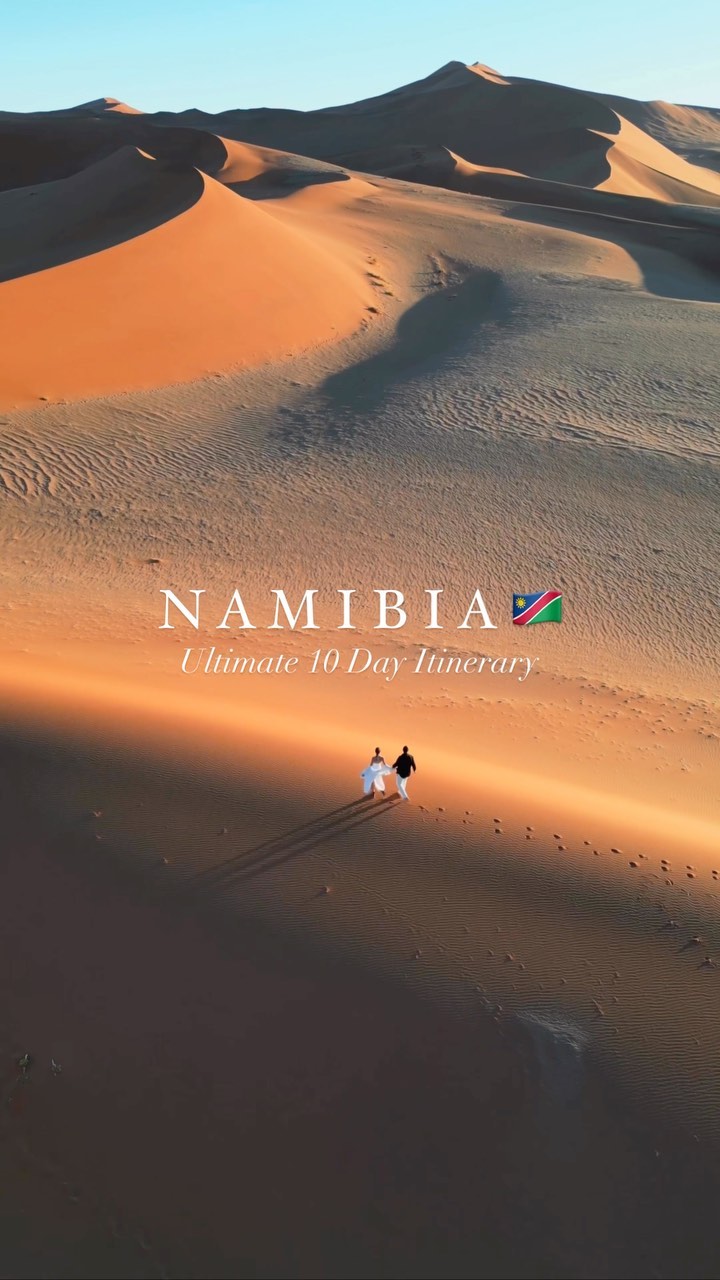
𝚂𝚘𝚜𝚜𝚞𝚜𝚟𝚕𝚎𝚒 𝚍𝚎𝚜𝚎𝚛𝚝, 𝙽𝚊𝚖𝚒𝚋𝚒𝚊
Situated in the largest conservation area in Africa (the Namib-Naukluft National Park), Sossusvlei is possibly Namibia’s most spectacular and best-known attraction. Characterised by the large red dunes that surround it, Sossusvlei is a large, white, salt and clay pan and is a great destination all year round. The dunes in this area are some of the highest in the world, reaching almost 400 meters, and provide photographic enthusiasts with wonderful images in the beautiful morning and evening light.
Sossusvlei literally translates to “dead-end marsh”, as it is the place where the dunes come together preventing the Tsauchab River to flow any further, some 60km east of the Atlantic Ocean. However, due to the dry conditions in the Namib Desert the River seldom flows this far and the pan remains bone-dry most years. During an exceptional rainy season the Tsauchab fills the pan, drawing visitors from all over the world to witness this spectacular site. Photographic enthusiasts are spoilt with a glassy “lake” holding reflections of the surrounding dunes. When the pan fills it can hold water for as long as a year.
Despite the harsh desert conditions in the area, one can find a wide variety of plants and animals that have adapted to survive.
All of the attractions surrounding Sossusvlei are easily accessible as all but the last 5 kilometers of the 65 kilometer drive to the vlei is tarred. Shuttles provide access to the last 5 kilometers, should you not have a...
Read moreNamibia is divided into four major regions. The salt pan of Sossusvlei in Namibia is located in the middle of the Namib-Naukluft Park in the area of the central Namib dunes, which is about 32,000 square kilometers in size. The Namib desert dominates the entire coastline of Namibia between the Kuiseb Canyon in the north and the Koichab River in the south near the harbour town of Lüderitz. In 1979, some areas of the park, including the Sossusvlei were affiliated. The Namib-Naukluft Park was founded by German colonists in 1907. Through the ages of time the park has expanded and it is now the largest national park of Africa with nearly 50,000 square kilometers in size.
The Sossusvlei in Namibia is more than 300 kilometers long and 140 kilometers wide and consists of seemingly endless sand dunes. The meaning of the Nama word for the Namib was derived from this apparent vast emptiness of the vlei. In English it translates to “empty space” or “place where there is nothing”. The spectacular height of these dunes creates a phenomenal attraction to visitors who come to witness the highest dunes in the world situated in the area. These dunes can reach up to 300 meters high and look like an amphitheater surrounding the huge salt pan or “vlei”. “Sossos” translates to “blind river” which is derived from the dried up Koichab river in the area. Experiencing the beauty of the Sossusvlei is a must for...
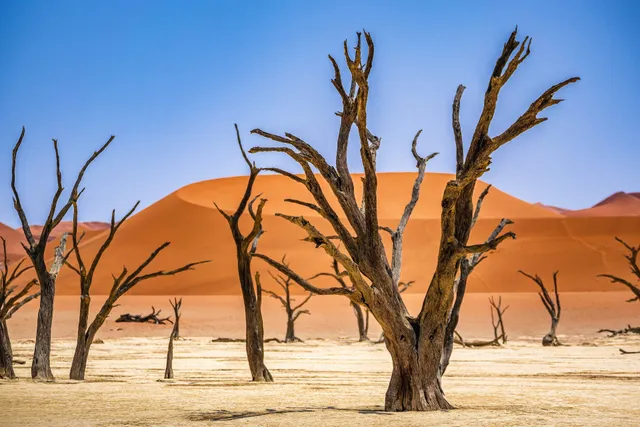
Read moreOn the plateau Sossusvlei in the Namib Desert there are the Dead Valley.... It was created about 900 years ago, when the dunes blocked the riverbed, and the trees were dying slowly without the water... Constant temperature, dry air, no wind - have kept their skeletons to the present day. However, I was impressed by not only this valley, but the attitude to it. We drove with jumping through deep ruts in the sand there by our 4x4 on the first evening. There was no one. Only two ravens cawed in the emptiness - creepy and ominously. It was just a mystique - the trees that have lived many centuries ago.. I reverently touched their skin . And then the next day we went to meet the sunrise. and - oh - the crowds of tourists, they shouted, hung their bags on a branchs, knocked out of the shoe the sand, knocked on the trunks, took pictures: astride on the trunk, astride on a branch, hanging on the branch.. I asked one young couple - do you know how old these trees? No ... oh so much ... and ... and they continue to to knock ... The feeling of sacrilege, but then my thought: every has their own path .. These unique trees have been preserved for hundreds of years, but they will not be exist a...
Read more