HTML SitemapExplore

Khwe Living Museum — Local services in Kavango East

Name
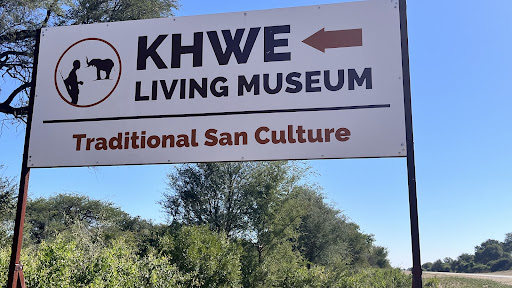
Khwe Living Museum
Description
Nearby attractions
Nearby restaurants
Nearby local services
Nearby hotels
Related posts
Keywords
Khwe Living Museum tourism.Khwe Living Museum hotels.Khwe Living Museum bed and breakfast. flights to Khwe Living Museum.Khwe Living Museum attractions.Khwe Living Museum restaurants.Khwe Living Museum local services.Khwe Living Museum travel.Khwe Living Museum travel guide.Khwe Living Museum travel blog.Khwe Living Museum pictures.Khwe Living Museum photos.Khwe Living Museum travel tips.Khwe Living Museum maps.Khwe Living Museum things to do.
Khwe Living Museum things to do, attractions, restaurants, events info and trip planning
Khwe Living Museum
NamibiaKavango EastKhwe Living Museum

Basic Info

Khwe Living Museum

WJ4X+9X, Mwitjiku, Namibia
4.5(12)
Open until 5:00 PM
Save
spot

Ratings & Description

Info

Cultural
Outdoor
Family friendly
Accessibility
attractions: , restaurants: , local businesses:
logoLearn more insights from Wanderboat AI.
Phone
+264 81 898 4088
Website
lcfn.info
Open hoursSee all hours
Sun7 AM - 5 PMOpen

Plan your stay

hotel
Pet-friendly Hotels in Kavango East
Find a cozy hotel nearby and make it a full experience.
hotel
Affordable Hotels in Kavango East
Find a cozy hotel nearby and make it a full experience.
hotel
The Coolest Hotels You Haven't Heard Of (Yet)
Find a cozy hotel nearby and make it a full experience.
hotel
Trending Stays Worth the Hype in Kavango East
Find a cozy hotel nearby and make it a full experience.

Reviews

Get the Appoverlay
Get the AppOne tap to find yournext favorite spots!
Wanderboat LogoWanderboat

Your everyday Al companion for getaway ideas

CompanyAbout Us
InformationAI Trip PlannerSitemap
SocialXInstagramTiktokLinkedin
LegalTerms of ServicePrivacy Policy

Get the app

© 2025 Wanderboat. All rights reserved.

Posts

Saskia CzempielSaskia Czempiel
Very good and informative place. Nice people
Gereon KrahnGereon Krahn
Kleiner Einblick in die Welt der Khwe. TanzauffĂĽhrung & Feuer machen.
hotel
Find your stay

Pet-friendly Hotels in Kavango East

Find a cozy hotel nearby and make it a full experience.

Very good and informative place. Nice people
Saskia Czempiel

Saskia Czempiel

hotel
Find your stay

Affordable Hotels in Kavango East

Find a cozy hotel nearby and make it a full experience.

Get the Appoverlay
Get the AppOne tap to find yournext favorite spots!
Kleiner Einblick in die Welt der Khwe. TanzauffĂĽhrung & Feuer machen.
Gereon Krahn

Gereon Krahn

hotel
Find your stay

The Coolest Hotels You Haven't Heard Of (Yet)

Find a cozy hotel nearby and make it a full experience.

hotel
Find your stay

Trending Stays Worth the Hype in Kavango East

Find a cozy hotel nearby and make it a full experience.

create-post
Turn your ideas into a post and inspire others!
Create

Reviews of Khwe Living Museum

4.5
(12)
avatar
5.0
17w

Today, we visited one of the many "living museums" of Namibia, model villages set up by the cultural ministry to preserve traditional knowledge and practices. Not unlike Colonial Williamsburg here in the US. The one we visited is for the Khwe tribe of the San people.

The San are the original inhabitants of this region and have been here at least 100,000 years. Geneticists have traced their DNA that far back (go ask ChatGPT, I'm not going to attempt to explain that, especially since it's over my head), farther than any other people on earth. For that time they have lived in balance with nature, very egalitarian, no permanent settlements, no government, no commerce, no agriculture, no accumulation of possessions, none of the crap that civilization has foisted on us. Unlike us, they take only what they need, from nature. The bush is their supermarket.

The San lived in small bands of 10 or so people. The women gathered fruits, nuts and herbs from the forest for food and medicine while the men hunted game. Everything they needed was provided by the land, rivers, plants and animals around them. Shelter was simple huts constructed from sticks held together with twine that they made from fibrous plants and covered with grasses. If the hunters killed a large animal like an eland that was too large to move, the whole band moved to where the animal was so they could process the hide for clothing and preserve the meat by drying.

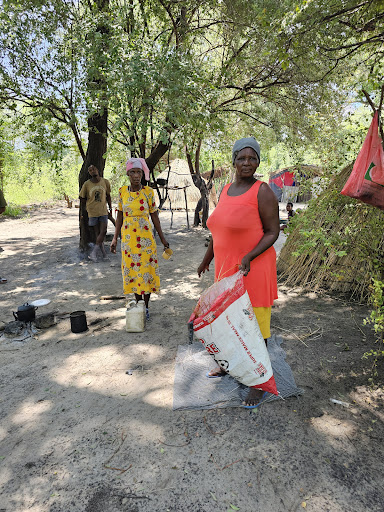
They showed us some crafts and tools, made fire with two sticks (way faster than the Maasai people we saw in Tanzania), made twine from a fibrous plant (exactly like the Bribri people we saw in Costa Rica), enacted a healing ceremony. It was interesting, and sad at what has been lost.

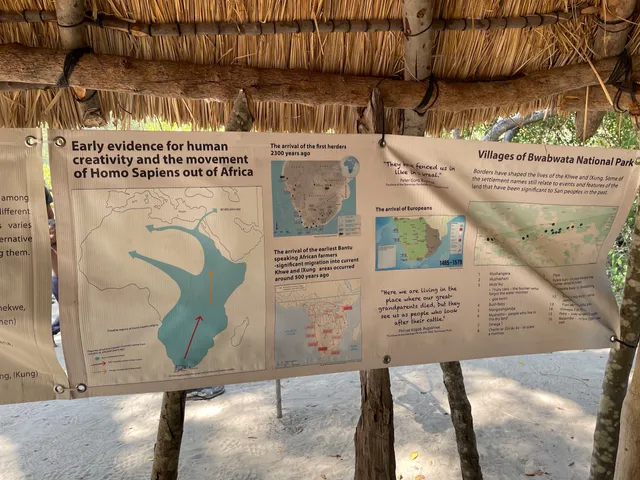
Starting around 2000 BC, Bantu people from Central Africa began to move into the region. With larger, more organized cultures, they began to displace the San, who ended up in the Kalahari desert of southwestern Africa, which could not support a large settled population. There the San lived for a thousand years until colonial times when European settlers came and treated the San as they have treated "primitive" cultures wherever they went; enslaving, killing, exploiting, you know the history. Small bands of San survived in the extremes of the desert until the 1950s and 60s when they were removed from the land so we could have national parks.

I have asked two Bantu people why they couldn't leave the San in the parks, their footprint is tiny, they would only take an impala here and there and they could continue their life. One said that the animals would become fearful of humans and then the tourists couldn't see them and the other said that if a San were killed by an animal, there would have to be a big investigation into the death, the animal would be put down. Both of these explanations are really just reasons justifying ownership of the parks, "ownership" being a concept the San don't really subscribe to. Whatever the reason, governments have decided that the supermarket is closed and the San way of life is just a tiny shrinking dot waiting for its dissipation...

   Read more

avatar
5.0
2y

An unforgettable experience. Absolutely worth visiting. Hands down this was my favorite village I've visited in Namibia, because everyone was smiling and did their best to make us enjoy our visit. Our local guide, Allie explained everything in a very clear way and answered all of our questions. The bushwalk provided an insight into how the San people navigate themselves in the wild by paying attention to every small detail both on the ground and on the trees. At the end of the walk the villagers showed us how they make their jewelry and how they make fire. At last, they performed some of their traditional dances and a healing ceremony. All in all, I cannot recommend this place enough....

   Read more
avatar
2.0
29w

Leider enttäuschend. Wie sind aufgrund der guten Bewertungen hingefahren. Wir haben den Craftworkshop mitgemacht. Am dem Tag war niemand anderes da. Mein Mann und ich wurden vom Junior Manager getrennt, weil die Ketten nur von den Mädels gemacht werden und Pfeil und Bogen nur mit den Männern, wo man als Frau nicht hindarf. Der Senior Manager war an dem Tag nicht anwesend. Laut Beschreibung der Workshops soll man aktiv an der Gestaltung teilnehmen. Wir dachten hier wird einem hands on gezeigt wie die Herstellung funktioniert mit Erklärung und selber mitmachen. Leider hat das nicht zugegriffen. Wir saßen 1 h neben den Leuten und haben zugeschaut, wie sie den Schmuck binden und den Pfeil und Bogen herstellen. Unterhalten hat man sich mit uns nicht, sie haben sich gegenseitig in ihrer Landessprache unterhalten. Bei Rückfragen wurde wsl. aufgrund der Englischkentnisse nur sehr spärlich geantwortet und bei der Frage, ob man selber mitmachen kann, gar nicht darauf geantwortet. Haben den Workshop auch früher abgebrochen, Trinkgeld hatten wir trotzdem gegeben, da sie grundsätzlich ja...

   Read more
Page 1 of 5
Previous
Next