Annapurna I was the first 8,000-metre (26,200 ft) peak to be climbed. Maurice Herzog and Louis Lachenal, of the French Annapurna expedition led by Herzog (including Lionel Terray, Gaston Rébuffat, Marcel Ichac, Jean Couzy, Marcel Schatz, Jacques Oudot, Francis de Noyelle), reached the summit on 3 June 1950.[13] Ichac made a documentary of the expedition, called Victoire sur l'Annapurna. Its summit was the highest summit attained for three years, until the first successful ascent of Mount Everest (although higher non-summit points - at least 8,500 metres (27,900 ft) - had already been attained on Everest in the 1920s).
The south face of Annapurna was first climbed in 1970 by Don Whillans and Dougal Haston also without using supplementary oxygen, members of a British expedition led by Chris Bonington that included the alpinist Ian Clough, who was killed by a falling serac during the descent. They were, however, beaten to the second ascent of Annapurna by a matter of days by a British Army expedition led by Colonel Henry Day.
In 1978, the American Women's Himalayan Expedition, a team led by Arlene Blum, became the first United States team to climb Annapurna I. The first summit team, composed of Vera Komarkova and Irene Miller, and Sherpas Mingma Tsering and Chewang Ringjing, reached the top at 3:30 pm on 15 October 1978. The second summit team, Alison Chadwick-Onyszkiewicz and Vera Watson, died during this climb.
In 1981 Polish expedition Zakopane Alpine Club set a new route on Annapurna I Central (8051 m). Maciej Berbeka and Bogusław Probulski reached the summit on 23 May 1981. The route called Zakopiańczyków Way was recognized as the best achievement of the Himalayan season in 1981.
The entire massif and surrounding area are protected within the 7,629-square-kilometre (2,946 sq mi) Annapurna Conservation Area, the first and largest conservation area in Nepal. The Annapurna Conservation Area is home to several world-class treks, including Annapurna Sanctuary and Annapurna Circuit.
Historically, the Annapurna peaks have been among the world's most treacherous mountains to climb with the particular case of the extremely steep south face of Annapurna I Main - a wall of rock that rises 3,000 meters (9,800 feet) - making it one of the most difficult climbs in the world.By March 2012, there had been 191 summit ascents of Annapurna I Main, and 61 climbing fatalities on the mountain. This fatality-to-summit ratio (1:3.1, or 32%) is the highest of any of the eight-thousanders.
In October 2014, at least 43 people were killed as a result of snowstorms and avalanches on and around Annapurna, thus resulting in Nepal's worst ever trekking disaster. The most recent report of human casualty has been that of January 17, 2020, due to an avalanche triggered by...
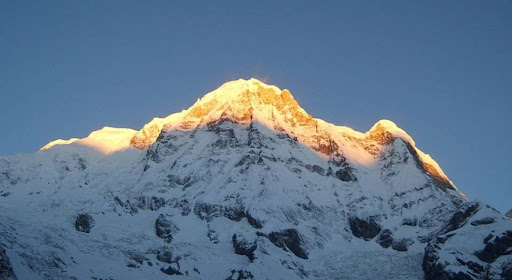
Read moreAnnapurna was a trip of a life time. The views were extraordinary. We arrived late in the evening when everything was cloud covered. We couldn't see a thing. After a very cold, but restful night, we woke up to the most spectacular morning views. Highly recommend the 150 mile circuit trek. Very Peaceful place to be. You ll feel extreme calmness in the atmosphere. A perfect place to hang around whenever you are in Pokhara. You will always have a good vibes and positive energy through out your body whenever you are there 🙏🙏🙏Annapurna I, standing at 8,091 meters (26,545 feet), is one of the most majestic and challenging peaks in the world. Here's why people are drawn to seeing it:
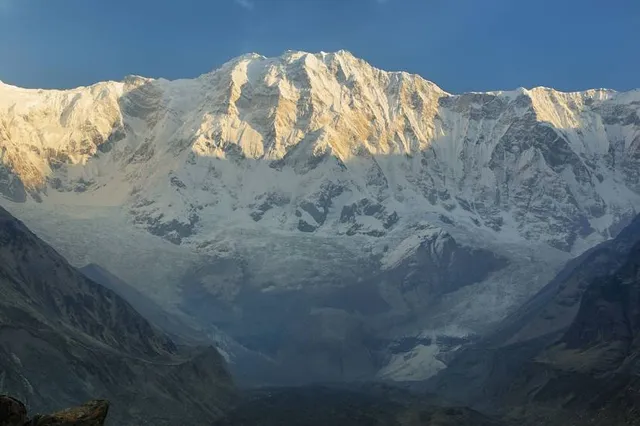
Natural Beauty: Annapurna I is part of the stunning Annapurna mountain range in the Himalayas, known for its breathtaking scenery and dramatic landscapes.
Adventure and Mountaineering: For climbers, Annapurna I presents a significant challenge and is one of the 14 peaks over 8,000 meters. Many climbers aspire to conquer it, making it a focal point for mountaineering enthusiasts.
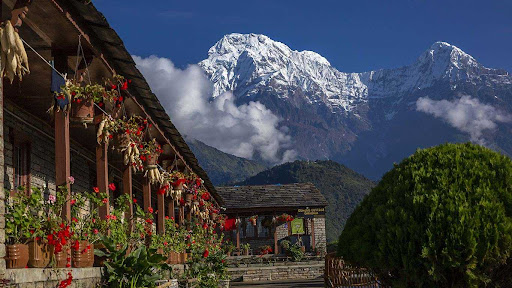
Cultural Significance: The region surrounding Annapurna I is rich in culture, with diverse ethnic communities and traditional villages along trekking routes. Visitors often immerse themselves in the local culture and hospitality.
Spiritual Connection: The Himalayas have spiritual significance for many people, and Annapurna I is no exception. It's revered by locals and holds spiritual significance in Hinduism and Buddhism.
Photographic Opportunities: Photographers are drawn to Annapurna I for its stunning vistas, offering endless opportunities for capturing the beauty of the Himalayas.
Overall, whether for adventure, spiritual exploration, cultural immersion, or simply appreciation of natural beauty, seeing Annapurna I is a remarkable experience for many travelers.Anyone who is thinking about doing a first time trek to a base camp should really consider Annapurna. This is not as difficult as maybe K2 or Everest but just as beautiful. The pictures below are from the month of September shortly after the monsoon season had ended.Annapurna 1 is a mountain situated in the Annapurna mountain range of Gandaki Province, 10th highest mountain in the world. A magnificent view of Annapurna and gaganpurnna from my Village(170KM awayAnnapurna was a trip of a life time. The views were extraordinary. We arrived late in the evening when everything was cloud covered. We couldn't see a thing. After a very cold, but restful night, we woke up to the most spectacular morning views. Highly recommend the 150 mile...
Read moreAnnapurna, towering at 8,091 meters (26,545 feet), is one of the most iconic peaks in the Himalayas and a dream for many mountaineers and trekkers. It forms part of the Annapurna massif in central Nepal, which is known for its breathtaking beauty and extreme challenges. The mountain’s technical difficulty, combined with the stunning scenery, makes it a must-see for those interested in high-altitude trekking and mountaineering.
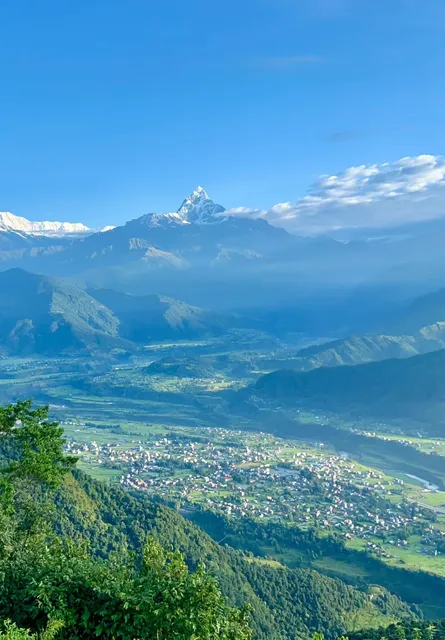
The Annapurna region is renowned for its trekking routes, particularly the Annapurna Circuit, which offers a diverse range of landscapes, from subtropical forests to alpine meadows and high-altitude deserts. The trek provides amazing views of the Annapurna massif, including the mighty Annapurna I, Machapuchare (Fishtail), and Dhaulagiri. These scenic views are often accompanied by rich cultural experiences, as trekkers pass through remote villages that offer a glimpse into the lives of indigenous communities like the Gurungs and Thakalis.
However, Annapurna is also known for its harsh conditions and unpredictability. The mountain holds the unfortunate reputation of having one of the highest fatality rates for mountaineering, especially on its southern face, making it a daunting challenge for even experienced climbers. In the past, avalanches and difficult weather have made summiting Annapurna a dangerous endeavor. Still, those who conquer it are rewarded with unparalleled views of the Himalayas.
For trekkers, the Annapurna Circuit is more accessible and safer than the more technical ascent of Annapurna I, but still offers a challenging experience. The circuit typically takes 10-21 days to complete, depending on pace, and offers some of the most stunning landscapes in the world. The trek also takes you across the Thorong La Pass, one of the highest points on any trekking route at 5,416 meters (17,769 feet), providing a sense of achievement and awe.
Overall, Annapurna is an unforgettable destination. Whether you’re summiting or trekking, the awe-inspiring beauty of the Himalayas combined with the challenge of the region makes it a legendary spot for those seeking adventure in one of the world’s most majestic...
Read more