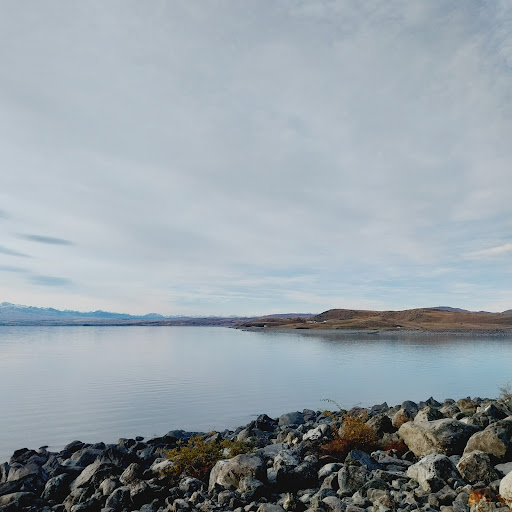
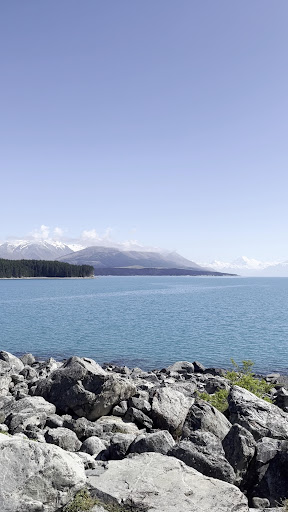
Lake Pukaki is the largest of three roughly parallel lakes running north-south along the northern edge of the Mackenzie Basin in the South Island of New Zealand. The other two are Lake Tekapo and Lake Ohau. It has a surface area of about 178.7 square kilometers (69 sq mi) and a maximum depth of around 70 meters (230 ft).
The lake was formed by glacial action. During the ice ages, massive glaciers carved out valleys, and as they retreated, they left behind moraines – accumulations of rock and sediment. These moraines acted as natural dams, trapping meltwater and forming the lakes we see today. Lake Pukaki's main inflow is from the Tasman River and the Hooker River, which originate from the Tasman Glacier and Hooker Glacier respectively, both located on the slopes of Aoraki / Mount Cook. The lake's outflow is the Pukaki River, which flows south to join the Waitaki River.
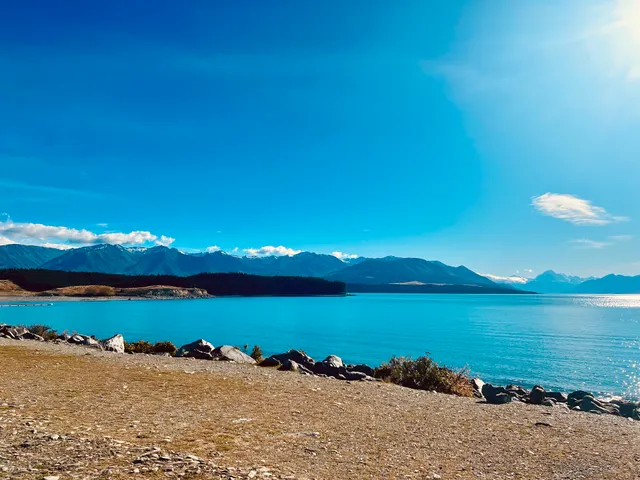
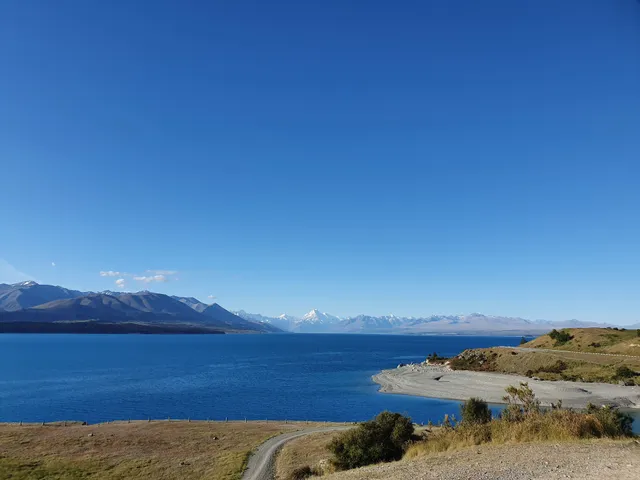
Lake Pukaki is renowned for its stunning turquoise color. This vibrant hue is due to the presence of finely ground rock flour (glacial flour) suspended in the water. As the glaciers grind against the bedrock, they produce this fine sediment. When the meltwater flows into the lake, these tiny particles remain suspended, and when sunlight hits the water, these particles reflect the blue-green wavelengths of light, giving the lake its characteristic milky turquoise appearance.
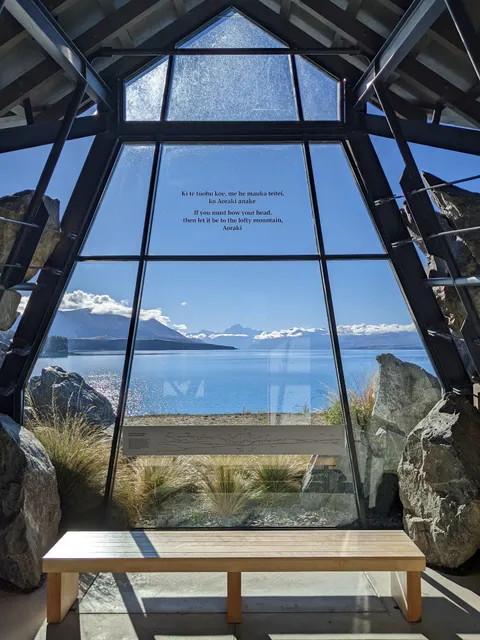
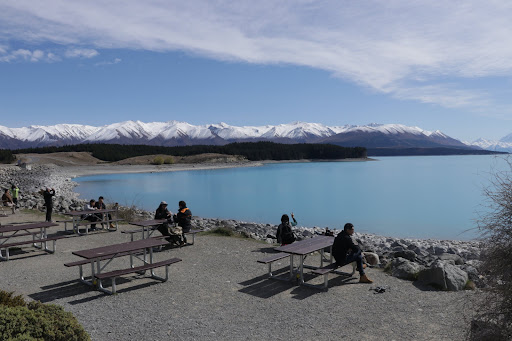
The landscape surrounding Lake Pukaki is dramatic and dominated by the majestic Southern Alps. To the north, on a clear day, you get breathtaking views of Aoraki / Mount Cook, New Zealand's highest mountain, and the surrounding peaks. The terrain is relatively dry, with tussock grasslands and sparse vegetation typical of the Mackenzie Basin. The area is known for its vast open spaces and clear, unpolluted air. Several smaller rivers and streams feed into the lake, carrying more of that glacial flour.
Lake Pukaki is a significant resource for hydroelectric power generation. The lake's water levels are controlled as part of the Waitaki hydroelectric scheme, which is a crucial source of electricity for New Zealand. Water is diverted from the lake through canals to power stations downstream. While this has altered the natural water levels to some extent, the lake retains its stunning beauty and recreational value.
The lake is also used for irrigation in the surrounding agricultural areas.
Lake Pukaki and its surroundings offer a range of activities for visitors:
The striking turquoise water against the backdrop of the Southern Alps makes it a photographer's paradise.
The drive along State Highway 80 (Mount Cook Road) that follows the western shore of the lake is considered one of the most scenic in New Zealand. There are numerous viewpoints to stop and admire the vista.
The area provides access to numerous hiking trails and mountaineering opportunities in the Aoraki / Mount Cook National Park, which is a short drive away.
Fishing: Lake Pukaki is known for its trout fishing.
Boating and Kayaking: While the water can be cold, boating and kayaking are popular activities, offering a different perspective of the lake and surrounding mountains.
Stargazing: The Mackenzie Basin, including the Lake Pukaki area, is renowned for its exceptionally dark skies, making it an ideal location for stargazing. It's part of the Aoraki Mackenzie International Dark Sky Reserve.
European exploration of the area began in the mid-19th century. James Mackenzie, a Scottish shepherd, is credited with discovering the basin (though his story is somewhat legendary). Sheep farming became the dominant activity in the region.
The construction of the hydroelectric power schemes in the 20th century significantly altered the landscape and the way water resources were managed. Lake Pukaki's role in this scheme has been vital for New Zealand's energy infrastructure.
In recent decades, tourism has become increasingly important to the region, with Lake Pukaki being a major drawcard due to its stunning natural beauty and its proximity to Aoraki / Mount Cook...
Read more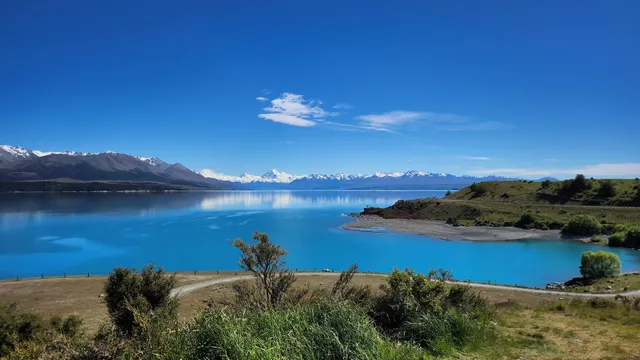
 Learn more insights from Wanderboat AI.