HTML SitemapExplore

Masherbrum — Local services in Masherbrum group

Name
Masherbrum
Description
Nearby attractions
Nearby restaurants
Nearby local services
Nearby hotels
Related posts
Keywords
Masherbrum tourism.Masherbrum hotels.Masherbrum bed and breakfast. flights to Masherbrum.Masherbrum attractions.Masherbrum restaurants.Masherbrum local services.Masherbrum travel.Masherbrum travel guide.Masherbrum travel blog.Masherbrum pictures.Masherbrum photos.Masherbrum travel tips.Masherbrum maps.Masherbrum things to do.
Masherbrum things to do, attractions, restaurants, events info and trip planning
Masherbrum
PakistanGilgit-BaltistanMasherbrum groupMasherbrum

Basic Info

Masherbrum

Masherbrum
4.6(95)
Save
spot

Ratings & Description

Info

Outdoor
Adventure
Scenic
Off the beaten path
attractions: , restaurants: , local businesses:
logoLearn more insights from Wanderboat AI.

Plan your stay

hotel
Pet-friendly Hotels in Masherbrum group
Find a cozy hotel nearby and make it a full experience.
hotel
Affordable Hotels in Masherbrum group
Find a cozy hotel nearby and make it a full experience.
hotel
The Coolest Hotels You Haven't Heard Of (Yet)
Find a cozy hotel nearby and make it a full experience.
hotel
Trending Stays Worth the Hype in Masherbrum group
Find a cozy hotel nearby and make it a full experience.

Reviews

Get the Appoverlay
Get the AppOne tap to find yournext favorite spots!
Wanderboat LogoWanderboat

Your everyday Al companion for getaway ideas

CompanyAbout Us
InformationAI Trip PlannerSitemap
SocialXInstagramTiktokLinkedin
LegalTerms of ServicePrivacy Policy

Get the app

© 2025 Wanderboat. All rights reserved.

Reviews of Masherbrum

4.6
(95)
avatar
5.0
2y

K1 Mountain, view from Hushe

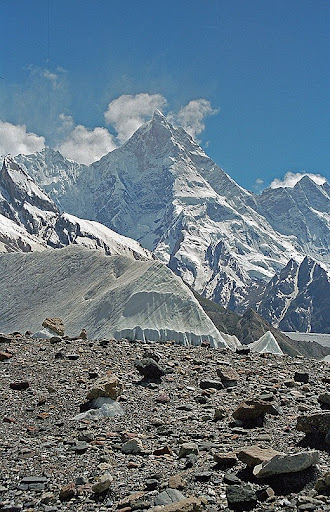
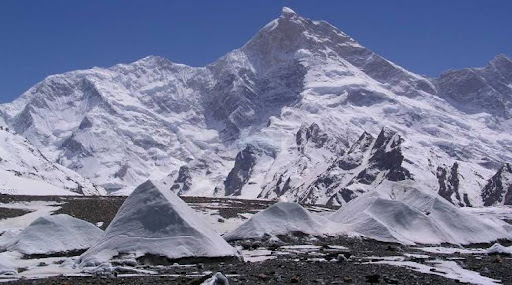
Masherbrum view from Surmo, Gilgit Baltistan. Etymology Edit Although "brum" means mountain in Balti, the origin of "masher" is less clear. Some have suggested that it derives from "Mashedar", meaning a muzzle-loader, due to the characteristic curvature of its summit as viewed from Baltoro Glacier. In Persian, "masheh" means both matchlock and trigger, and "dar" is a suffix meaning "having". Others have noted that "Masha" means lady, and "Masherbrum" is the "Queen of Peaks". Still others have noted that "Masher" means "no sunlight", in reference to the year-round snow cover at the summit.

Geography Edit Masherbrum is the highest peak of the Masherbrum Mountains, a subrange of the Karakoram range. It is a large and striking peak, which is somewhat overshadowed by the nearby 8,000 metres (26,000 ft) peaks of the main range of the Karakoram which includes four of the fourteen Eight-thousanders, namely K2, Gasherbrum I, Broad Peak and Gasherbrum II.

The Masherbrum Mountains lie to the south of the Baltoro Glacier and the main range of the Karakoram lies to the north of the Baltoro. The main range is the continental divide of southern Asia. Rivers to the south flow into the Arabian Sea. Rivers to the north flow into the Tarim Basin.

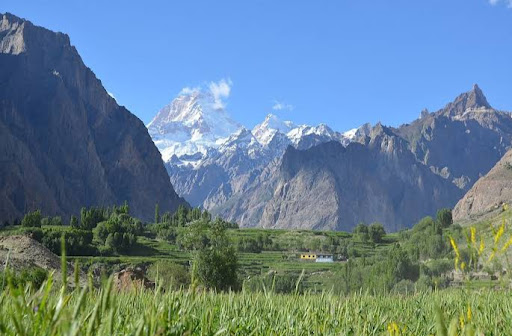
The Baltoro Glacier is the route most commonly used to access the 8000m peaks of the Karakoram, and many trekkers also travel on the Baltoro. Masherbrum also lies at the north end of the Hushe Valley, which serves as the southern approach to the peak.[citation needed]

Climbing history Edit In 1856, Thomas Montgomerie, a British Royal Engineers lieutenant, noticed a tall mountain in the Karakorams and called it K1 (denoting peak 1 of the Karakorams; K2 was the name he gave to the nearby peak behind K1 when viewed from Harmukh). To the local people of the area, it is known as Masherbrum.

Masherbrum was reconnoitered in 1911 by Fanny Bullock Workman and her husband, Dr. William H. Workman.[citation needed] It was first attempted in 1938 from the south, by a group led by James Waller which included Dawa Thondup and J. O. M. Roberts. The attempt failed just short of the summit, when J.B. Harrison and R.A. Hodgkin, severely frostbitten, had to return due to bad weather.[2]

After two more failed expeditions, in 1955 and 1957, Masherbrum was first climbed in 1960 by George Irving Bell and Willi Unsoeld, led by the former, in an American-Pakistani expedition including Nick Clinch.[3] They succeeded in climbing the southeast face route that had stymied the earlier parties.

The Himalayan Index lists three additional ascents and six additional failed attempts on Masherbrum. The ascents include two by additional routes, the NW Face and the NW Ridge/N Face.

In her book Voyage au Bout du Vide: Une CordÄ—e Alpine au Masherbrum, the French mountaineer Christine de Colombel provides a dramatic account of her 1980 attempt, with David Belden, to ascend Masherbrum in alpine style. Their three-month expedition, bedeviled by bad weather, ended in failure when avalanches swept their camp and injured de Colombel, leading to a desperate three-day retreat in...

   Read more
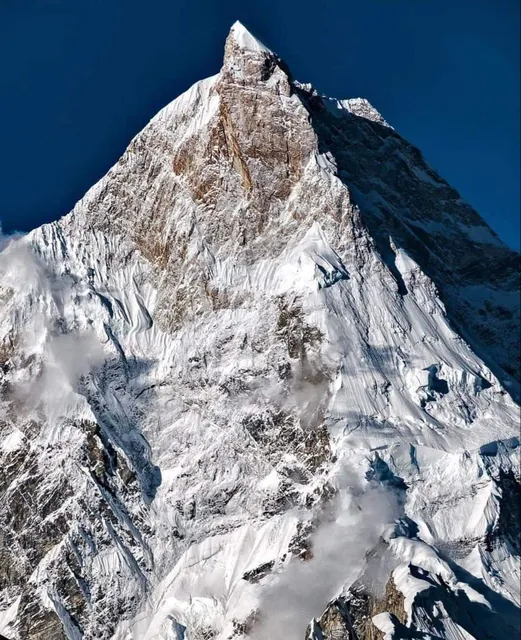

avatar
5.0
3y

Masherbrum base camp trek is one of the famous treks in Baltistan (Skardu). It is recommended as an excellent way to get fit and acclimatized before heading for Masherbrum base camp. This trek will offer a series of magnificent views during this trekking tour.

Hushe valley is situated in the south of the great-glaciated region of Baltoro. The area offers various opportunities to trek to the base camps and climbing to trekking peaks. Some of the fascinating excursions we have combined in one program give full spectrum. Walking for a day or two will take you to the bases of the higher mountains. From where you will be offered to make walking excursions or taste light climbing in the vicinity to the higher altitudes.

Main Attractions during Mashabrum Base Camp Trek Mashabrum base camp is the first section of this program. Mashabrum (7821m) is the 28th highest peak is standing in the backdrop of the last outpost Hushe. In the second portion, the Charakusa Valley offers stunning views of Chogolisa, K-6, and K-7, and many other peaks. In this trek, we also go to the Ghandogoro valley to climb Ghandogoro peak 5850m, have breathtaking views of Great’s mountains of central Karakoram, including K-2, Broad Peak, Gasherbrum Group. After about five hours, we reach the crest of the pass. Our efforts are rewarded with one of the most fantastic views in the Karakorum and many other mountains. Besides, one can experience climbing of below 6500m peaks without any bonding royalty fee.

A relatively easy trek leads to the mashabrum base camp trek straight towards the foot of mighty Masherbrum (7821m) with excellent views. This short trek into Karakoram’s heart is recommended by itself or as acclimatization before tackling higher destinations in the Gondogoro Valley. The only glacier walking is a specific 30-minute section before base camp. An alternative route (see Alternative Days 4-6), which is in a restricted zone, is useful when continuing up the Gondogoro Valley or on to...

   Read more
avatar
5.0
2y

El Masherbrum (7821 m.) (también conocido como K1) es la vigésimo cuarta más alta del mundo, y la undécima de Pakistán. Es el pico más alto de las montañas Masherbrum (Masherbrum Mountains), una subcordillera del Karakórum. Es una montaña prominente e impactante, quizás descuidada por la cercanía en la zona de cuatro de los catorce ochomiles del mundo: K2, Gasherbrum I, Broad Peak y Gasherbrum II.

El significado del nombre no está claro. Puede provenir de mashadar (mosquetón) y brum (montaña), por su parecido de la doble cima con un mosquetón antiguo. Puede, también, provenir de masha (reina o señorita), resultando en "reina de los picos". También se han sugerido otros significados.

HISTORIA: En 1856, Thomas George Montgomerie, un ingeniero real británico, realizando trabajos topográficas y de exploración, se dio cuenta de su gran altura y la llamó "K1" (pico 1 del Karakórum). Los locales lo denominan Masherbrum. Masherbrum fue explorado en 1911 por el intrépido doctor William H. Workman y su mujer, Fanny Bullock Workman. Se intentó su ascensión en 1938 desde el sur. El intento fracasó, pero se quedó a pocos metros de la cima. Después de otras dos expediciones sin éxito, en 1955 y 1957, el Masherbrum fue ascendido en 1960 por George Irving Bell y Willi Unsoeld, parte de una expedición conjunta Estados Unidos-Pakistán, dirigida por Nick Clinch. Consiguieron escalar la vía de la cara sureste, que había sido subestimada por las expediciones anteriores. La lista Himalayan Index incluye tres ascensiones más y otras seis fallidas. Las ascensiones incluyen dos nuevas vías: la cara noroeste y la arista...

   Read more
Page 1 of 7
Previous
Next

Posts

Bablu KumarBablu Kumar
K1 Mountain, view from Hushe Masherbrum view from Surmo, Gilgit Baltistan. Etymology Edit Although "brum" means mountain in Balti, the origin of "masher" is less clear. Some have suggested that it derives from "Mashedar", meaning a muzzle-loader, due to the characteristic curvature of its summit as viewed from Baltoro Glacier. In Persian, "masheh" means both matchlock and trigger, and "dar" is a suffix meaning "having". Others have noted that "Masha" means lady, and "Masherbrum" is the "Queen of Peaks". Still others have noted that "Masher" means "no sunlight", in reference to the year-round snow cover at the summit. Geography Edit Masherbrum is the highest peak of the Masherbrum Mountains, a subrange of the Karakoram range. It is a large and striking peak, which is somewhat overshadowed by the nearby 8,000 metres (26,000 ft) peaks of the main range of the Karakoram which includes four of the fourteen Eight-thousanders, namely K2, Gasherbrum I, Broad Peak and Gasherbrum II. The Masherbrum Mountains lie to the south of the Baltoro Glacier and the main range of the Karakoram lies to the north of the Baltoro. The main range is the continental divide of southern Asia. Rivers to the south flow into the Arabian Sea. Rivers to the north flow into the Tarim Basin. The Baltoro Glacier is the route most commonly used to access the 8000m peaks of the Karakoram, and many trekkers also travel on the Baltoro. Masherbrum also lies at the north end of the Hushe Valley, which serves as the southern approach to the peak.[citation needed] Climbing history Edit In 1856, Thomas Montgomerie, a British Royal Engineers lieutenant, noticed a tall mountain in the Karakorams and called it K1 (denoting peak 1 of the Karakorams; K2 was the name he gave to the nearby peak behind K1 when viewed from Harmukh). To the local people of the area, it is known as Masherbrum. Masherbrum was reconnoitered in 1911 by Fanny Bullock Workman and her husband, Dr. William H. Workman.[citation needed] It was first attempted in 1938 from the south, by a group led by James Waller which included Dawa Thondup and J. O. M. Roberts. The attempt failed just short of the summit, when J.B. Harrison and R.A. Hodgkin, severely frostbitten, had to return due to bad weather.[2] After two more failed expeditions, in 1955 and 1957, Masherbrum was first climbed in 1960 by George Irving Bell and Willi Unsoeld, led by the former, in an American-Pakistani expedition including Nick Clinch.[3] They succeeded in climbing the southeast face route that had stymied the earlier parties. The Himalayan Index lists three additional ascents and six additional failed attempts on Masherbrum. The ascents include two by additional routes, the NW Face and the NW Ridge/N Face. In her book Voyage au Bout du Vide: Une CordÄ—e Alpine au Masherbrum, the French mountaineer Christine de Colombel provides a dramatic account of her 1980 attempt, with David Belden, to ascend Masherbrum in alpine style. Their three-month expedition, bedeviled by bad weather, ended in failure when avalanches swept their camp and injured de Colombel, leading to a desperate three-day retreat in whiteout conditions
Muhammad Ali (K2)Muhammad Ali (K2)
Masherbrum base camp trek is one of the famous treks in Baltistan (Skardu). It is recommended as an excellent way to get fit and acclimatized before heading for Masherbrum base camp. This trek will offer a series of magnificent views during this trekking tour. Hushe valley is situated in the south of the great-glaciated region of Baltoro. The area offers various opportunities to trek to the base camps and climbing to trekking peaks. Some of the fascinating excursions we have combined in one program give full spectrum. Walking for a day or two will take you to the bases of the higher mountains. From where you will be offered to make walking excursions or taste light climbing in the vicinity to the higher altitudes. Main Attractions during Mashabrum Base Camp Trek Mashabrum base camp is the first section of this program. Mashabrum (7821m) is the 28th highest peak is standing in the backdrop of the last outpost Hushe. In the second portion, the Charakusa Valley offers stunning views of Chogolisa, K-6, and K-7, and many other peaks. In this trek, we also go to the Ghandogoro valley to climb Ghandogoro peak 5850m, have breathtaking views of Great’s mountains of central Karakoram, including K-2, Broad Peak, Gasherbrum Group. After about five hours, we reach the crest of the pass. Our efforts are rewarded with one of the most fantastic views in the Karakorum and many other mountains. Besides, one can experience climbing of below 6500m peaks without any bonding royalty fee. A relatively easy trek leads to the mashabrum base camp trek straight towards the foot of mighty Masherbrum (7821m) with excellent views. This short trek into Karakoram’s heart is recommended by itself or as acclimatization before tackling higher destinations in the Gondogoro Valley. The only glacier walking is a specific 30-minute section before base camp. An alternative route (see Alternative Days 4-6), which is in a restricted zone, is useful when continuing up the Gondogoro Valley or on to K7 Base Camp.
Muhammad RumaisMuhammad Rumais
In Balti, “brum” means mountain, but the term “Masher” is unclear, although it has been translated as meaning “no sunlight,” which could refer to the fact that the top of the mountain is covered in snow all year. Also, the word “Masha” means woman, so some believe that “Masherbrum” translates to “Queen of Peaks”
See more posts
See more posts
hotel
Find your stay

Pet-friendly Hotels in Masherbrum group

Find a cozy hotel nearby and make it a full experience.

K1 Mountain, view from Hushe Masherbrum view from Surmo, Gilgit Baltistan. Etymology Edit Although "brum" means mountain in Balti, the origin of "masher" is less clear. Some have suggested that it derives from "Mashedar", meaning a muzzle-loader, due to the characteristic curvature of its summit as viewed from Baltoro Glacier. In Persian, "masheh" means both matchlock and trigger, and "dar" is a suffix meaning "having". Others have noted that "Masha" means lady, and "Masherbrum" is the "Queen of Peaks". Still others have noted that "Masher" means "no sunlight", in reference to the year-round snow cover at the summit. Geography Edit Masherbrum is the highest peak of the Masherbrum Mountains, a subrange of the Karakoram range. It is a large and striking peak, which is somewhat overshadowed by the nearby 8,000 metres (26,000 ft) peaks of the main range of the Karakoram which includes four of the fourteen Eight-thousanders, namely K2, Gasherbrum I, Broad Peak and Gasherbrum II. The Masherbrum Mountains lie to the south of the Baltoro Glacier and the main range of the Karakoram lies to the north of the Baltoro. The main range is the continental divide of southern Asia. Rivers to the south flow into the Arabian Sea. Rivers to the north flow into the Tarim Basin. The Baltoro Glacier is the route most commonly used to access the 8000m peaks of the Karakoram, and many trekkers also travel on the Baltoro. Masherbrum also lies at the north end of the Hushe Valley, which serves as the southern approach to the peak.[citation needed] Climbing history Edit In 1856, Thomas Montgomerie, a British Royal Engineers lieutenant, noticed a tall mountain in the Karakorams and called it K1 (denoting peak 1 of the Karakorams; K2 was the name he gave to the nearby peak behind K1 when viewed from Harmukh). To the local people of the area, it is known as Masherbrum. Masherbrum was reconnoitered in 1911 by Fanny Bullock Workman and her husband, Dr. William H. Workman.[citation needed] It was first attempted in 1938 from the south, by a group led by James Waller which included Dawa Thondup and J. O. M. Roberts. The attempt failed just short of the summit, when J.B. Harrison and R.A. Hodgkin, severely frostbitten, had to return due to bad weather.[2] After two more failed expeditions, in 1955 and 1957, Masherbrum was first climbed in 1960 by George Irving Bell and Willi Unsoeld, led by the former, in an American-Pakistani expedition including Nick Clinch.[3] They succeeded in climbing the southeast face route that had stymied the earlier parties. The Himalayan Index lists three additional ascents and six additional failed attempts on Masherbrum. The ascents include two by additional routes, the NW Face and the NW Ridge/N Face. In her book Voyage au Bout du Vide: Une CordÄ—e Alpine au Masherbrum, the French mountaineer Christine de Colombel provides a dramatic account of her 1980 attempt, with David Belden, to ascend Masherbrum in alpine style. Their three-month expedition, bedeviled by bad weather, ended in failure when avalanches swept their camp and injured de Colombel, leading to a desperate three-day retreat in whiteout conditions
Bablu Kumar

Bablu Kumar

hotel
Find your stay

Affordable Hotels in Masherbrum group

Find a cozy hotel nearby and make it a full experience.

Get the Appoverlay
Get the AppOne tap to find yournext favorite spots!
Masherbrum base camp trek is one of the famous treks in Baltistan (Skardu). It is recommended as an excellent way to get fit and acclimatized before heading for Masherbrum base camp. This trek will offer a series of magnificent views during this trekking tour. Hushe valley is situated in the south of the great-glaciated region of Baltoro. The area offers various opportunities to trek to the base camps and climbing to trekking peaks. Some of the fascinating excursions we have combined in one program give full spectrum. Walking for a day or two will take you to the bases of the higher mountains. From where you will be offered to make walking excursions or taste light climbing in the vicinity to the higher altitudes. Main Attractions during Mashabrum Base Camp Trek Mashabrum base camp is the first section of this program. Mashabrum (7821m) is the 28th highest peak is standing in the backdrop of the last outpost Hushe. In the second portion, the Charakusa Valley offers stunning views of Chogolisa, K-6, and K-7, and many other peaks. In this trek, we also go to the Ghandogoro valley to climb Ghandogoro peak 5850m, have breathtaking views of Great’s mountains of central Karakoram, including K-2, Broad Peak, Gasherbrum Group. After about five hours, we reach the crest of the pass. Our efforts are rewarded with one of the most fantastic views in the Karakorum and many other mountains. Besides, one can experience climbing of below 6500m peaks without any bonding royalty fee. A relatively easy trek leads to the mashabrum base camp trek straight towards the foot of mighty Masherbrum (7821m) with excellent views. This short trek into Karakoram’s heart is recommended by itself or as acclimatization before tackling higher destinations in the Gondogoro Valley. The only glacier walking is a specific 30-minute section before base camp. An alternative route (see Alternative Days 4-6), which is in a restricted zone, is useful when continuing up the Gondogoro Valley or on to K7 Base Camp.
Muhammad Ali (K2)

Muhammad Ali (K2)

hotel
Find your stay

The Coolest Hotels You Haven't Heard Of (Yet)

Find a cozy hotel nearby and make it a full experience.

hotel
Find your stay

Trending Stays Worth the Hype in Masherbrum group

Find a cozy hotel nearby and make it a full experience.

In Balti, “brum” means mountain, but the term “Masher” is unclear, although it has been translated as meaning “no sunlight,” which could refer to the fact that the top of the mountain is covered in snow all year. Also, the word “Masha” means woman, so some believe that “Masherbrum” translates to “Queen of Peaks”
Muhammad Rumais

Muhammad Rumais

See more posts
See more posts