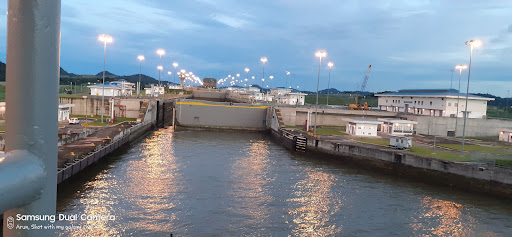
Panama Canal – Global Shipping Wonder Connecting Oceans.
🌎 Panama Canal – Engineering Marvel & Global Trade Artery
📍 Location: Panama, spanning ~82 km (51 mi) from Colón (Atlantic) to Balboa/Panama City (Pacific) .
🕰️ History & Construction
Ancient ideas initiated in the 1500s; the French attempt (1881–1899) failed due to disease and engineering issues .
U.S. undertook the project in 1904, after Panama’s independence—with construction completed in 1914 .
A key historical turning point came with the Torrijos–Carter Treaties (1977), transferring full control to Panama on Dec 31, 1999 .
🔧 Engineering Feat
Lock system (Gatún, Pedro Miguel, Miraflores) elevates ships ~26 m via Gatún Lake .
Designed to shave ~8,000 nautical miles off global shipping routes .
The notorious Culebra/Gaillard Cut faced massive early 1907 landslides, now stabilized through engineering solutions .
⚓ Major Expansion & Modern Upgrades
2016 expansion added new Neopanamax locks, enabling ships twice the size of original Panamax—the largest being ~17,640 TEU .
Expansion results:
+30% daily transits, +22% tonnage between Oct 2024–May 2025 (326 M PC tons) .
2025 container ship transits hit a record 1,200+ in just five months (+10.2% YoY) .
Water management: Innovative recycled basins cut water use by 60%, aiding drought resilience .
Future initiatives include “NetZero Slots” for low-carbon vessels in 2025 and continued reservoir projects .
🌐 Economic & Geopolitical Importance
Handles 5% of global trade, 12–15% of container traffic, 9% of oil, and 8% LNG shipments .
Revenue vital for Panama’s economy—especially post-1999 national ownership .
Traffic dipped during the 2023 drought (~22 daily), recovering to 33+ vessels/day by 2024–25 through water-saving measures .
Geopolitical tensions (e.g., US–China port control concerns, Red Sea disruptions) underline the canal’s strategic relevance .
📷 Content & Visual Suggestions
Aerial/drone shots of a ship navigating the locks.
Time-lapse of transit through locks + canal cuts.
Before-after imagery of the 2016 expansion and lock complex.
Infographic overlays with stats: transit counts, cargo tonnage, water savings.
Short voiceovers: “Witness how this 82‑km waterway slashes global shipping time…”
#PanamaCanal #Panama #EngineeringMarvel #GlobalTrade #LocalGuide #Neopanamax...
Read moreShifting is very very fast Specifications Length 82 km (51 miles) Maximum boat length 366 m (1,200 ft 9 in) Maximum boat beam 49 m (160 ft 9 in) (originally 28.5 m or 93 ft 6 in) Maximum boat draft 15.2 m (50 ft) Locks 3 locks up, 3 down per transit; all three lanes (3 lanes of locks) Status Open, expansion opened June 26, 2016 Navigation authority Panama Canal Authority History Original owner Société internationale du Canal Principal engineer John Findley Wallace (1904–1905), John Frank Stevens (1905–1907), George Washington Goethals (1907–1914)
Location of Panama between Pacific (bottom) and Caribbean (top), with canal at top center
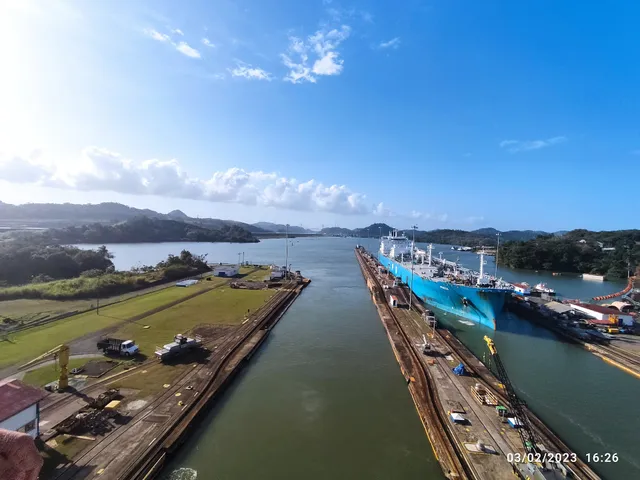
The panamax ship MSC Poh Lin exiting the Miraflores locks, March 2013 Canal locks at each end lift ships up to Gatun Lake, an artificial lake created to reduce the amount of excavation work required for the canal, 26 m (85 ft) above sea level, and then lower the ships at the other end. The original locks are 32.5 m (110 ft) wide. A third, wider lane of locks was constructed between September 2007 and May 2016. The expanded waterway began commercial operation on June 26, 2016. The new locks allow transit of larger, neo-Panamax ships, capable of handling more cargo.[1]
Colombia, France, and later the United States controlled the territory surrounding the canal during construction. France began work on the canal in 1881, but stopped because of engineering problems and a high worker mortality rate. The United States took over the project in 1904 and opened the canal on August 15, 1914. The US continued to control the canal and surrounding Panama Canal Zone until the 1977 Torrijos–Carter Treaties provided for handover to Panama. After a period of joint American–Panamanian control, the canal was taken over by the Panamanian government in 1999. It is now managed and operated by the government-owned Panama Canal Authority.
Annual traffic has risen from about 1,000 ships in 1914, when the canal opened, to 14,702 vessels in 2008, for a total of 333.7 million Panama Canal/Universal Measurement System (PC/UMS) tons. By 2012, more than 815,000 vessels had passed through the canal.[2] It takes 11.38 hours to pass through the Panama Canal.[3] The American Society of Civil Engineers has ranked the Panama Canal one of the seven wonders of the...
Read moreMy journey through the Panama Canal on board the Carnival Spirit was remarkable September 2023. I hope the images you see shows the beauty as I attempted to capture various aspects of this engineering marvel.
Panama Canal Night View: The photograph featuring the Wallenius Wilhelmsen cargo ship under a dark sky with distant lightning or clouds reflects the anticipation before entering the canal. The sight of other vessels like this waiting to cross highlights the high demand and strategic importance of this route.
Scenic Waterways and Panama City Skyline: Our ship approached the entrance, the images of sailboats on the peaceful water and the distant view of the Panama City skyline are truly serene. These images show how close nature and urban development coexist. The lush greenery along the coast contrasts with the modern city skyline in the background, offering a unique view.
Bridge of the Americas: The images of this iconic bridge are especially striking. The Bridge of the Americas marks the Pacific entrance to the canal, and our ship passing underneath it at sunrise provides a symbolic transition from the Pacific Ocean into the canal system. The view from below the bridge gives a dramatic sense of scale.
Tugboats and Engineering Marvels: The detailed shot of the tugboat Cerro Santiago emphasizes the engineering support that helps large vessels navigate the canal. Tugboats like this are crucial for guiding ships into the narrow locks and channels.
The Port and Locks: The busy port scenes show the industrial side of the canal. The cranes, shipping containers, and massive vessels highlight the logistical complexity of the canal operations, managing hundreds of ships daily.
I hoped my account of the journey is enriched by these visuals. I would suggest making this journey emphasizing how the leisurely pace through the canal allowed me to fully appreciate the intricate details of the engineering, the surrounding natural beauty, and the seamless interaction between old and new technological solutions like the trains that guide ships through the canal. I like to mention the contrast between the human-made marvel and the natural beauty surrounding the canal. The sight of Panama City’s skyline against the lush, hilly landscape really encapsulates the duality of...
Read more