The Kudumbigala monastic complex is a significant historical and religious site in Sri Lanka, with a rich and tumultuous history. Established in 246 BC during the reign of King Devanampiyatissa, it served as a refuge for Buddhist monks seeking solitude away from bustling urban centers. The complex, comprising over 200 rock caves, is a testament to the early Buddhist monastic tradition in Sri Lanka. The discovery of inscriptions in Brahmi script and other archaeological evidence in the Maha Sudharshana Lena cave further underscores its ancient origins, linking it to the pre-Christian era and the patronage of figures like Nandimitra, one of King Dutugemunu’s ten giant warriors.
However, the monastery's history is also marked by tragedy and neglect. In 1994, the LTTE (Liberation Tigers of Tamil Eelam) carried out a brutal attack in the nearby village of Panama, killing 17 innocent civilians. This event forced the abandonment of Kudumbigala, as the government was unable to ensure its protection. The LTTE's actions, including desecrating the Buddha statue by throwing tar on its head, were deliberate attempts to intimidate the monks and erase the cultural and religious significance of the site.
The broader context of ethnic conflict in Sri Lanka, particularly the Tamil separatist movement, led to the displacement of Sinhalese Buddhists from large areas of the country. Despite the profound cultural and historical importance of sites like Kudumbigala, many Sinhalese Buddhists remain unaware of their heritage, and a smaller percentage of Christian Sinhalese seem indifferent to its preservation.
After years of abandonment due to the civil war, Kudumbigala stood as a silent witness to the erasure and rediscovery of Sri Lanka's rich cultural landscape. The monastery's unique cylindrical dagoba, the only one of its kind surviving in Sri Lanka, highlights its architectural and spiritual significance. The site's revival and protection are crucial for preserving the legacy of Sinhalese civilization and ensuring that such sacred places are not lost to history. The story of Kudumbigala is a poignant reminder of the resilience of cultural heritage in the face of conflict and the need for collective efforts to safeguard it for future...
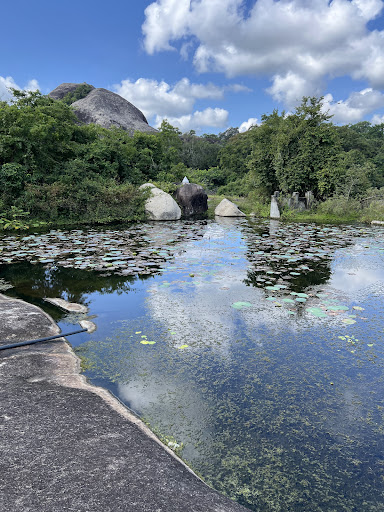
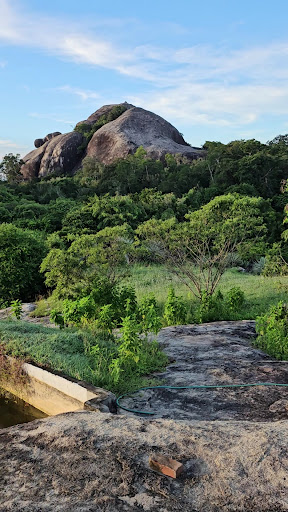
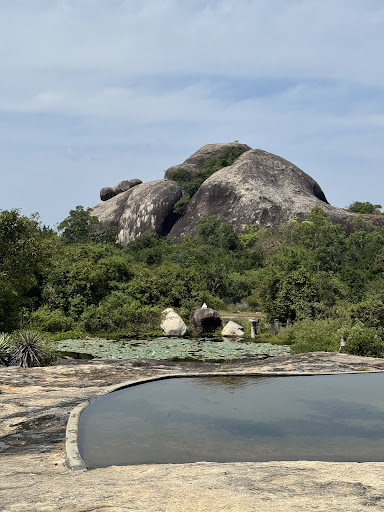
Read moreDrip caves, inscriptions, and old dagabs are scattered here, which reveal that there was a Buddhist revival in this area during the Rohana kingdoms which belong to the early period of Anuradhapura. In some caves, the owners of the current forest are working. There are 50 caves located here with 5 rocks. There is also a story related to this place.. It must have been after the end of the era of the Arhats that this land was once again covered with forest. Around 1942, a wonderful upasaka gentleman has come through this great forest.. That is Maithri Upasaka gentleman. Being a non-religious person by birth, he embraced Buddhism and came alone to this great forest and purified the sudarshan cave here and spent his time in preaching and meditation. Later, it was at the invitation of that gentleman that Tambugala Anandasiri, who was the predecessor of the current Kudumbigala, was visited. If you want to know the wonderful experiences he had in this place, you have to read the book written by him as an account of his twenty-five years of life... First of all, the walls of about 10 caves were tied up and arranged in chambers and preaching started. More than 10 inscriptions belonging to the pre-Christian era are found here. Eight ruins of Dagab can be seen at Kudumbigala. A hall has been built here where the Lords of the forest can stay for those who come from outside and prepare alms. Natural springs are located in several places on this land in a wonderful way. Mammals such as elephant, tiger, spotted deer, dark leopard, wolverine, sand deer, bull, bear, jackal, which can be seen in the dry zone, are still present in this forest. m. This Kudumbigala forest is located at a distance of...
Read moreKudumbigala Monastery is a remote but truly worthy place to visit. It’s a very sacred site, so it’s important to dress properly, behave silently, and show good manners when you come here. The atmosphere is so peaceful, and you really feel the spiritual energy of the monks and the surroundings.
The monastery is deep inside the jungle, and the road leading there is just a bumpy mud road. You can get through if you go slowly, but don’t expect nearby facilities. so bring whatever you need with you.
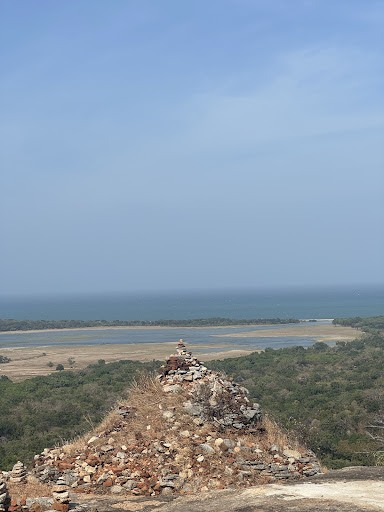
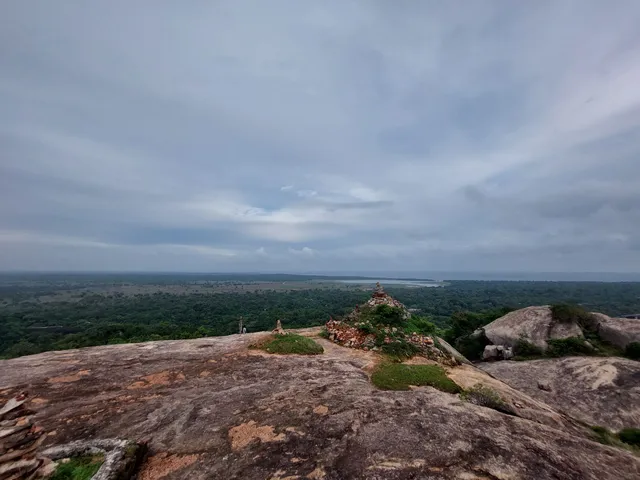
Climbing to the top of the rock is an amazing experience. The path is clear, with steps and railings that make it easier, though you still need a bit of fitness. I recommend starting around 6 am before it gets hot. The view from the top, along with the unique stupa, is absolutely worth it.
This is one of those places that’s not just about sightseeing, but about respecting and connecting with the sacred space. A visit here leaves you with peace of mind and a deep appreciation for history, nature, and...
Read more