HTML SitemapExplore

Kala Wewa — Local services in North Central Province

Name
Kala Wewa
Description
Kala Wewa built by the King Datusena in 460 A.D, is a twin reservoir complex which has a capacity of 123 million cubic meters. This reservoir complex has facilitated with a stone made spillway and three main sluices.
Nearby attractions
Nearby restaurants
Nearby local services
Nearby hotels
Related posts
Keywords
Kala Wewa tourism.Kala Wewa hotels.Kala Wewa bed and breakfast. flights to Kala Wewa.Kala Wewa attractions.Kala Wewa restaurants.Kala Wewa local services.Kala Wewa travel.Kala Wewa travel guide.Kala Wewa travel blog.Kala Wewa pictures.Kala Wewa photos.Kala Wewa travel tips.Kala Wewa maps.Kala Wewa things to do.
Kala Wewa things to do, attractions, restaurants, events info and trip planning
Kala Wewa
Sri LankaNorth Central ProvinceKala Wewa

Basic Info

Kala Wewa

Sri Lanka
4.6(383)
Save
spot

Ratings & Description

Info

Kala Wewa built by the King Datusena in 460 A.D, is a twin reservoir complex which has a capacity of 123 million cubic meters. This reservoir complex has facilitated with a stone made spillway and three main sluices.

Cultural
Outdoor
Scenic
attractions: , restaurants: , local businesses:
logoLearn more insights from Wanderboat AI.

Plan your stay

hotel
Pet-friendly Hotels in North Central Province
Find a cozy hotel nearby and make it a full experience.
hotel
Affordable Hotels in North Central Province
Find a cozy hotel nearby and make it a full experience.
hotel
The Coolest Hotels You Haven't Heard Of (Yet)
Find a cozy hotel nearby and make it a full experience.
hotel
Trending Stays Worth the Hype in North Central Province
Find a cozy hotel nearby and make it a full experience.

Reviews

Live events

See Sigiriya by boat at sunrise or sunset
Sun, Feb 8 • 4:30 PM
Dambulla, Central Province 10250, Sri Lanka
View details
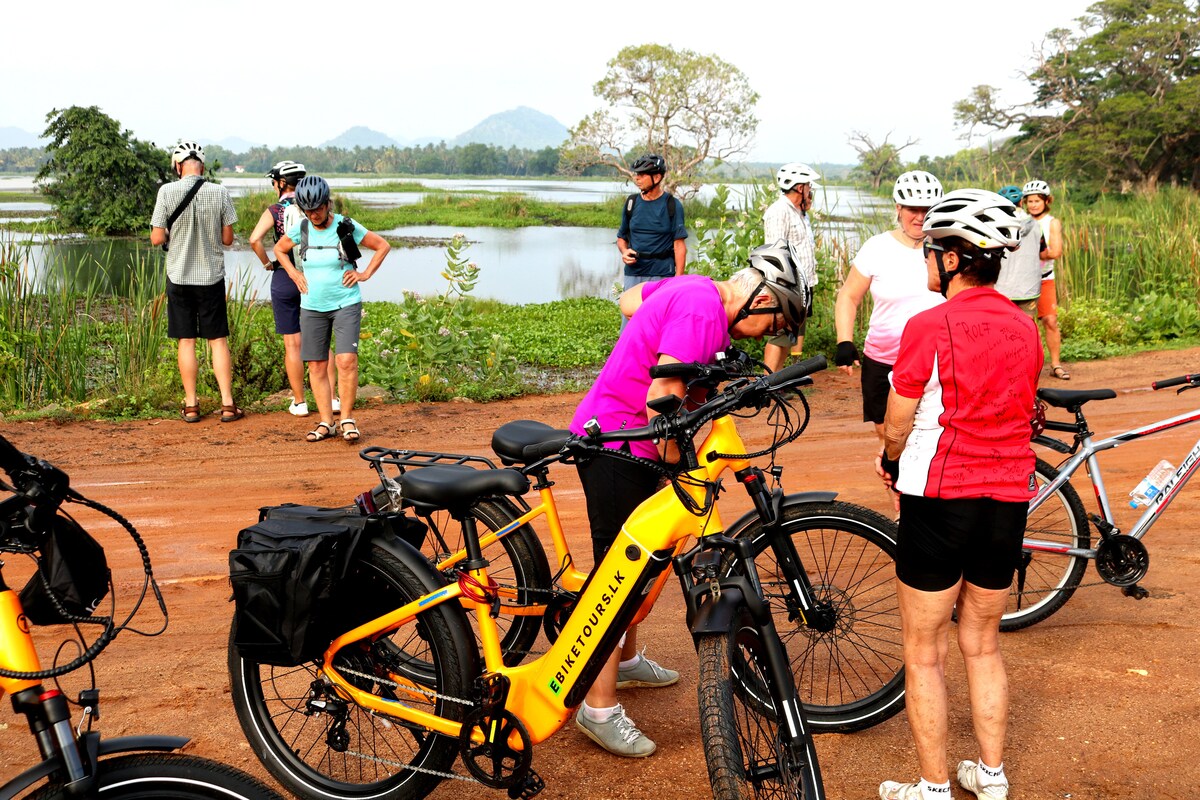
E-bike ride to Golden Temple and Private Island
Sun, Feb 8 • 7:30 PM
Dambulla, Central Province , Sri Lanka
View details
Get the Appoverlay
Get the AppOne tap to find yournext favorite spots!
Wanderboat LogoWanderboat

Your everyday Al companion for getaway ideas

CompanyAbout Us
InformationAI Trip PlannerSitemap
SocialXInstagramTiktokLinkedin
LegalTerms of ServicePrivacy Policy

Get the app

© 2025 Wanderboat. All rights reserved.

Reviews of Kala Wewa

4.6
(383)
avatar
4.0
3y

Kala Wewa and its waterway Yodha Ela (Jaya Ganga) is one of the most magnificent achievement of the ancient irrigation engineers of Sri Lanka. This reservoir was built by King Dhatusena (459-477) as part of rebuilding the country after liberating it from South Indian invaders who had plundered the country for over 25 years.

This reservoir has a circumference of over 40 miles (65 km) and has a total area of 7 square miles ( 18.1 square kilometers) at full capacity. The ancient spill (pitawana) is measured to be 216 feet (66 meters) in width and 170 ft (52 meters) in length. For comparison, the width of the spill is more than three quarters length of a soccer field! The spill was built using hammered Granite, a solid structure one could imagine. Each block of Granite is shaped precisely to fit its neighbor. The whole structure eventually acts like one huge rock.

Once the Kala Wewa was completed, he built an another tank called Balalu wewa adjoining Kala Wewa and joined the two, creating one of the largest tanks in the history. Therefore sometimes this massive irrigation reservoir is called Kala Balalu Wewa. The total length of the dam is 22,572 feet (6,879.9 m) and the height is 40-60 feet (12-18.3 m).

Yodha Ela, a 87 kilometer canal was then built to bring water from Kala Wewa to the city of Anuradhapura. All the three major reservoirs in the city of Anuradhapura (Abhaya wewa, Tissa wewa and Nuwara wewa) and the Nachchaduwa reservoir was fed by the Yodha Ela.

The gradient of Yodha Ela was measured to be 6 inches per mile. (1:10,000). Maintaining such a gradient is an extremely challenging task even for the modern engineers who have access to laser guided survey equipment. Few miles after leaving Kalawewa, the Jayaganga divides into two branches. One branch goes towards Nachchaduwa reservoir while the other goes towards the Anuradhapura city reservoirs.

King Dhatusena’s Kalawewa – Jayaganga scheme was designed to provide water to sixty village reservoirs and to the city of Anuradhapura. Many irrigation Engineers are still baffled how a 40 feet wide, 87 km long canal with a such a precise slope could have been planned and constructed 1,500 years ago.

Many a features had been added to the canal since its construction. King Parakramabahu who governed the country nearly 700 years after the Yoda Wawa, reconstructed the canal added more feeders to the canal starting from thirty four reservoirs found between Kala Wawa and Thissa Wawa, re-naming it Jaya Ganga or the river of victory.

When the British discovered this tank they could not comprehend the need for a such a massive spill who didn’t understand the dynamics of monsoon rain in the region.

In his 1837 book “The Maháwanso in Roman Characters: With the Translation Subjoined – and an introductory essay .., Volume 1”, George Turnour writes

“This tank situated 20 miles north west of the temple of Dambulla on the road to Anuradhapura, and which has hitherto attracted little notice, exhibits perhaps the remains of one of the greatest of the ancient great works of Ceylon. The circumference of the area of the tank, when the embankment was perfect, could not be less than 40 miles. The embankment, with the lateral mound of the Balalu Wewa is at least 10-12 miles long. The stone spill water in the broken bank of Kala Wewa is perhaps, one of the most stupendous monuments in the island, of misapplied human labour. The canal by which the waters of this tank were conducted to Anuradhapura, may still be partially traced : and in this vicinity the remains of the ancient fortress of the Wijitha are...

   Read more

avatar
5.0
2y

Kala Wewa, a colossal ancient reservoir nestled in the heart of Sri Lanka's North Central Province, stands as a testament to the island's rich history of hydraulic engineering and agricultural ingenuity. This massive reservoir, constructed over two millennia ago, remains a symbol of the island's ability to harness and manage water resources, shaping the agricultural landscape of the region.

Believed to have been built during the reign of King Datusena in the 5th century, Kala Wewa was an ambitious undertaking of hydraulic engineering. The reservoir's construction involved creating an enormous embankment to impound water from the Amban River, creating a vast artificial lake that spans over 2,400 acres. The primary purpose of Kala Wewa was to irrigate the surrounding agricultural lands, fostering an environment conducive to cultivation and sustaining a flourishing civilization.

Kala Wewa served as a key component of an extensive irrigation network in ancient Sri Lanka. The reservoir was part of a sophisticated hydraulic system that included a network of canals, sluices, and smaller reservoirs designed to distribute water across the region. This intricate irrigation system revolutionized agriculture, enabling the cultivation of crops and supporting a thriving agrarian society.

The reservoir's name, "Kala Wewa," translates to the "Black Reservoir," possibly derived from the dark color of the soil in the area. The agricultural lands surrounding Kala Wewa were fertile, benefiting from the nutrient-rich sediment deposited by the reservoir's waters. The region became a breadbasket, contributing significantly to the food security and economic prosperity of the ancient kingdom.

Beyond its practical significance in irrigation and agriculture, Kala Wewa holds cultural and historical importance. The reservoir is surrounded by archaeological sites, including ancient temples and monastic complexes. These sites provide insights into the cultural and religious practices of the ancient inhabitants who relied on the reservoir for their livelihoods.

Kala Wewa has weathered the test of time, and its impact on the region's landscape endures. The reservoir continues to play a crucial role in sustaining agriculture in the area, benefiting modern farmers as it did ancient civilizations. The legacy of Kala Wewa reflects the foresight and engineering prowess of the ancient Sri Lankan civilizations, demonstrating their ability to harness natural resources for the greater good of the community.

Conservation efforts have been undertaken to preserve and protect Kala Wewa, ensuring that it remains a living testament to Sri Lanka's ancient hydraulic engineering achievements. The reservoir remains an important cultural and historical site, attracting visitors who marvel at its sheer size and the engineering marvels of the past.

In conclusion, Kala Wewa stands as a monumental achievement of ancient Sri Lankan civilization, showcasing the innovative spirit of hydraulic engineering that transformed the agricultural landscape. This colossal reservoir, with its intricate irrigation system, not only shaped the livelihoods of ancient communities but also continues to be a source of cultural pride and historical intrigue in the...

   Read more
avatar
5.0
7y

Kala Wewa and its waterway Yodha Ela (Jaya Ganga) is one of the most magnificent achievement of the ancient irrigation engineers of Sri Lanka. This reservoir was built by King Dhatusena (459-477) as part of rebuilding the country after liberating it from South Indian invaders who had plundered the country for over 25 years. This reservoir has a circumference of over 40 miles (65 km) and has a total area of 7 square miles ( 18.1 square kilometers) at full capacity. The ancient spill (pitawana) is measured to be 216 feet (66 meters) in width and 170 ft (52 meters) in length. For comparison, the width of the spill is more than three quarters length of a soccer field! The spill was built using hammered Granite, a solid structure one could imagine. Each block of Granite is shaped precisely to fit its neighbor. The whole structure eventually acts like one huge rock. Once the Kala Wewa was completed, he built an another tank called Balalu wewa adjoining Kala Wewa and joined the two, creating one of the largest tanks in the history. Therefore sometimes this massive irrigation reservoir is called Kala Balalu Wewa. The total length of the dam is 22,572 feet (6,879.9 m) and the height is 40-60 feet (12-18.3 m).

Yodha Ela, a 87 kilometer canal was then built to bring water from Kala Wewa to the city of Anuradhapura. All the three major reservoirs in the city of Anuradhapura (Abhaya wewa, Tissa wewa and Nuwara wewa) and the Nachchaduwa reservoir was fed by the Yodha Ela.

The gradient of Yodha Ela was measured to be 6 inches per mile. (1:10,000). Maintaining such a gradient is an extremely challenging task even for the modern engineers who have access to laser guided survey equipment. Few miles after leaving Kalawewa, the Jayaganga divides into two branches. One branch goes towards Nachchaduwa reservoir while the other goes towards the Anuradhapura city reservoirs.

King Dhatusena’s Kalawewa – Jayaganga scheme was designed to provide water to sixty village reservoirs and to the city of Anuradhapura. Many irrigation Engineers are still baffled how a 40 feet wide, 87 km long canal with a such a precise slope could have been planned and constructed 1,500 years ago.

Many a features had been added to the canal since its construction. King Parakramabahu who governed the country nearly 700 years after the Yoda Wawa, reconstructed the canal added more feeders to the canal starting from thirty four reservoirs found between Kala Wawa and Thissa Wawa, re-naming it Jaya Ganga or the river of victory. When the British discovered this tank they could not comprehend the need for a such a massive spill who didn’t understand the dynamics of monsoon rain in the region.

In his 1837 book “The Maháwanso in Roman Characters: With the Translation Subjoined – and an introductory essay .., Volume 1”, George...

   Read more
Page 1 of 7
Previous
Next

Posts

Hirushan SavinduHirushan Savindu
Kala Wewa and its waterway Yodha Ela (Jaya Ganga) is one of the most magnificent achievement of the ancient irrigation engineers of Sri Lanka. This reservoir was built by King Dhatusena (459-477) as part of rebuilding the country after liberating it from South Indian invaders who had plundered the country for over 25 years. This reservoir has a circumference of over 40 miles (65 km) and has a total area of 7 square miles ( 18.1 square kilometers) at full capacity. The ancient spill (pitawana) is measured to be 216 feet (66 meters) in width and 170 ft (52 meters) in length. For comparison, the width of the spill is more than three quarters length of a soccer field! The spill was built using hammered Granite, a solid structure one could imagine. Each block of Granite is shaped precisely to fit its neighbor. The whole structure eventually acts like one huge rock. Once the Kala Wewa was completed, he built an another tank called Balalu wewa adjoining Kala Wewa and joined the two, creating one of the largest tanks in the history. Therefore sometimes this massive irrigation reservoir is called Kala Balalu Wewa. The total length of the dam is 22,572 feet (6,879.9 m) and the height is 40-60 feet (12-18.3 m). Yodha Ela, a 87 kilometer canal was then built to bring water from Kala Wewa to the city of Anuradhapura. All the three major reservoirs in the city of Anuradhapura (Abhaya wewa, Tissa wewa and Nuwara wewa) and the Nachchaduwa reservoir was fed by the Yodha Ela. The gradient of Yodha Ela was measured to be 6 inches per mile. (1:10,000). Maintaining such a gradient is an extremely challenging task even for the modern engineers who have access to laser guided survey equipment. Few miles after leaving Kalawewa, the Jayaganga divides into two branches. One branch goes towards Nachchaduwa reservoir while the other goes towards the Anuradhapura city reservoirs. King Dhatusena’s Kalawewa – Jayaganga scheme was designed to provide water to sixty village reservoirs and to the city of Anuradhapura. Many irrigation Engineers are still baffled how a 40 feet wide, 87 km long canal with a such a precise slope could have been planned and constructed 1,500 years ago. Many a features had been added to the canal since its construction. King Parakramabahu who governed the country nearly 700 years after the Yoda Wawa, reconstructed the canal added more feeders to the canal starting from thirty four reservoirs found between Kala Wawa and Thissa Wawa, re-naming it Jaya Ganga or the river of victory. When the British discovered this tank they could not comprehend the need for a such a massive spill who didn’t understand the dynamics of monsoon rain in the region. In his 1837 book “The Maháwanso in Roman Characters: With the Translation Subjoined – and an introductory essay .., Volume 1”, George Turnour writes “This tank situated 20 miles north west of the temple of Dambulla on the road to Anuradhapura, and which has hitherto attracted little notice, exhibits perhaps the remains of one of the greatest of the ancient great works of Ceylon. The circumference of the area of the tank, when the embankment was perfect, could not be less than 40 miles. The embankment, with the lateral mound of the Balalu Wewa is at least 10-12 miles long. The stone spill water in the broken bank of Kala Wewa is perhaps, one of the most stupendous monuments in the island, of misapplied human labour. The canal by which the waters of this tank were conducted to Anuradhapura, may still be partially traced : and in this vicinity the remains of the ancient fortress of the Wijitha are to be found. “
Your browser does not support the video tag.
Kalpa WeerasingheKalpa Weerasinghe
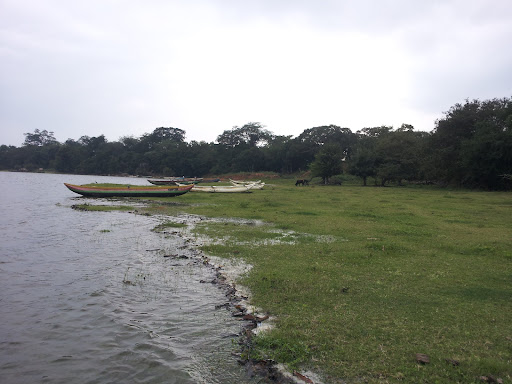
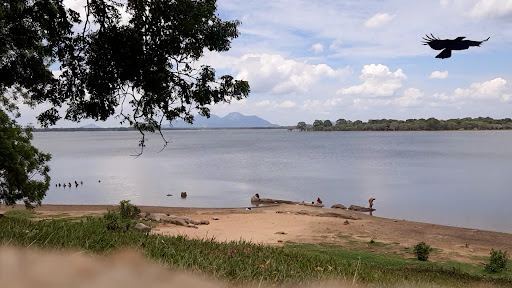
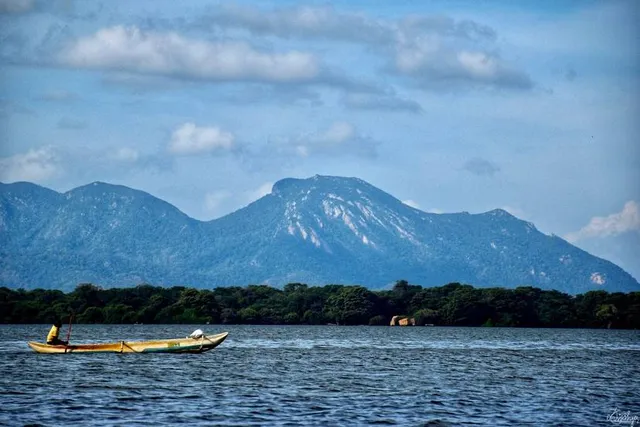
Best lake bund you can ever ask for. Very calming environment. You can sit for hours witnessing the beauty of the lake. You can see the ritigala mountain emerging from one end of the lake. Built by king dhatusena.
Gishan BandaraGishan Bandara
Kala Wewa and its waterway Yodha Ela (Jaya Ganga) is one of the most magnificent achievement of the ancient irrigation engineers of Sri Lanka. This reservoir was built by King Dhatusena (459-477) as part of rebuilding the country after liberating it from South Indian invaders who had plundered the country for over 25 years. This reservoir has a circumference of over 40 miles (65 km) and has a total area of 7 square miles ( 18.1 square kilometers) at full capacity. The ancient spill (pitawana) is measured to be 216 feet (66 meters) in width and 170 ft (52 meters) in length. For comparison, the width of the spill is more than three quarters length of a soccer field! The spill was built using hammered Granite, a solid structure one could imagine. Each block of Granite is shaped precisely to fit its neighbor. The whole structure eventually acts like one huge rock. Once the Kala Wewa was completed, he built an another tank called Balalu wewa adjoining Kala Wewa and joined the two, creating one of the largest tanks in the history. Therefore sometimes this massive irrigation reservoir is called Kala Balalu Wewa. The total length of the dam is 22,572 feet (6,879.9 m) and the height is 40-60 feet (12-18.3 m). Yodha Ela, a 87 kilometer canal was then built to bring water from Kala Wewa to the city of Anuradhapura. All the three major reservoirs in the city of Anuradhapura (Abhaya wewa, Tissa wewa and Nuwara wewa) and the Nachchaduwa reservoir was fed by the Yodha Ela. The gradient of Yodha Ela was measured to be 6 inches per mile. (1:10,000). Maintaining such a gradient is an extremely challenging task even for the modern engineers who have access to laser guided survey equipment. Few miles after leaving Kalawewa, the Jayaganga divides into two branches. One branch goes towards Nachchaduwa reservoir while the other goes towards the Anuradhapura city reservoirs. King Dhatusena’s Kalawewa – Jayaganga scheme was designed to provide water to sixty village reservoirs and to the city of Anuradhapura. Many irrigation Engineers are still baffled how a 40 feet wide, 87 km long canal with a such a precise slope could have been planned and constructed 1,500 years ago. Many a features had been added to the canal since its construction. King Parakramabahu who governed the country nearly 700 years after the Yoda Wawa, reconstructed the canal added more feeders to the canal starting from thirty four reservoirs found between Kala Wawa and Thissa Wawa, re-naming it Jaya Ganga or the river of victory. When the British discovered this tank they could not comprehend the need for a such a massive spill who didn’t understand the dynamics of monsoon rain in the region. In his 1837 book “The Maháwanso in Roman Characters: With the Translation Subjoined – and an introductory essay .., Volume 1”, George Turnour writes
See more posts
See more posts
hotel
Find your stay

Pet-friendly Hotels in North Central Province

Find a cozy hotel nearby and make it a full experience.

Kala Wewa and its waterway Yodha Ela (Jaya Ganga) is one of the most magnificent achievement of the ancient irrigation engineers of Sri Lanka. This reservoir was built by King Dhatusena (459-477) as part of rebuilding the country after liberating it from South Indian invaders who had plundered the country for over 25 years. This reservoir has a circumference of over 40 miles (65 km) and has a total area of 7 square miles ( 18.1 square kilometers) at full capacity. The ancient spill (pitawana) is measured to be 216 feet (66 meters) in width and 170 ft (52 meters) in length. For comparison, the width of the spill is more than three quarters length of a soccer field! The spill was built using hammered Granite, a solid structure one could imagine. Each block of Granite is shaped precisely to fit its neighbor. The whole structure eventually acts like one huge rock. Once the Kala Wewa was completed, he built an another tank called Balalu wewa adjoining Kala Wewa and joined the two, creating one of the largest tanks in the history. Therefore sometimes this massive irrigation reservoir is called Kala Balalu Wewa. The total length of the dam is 22,572 feet (6,879.9 m) and the height is 40-60 feet (12-18.3 m). Yodha Ela, a 87 kilometer canal was then built to bring water from Kala Wewa to the city of Anuradhapura. All the three major reservoirs in the city of Anuradhapura (Abhaya wewa, Tissa wewa and Nuwara wewa) and the Nachchaduwa reservoir was fed by the Yodha Ela. The gradient of Yodha Ela was measured to be 6 inches per mile. (1:10,000). Maintaining such a gradient is an extremely challenging task even for the modern engineers who have access to laser guided survey equipment. Few miles after leaving Kalawewa, the Jayaganga divides into two branches. One branch goes towards Nachchaduwa reservoir while the other goes towards the Anuradhapura city reservoirs. King Dhatusena’s Kalawewa – Jayaganga scheme was designed to provide water to sixty village reservoirs and to the city of Anuradhapura. Many irrigation Engineers are still baffled how a 40 feet wide, 87 km long canal with a such a precise slope could have been planned and constructed 1,500 years ago. Many a features had been added to the canal since its construction. King Parakramabahu who governed the country nearly 700 years after the Yoda Wawa, reconstructed the canal added more feeders to the canal starting from thirty four reservoirs found between Kala Wawa and Thissa Wawa, re-naming it Jaya Ganga or the river of victory. When the British discovered this tank they could not comprehend the need for a such a massive spill who didn’t understand the dynamics of monsoon rain in the region. In his 1837 book “The Maháwanso in Roman Characters: With the Translation Subjoined – and an introductory essay .., Volume 1”, George Turnour writes “This tank situated 20 miles north west of the temple of Dambulla on the road to Anuradhapura, and which has hitherto attracted little notice, exhibits perhaps the remains of one of the greatest of the ancient great works of Ceylon. The circumference of the area of the tank, when the embankment was perfect, could not be less than 40 miles. The embankment, with the lateral mound of the Balalu Wewa is at least 10-12 miles long. The stone spill water in the broken bank of Kala Wewa is perhaps, one of the most stupendous monuments in the island, of misapplied human labour. The canal by which the waters of this tank were conducted to Anuradhapura, may still be partially traced : and in this vicinity the remains of the ancient fortress of the Wijitha are to be found. “
Hirushan Savindu

Hirushan Savindu

hotel
Find your stay

Affordable Hotels in North Central Province

Find a cozy hotel nearby and make it a full experience.

Get the Appoverlay
Get the AppOne tap to find yournext favorite spots!
Best lake bund you can ever ask for. Very calming environment. You can sit for hours witnessing the beauty of the lake. You can see the ritigala mountain emerging from one end of the lake. Built by king dhatusena.
Kalpa Weerasinghe

Kalpa Weerasinghe

hotel
Find your stay

The Coolest Hotels You Haven't Heard Of (Yet)

Find a cozy hotel nearby and make it a full experience.

hotel
Find your stay

Trending Stays Worth the Hype in North Central Province

Find a cozy hotel nearby and make it a full experience.

Kala Wewa and its waterway Yodha Ela (Jaya Ganga) is one of the most magnificent achievement of the ancient irrigation engineers of Sri Lanka. This reservoir was built by King Dhatusena (459-477) as part of rebuilding the country after liberating it from South Indian invaders who had plundered the country for over 25 years. This reservoir has a circumference of over 40 miles (65 km) and has a total area of 7 square miles ( 18.1 square kilometers) at full capacity. The ancient spill (pitawana) is measured to be 216 feet (66 meters) in width and 170 ft (52 meters) in length. For comparison, the width of the spill is more than three quarters length of a soccer field! The spill was built using hammered Granite, a solid structure one could imagine. Each block of Granite is shaped precisely to fit its neighbor. The whole structure eventually acts like one huge rock. Once the Kala Wewa was completed, he built an another tank called Balalu wewa adjoining Kala Wewa and joined the two, creating one of the largest tanks in the history. Therefore sometimes this massive irrigation reservoir is called Kala Balalu Wewa. The total length of the dam is 22,572 feet (6,879.9 m) and the height is 40-60 feet (12-18.3 m). Yodha Ela, a 87 kilometer canal was then built to bring water from Kala Wewa to the city of Anuradhapura. All the three major reservoirs in the city of Anuradhapura (Abhaya wewa, Tissa wewa and Nuwara wewa) and the Nachchaduwa reservoir was fed by the Yodha Ela. The gradient of Yodha Ela was measured to be 6 inches per mile. (1:10,000). Maintaining such a gradient is an extremely challenging task even for the modern engineers who have access to laser guided survey equipment. Few miles after leaving Kalawewa, the Jayaganga divides into two branches. One branch goes towards Nachchaduwa reservoir while the other goes towards the Anuradhapura city reservoirs. King Dhatusena’s Kalawewa – Jayaganga scheme was designed to provide water to sixty village reservoirs and to the city of Anuradhapura. Many irrigation Engineers are still baffled how a 40 feet wide, 87 km long canal with a such a precise slope could have been planned and constructed 1,500 years ago. Many a features had been added to the canal since its construction. King Parakramabahu who governed the country nearly 700 years after the Yoda Wawa, reconstructed the canal added more feeders to the canal starting from thirty four reservoirs found between Kala Wawa and Thissa Wawa, re-naming it Jaya Ganga or the river of victory. When the British discovered this tank they could not comprehend the need for a such a massive spill who didn’t understand the dynamics of monsoon rain in the region. In his 1837 book “The Maháwanso in Roman Characters: With the Translation Subjoined – and an introductory essay .., Volume 1”, George Turnour writes
Gishan Bandara

Gishan Bandara

See more posts
See more posts