HTML SitemapExplore

Nainativu — Local services in Northern Province

Name
Nainativu
Description
Nainativu, is a small but notable island off the coast of Jaffna Peninsula in the Northern Province, Sri Lanka. The name of the island alludes to the folklore inhabitants, the Naga people.
Nearby attractions
Nearby restaurants
Nearby local services
Nearby hotels
Related posts
Keywords
Nainativu tourism.Nainativu hotels.Nainativu bed and breakfast. flights to Nainativu.Nainativu attractions.Nainativu restaurants.Nainativu local services.Nainativu travel.Nainativu travel guide.Nainativu travel blog.Nainativu pictures.Nainativu photos.Nainativu travel tips.Nainativu maps.Nainativu things to do.
Nainativu things to do, attractions, restaurants, events info and trip planning
Nainativu
Sri LankaNorthern ProvinceNainativu

Basic Info

Nainativu

Sri Lanka
4.5(195)
Save
spot

Ratings & Description

Info

Nainativu, is a small but notable island off the coast of Jaffna Peninsula in the Northern Province, Sri Lanka. The name of the island alludes to the folklore inhabitants, the Naga people.

Cultural
Scenic
Family friendly
attractions: , restaurants: , local businesses:
logoLearn more insights from Wanderboat AI.

Plan your stay

hotel
Pet-friendly Hotels in Northern Province
Find a cozy hotel nearby and make it a full experience.
hotel
Affordable Hotels in Northern Province
Find a cozy hotel nearby and make it a full experience.
hotel
The Coolest Hotels You Haven't Heard Of (Yet)
Find a cozy hotel nearby and make it a full experience.
hotel
Trending Stays Worth the Hype in Northern Province
Find a cozy hotel nearby and make it a full experience.

Reviews

Get the Appoverlay
Get the AppOne tap to find yournext favorite spots!
Wanderboat LogoWanderboat

Your everyday Al companion for getaway ideas

CompanyAbout Us
InformationAI Trip PlannerSitemap
SocialXInstagramTiktokLinkedin
LegalTerms of ServicePrivacy Policy

Get the app

© 2025 Wanderboat. All rights reserved.

Reviews of Nainativu

4.5
(195)
avatar
4.0
2y

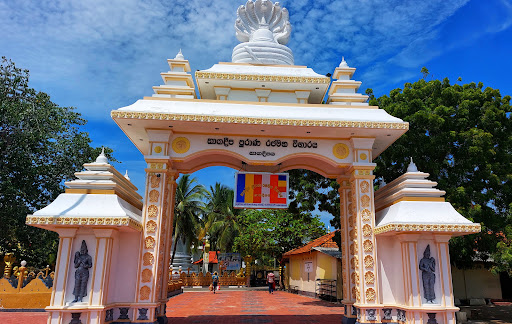
Nainativu (Tamil: நயினாதீவு Nainatheevu, Sinhala: නාගදීපය Nagadeepa), is a small but notable island off the coast of Jaffna Peninsula in the Northern Province, Sri Lanka. The name of the island alludes to the folklore inhabitants, the Naga people. It is home to the Hindu shrine of Nagapooshani Amman Temple; one of the prominent 64 Shakti Peethas, and the Buddhist shrine Nagadeepa Purana Viharaya.

Historians note the island is mentioned in the ancient Tamil Sangam literature of nearby Tamil Nadu such as Manimekalai where it was mentioned as Manipallavam (Tamil: மணிபல்லவம்), and ancient Buddhist legends of Sri Lanka such as Mahavamsa. Ptolemy, a Greek cartographer, describes the islands around the Jaffna peninsula as Nagadiba (Greek: Ναγάδιβα) in the first century CE.

Nāka Tivu / Nāka Nadu was the name of the whole Jaffna peninsula in some historical documents. There are number of Buddhist myths associated with the interactions of people of this historical place with Buddha. The two Tamil epics of the second century - Kundalakesi and Manimekalai - describe the islet of Manipallavam of Nāka Nadu, this islet of the Jaffna peninsula, from where merchants came to obtain gems and conch shells. The protagonists of the former story by Nathakuthanaar, visited the island. In the latter poem by Sīthalai Sāttanār, the sea goddess Manimekhala brings the heroine to the island, where she worships Buddha. She is also told of the petrosomatoglyph atop the mountain of the main island and a magic bowl Amudha Surabhi (cornucopia bowl) that appears once every year in a lake of the islet.

The Manimekhalai and the Mahavamsa both describe Buddha settling a dispute between two Naga princes over a gem set throne seat on an island known as Manipallavam or Nagadeepa, identified as Nainativu by several scholars. The Tamil language inscription of the Nainativu Hindu temple by Parâkramabâhu I of the 12th century CE states that foreigners landing at new ports must meet at Kayts and they must be protected, and if ships to the islet carrying elephants and horses get shipwrecked, a fourth of the cargo must go to the treasury.

The epic Manimekalai tells the story of the Chola king Killi who on a visit to the island fell in love with the naga princess Pilivalai, the daughter of king Valaivanan of Manipallavam. The prince born out of this union was Tondaiman Ilamtiraiyan. When the boy grew up the princess wanted to send her son to the Chola kingdom. So she entrusted the prince to a merchant who dealt in woolen blankets called Kambala Chetty when the latter's ship stopped in the island. During the voyage to the Chola kingdom, the ship was wrecked due to rough weather and the boy was lost. He was later found washed ashore with a Tondai twig (creeper) around his leg. So he came to be called Tondaiman Ilam Tiraiyan meaning the young one of the seas or waves. When he grew up the northern part of the Chola kingdom was entrusted to him and the area he governed came to be called Tondaimandalam after him. He is considered by some scholars to be the progenitor of the Pallava dynasty and the dynasty he founded took its name after the native place of his mother, that is...

   Read more
avatar
5.0
51w

Nainativu Island, easy to reach from Kurikadduwan Jetty (KKD), is one of the major attractions of Northern Sri Lanka.

It is a major pilgrimage site for both Hindus and Buddhists, because there are two significant temples of the respective religions, namely Nagapooshani Amman Kovil, which is the setting of the largest mainly Hindu festival in Sri Lanka, and the Nagadeepa Purana Viharaya, which is believed to be one of the places visited by the Buddha and thereby one of the holiest Buddhist sites in Sri Lanka.

Nainativu, sometimes spelt 'Nayinativu', is the modern Tamil name of an island of the Jaffna archipelago. Though smaller in size than the neighbouring islands, it's the archipelago's top destination for travellers interested in Sri Lanka's cultural heritage, as Nainativu is a significant pilgrimage site in the first place.

Nainativu, covered with palm trees, is a small stretch of land of only 4 square kilometers in size.

The largest distance is 4.1 km from north to south. The maximum width of the island is 1.2 km.

It's inhabited by approximately 3000 Tamil speaking people. Most of them are Hindus, only about 150 islanders are Muslims.

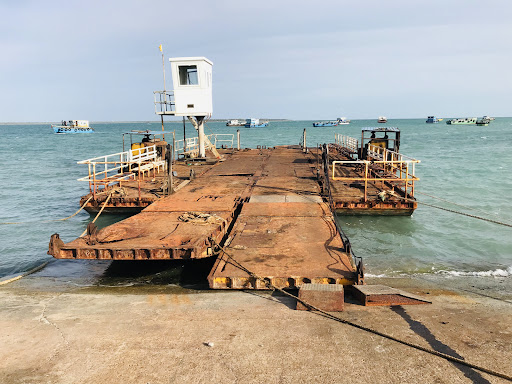
​​Nainativu Island is situated 27 km west of Jaffna, as the crow flies, and in 2 km distance from the port of Kurikadduwan (KKD), where ferry boat service to Nainativu is available.

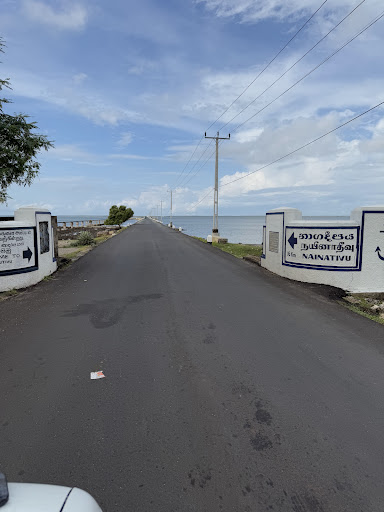
The KKD ferry port can be reached by vehicle, crossing two causeways connecting the neighbouring island Pundukutivu and Kayts with Jaffna Peninsula. Boats leave KKD at least once an hour.

Travellers visiting Nainativu in the afternoon should be careful to ask, when does the last return-ferry depart from Nainativu and at which of the two piers.

Usually, it's the pier of the island's jetty, just in front of the Hindu temple. The last boat to KKD leaves about 4.30 pm. Better...

   Read more

avatar
5.0
7y

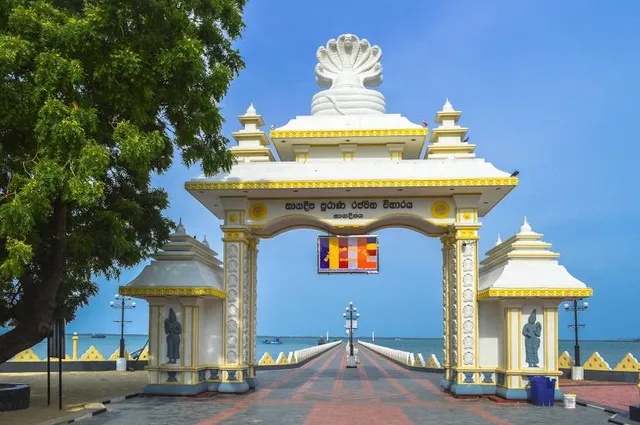
Nainativu is a separate island where people have to travel by boat for 20 minutes. Before that, in order to reach the place where boats are kept, people travel by bus which is starting from Jaffna town. That bus ride takes nearly 30 minutes to reach board yard. Boats stops at two places of nainativu island. The first place is near to the temple where Buddha's statues and other religious things are placed. Also people who took off from the first place can walk to the next boat stop. A hindu kovil is there near the second boat stop. According to the choice of people, they are able to take off at any place. A boat usually charges Rs.30 from a person for a single ride. It's Rs.20 distance to reach the boat yard from Jaffna town by bus. It was a great experience in life, because everything was different. The culture, the people, the environment, everything was unforgettable because the people were really good and they treat well. Special thanks to all the tamil people who helped during the visit. Hope to come in the next time also in Colombo to Jaffna (Kankasanthurai) express train. It was only a 9 hours travel (8.30 pm - 5.30 am) from Colombo to Jaffna...

   Read more
Page 1 of 7
Previous
Next

Posts

A S M SiyathA S M Siyath
Nainativu (Tamil: நயினாதீவு Nainatheevu, Sinhala: නාගදීපය Nagadeepa), is a small but notable island off the coast of Jaffna Peninsula in the Northern Province, Sri Lanka. The name of the island alludes to the folklore inhabitants, the Naga people. It is home to the Hindu shrine of Nagapooshani Amman Temple; one of the prominent 64 Shakti Peethas, and the Buddhist shrine Nagadeepa Purana Viharaya. Historians note the island is mentioned in the ancient Tamil Sangam literature of nearby Tamil Nadu such as Manimekalai where it was mentioned as Manipallavam (Tamil: மணிபல்லவம்), and ancient Buddhist legends of Sri Lanka such as Mahavamsa. Ptolemy, a Greek cartographer, describes the islands around the Jaffna peninsula as Nagadiba (Greek: Ναγάδιβα) in the first century CE. Nāka Tivu / Nāka Nadu was the name of the whole Jaffna peninsula in some historical documents. There are number of Buddhist myths associated with the interactions of people of this historical place with Buddha. The two Tamil epics of the second century - Kundalakesi and Manimekalai - describe the islet of Manipallavam of Nāka Nadu, this islet of the Jaffna peninsula, from where merchants came to obtain gems and conch shells. The protagonists of the former story by Nathakuthanaar, visited the island. In the latter poem by Sīthalai Sāttanār, the sea goddess Manimekhala brings the heroine to the island, where she worships Buddha. She is also told of the petrosomatoglyph atop the mountain of the main island and a magic bowl Amudha Surabhi (cornucopia bowl) that appears once every year in a lake of the islet. The Manimekhalai and the Mahavamsa both describe Buddha settling a dispute between two Naga princes over a gem set throne seat on an island known as Manipallavam or Nagadeepa, identified as Nainativu by several scholars. The Tamil language inscription of the Nainativu Hindu temple by Parâkramabâhu I of the 12th century CE states that foreigners landing at new ports must meet at Kayts and they must be protected, and if ships to the islet carrying elephants and horses get shipwrecked, a fourth of the cargo must go to the treasury. The epic Manimekalai tells the story of the Chola king Killi who on a visit to the island fell in love with the naga princess Pilivalai, the daughter of king Valaivanan of Manipallavam. The prince born out of this union was Tondaiman Ilamtiraiyan. When the boy grew up the princess wanted to send her son to the Chola kingdom. So she entrusted the prince to a merchant who dealt in woolen blankets called Kambala Chetty when the latter's ship stopped in the island. During the voyage to the Chola kingdom, the ship was wrecked due to rough weather and the boy was lost. He was later found washed ashore with a Tondai twig (creeper) around his leg. So he came to be called Tondaiman Ilam Tiraiyan meaning the young one of the seas or waves. When he grew up the northern part of the Chola kingdom was entrusted to him and the area he governed came to be called Tondaimandalam after him. He is considered by some scholars to be the progenitor of the Pallava dynasty and the dynasty he founded took its name after the native place of his mother, that is Manipallavam.
Your browser does not support the video tag.
SHEM MAX (BLUEFIRE)SHEM MAX (BLUEFIRE)
⭐️⭐️⭐️⭐️⭐️ Wonderful Travel Experience in ever got in this Island ❤️❤️❤️
Prasad LokubalasuriyaPrasad Lokubalasuriya
Nainativu Island, easy to reach from Kurikadduwan Jetty (KKD), is one of the major attractions of Northern Sri Lanka. It is a major pilgrimage site for both Hindus and Buddhists, because there are two significant temples of the respective religions, namely Nagapooshani Amman Kovil, which is the setting of the largest mainly Hindu festival in Sri Lanka, and the Nagadeepa Purana Viharaya, which is believed to be one of the places visited by the Buddha and thereby one of the holiest Buddhist sites in Sri Lanka. Nainativu, sometimes spelt 'Nayinativu', is the modern Tamil name of an island of the Jaffna archipelago. Though smaller in size than the neighbouring islands, it's the archipelago's top destination for travellers interested in Sri Lanka's cultural heritage, as Nainativu is a significant pilgrimage site in the first place. Nainativu, covered with palm trees, is a small stretch of land of only 4 square kilometers in size. The largest distance is 4.1 km from north to south. The maximum width of the island is 1.2 km. It's inhabited by approximately 3000 Tamil speaking people. Most of them are Hindus, only about 150 islanders are Muslims. ​​Nainativu Island is situated 27 km west of Jaffna, as the crow flies, and in 2 km distance from the port of Kurikadduwan (KKD), where ferry boat service to Nainativu is available. The KKD ferry port can be reached by vehicle, crossing two causeways connecting the neighbouring island Pundukutivu and Kayts with Jaffna Peninsula. Boats leave KKD at least once an hour. Travellers visiting Nainativu in the afternoon should be careful to ask, when does the last return-ferry depart from Nainativu and at which of the two piers. Usually, it's the pier of the island's jetty, just in front of the Hindu temple. The last boat to KKD leaves about 4.30 pm. Better ask to be sure.
See more posts
See more posts
hotel
Find your stay

Pet-friendly Hotels in Northern Province

Find a cozy hotel nearby and make it a full experience.

Nainativu (Tamil: நயினாதீவு Nainatheevu, Sinhala: නාගදීපය Nagadeepa), is a small but notable island off the coast of Jaffna Peninsula in the Northern Province, Sri Lanka. The name of the island alludes to the folklore inhabitants, the Naga people. It is home to the Hindu shrine of Nagapooshani Amman Temple; one of the prominent 64 Shakti Peethas, and the Buddhist shrine Nagadeepa Purana Viharaya. Historians note the island is mentioned in the ancient Tamil Sangam literature of nearby Tamil Nadu such as Manimekalai where it was mentioned as Manipallavam (Tamil: மணிபல்லவம்), and ancient Buddhist legends of Sri Lanka such as Mahavamsa. Ptolemy, a Greek cartographer, describes the islands around the Jaffna peninsula as Nagadiba (Greek: Ναγάδιβα) in the first century CE. Nāka Tivu / Nāka Nadu was the name of the whole Jaffna peninsula in some historical documents. There are number of Buddhist myths associated with the interactions of people of this historical place with Buddha. The two Tamil epics of the second century - Kundalakesi and Manimekalai - describe the islet of Manipallavam of Nāka Nadu, this islet of the Jaffna peninsula, from where merchants came to obtain gems and conch shells. The protagonists of the former story by Nathakuthanaar, visited the island. In the latter poem by Sīthalai Sāttanār, the sea goddess Manimekhala brings the heroine to the island, where she worships Buddha. She is also told of the petrosomatoglyph atop the mountain of the main island and a magic bowl Amudha Surabhi (cornucopia bowl) that appears once every year in a lake of the islet. The Manimekhalai and the Mahavamsa both describe Buddha settling a dispute between two Naga princes over a gem set throne seat on an island known as Manipallavam or Nagadeepa, identified as Nainativu by several scholars. The Tamil language inscription of the Nainativu Hindu temple by Parâkramabâhu I of the 12th century CE states that foreigners landing at new ports must meet at Kayts and they must be protected, and if ships to the islet carrying elephants and horses get shipwrecked, a fourth of the cargo must go to the treasury. The epic Manimekalai tells the story of the Chola king Killi who on a visit to the island fell in love with the naga princess Pilivalai, the daughter of king Valaivanan of Manipallavam. The prince born out of this union was Tondaiman Ilamtiraiyan. When the boy grew up the princess wanted to send her son to the Chola kingdom. So she entrusted the prince to a merchant who dealt in woolen blankets called Kambala Chetty when the latter's ship stopped in the island. During the voyage to the Chola kingdom, the ship was wrecked due to rough weather and the boy was lost. He was later found washed ashore with a Tondai twig (creeper) around his leg. So he came to be called Tondaiman Ilam Tiraiyan meaning the young one of the seas or waves. When he grew up the northern part of the Chola kingdom was entrusted to him and the area he governed came to be called Tondaimandalam after him. He is considered by some scholars to be the progenitor of the Pallava dynasty and the dynasty he founded took its name after the native place of his mother, that is Manipallavam.
A S M Siyath

A S M Siyath

hotel
Find your stay

Affordable Hotels in Northern Province

Find a cozy hotel nearby and make it a full experience.

Get the Appoverlay
Get the AppOne tap to find yournext favorite spots!
⭐️⭐️⭐️⭐️⭐️ Wonderful Travel Experience in ever got in this Island ❤️❤️❤️
SHEM MAX (BLUEFIRE)

SHEM MAX (BLUEFIRE)

hotel
Find your stay

The Coolest Hotels You Haven't Heard Of (Yet)

Find a cozy hotel nearby and make it a full experience.

hotel
Find your stay

Trending Stays Worth the Hype in Northern Province

Find a cozy hotel nearby and make it a full experience.

Nainativu Island, easy to reach from Kurikadduwan Jetty (KKD), is one of the major attractions of Northern Sri Lanka. It is a major pilgrimage site for both Hindus and Buddhists, because there are two significant temples of the respective religions, namely Nagapooshani Amman Kovil, which is the setting of the largest mainly Hindu festival in Sri Lanka, and the Nagadeepa Purana Viharaya, which is believed to be one of the places visited by the Buddha and thereby one of the holiest Buddhist sites in Sri Lanka. Nainativu, sometimes spelt 'Nayinativu', is the modern Tamil name of an island of the Jaffna archipelago. Though smaller in size than the neighbouring islands, it's the archipelago's top destination for travellers interested in Sri Lanka's cultural heritage, as Nainativu is a significant pilgrimage site in the first place. Nainativu, covered with palm trees, is a small stretch of land of only 4 square kilometers in size. The largest distance is 4.1 km from north to south. The maximum width of the island is 1.2 km. It's inhabited by approximately 3000 Tamil speaking people. Most of them are Hindus, only about 150 islanders are Muslims. ​​Nainativu Island is situated 27 km west of Jaffna, as the crow flies, and in 2 km distance from the port of Kurikadduwan (KKD), where ferry boat service to Nainativu is available. The KKD ferry port can be reached by vehicle, crossing two causeways connecting the neighbouring island Pundukutivu and Kayts with Jaffna Peninsula. Boats leave KKD at least once an hour. Travellers visiting Nainativu in the afternoon should be careful to ask, when does the last return-ferry depart from Nainativu and at which of the two piers. Usually, it's the pier of the island's jetty, just in front of the Hindu temple. The last boat to KKD leaves about 4.30 pm. Better ask to be sure.
Prasad Lokubalasuriya

Prasad Lokubalasuriya

See more posts
See more posts