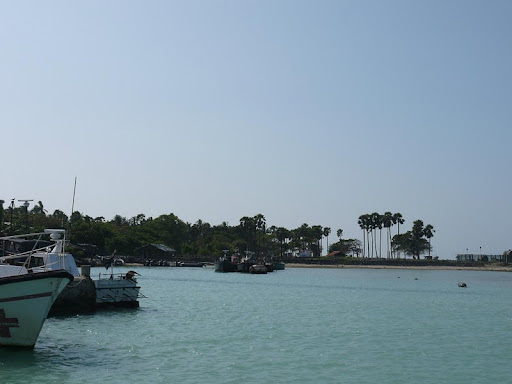
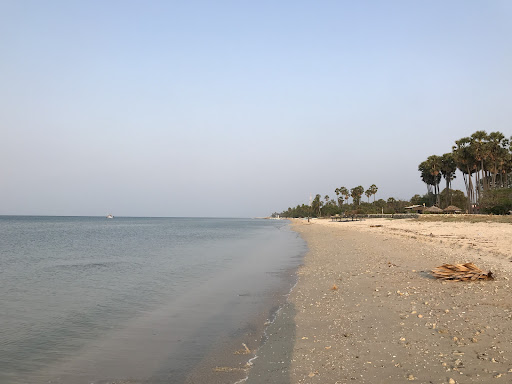
Neduntheevu, also known as Delft Island, is a truly unique and historically rich island in Sri Lanka. I have visited this island 3 times, and each experience has been remarkable and unforgettable.
Getting There
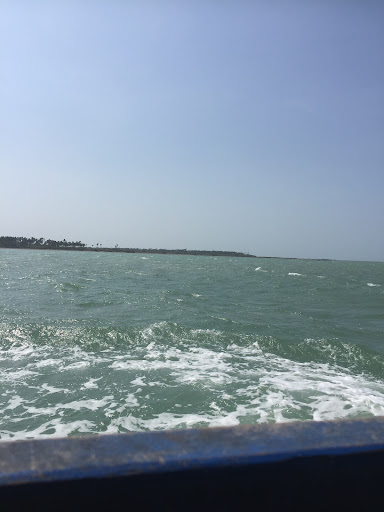
To reach Delft Island, you need to take a boat from the mainland. The first time I visited, I traveled via the government boat, which was an interesting journey across the scenic blue waters of the Palk Strait.
Cultural & Religious Harmony
One of the most heartwarming things about Delft Island is the peaceful coexistence of multiple religions. Even though it is a tiny island with a small population, it has a: ✅ Buddhist temple ✅ Hindu temple (Kovil) ✅ Muslim mosque ✅ Christian church
This diversity and unity among the people make Delft Island stand out as a symbol of Sri Lanka’s multicultural harmony.
Architecture & Historical Sites
What makes this island truly fascinating is its historical structures and coral-built architecture. Since the island is surrounded by corals, many old buildings, forts, and walls are entirely made of corals, giving them a unique and ancient look. Some of the must-see historical sites include: • The Dutch Fort ruins • The Old Dutch Stables • The famous Coral Walls • The ancient Baobab Tree
Walking around Delft Island feels like stepping back in time.
Local Hospitality & Food Experience
The people of Delft Island are incredibly kind and welcoming. They helped us arrange food and even assisted in cooking. You can find fresh meat like chicken and mutton, and even buy a live goat or rooster to prepare your own meal. If you bring your own cooking supplies, it makes the experience even better!
For Halal food, I visited the local mosque, where the community was very supportive and helped me find Halal meat suppliers.
Final Thoughts
Delft Island is a must-visit destination for anyone looking to experience history, culture, and natural beauty in one place. The peaceful lifestyle, friendly people, and breathtaking coral-built structures make it a hidden gem of Sri Lanka.
✅ Perfect for adventure seekers, history lovers, and cultural explorers!
Would definitely recommend visiting and exploring it on foot or by bicycle to truly...
Read moreThe remotest of Sri Lanka's inhabited islands is Delft, which is situated in the Gulf of Mannar to the north-northwest of mainland Sri Lanka and to the south-southwest of Jaffna peninsula. Delft Island is a Divisional Secretariat of Jaffna District in the Northern Province of Sri Lanka.
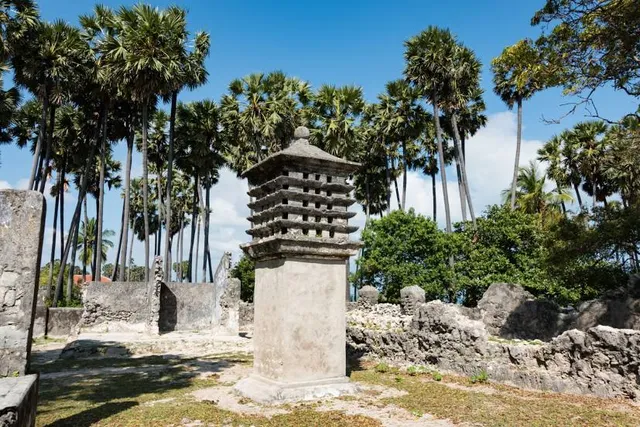
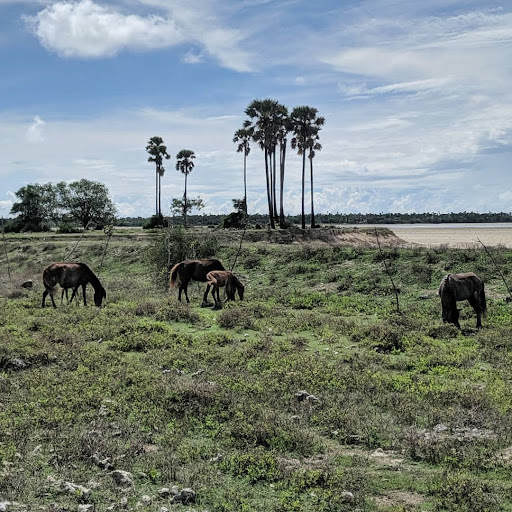
Besides the natural beauty of the sparsely populated island and some ruins of a fortress buildings, there are few attractions for travellers - but they are somewhat strange ones, namely first and foremost Sri Lanka's only herds of feral horses, descendants of Arabian stallions once breeded here for horse trade with India; secondly an imposing specimen of a Baobab tree, a typical species of subsaharan Africa, which is a rare sight in Sri Lanka. All landmarks of Delft Island – the buildings, the animals and the tree - are legacies of European colonial history.
The Dutch city name "Delft" is the common Sinhalese designation of the island, although the Sinhala language otherwise avoids the articulation of three consonants and does not use the ending "lft". Of course, there is a traditional Tamil name as well, "Neduntivu", also spelt "Neduntheevu", which translates to "long island" or "large island". But Sri Lankans of all ethnicities still use - or at least understand - the word "Delft". Even on renowned international nautical maps, e.g, the Admiralty Charts issued by the United Kingdom Hydrographic Office, the island is cartographed as "Delft".
Not surprisingly, this strange name for a tropical island is of colonial origin. After the Dutch conquered Jaffna from the Portuguese in the mid 17th century, Rijckloff van Goens, their Governor of Zeylan, gave names of Dutch cities to all eight major islands of the archipelago in the Palk Strait just to the west of Jaffna peninsula, e.g. "Rotterdam" for the islet Analaitivu, which is the smallest of those eight. In the course of time, most Dutch city names of their islands have been forgotten by Sri Lankans - except from "Delft" for the most distant one.
Not only due to its illustrious name, Delft nowadays is pretty popular with Dutch travellers visiting the Northern Province...
Read moreDelft island is a roughly oval shaped island with an area of around 50 sq km. The length and width of the land is nearly 8 km and 6 km respectively. The island is composed of tropical semi arid ecosystem. The vegetation is mostly composed of Palmyra trees and small dry zone arid shrubs. Around 5000 people are living in this island. The island is consist of coralline soil. However the people are very courageous and they have challenged the environment. Bananas, Papaya and chillies are well grown in the island by the farmers. Fishing is the major livelihood of the residents. There are feral ponies on the island, descendants of forebears abandoned there in the Dutch period. Protugese have named the island as Ilha das Vacas, the Dutch called it Delft. Divisional secretariat office, Pradesheeya sabha (local government), A police station, A school (Delft Maha Vidyalaya), Wildlife range office, a branch of Bank of Ceylon and a power station of Ceylon Electricity Board are located in the island. Boat services are operated for the transportation of the villagers to the...
Read more