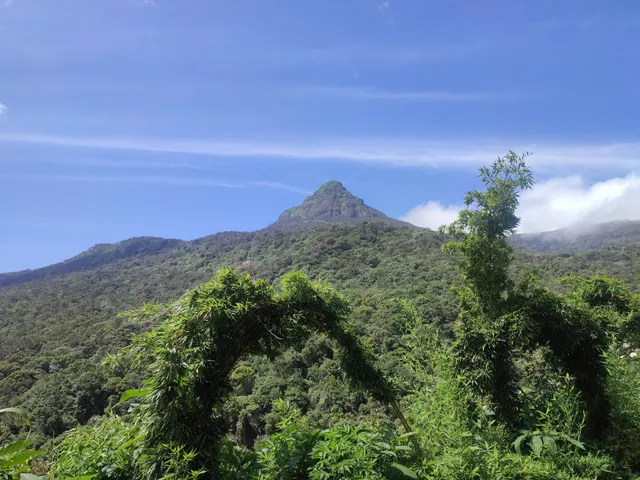
Sri Pada: A Majestic Ascent to Sacred Serenity - A Comprehensive Review Sri Pada, also reverently known as Adam's Peak, stands as a majestic sentinel in the heart of Sri Lanka's Hill Country. More than just a towering mountain (reaching a formidable 2,243 meters or 7,359 feet), it is a sacred pilgrimage site revered by followers of four major religions: Buddhism, Hinduism, Islam, and Christianity. This review delves deep into the multifaceted experience of Sri Pada, encompassing its spiritual significance, the arduous yet rewarding climb, the breathtaking natural beauty, and the cultural tapestry woven around this iconic peak. A Tapestry of Faith and Legend (5/5 Stars): The allure of Sri Pada transcends its physical grandeur; it lies profoundly in the sacred footprint enshrined near its summit. For Buddhists, this is the footprint of the Buddha himself, left as he departed Sri Lanka. Hindus believe it to be the footprint of Lord Shiva. Muslims venerate it as that of Adam, the first man, after being cast out of Paradise. Christians, particularly Portuguese Christians in the past, attributed it to St. Thomas, one of the twelve apostles. This confluence of religious beliefs creates a unique and powerful atmosphere. Pilgrims of diverse faiths embark on the same journey, united by a shared reverence for the sacred mark atop the mountain. The air is thick with devotion, the chants and prayers echoing through the night, creating an experience that is deeply spiritual and profoundly moving, regardless of one's personal beliefs. The rich tapestry of legends and the palpable faith of the pilgrims are undeniably the heart and soul of Sri Pada. The Pilgrimage: An Ordeal of Faith and Endurance (4/5 Stars): The ascent of Sri Pada is not for the faint of heart. The traditional pilgrimage season typically runs from the Poya day in December to the Vesak festival in May. During this time, thousands of devotees embark on the climb, often starting in the middle of the night to reach the summit for the breathtaking sunrise. The path, primarily consisting of thousands of uneven stone steps, winds its way through lush forests, past cascading waterfalls, and over rocky terrain. The darkness, illuminated only by strings of lights and the torches of fellow pilgrims, adds to the mystical atmosphere but also intensifies the physical challenge. The air grows thinner with altitude, and the relentless climb tests one's endurance and willpower. However, the shared struggle fosters a strong sense of camaraderie among the pilgrims. Encouragement and support are freely offered, creating a unique bond between strangers united by a common goal. The numerous tea stalls and small shops along the way provide much-needed respite and refreshments, offering moments of connection and shared stories. While the physical exertion can be demanding (hence the slightly lower rating), the sense of accomplishment upon reaching the summit, coupled with the spiritual significance of the journey, makes the ordeal incredibly rewarding. A Symphony of Nature's Grandeur (5/5 Stars): Beyond its spiritual importance, Sri Pada offers an unparalleled spectacle of natural beauty. The journey itself unfolds amidst stunning landscapes. Lush green forests teeming with biodiversity cloak the lower slopes, giving way to more rugged and windswept terrain as one ascends. The panoramic views that unfold with each upward step are simply breathtaking. Reaching the summit before dawn is an experience etched in memory. As the first rays of sunlight pierce the horizon, they paint the surrounding peaks and valleys in a breathtaking palette of gold, orange, and pink. The triangular shadow of the peak cast upon the misty plains below is a truly awe-inspiring sight, often referred to as the "Shadow of the Sacred Mountain." The natural beauty surrounding Sri Pada is integral to the pilgrimage experience, offering moments of reflection and wonder amidst the physical exertion. The pristine environment and the panoramic vistas serve as a powerful reminder of the raw beauty and...
Read moreIf you would like to know if this place is for you or not, then read this review.
I will treat it as a tourist-friendly FAQ (frequently asked questions) so you can get the most of insights to help you decide on whether to come here or not.
NOTE: this is based on my experience, on that specific time/day, and everyone is welcome to their own opinion based on their own personality, preferences, and conditions of the day they attended.
Is this place for me? If you like stairs, nature, Buddhism, and/or culture, this is definitely the place for you. If you do not enjoy any of the things previously mentioned (especially stairs) then do not come.
How many steps? 5,500 one way. More if you could multiple steps taken on the bigger or longer “steps”. I did 23,537 steps from the hotel all the way to the summit and back over the course of about 6 hours.
How long does it take? Depends on your pace. We went up fast to make sure we reached the summit by sunrise and arrived there in 2.25 hours. Some people go slower, and take 3 (one way).
How much does it cost? There is no entrance fee. You can donate to the monks that greet you at the base, but that’s optional. Bring some cash if you’re feeling generous. They help keep up the path and the location.
When should I go? Check the weather and make sure it will be clear during the estimated time you reach the summit. Note monsoon season, and their religious celebrations that start First full moon of December.
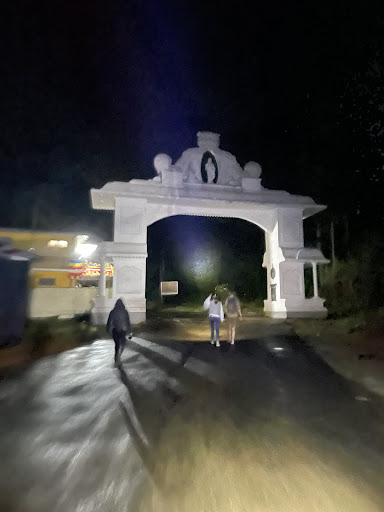
When should I start? Early morning or before sunset when it is fresh, but if your goal is to see the famous triangle sunrise, then you should start going up around 3am, or 3 hours ahead of the sunrise time. If you’re just there for nature and culture, go any time.
Equipment? Rain proof stuff, hike friendly shoes, and something warm for the summit that you can take off and pack when you’re going back down. Flashlight for sure if you’re going there in the dark.
Bathrooms? A few here and there up the mountain, but honestly, super disgusting and probably easier to go in the woods. Bring toilet paper, as even the 2 toilets on the way up had none.
Security? There were 4 police posts spotted on the way up, three of them were active. We had no need of them, thankfully, but it is comforting to know that they are there. You will encounter locals along the way including shop keepers and guides offering service, but they’re usually respectful once you express your interest in their offer or lack thereof.
Health & Safety? It rains a lot and you can slip. Bring good shoes and if accident prone, some form of first aid kit. It is a long way down and there is no shortcut to the top…keep that in mind. Monkeys and birds were the only animals sighted, but beware of snakes and bugs when going off the path. Bring allergy contingencies if you are allergic to ants, bees, etc.
Food & Drink? You will encounter small shops along the way. From the base, all the way to the top. There is one 100 meters from the summit where you can buy tea, water, soda, or warm snacks freshly cooked on their grill. There are some water hoses along the way from the local water supply but i do Not know if it is potable or not. Bring water bottles, and take them with you when they’re empty.
How’s the air? While the region is certainly green and gorgeous, there are lots of people burning their trash up and around the mountain. Not only in their villages, but also shop keepers on the way up. At the summit, you become surrounded with smoke from people burning various sorts of wood and incense. In short, bring inhalers if you are asthmatic, for sure, and be careful if you are allergic or sensitive to smoke.
Do I need a guide? Not really. The path is very straight-forward up the stairs. Just remember the town you started if you wanna get back there as you can go back down 2 different ways once you’ve reached the top. Also, if you want to know about the history and details along the way, a travel guide would be preferred as most the signs are...
Read moreAdam’s Peak, also known as Sri Pada, is one of the most famous and revered mountains in Sri Lanka. Located in the central region of the island, Adam’s Peak stands at 2,243 meters (7,359 feet) above sea level, making it the fifth-highest mountain in Sri Lanka. The peak is considered sacred by people of various religions, including Buddhists, Hindus, Muslims, and Christians, due to its historical and spiritual significance.
In this essay, we will explore the geography, history, religious importance, and the pilgrimage to Adam’s Peak, shedding light on why it has been a central part of Sri Lankan culture for centuries.
The peak itself is easily recognizable due to its distinctive, conical shape. The area around the mountain is covered with dense forests, waterfalls, and tea plantations, creating a picturesque and serene environment. The region has a mild climate, and the views from the top of the peak are breathtaking, offering a panoramic view of the island's countryside and nearby mountains.
Hindu Beliefs
In Hinduism, Adam's Peak is known as "Sivanolipatha Malai," meaning "The Mountain of Lord Shiva's Footprint." According to Hindu legend, Lord Shiva, one of the principal deities of Hinduism, left his footprint at the top of the mountain. The footprint is said to symbolize Lord Shiva's presence and power.
Hindus believe that climbing the mountain and paying homage to the footprint brings blessings and divine protection. This belief attracts a large number of Hindu pilgrims from Sri Lanka as well as from India.
Christian and Islamic Beliefs
In Christianity and Islam, Adam’s Peak is believed to be connected to the biblical figure of Adam. The name "Adam’s Peak" comes from the belief that this was the place where Adam, the first human being in the Bible, set foot on Earth after being cast out of the Garden of Eden. According to this tradition, Adam’s first step on Earth was taken at the summit of the mountain, and the footprint marks the spot where his foot touched the ground.
Islamic tradition also holds that Adam, after being sent to Earth, repented for his sins at this location. Muslims believe that Adam was the first prophet of God, and they also regard the footprint as a significant mark left by the first human being.
The climb is usually done barefoot, as it is believed to be a sign of humility and devotion. Pilgrims carry offerings, such as flowers or incense, and chant prayers or hymns as they ascend. Along the way, there are numerous rest stops where pilgrims can take a break, drink water, and light candles. The route is well-lit, with lights installed along the way to guide the pilgrims during the night-time journey.
At the top of the mountain, pilgrims gather to view the famous footprint. Many believe that gazing at the footprint while standing in the early morning light brings a sense of peace and spiritual fulfillment. The summit also offers a unique opportunity to witness the breathtaking natural beauty of Sri Lanka, with panoramic views of the surrounding mountains, valleys, and forests.
The Cultural and Social Importance of Adam's Peak
Adam’s Peak is not just a religious destination; it is also a symbol of unity and cultural identity in Sri Lanka. The mountain brings together people from different religions, ethnic groups, and backgrounds. Although each group has its own interpretation of the sacredness of the mountain, the pilgrimage to the summit is a shared experience that transcends religious boundaries.
For many Sri Lankans, the pilgrimage to Adam's Peak is a rite of passage. It is often considered an important part of life, and many people undertake the journey at least once in their lifetime. The experience of climbing the mountain is not only a spiritual journey but also a physical and mental challenge that strengthens one’s resolve and discipline.
The mountain is also a significant part of Sri Lanka’s cultural heritage. Over the years, it has been a center of literature,...
Read more