We were a group of 12 Canadians that summitted Kilimanjaro on Oct 9, 2022. Peak Planet was our chosen outfitter. They excelled at facilitating our expedition. An all-around 5-star effort. We would recommend Peak Planet (PP).
See below for information about our experience.
Covid caused us to postpone our trip once. PP made it simple for us to rebook. There was a very small rebooking fee. We provided new dates with no issue.
We selected the custom 10-day Summit package which included hotel stays, airport transfers, and a fully provisioned and staffed expedition to accommodate 8 days of trekking the Lemosho route for 12 people. PP provided 4-season expedition gear including tents, sleeping pads, dining tents, and bathroom facilities to support 12 trekkers and all the necessary support staff. PP also has trekking gear rentals available (cold-weather sleeping bags, trekking poles, and outerwear gear perfect for the higher-altitude cold weather). The details of these are available on the PP website.
Airport pickup and dropoff provisions were flawless with pre-organized on-arrival and departure transportation and accommodations bookings.
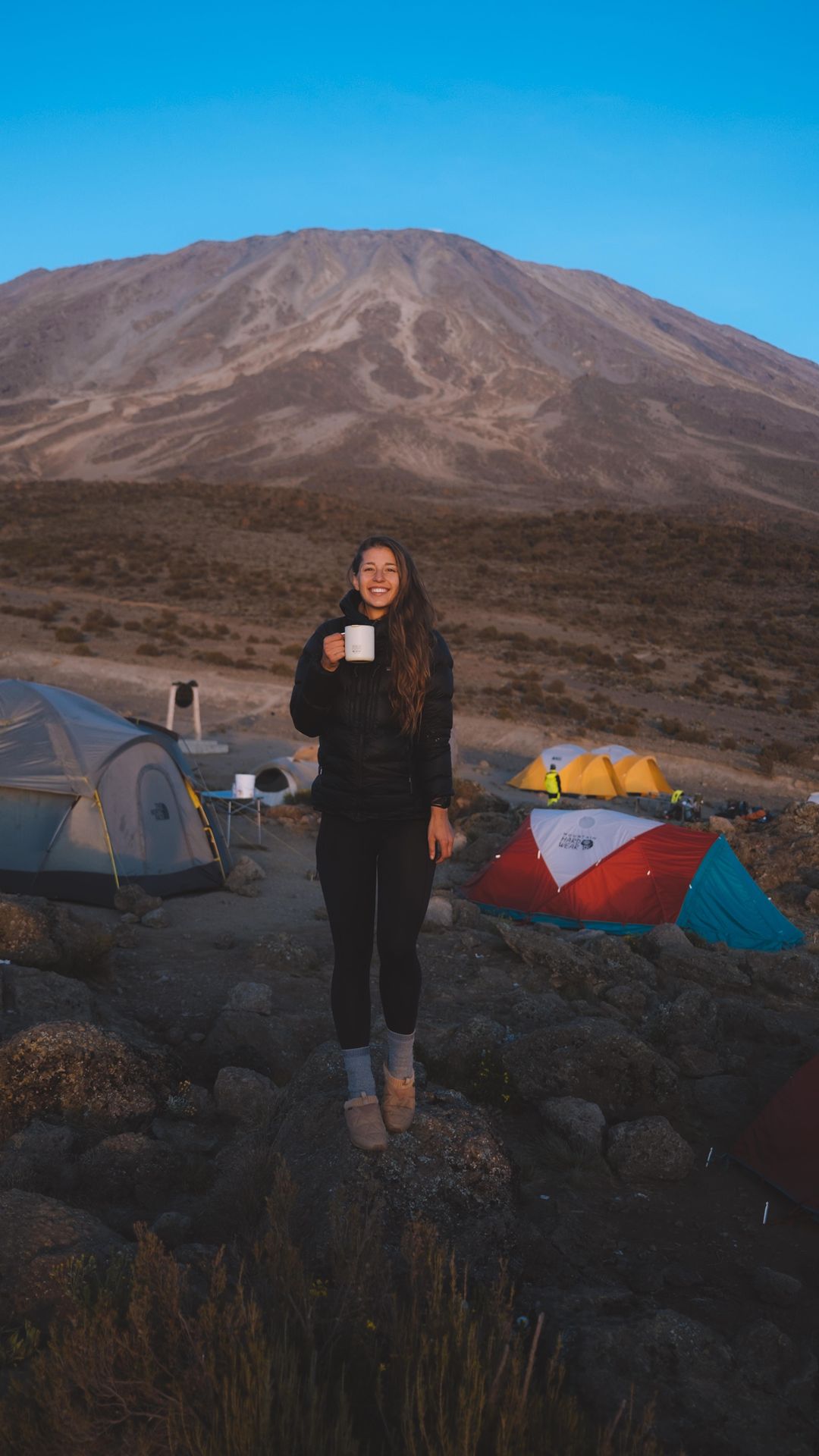
Tents were durable and well-designed to meet the day-to-day demands necessary for a multiday trek on Mount Kilimanjaro. The tents were well-sized to accommodate two trekkers with two entrances, each with its own vestibule. They were cozy inside and accommodated duffle bags, day packs, and sleeping pads for each trekker. Rental sleeping bags were mummy-style. One size fits all. They were warm and well-suited for the mountain. The opening and closing of tent zippers were a little finicky. They would occasionally jam and need to be worked to unjam, a minor inconvenience when it did happen.
The on-mountain PP had 44 members, including 6 guides, 34 porters, and 4 kitchen staff to support our efforts. All under the masterful leadership of our chief guide Caspar. It was clear that the PP team was a close-knit group that worked well together and knew what they were doing. From transport of our gear, and camp setup, to facilitating all meals, daily health checks, daily debriefs, and food preparation - PP excelled. The daily schedule proceeded like clockwork and on time. Caspar and the guide team provided timely updates and therefore there were no surprises.
The dining tent served as a meeting place for debriefing sessions, health checks, all meals, and after-meal socializing. We did find space a little tight for 12 diners. Refreshments were readily available and included hot and cold water. Coffee, tea, hot chocolate, and Milo mixes were available. Jams, honey, and Nutella spreads were also on the table. A guide always joined us for meals. Food was freshly prepared, meals were flavorful and plentiful. Vegetarian options were available for every meal. The dining tent was heated which made it very comfortable for our group to socialize and serve as a meeting place.
Summit night was our most difficult time on Kilimanjaro. We left camp at 11:30 pm we proceeded up (about 8 hours worth of trekking) in the cold frigid air under the light of a full moon. We got additional guiding support from 6 selected porters (a 2 to 1 ratio of guide to trekker). The support team's enthusiasm was instrumental and provided additional incentive for our group to succeed. They were truly inspirational and helped us up to and down from the summit, and into camp safely.
Our group appreciated many kindnesses from the PP team while trekking. Some examples - encouragement, and support while on the trail, sharing information about Tanzania, and the mountain while trekking, additional summit night support, porter assistance for the last few km's into camp on more difficult trekking days, encouragement and positivity arriving into camp. Our cook baked a delicious cake following our summit. These were very special and enhance our memories of our accomplishments.
A trip of a lifetime that will not soon...
Read moreMount Kilimanjaro is the number one highest mountain in Africa. It has three volcano cones; Kibo, Mawenzi and Shira. Here are 10 things about Mount Kilimanjaro.
Mount Kilimanjaro is the tallest mountain on the African continent and the highest free-standing mountain in the world.
Kilimanjaro has three volcanic cones, Mawenzi, Shira and Kibo. Mawenzi and Shira are extinct but Kibo, the highest peak, is dormant and could erupt again. The most recent activity was about 200 years ago; the last major eruption was 360,000 years ago.
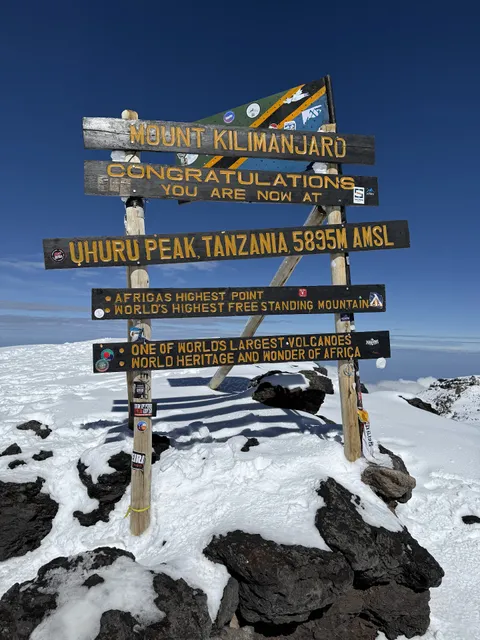
Nearly every climber who has summitted Uhuru Peak, the highest summit on Kibo’s crater rim, has recorded his or her thoughts about the accomplishment in a book stored in a wooden box at the top.
The oldest person ever to summit Mt. Kilimanjaro was 87-year-old Frenchman Valtee Daniel.
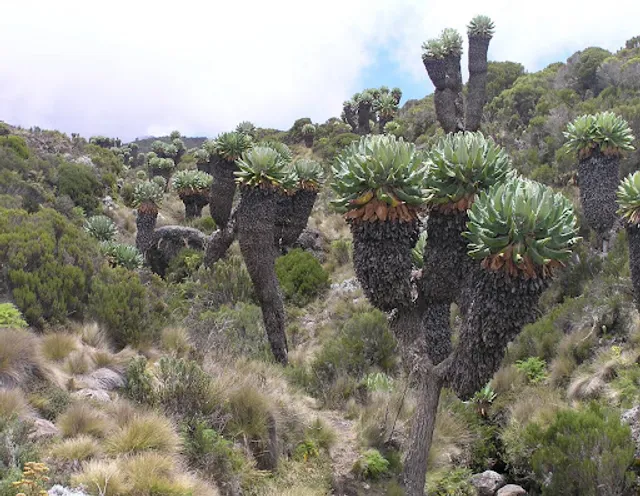
Almost every kind of ecological system is found on the mountain: cultivated land, rain forest, heath, moorland, alpine desert and an arctic summit.
The fasted verified ascent of Mt. Kilimanjaro occurred in 2001 when Italian Bruno Brunod summitted Uhuru Peak in 5 hours 38 minutes 40 seconds. The fastest roundtrip was accomplished in 2004, when local guide Simon Mtuy went up and down the mountain in 8:27.
The mountain’s snow caps are diminishing, having lost more than 80 percent of their mass since 1912. In fact, they may be completely ice free within the next 20 years, according to scientists.
Shamsa Mwangunga, National Resources and Tourism minister of Tanzania, announced in 2008 that 4.8 million indigenous trees will be planted around the base of the mountain, helping prevent soil erosion and protect water sources.
South African Bernard Goosen twice scaled Mt. Kilimanjaro in a wheelchair. His first summit, in 2003, took nine days; his second, four years later, took only six. Born with cerebral palsy, Goosen used a modified wheelchair, mostly without assistance, to climb the mountain.
Approximately 25,000 people attempt to summit Mt. Kilimanjaro annually. Approximately two-thirds are successful. Altitude-related problems is the most common reason climbers turn back. ⛥⛥⛥⛥⛥⛥⛥✴✴✴✴✴✴✴⛥⛥⛥⛥⛥⛥
A number of theories exist about the meaning and origin of the name. One theory is that the name is a mix of the Swahili word Kilima, meaning "mountain," and the KiChagga word Njaro, loosely translated as "whiteness." Another is that Kilimanjaro is the European pronunciation of a KiChagga phrase meaning "we failed to climb it."
One of the Seven Summits (the highest peaks on the seven continents), Kilimanjaro is in Tanzania in east Africa. Kilimanjaro lies within the 292-square-mile (756 square kilometers) Kilimanjaro National Park. Kilimanjaro rises from its base approximately 16,732 feet (5,100 meters) from the plains near the Tanzanian municipality of Moshi, making it the tallest free-standing mountain...
Read moreI watched the Kilimanjaro Climb by the TV celebrities and was surprised at the differences time had made to the mountain and the facilities. I climbed this mountain in 1965 as a member of a school team in Nairobi. I was 18 and a bit when we floated the idea of climbing Kilimanjaro leading to 8 of us confirming serious interest. Training was cross country running about 8-10 miles several times a week and other exercises. In those days gyms and specialized training was almost unheard. We had to equip ourselves with our own equipment. This was essentially basic camping gear and cooking utensils and the famous Primus Stove. Our route was from Kenya side, through Oloitokitok. This was the steepest of all the several routes. At the base camp we hired a local Kenyan guide. Each of us carried a rucksack of about 50 pounds containing food and the camping gear. First days trek was through quite a dense jungle with lots of water streams. This was also the only drinking water, and all jerry cans were filled. The jungle trek led to tall savannah grass, known as Elephant Grass, and this eventually thinned out to sparse grassland. Sleeping was in the natural First & Second Caves in the mountain. Also, at this stage, there were no water streams, and the only source of water was the spring water drips in the caves. Once out of the second caves on the third day the climb became steep but this stage was still about 4-5 hrs trek and sleeping was under the sky. The next day’s climb took us to Kibo Hut at altitude of 15500 ft. These were purpose made tin huts with bunk beds. Permanent snow cap started here and water for all needs had to be made by melting snow using the Primus. The final assent started between 3-4 am and we reached Gillman’s Point 19340 ft at 7 am 9 April 1965. Though not recorded on camera or video, the picture is still vivid in my mind. I was shocked to see the absence of snow but amazed at the facilities. I would love to climb again.
To all who have climbed Kilimanjaro recently. I am sure most of you enjoyed the climb and wonderful view from the top in the highest point in Africa. However, with the adverse effects of Climate Change, the amount of snow left is shocking. I did this climb in 1965 and the snow cap streched from 15,000ft (Kibo Hut) to the Uhuru Peak all the way and into the crater. The crater was like a big smooth mixing bowl with no imperfections. Unfortunately, digital cameras as like the current ones did not exist then for the ordinary person ( they were there only for the top scientists). Unfortunately we can not travel back in time to record photogaphically what...
Read more