1,300-year-old Buddhist treasures unearthed in northeastern Thailand
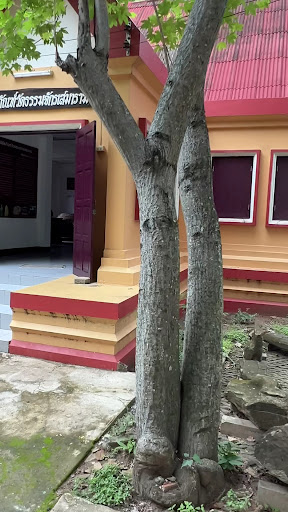
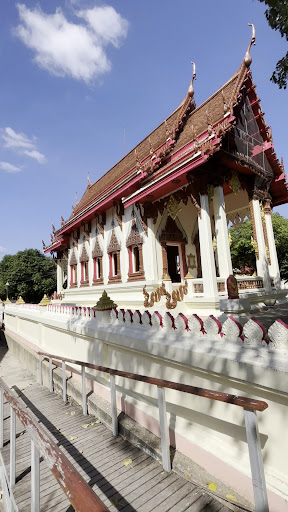
A stunning collection of ancient artifacts from the Dvaravati period has been discovered at the historic Wat Thammachak Sema Ram temple complex in Thailand’s Nakhon Ratchasima Province. The discovery, announced by Thailand’s Fine Arts Department, was made during conservation work at the Phra Non archaeological site, where workers were installing an underground drainage system near the famed reclining Buddha statue.
The findings were initially made on April 21, 2025, at a depth of approximately 1.3 meters beneath the temple site. A damaged ceramic container was unearthed, and within it were a total of 33 ancient ornaments made of gold, silver, and bronze. These included gold rings, silver earrings, and a special pair of bronze spiral hoop earrings — a form previously discovered at other sites from the Dvaravati period, such as Phu Khao Thong in Ranong Province and Tha Chana in Surat Thani Province.
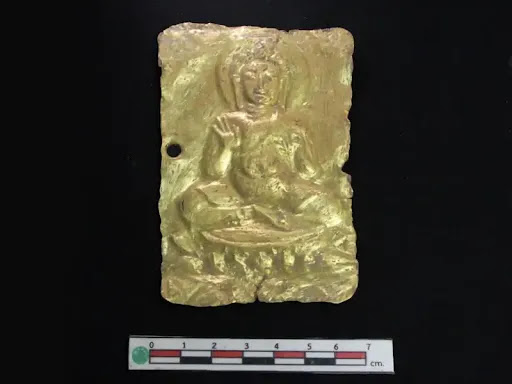
Further excavation on April 30 led to the discovery of three additional religious items, such as repoussé gold and lead-tin alloy sheets (locally called “chin”). The most eye-catching of these is a rectangular gold sheet, measuring 8 by 12.5 centimeters, depicting a seated Buddha in the Vitarka Mudra — a hand gesture that indicates the transmission of teachings. The figure has characteristic Dvaravati artistry, such as spiral curls, a large halo, elongated earlobes, and a robe draped over one shoulder. A small puncture hole at the top right suggests it may have been worn or displayed.
Another of the finds is a chin sheet showing a standing Buddha in an arched frame. Although damaged on one side, the sheet — measuring 11.5 by 15.5 centimeters — retains detail. The Buddha is flanked by two attendant figures, one of whom is thought to be an image of Phra Phrom, the Thai manifestation of the Hindu god Brahma. The figure bears a strong resemblance to other Dvaravati repoussé pieces, such as a plaque now housed in the Dvaravati Art Room of the National Museum Bangkok.
The third artifact is a piece of hardened soil that has three stacked metal sheets embedded inside it, separated by thin layers of mortar. This was discovered behind the reclining Buddha’s head, and it points to the possibility of intentional ritual placement.
The Director of the 10th Regional Office of Fine Arts in Nakhon Ratchasima, Mr. Thotsaphon Srisaman, has transferred the recently discovered items to the Phimai National Museum, where they are being conserved and cataloged.
The reclining Buddha statue itself, central to the site and believed to have been created around CE 657 under the reign of King Ramaraj of Ramburi (possibly Ayodhyapura), remains a point of religious and historical fascination. The site, which has seen activity since the 6th century during the Buddhist Dvaravati state period, continues to yield signs of sophisticated artistry and long-distance cultural exchanges within Southeast Asia.
More information: The Fine...
Read more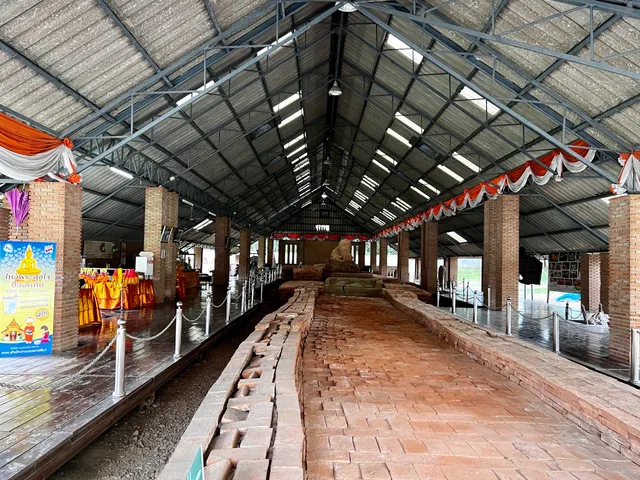
 Learn more insights from Wanderboat AI.