This is a place not to be missed by anyone interested in the natural world or in the exploration of Africa and Antarctica! What a feast of pleasure and information awaits you! The Wakes was the home of Gilbert White, author of The Natural History and Antiquities of Selborne, a delightful collection of his letters in which he records the natural world and speculates on such matters as where Swifts disappear to in winter (he postulated that they might hibernate in the mud in the bottom of streams!) His book has never been out of print since being written in the 18C. White is often regarded as the founder of ecology. The Wakes displays many items associated with him: don't miss the tale of Timothy the Tortoise!
But this splendid museum is also shared by two inveterate explorers, different generations of the same family, who each lost his life on an exploration. Frank Oates travelled in South America and in Africa in the Victorian heyday of exploration of the Dark (because unexplored) Continent and succumbed to disease. You will see relics of his journeys including ethnographic collections and the heads of various beasts together with plaques showing his journeys and summarising his life.
The surname Oates might well have rung a bell in your mind. Yes, Lawrence Oates who accompanied Scott on his ultimately unsuccessful and tragic race with Amundsen to be first at the South Pole. Again, the museum staff have done an excellent job in summarising the family life and military career of this intrepid man who sought to save his companions by sacrificing himself, saying in the team's shared tent as a blizzard roared "I'm going outside and I may be some time", words familiar to me from my boyhood when Britons were taught about our heroes.
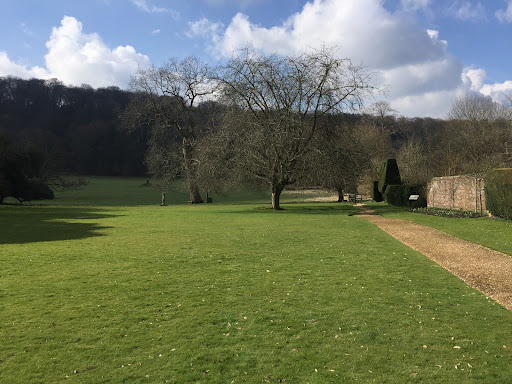
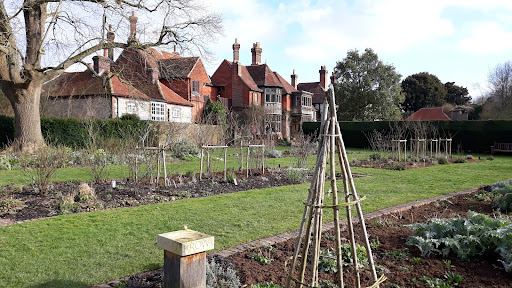
Now I suggest you relax in the friendly cafe, treating yourself to the homemade cakes and a cup of tea or coffee, before exploring the grounds with their vegetable and herb gardens and recreation of various now outdated things you might have seen in Gilbert's day. And don't miss, far across the large field, a walk to the statue of Hercules. You will have a surprise but all is explained by a plaque on its plinth.
You will have spent an enjoyable time at The Wakes but there is yet more to come! A few minutes walk away is the parish church. As you go in through the gate, glance to your left where you will see what remains of the yew tree which had stood for centuries before being blown down in the Great Storm a few decades ago.
As you enter he church you will see a cross section of that yew. Noting the fine ironwork on the church door, carefully step down into the cool interior and then turn right. You will see two lovely stained glass windows. One, from the 1920's, has the figure of St Francis who, you may recall, talked to the birds and here he is surrounded by all the birds mentioned in Gilbert's book, each shown in accurate detail: alongside is a helpful illustration indicating the names of each bird. To your left is another, later, window which shows the other creatures mentioned in the book.
On leaving the church, turn left and left again at the east end to find Gilbert White's grave. A highly learnĂšd but modest man, he asked at his name be cut only with "G W" on his tiny tombstone.
You will have filled your day with unalloyed delight among the shades of a pioneering ecologist and two...
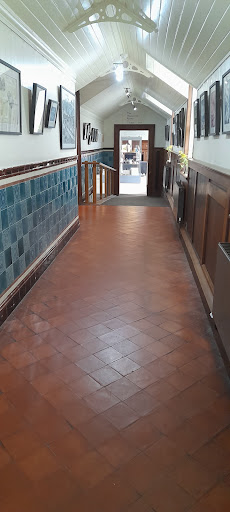
   Read moreHORRIFIED AT THE 'IMPROVEMENTS' I feel so angry at the way they have ruined Gilbert Whiteâs house. I have been visiting Gilbert Whites for many years and always loved its charm and atmosphere. Now it has had a huge lottery grant that has been used to strip the place that made it what it was. The âimprovementsâ are reminiscent of the Brutalist architects from the past who had scant regard for history or preserving the past.
What made the house what it was is CHARM. The old house had atmosphere and you could feel the energy of the past still living in this old house. It was easy to imagine the eccentric Gilbert White sitting in the old rooms and musing about the wonders of botany or dreaming up his schemes to build the zigzag path.
My wife and I, over many years, were not just attracted by the history but the tearoom selling its Bishop Wigâs tea cakes in the ramshackle room used as a tea room. The whole place oozed Englishness. Even the Gents toilets were fantastic â an incredible piece of âWallace and Gromitâ style engineering, still working and perfectly reflecting the character of the house and the people who lived there.
Now what we have is a renovation that has stripped the history from the house. The charm has gone forever. We now have a converted stable into a modern cafĂ© in a contemporary style that youâd find in a store like John Lewis. It still serves nice cakes and the people are pleasant too but it is characterless and clinical. You can no longer sit in the garden for your cup of tea or be served in the lost charm of the house. It was the cup of tea and biscuits charm that made this place.
Whatever got into the heads of the Lotter Fund and the architects that made the changes? Donât they understand history? Why canât they appreciate what it is about Gilbert Whiteâs house that made it so quintessentially English. It all fitted so well too with the character of people like Oates and his personality.
What most revolts me about the house now, apart from its modern fittings and carpets, are the ghastly graphics that hang everywhere with pointless quotations. Many of these graphics are completely unnecessary and uninformative and add nothing whatsoever to the place. Again it is a modern addition what simply spoils what the house is about. We must preserve history. It is good there are grants available to do this but we donât want to âimproveâ on history. When we do this we destroy the very history that was there.
My wife and I have been coming to Gilbert Whites house for many, many years â maybe 5 times a year as it was a lovely place to drop in to and absorb itâs delightful energy of a genteel time now gone. We both came away feeling depressed and with a feeling of suppressed anger. How can you destroy something so lovely, so charming?
My only consolation is that you at least didnât concrete over the lawns for a car park. Maybe youâll save this for the next lottery grant?
I do hope that the people who are responsible for this are brought to account. If other visitors feel as I do, please say something here. I overheard others expressing...
   Read moreVisiting Gilbert Whiteâs House felt like stepping into a quieter, more attentive world. The rooms are modest but full of life, and what really stayed with me was seeing nature through Whiteâs eyesâhis writing is almost poetic in its simplicity. He doesnât dramatize; he observes. Birds, weather, plantsâall described with a kind of reverence that makes you slow down and notice things youâd usually overlook.
The museum itself is bright, airy, and thoughtfully laid out. Itâs full of interactive touchesâdrawers that open to reveal surprises, objects you can handle, and displays that invite curiosity rather than just observation. Itâs clearly designed to be engaging for all ages, and it works. Thereâs a sense of playfulness woven through the learning, which makes the experience feel alive.
The museum does a lovely job of letting Whiteâs voice lead. Diary extracts are placed throughout the houseânot the gardenâand theyâre not just informativeâtheyâre intimate. You feel like youâre walking alongside him, sharing in his quiet joy at a birdâs song or the changing of the seasons.
Then you cross into the Oates section, and the atmosphere shifts. Itâs immersive in a different wayâmore visceral, more emotionally charged. The personal effects, especially Lawrence Oatesâ belongings, are deeply moving. Youâre not just reading about polar exploration; youâre feeling the weight of it. The quiet bravery, the loss, the humanityâitâs all there in the details.
And itâs not just Lawrence. His brother Frank Oates, too, lived a life of bold explorationâventuring into Africa with curiosity and courage. Both brothers, in their own ways, embraced the unknown. The museum honours that spirit without sensationalising it. Itâs respectful, poignant, and quietly powerful.
Oddlyâand a little eerilyâin the area where the Boer War uniform was displayed, my husband caught a distinct smell of pipe smoke and asked if I could smell it too. I couldnât. It was fleeting, but it added an unexpected layer to the experience. Whether imagination or something else, it felt strangely fitting in a place so steeped in personal history.
The contrast between the two halves of the museum is striking, but beautifully handled. Whiteâs world is one of patience and wonder; the Oates story brings courage and tragedy. Together, they offer a layered, unforgettable experience.
The cafĂ©, however, was less inspiring. ÂŁ9.00 for a cheese and tomato sandwich felt steepâand the tomato turned out to be a single slice. Itâs a lovely setting, but the pricing didnât quite match the portion. Worth knowing if you're planning to eat there.
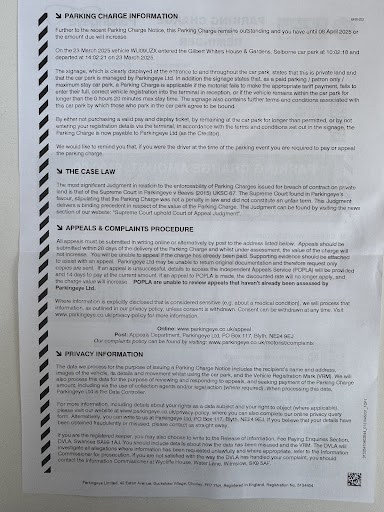
Parking is free if youâre visiting the cafĂ© or the houseâjust make sure to register your vehicle on arrival. Itâs a small detail, but easy to miss.
We also ventured across the road to the church to visit Gilbert Whiteâs resting place. Itâs a lovely little churchâsimple, peaceful, and full of quiet charm. Standing there, knowing heâs buried in the village he loved and wrote about so tenderly, felt like the perfect way to...
   Read more