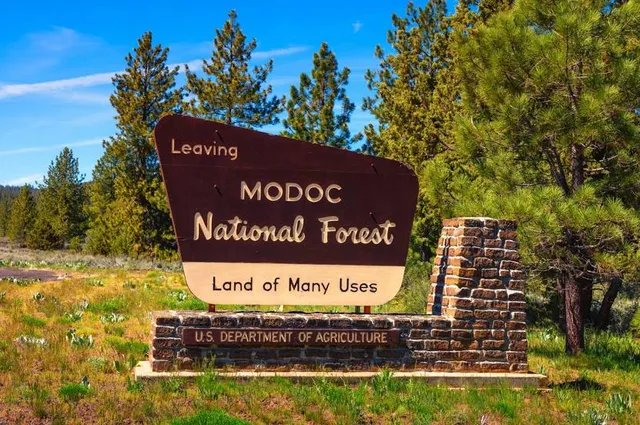
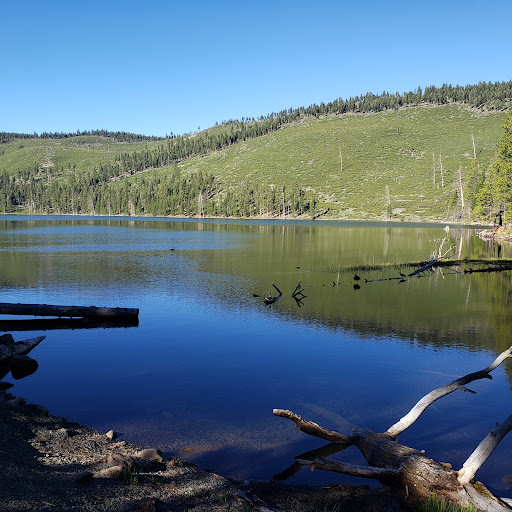
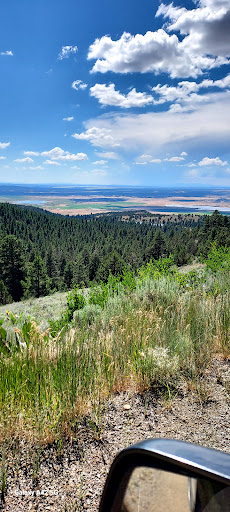
I love it here. I have visited many times. It is a place of solitude. Many visits here I never saw anyone but my family. There are many hiking trails and caves nearby. Also, there are petroglyphs here and there. If I stop and think about it I can smell the sweet smell of sage in late spring and hear the wind flowing by the juniper trees and rocks. It can be SO QUIET there.
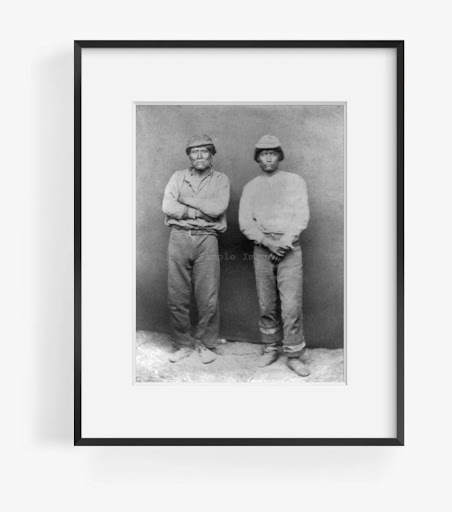
The history is interesting ----- Capt Jack otherwise known as Kintpuash was a Modoc Chief who had his family/tribal land taken from him and he returned hoping to just live out his life on the land his ancestors lived on --- and where he grew up. Instead he did amazing things to fend off the army and ended up hung.
If you drive down through the lava beds you will see where Capt Jack aka Kintpuash unbelievably held off a large army with a small group of Native Americans. It is called "Capt Jack's Stronghold." I suggest you hike it early in the morning or late in the evening if it is summer time because I got heat stroke during a 90+ degree day when the lava made it about 110.
This is from Wikipedia (so take it with a grain of salt) but the story lines up with what I know.
Kintpuash was born about 1837 into a Modoc family in their ancestral territory near Tule Lake. The Modoc occupied about 5,000 acres here, along what became the California-Oregon border after European settlement.
In 1864 Jack and his family still lived in their ancestral home near Tule Lake. Due to the pressure of white settlers who wanted to farm the fertile land and were encroaching in this territory, Kintpuash and his family were among the Modoc removed by the United States to the Klamath Reservation in southwestern Oregon. This was primarily occupied by their traditional rivals, the much larger Klamath tribe. The Klamath outnumbered the newcomers, and the reservation was on traditional Klamath land; the Modoc complained of poor treatment and conflict with the Klamath.
In 1865, Kintpuash, by then informally called Captain Jack by American settlers, led a band of Modoc from the reservation back to their home in California. In 1869, the band were rounded up by the United States Army and returned to the Klamath Reservation. Finding conditions had not improved, in April 1870, Captain Jack led a band of about 180 Modoc back to the Tule Lake area.
Modoc War, 1872-73
In 1872, US Army forces were sent to capture Kintpuash's band and return them to the reservation. On November 29, while their surrender was being negotiated at the Lost River in Oregon, fighting broke out between a soldier and one of the Modoc warriors. The brief Battle of Lost...
Read more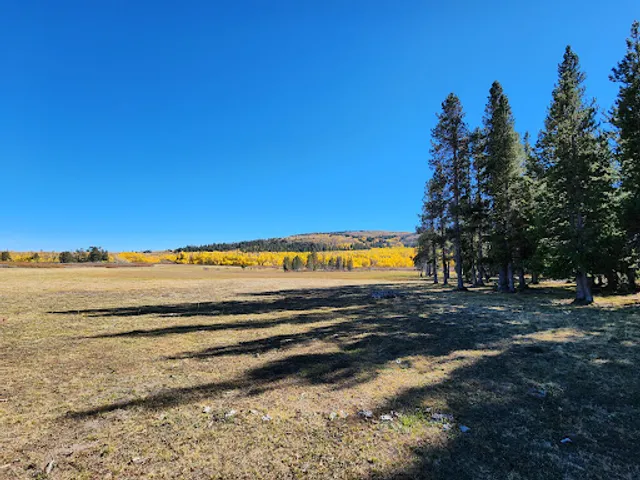
 Learn more insights from Wanderboat AI.