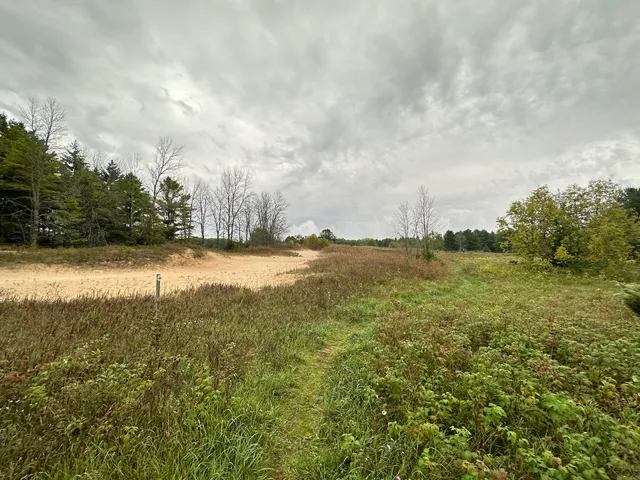
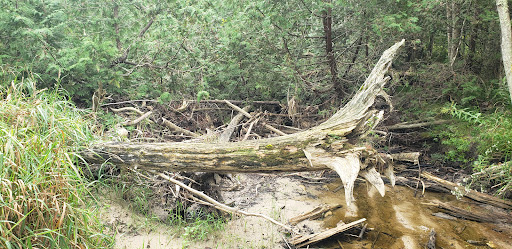
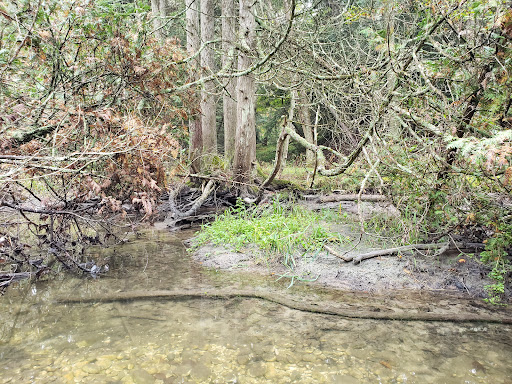
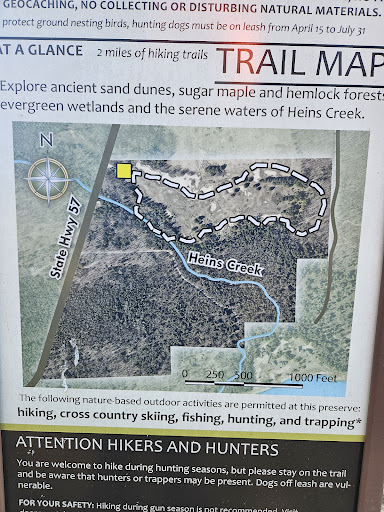
Heins Creek, a 74 acres preserve with 0.75 easy hiking trails, established in 2013, and named after the Hein family which came to the area in the late 19th Century, began in 2004 when the Arnie and Julie Widen, and then Tony Walters, and siblings, Williams family, offered to sell their properties to the DC Land Trust to protect Heins Creek forever. A Knowles-Nelson grant was obtained to buy 50% of the land and the families generously donated the other 50% appraised value to protect the creek (Class II Trout Stream) that flows about a mile from Kangaroo Lake to Lake Michigan. (Heins Creek Nature Preserve -- the land-- does not connect to Lake Michigan, you've not going to see the lake from here, even though the creek does empty into the lake.) If you visit in the fall, it's quiet and the creek is low water so you might ask: What's the big deal? But in April, watch out for all sorts of water life. The trick is to be supremely quiet. Sit or stand quietly and watch the magic.
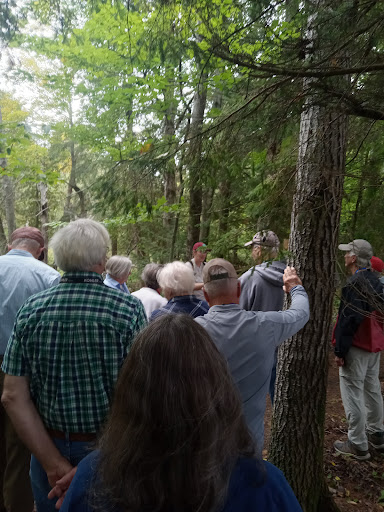
Paige and I led 15 Learning in Retirement hikers on Sept. 23 along the trail and we explained the criteria the Land Trust used to evaluate the property. It has it all. The watercourse, the geologically significant ridges from the Algonquin and Nipissing Lake periods that hurled the rising and falling glacial waters with sands up into the bays that eventually became "embayed" or closed off. Then came the first Door County tourists, the Native Peoples, who came from May to October for the white fish and trout, the elk (not deer) in that heavily wooded period and beaver. They moved back to the Green Bay side in the winters. This went on during the Middle Ages period in Europe, but humans were here 12,000 years ago (Paleo-Indians) though the waters covered just about everything.
Archaeologists have done a fine job documenting the points and pottery found here in two encampments which provided camps for numerous people. They are displayed at the Door County Historical Society in Sturgeon Bay, WI. Also at museums in Milwaukeee.
In terms of plants and trees, this is an excellent example of forest succession. Junipers are abundant in the sand dunes, the first plants that become nurseries for maples and white pines. Then into the forested area look for mature maples, spruce, white cedar, and hemlock. Abundant mushrooms.
Particularly indebted to Marilyn Hein for her book on the history of the area and stories about the people who lived on...
Read moreOne of my new favorite hikes! This trail features woods, creeks, fields of wildflowers, and some sand. This trail is one loop around the property and features a winding trail through the trees From fish in the creek to bees pollinating the flowers, this is a beautiful trail to hike. Some of the terrain is muddy by the creek and sandy in the fields, so plan...
Read moreWent in September. Creek is almost completely dried up even after rain, also multiple debris dams are blocking the creek. Likely won't be any fish until water levels rise. Bit of a shame to loose spawning habitat. Cute...
Read more